
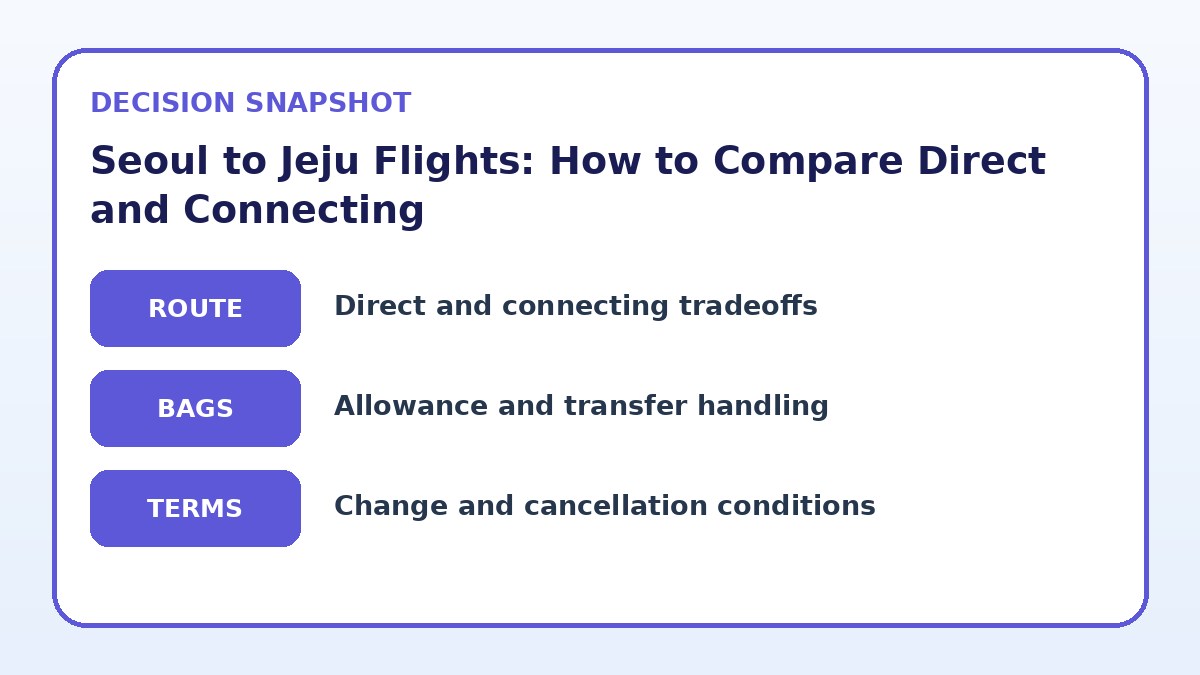
If you’re traveling from Seoul to Jeju for the first time, the practical choice usually comes down to whether you want a direct flight for simplicity or a connecting itinerary for potential flexibility. Direct flights keep things straightforward: one departure, one arrival, and less logistics to manage on the travel day. Connecting options can open more schedule choices, lower fares in some search results, or let you combine transport modes, but they add transfer risk and more time on the clock. Before booking, decide which matters more to you—speed and easy logistics, or flexibility and potential savings—and then compare total door-to-door time, layover length, transfer complexity, and refund/change rules on the carrier or booking page. Use Trip.com or an airline’s site to check current options, but always confirm final baggage rules, connection minimums, and boarding times with the operating carrier before you pay.
What direct flights really buy you
A direct flight between Seoul and Jeju usually means lower hassle on travel day: one check-in, one boarding sequence, and no mid-route airport transfers. For first-time visitors who prefer minimizing complexity, that predictability matters—especially if you’re carrying luggage, traveling with family, or arriving in Seoul from an international flight. Direct itineraries also reduce the number of potential points of delay; if a flight is delayed, you aren’t racing to connect at another airport. That simplicity can be worth more than a small fare difference when you value certainty over squeezing out savings.
However, direct doesn’t automatically mean fastest door-to-door. Consider where you’ll depart in Seoul—Incheon (ICN) and Gimpo (GMP) serve different types of flights and offer different ground transit times from central Seoul. Also check which terminal and your airline’s minimum check-in time; some budget carriers require earlier arrival or have stricter baggage enforcement. On the booking page, confirm departure airport, terminal, and whether the listed flight is non-stop or merely marketed as ‘‘direct’’—some sites use language loosely, so verify on the carrier’s official itinerary.
When a connecting option makes sense
Connecting itineraries are useful when direct flights are full, when you’re aiming for a specific departure window that direct service doesn’t offer, or when price is a higher priority. Connections can also allow creative routing—combining a morning domestic hop with an overnight or afternoon ferry if you want a scenic approach—but those options bring complexity. If the connection is on the same ticket with through-checked baggage and protection for missed flights, it behaves more like a single journey; if not, you may need to collect and re-check bags and pass security again.
If you consider a connecting route, scrutinize the minimum connection time and whether connections are airport-to-airport or involve a terminal transfer. Verify whether the two flights are on one ticket or separate tickets: separate tickets often mean you’ll be treated as a new passenger if a delay causes you to miss the second leg. Check the carrier’s transfer rules on the final booking page, and factor in buffer time for immigration, baggage pickup, and local transit between terminals or airports if needed.
| Approach | Best for | Tradeoff to check |
|---|---|---|
| Direct flights | Travelers prioritizing simplicity, short transfer time, and lower chance of missing connections. | Fewer schedule choices and sometimes higher headline fares compared with routed alternatives. |
| Same-ticket connecting itineraries | Those who want more schedule options with protection if the connection is missed. | Can involve longer total travel time and may still require attention to baggage transfer rules. |
| Separate-ticket connections | Flexible travelers seeking lower fares or combining carriers, willing to self-manage transfers. | Higher risk of missed onward travel and potential extra fees; rarely offers protection if delayed. |
| Mixed-mode routing (flight + ferry or land) | Travelers valuing itinerary variety or specific arrival points not served directly by air. | More complex logistics, more door-to-door time, and multiple bookings to coordinate and verify. |
Comparing cost, time, and risk
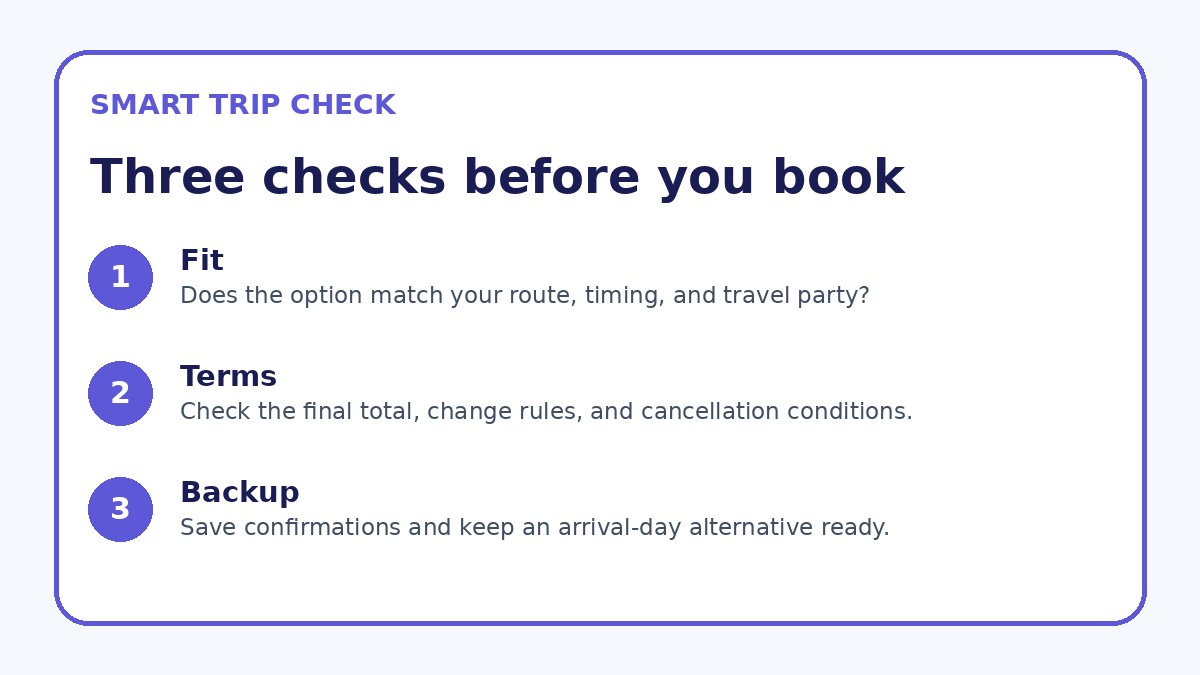
When comparing Seoul to Jeju flights, don’t evaluate options using headline airfare alone. Add up total journey time from where you are in Seoul, estimated transit to the departure airport, check-in and security time, layovers, and arrival transfer time on Jeju. A cheap connecting option might save money on the ticket but cost more in taxi fares, extra baggage fees, or the stress and potential expense of a missed connection. Look at fare rules for changes and refunds: a slightly higher fare with flexible change terms can be a better deal for travelers who value peace of mind.
Assess risk tolerances: if you have a tight schedule—tours, events, or onward ferry reservations—prioritize direct options or connections with long buffers and protective through-ticketing. If you’re flexible with timing and willing to manage transfers, connecting flights can unlock more schedule and price combinations. Always confirm baggage transfer policies and whether the airline will rebook you automatically in case of a missed connection; if that information isn’t clear on the booking page, contact the carrier directly before payment.
Before you book
- Confirm which Seoul airport and terminal your flight departs from and how long ground transit will take from your location.
- Check whether both legs of a connecting itinerary are on the same ticket and whether baggage is through-checked automatically.
- Verify baggage allowances, fees, and size limits on the carrier’s final booking page before payment.
- Allow buffer time for immigration or inter-terminal transfers when your travel plan includes arriving in Seoul before a domestic departure.
- Compare total door-to-door travel time, not just airborne time, when choosing between direct and connecting options.
- Save airline contact details and screenshot itineraries so you can rebook or confirm policies quickly if plans change.
Practical booking and airport checks
Before you click pay, verify a few specifics that affect the real travel experience: departure airport and terminal, bag allowance and fees, check-in and boarding cutoffs, airport transfer times, and whether both legs are on one ticket. If using aggregators or travel sites, cross-check the itinerary on the operating airline’s website; flight times, connection rules, and baggage policies can differ between sellers. When a transfer is required, check which terminals are involved and whether an inter-terminal shuttle or public transport is needed—these details matter for the time you must reserve between flights.
On travel day, build at least the airline’s recommended minimum plus extra buffer into your plan. Keep digital and printed copies of itineraries, and store important contact numbers for airlines and ground services. If your inbound trip to Seoul is international, leave extra time for immigration and baggage on arrival before a domestic departure. Finally, if you want a single place to compare options, Trip.com can show current schedules and availability, but always confirm live baggage rules and change policies on the airline’s final booking page before completing a purchase.
Frequently asked questions
Are direct flights always the fastest way to get from Seoul to Jeju?
Not always. Direct flights eliminate transfer time between flights, but total travel time depends on where you start in Seoul, the airport you must reach, and ground transfers at both ends. If a direct flight departs from an airport that takes much longer to reach from your accommodation than a connecting option from a closer airport, the connecting route could be competitive on total door-to-door time. Always add transit and check-in buffers when calculating which itinerary is actually faster for your schedule.
If I book two separate tickets for a connection, will airlines help if I miss the second flight?
When tickets are separate, airlines generally treat each booking independently. If your first flight is delayed and you miss a separately booked second flight, the second carrier is not obliged to rebook you for free. Some carriers may offer goodwill assistance, but that is not guaranteed. To reduce risk, allow generous transfer time, consider travel insurance that covers missed connections, or book same-ticket itineraries that include protection for irregular operations. Always confirm transfer and baggage rules before buying separate tickets.
What should I verify on the booking page before I finalize a Seoul to Jeju flight?
On the final booking page, check the departure airport and terminal, whether the flight is non-stop, baggage allowance and fees, change and cancellation rules, check-in and boarding cutoffs, and whether connections are on a single ticket. If the itinerary includes a connection, confirm the minimum connection time and who is responsible for transferring baggage. If any of these items are unclear, contact the airline or booking agent to get a written clarification before completing payment.
Final planning note
For first-time visitors deciding between Seoul to Jeju flights, choose based on which tradeoffs you’re willing to accept: direct flights for simplicity and lower transfer risk, or connecting options for wider schedule choice and potential savings if you can manage transfers. Focus on total door-to-door time, baggage rules, and whether both legs are on a single ticket when comparing itineraries. Verify departure airports, terminal details, and the carrier’s connection and baggage policies on the final booking page before purchase. With those checks done, you’ll be able to pick the option that matches your comfort with complexity and your travel timeline.
Continue planning
Check current options and final conditions
Use the provider page to confirm live availability, the final total, cancellation terms, and every condition that matters to your trip.
This evergreen planning guide was created with AI-assisted drafting and a structured quality review. It does not display live prices, schedules, availability, visa guidance, or provider rankings. Verify current details before booking. Some links are affiliate links; we may earn a commission at no additional cost to you.