Practical answer up front: for most first-time visitors the Shinkansen (bullet train) or regular intercity trains combine speed, comfort, and convenience and are the default choice if you prioritize time and simplicity. Coaches (long-distance buses) are usually the cheapest surface option and can be a good pick if you prefer lower cost over travel time and are comfortable with longer rides. Ferries are not a direct Tokyo–Kyoto option for the whole journey but can be part of a scenic multi-leg trip if you want a slower coastal experience. Finally, car travel or flights can make sense in specific situations — small groups with lots of luggage, complex multi-city itineraries, or when you plan regional detours. Below I explain tradeoffs, how to compare direct and connecting options, and what to verify on providers’ booking pages before you commit.
Train travel: speed, frequency, and convenience
Trains are the simplest way to think about Tokyo to Kyoto transport because they offer frequent departures, predictable travel rhythms, and widely known interchange stations. High-speed options typically reduce overall journey time; regular intercity services can be cheaper and still convenient if you don’t mind a slightly longer ride. For first-time visitors, the ease of navigating major stations, the ability to sit comfortably with luggage, and the continuity of service are strong practical advantages compared with other surface modes.
When choosing between direct and connecting train options, compare total door-to-door time, number of station changes, and the hassle of moving luggage between platforms. Also check whether seats require reservations and whether a rail pass you might hold covers the service you plan to use. On provider pages confirm exact departure and arrival stations, transfer windows, baggage allowances, and cancellation rules; schedules and reservation policies can change and should be verified before booking.
Coach and night bus: budget and overnight practicality
Coaches or long-distance buses typically cost less than trains and can be booked as day or night services. The tradeoff is longer travel time and fewer onboard comforts than premium train classes. For travelers aiming to save on accommodation, a reliable night bus can turn travel time into a sleep period and free up daytime hours at your destination, but comfort levels vary and you should confirm seat types and onboard facilities before booking.
When assessing coaches, compare scheduled travel time, departure/arrival terminal locations, and the true total door-to-door time including transfers to your accommodations. Look for clear baggage policies, restroom availability, and whether the provider guarantees a seat. Because coach services and seat configurations change, verify current amenities and any luggage-size rules on the operator’s final booking page. Trip.com is one place to compare availability, but always confirm details with the carrier.
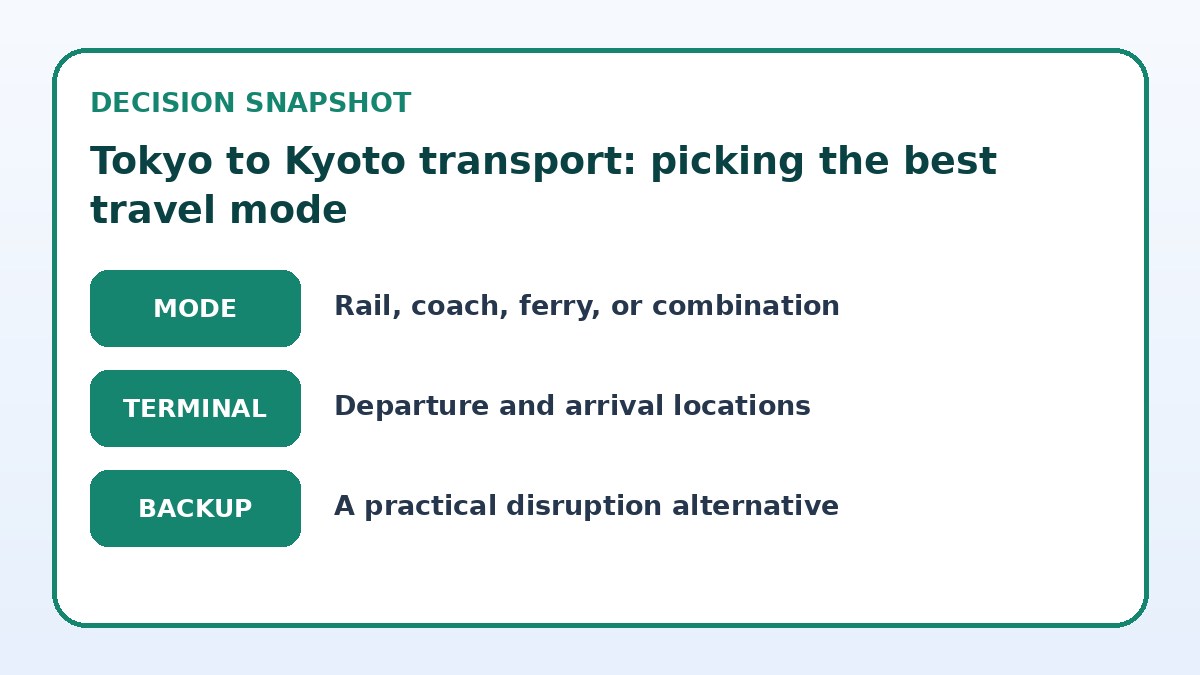
| Approach | Best for | Tradeoff to check |
|---|---|---|
| High-speed train | Travelers prioritizing speed, predictability, and station convenience | Higher ticket cost and sometimes required seat reservations |
| Intercity train | Those balancing cost and comfort with frequent departures | Slightly longer travel time than high-speed services |
| Coach / night bus | Budget-conscious travelers or those using overnight travel to save time | Longer journey, varying comfort and limited onboard amenities |
| Ferry + train/coach combos | Travelers who want scenic coastal travel and an unhurried itinerary | Significantly longer total travel time and complex connections |
Ferries and mixed coastal routes: scenic but slower
Ferries are not a single-step alternative for the Tokyo–Kyoto corridor, but they can be woven into a multi-leg itinerary if you want coastal scenery or a different travel rhythm. Typical planning involves a ferry segment between coastal ports, followed by a train or coach leg inland toward Kyoto. This approach turns the journey into part of your travel experience rather than purely transit; it can be rewarding for travelers who prioritize views and relaxed pacing over speed.
Mixed routes require attentive timing: ferry schedules may not align with frequent trains, and connections can lengthen the overall journey. When considering this approach, verify ferry timetables, the availability of vehicle or foot passenger space, and how long the port transfer will take. Always check the ferry operator’s booking page for current sailing times, check-in windows, and any luggage or vehicle restrictions before you finalize plans.
Before you book
- Confirm total door-to-door travel time, including transfers between stations, ports, or terminals, before comparing prices.
- Verify luggage size limits, special baggage rules, and whether reservations are required on the operator’s final booking page.
- Check departure and arrival station or terminal addresses and plan local transfers to your accommodation in advance.
- Compare seat types and onboard amenities (power outlets, toilets, reclining seats) for comfort on longer trips.
- If considering a rail pass, confirm which services and classes it covers on the official pass documentation page.
- Look up cancellation and change policies for your chosen provider and, if needed, consider refundable or flexible ticket options.
Driving and flying: when they make sense
Driving offers flexibility, especially if your itinerary includes side trips, rural destinations, or multiple people sharing costs. However, keep in mind the extra tasks: navigating unfamiliar roads, paying tolls, and finding parking at your destination. For first-time visitors who aren’t comfortable driving in Japan, language, signage differences, or narrow urban streets can add stress. Factor in the door-to-door time, not just the time behind the wheel.
Flying can be practical if you need to connect from an international flight or if you’re combining Kyoto with remote airports, but there is no direct sea-to-air advantage for the core Tokyo–Kyoto segment. Compare total transfer times to and from airports, check baggage rules, and verify whether flights save meaningful time over high-speed rail when you include airport security and transfer windows. Always confirm baggage allowances and any optional fees directly on the airline’s booking page before purchasing.
Frequently asked questions
Is the bullet train the fastest way to travel from Tokyo to Kyoto?
Generally, high-speed rail options are the fastest surface choice between major city centers, offering frequent departures and minimal transfers. However, actual door-to-door speed depends on where you start in Tokyo and where you need to arrive in Kyoto, transfer times to and from stations, and whether you must factor in luggage handling or station navigation. Always compare total travel time across options and verify schedules on the provider’s booking page before committing.
Can I mix a ferry and train to make the route more scenic?
Yes — combining a ferry leg with train or coach segments can create a scenic alternative to a direct rail trip, but it requires careful scheduling. Ferry timetables are often less frequent than trains and may involve long waits or additional transfers at ports. If you plan a mixed route, check ferry check-in windows, connection times to the nearest railhead, and luggage rules on the operator’s site so you don’t risk missing a crucial connection.
Should I drive instead of taking public transport between Tokyo and Kyoto?
Driving makes sense if your trip includes off-the-beaten-path stops, a group with shared costs, or bulky luggage that would be awkward on public transit. But driving comes with responsibilities: navigating unfamiliar roads, paying tolls, and securing parking in city centers. For first-time visitors comfortable with local driving conditions, it offers flexibility; otherwise, trains and coaches remove the stress of navigation and can be more efficient for point-to-point travel. Confirm rental terms and parking options before choosing this mode.
Final planning note
Choosing how to travel from Tokyo to Kyoto comes down to a few clear priorities: speed, cost, comfort, and the kind of experience you want en route. High-speed and intercity trains are the straightforward solution for most visitors who want speed and predictability. Coaches and night buses are the budget option if you accept longer travel times. Ferry-inclusive itineraries offer scenery at the cost of convenience, while driving and flying are situationally useful for particular group sizes or multi-destination plans. Before you book, compare total door-to-door time, baggage rules, and cancellation terms on the provider’s final booking page; use a comparison site like Trip.com if you want a quick availability check, but always confirm details with the operator.
Continue planning
Check current options and final conditions
Use the provider page to confirm live availability, the final total, cancellation terms, and every condition that matters to your trip.
This evergreen planning guide was created with AI-assisted drafting and a structured quality review. It does not display live prices, schedules, availability, visa guidance, or provider rankings. Verify current details before booking. Some links are affiliate links; we may earn a commission at no additional cost to you.