Practical answer first: families flying Seoul to Da Nang should prioritize routing that minimizes overnight layovers, limits connection changes, and keeps baggage handling straightforward — even if that means paying a bit more for a through ticket or a single-carrier itinerary. Before you search, gather exact travel dates, ages of each child, seat preferences, carry-on needs, and any special assistance requests. That lets you filter options quickly and compare fares with consistent inputs. Use the ticketing page to verify baggage transfer rules, minimum connection times, and infant/child seating policies — those are the details that most affect comfort. If you plan to split the trip across carriers, build buffer time and confirm baggage recheck procedures; if you choose one carrier with a connection, check protection for missed connections on their booking terms. Preparing these details up front keeps options manageable and reduces stress on travel day.
See live routes for your exact travel day
Compare direct and connecting choices with the same baggage and traveler details.
Routing: direct versus connecting options and why it matters
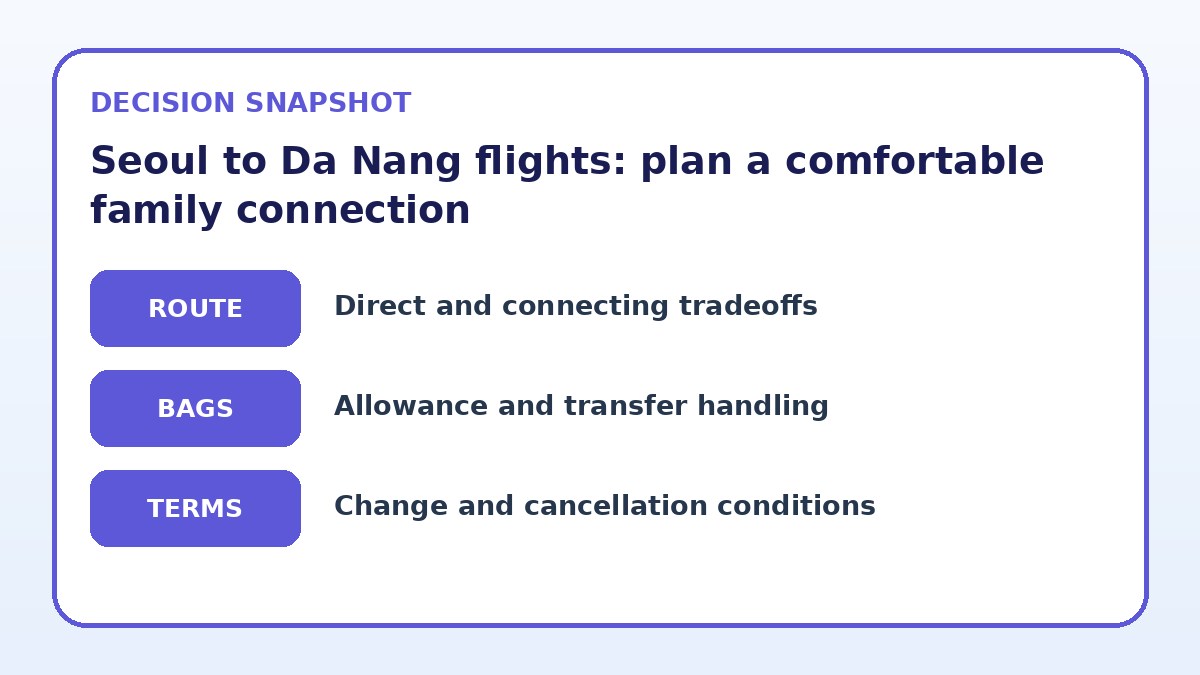
Compare direct and connecting options by thinking about time, number of airport moves, and how many times you’ll manage luggage and children. A direct flight (if available) is the simplest — one boarding, one security check at origin, and no rechecking of bags — but direct options may not exist on every date or might depart at inconvenient hours. Connecting itineraries can offer better schedule fits or lower fares, yet introduce more variables: a tight layover can cause stress if a delay occurs; long layovers mean childcare and entertainment needs at the airport; and changing terminals might require extra transfers.
For families, prioritize itineraries with a single connection and a carrier that issues one ticket for the full journey. That reduces the number of times you must collect and recheck checked bags and usually gives you protection if the first flight is delayed. If a single-ticket connection would force a late-night arrival or a tiny connection window, compare a longer but daylight-oriented connection instead. When evaluating options, check airport layouts and whether the transfer requires an extra security screening or immigration step — those details are listed on airline or airport pages and are worth verifying before booking.
Baggage and connection risk: keep the kids’ essentials with you
Families should inventory what must travel in carry-on versus checked baggage: diapers, formula, medications, favorite toys, and a change of clothes for each child belong in your carry-on. If you have separate tickets with different carriers, assume checked bags will not transfer automatically and plan to gate-check or pack key items in the carry-on. When comparing fares, read the fare conditions on the booking page to confirm how many checked bags are included and the cost for extra bags; children often count as passengers with their own checked-bag allowance depending on the airline.
Assess connection risk by checking minimum connection times quoted by the airlines and the transfer procedures at your connection airport. If a connection requires clearing immigration or moving between terminals with shuttle transfers, add cushion time. Consider booking a slightly longer layover on the same ticket to lower the stress of a missed connection. For tight schedules where a missed connection would leave you with no protection, consider paying more for a through-ticket or a single-carrier itinerary that explicitly covers missed connections in its conditions.
Compare flight-selection strategies
| Flight strategy | Best for | Risk to check |
|---|---|---|
| Single-ticket connection on one carrier | Families wanting luggage transfer and missed-connection protection | Often higher fare but simpler transfers and less paperwork if delays occur |
| Two separate low-cost segments | Budget-conscious families willing to accept extra time and risk | Lower upfront cost but no automatic baggage transfer or protection for missed legs |
| Long daytime layover with an overnight in an airport hotel | Families who prefer breaking the journey to rest and avoid night travel | More total travel time and added cost for accommodation and transfers |
| Tighter schedule with minimal layover | Families prioritizing shortest total trip time and fewer hours in transit | Higher risk of missed connections and more stress managing quick transfers |
Recheck the complete itinerary
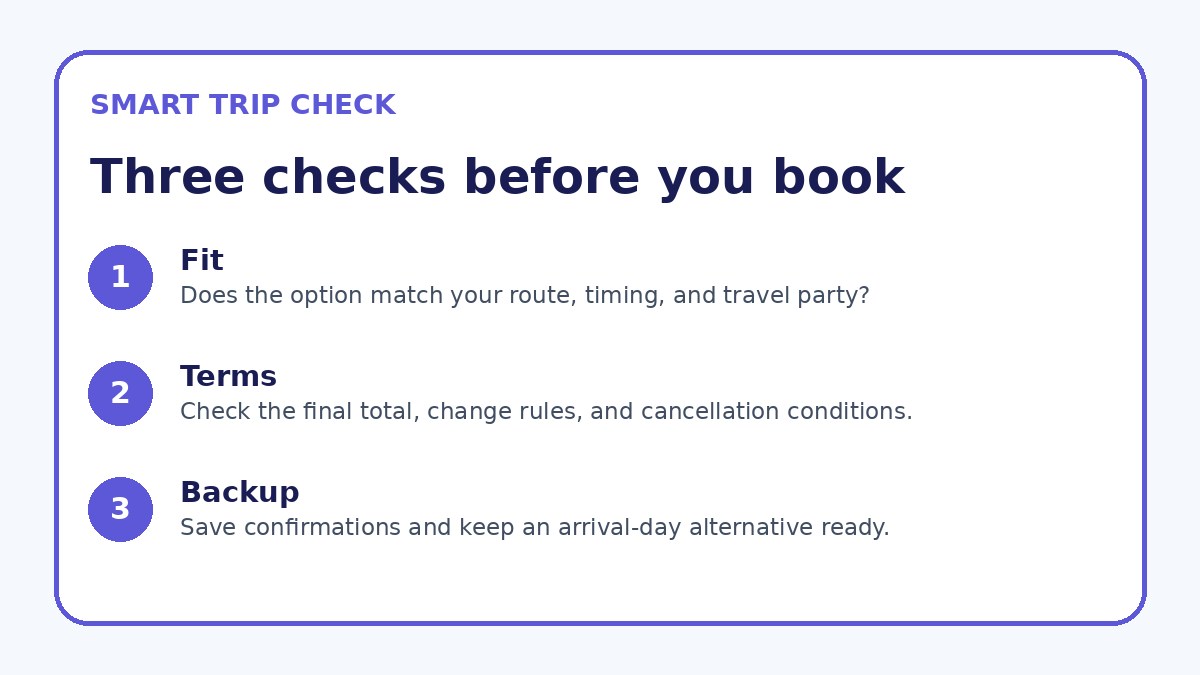
Confirm airports, connection handling, baggage, and change conditions before deciding.
Schedule fit and in-flight comfort for children
Think about your child’s routine when choosing departure and arrival times. Flights that align with naps or bedtime can make long legs easier, but avoid planning long overnight flights for infants who struggle with sleeping on planes. Daytime connections give more flexibility for meals and playtime between flights. Look for itineraries with similar departure and arrival times across legs to reduce jetlag disruption, and avoid multiple short hops that repeatedly require security and boarding for young children.
Check airline amenities that impact comfort: seat selection and extra legroom options, bulkhead seats where bassinets may be installed, and in-flight entertainment or USB power for older kids. Verify bassinet eligibility and reserve early if you need one. Also review meal options for children and request special meals if necessary on the booking page. If flying a long leg overnight, bring familiar sleep cues — blanket, small pillow, and quiet toys — and plan to hydrate and move around during the flight to reduce restlessness.
Flight details to verify
- Gather exact traveler details: full names as on passports, dates of birth for children, contact phone and email, and any frequent flyer numbers.
- Confirm carry-on essentials packed: diapers, medications, formula, snacks, chargers, and comfort items for each child.
- Before booking, check the booking page for baggage allowance per passenger and fees for additional checked bags.
- Verify connection procedures on the airline or airport site: terminal changes, immigration requirements, and minimum connection times.
- Reserve seats and request bassinets or special meals during booking; note any age or weight limits listed by the airline.
- Buy travel protection that explicitly covers missed connections and flight delays, and keep policy details accessible during travel.
Fare conditions and booking strategy for family peace of mind
When comparing fares, focus less on the absolute lowest fare and more on the combination of change/refund flexibility, baggage inclusions, and protection for missed connections. A slightly higher fare that includes two checked bags and free changes may save you money and stress if plans shift or a connection is delayed. Carefully read the fare rules on the final booking page: verify change fees, whether name corrections are allowed, and if the fare is refundable or credit-only — these rules vary widely across fare classes and carriers.
If you’re considering separate tickets to lower cost, add time buffers and account for the cost and hassle of rechecking bags and passing through security again. Purchase travel insurance that covers missed connections and flight delays, and confirm its coverage details before buying. Before you finalize payment, double-check passenger ages, frequent flyer numbers, seat assignments, and any requested special assistance. Small errors are harder to fix after ticketing, and for families, locking in correct details prevents avoidable stress at the airport.
Flight Guide questions travelers ask
Should I book one ticket or two separate tickets for a family traveling Seoul to Da Nang?
Booking a single ticket on one carrier is usually safer for families because it typically provides automatic baggage transfer and missed-connection protection if your first flight is delayed. Two separate tickets can be cheaper but mean you must collect and recheck checked bags and accept the risk that a delay on the first leg could leave you responsible for buying a new onward ticket. If you choose separate tickets, build generous buffer time and confirm interline baggage policies before booking.
How much connection time should we allow with young children between flights?
Allow more than the airline’s minimum connection time when traveling with children to cover restroom breaks, diaper changes, and navigating between gates or terminals. If the transfer requires passing immigration or a terminal shuttle, add at least one extra hour beyond a simple same-terminal transfer. For international-to-domestic or vice versa with checked bags and security, plan an even longer buffer. Check the airports’ terminal maps on the airline’s site and factor in possible delays when setting layover length.
What baggage strategy makes travel easier for families on long-haul connections?
Keep critical child items in carry-on luggage — diapers, formula, medicines, a change of clothes, and a few comfort items — so you aren’t stranded if checked bags are delayed. If your itinerary is on one ticket, check the carrier’s checked-bag allowance and aim to bring one checked bag per family plus essential carry-ons. For separate tickets, plan to carry more so you won’t need to retrieve and recheck bags during a tight transfer. Always verify baggage rules and fees on the final booking page before paying.
Final decision note
Families booking Seoul to Da Nang flights should plan with comfort and contingency in mind rather than chasing the absolute cheapest ticket. Prioritize routing that reduces transfers and baggage handling, confirm fare rules and baggage allowances on the carrier’s booking page, and choose connection times that fit your children’s routines. Where possible, prefer a single-ticket itinerary for simpler protection against delays; if you use separate tickets, build substantial buffer time and pack essential items in carry-on. Prepare traveler details, request seats and bassinets early, and buy protection that covers missed connections — those small steps make a long trip manageable and more enjoyable for everyone.
Continue planning
Check current options and final conditions
Use the provider page to confirm live availability, the final total, cancellation terms, and every condition that matters to your trip.
This evergreen planning guide was created with AI-assisted drafting and a structured quality review. It does not display live prices, schedules, availability, visa guidance, or provider rankings. Verify current details before booking. Some links are affiliate links; we may earn a commission at no additional cost to you.