If you’re traveling from Seoul to Gyeongju on business, the most useful decision is balancing route convenience against fare and baggage risk. Practically: decide whether you need the shortest door-to-door time (which may cost more and restrict baggage flexibility) or whether slightly longer connection windows give you predictable transfers and lower stress when traveling with work equipment. Start by confirming your meeting times and the exact arrival point in Gyeongju, then gather traveler details—frequent‑flyer status, carry-on vs checked luggage, and any oversized items—before searching for live Seoul to Gyeongju flights. This article focuses on how to organize baggage and airport time so you arrive prepared, outlining routing choices, connection and baggage risks, schedule-fit strategies, and the fare conditions you should verify on each booking page.
See live routes for your exact travel day
Compare direct and connecting choices with the same baggage and traveler details.
Routing: direct versus connecting and the door-to-door tradeoff
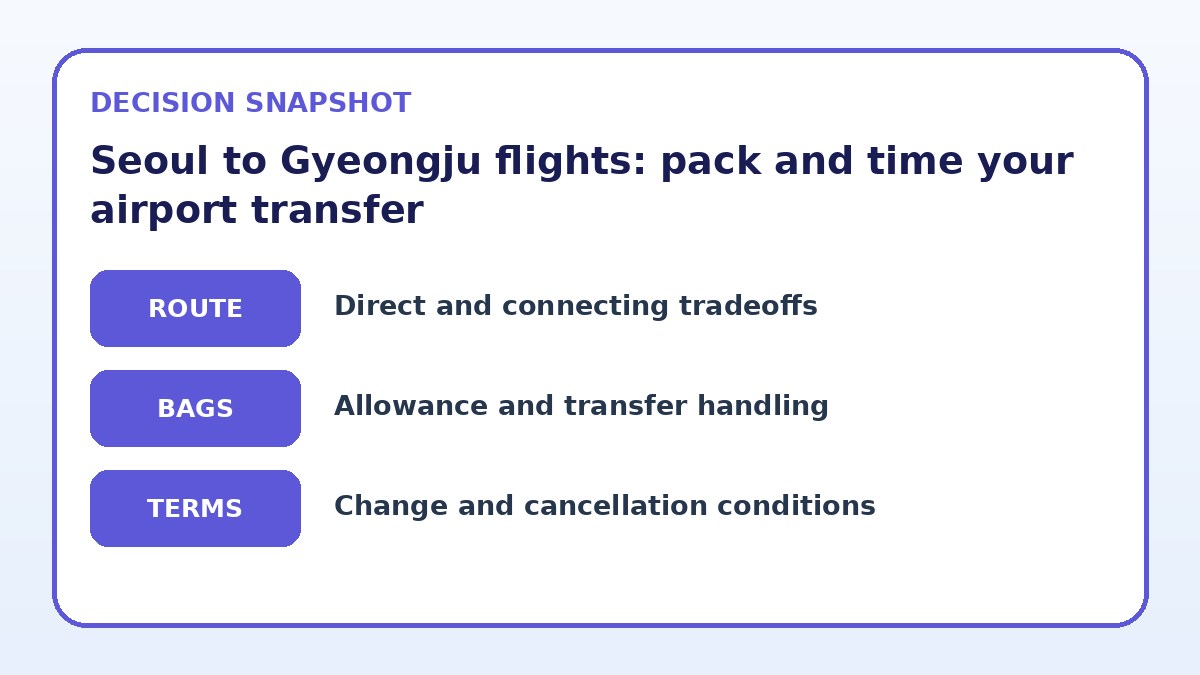
Decide first whether you prioritize total travel time or scheduling flexibility. A direct routing (if offered) shortens the airport-to-airport leg and typically reduces the number of times luggage is handled, which lowers the risk of mishandled baggage. However, a direct option may depart from a different Seoul airport or at a time that forces an early wakeup or a late arrival, pushing ground-transport choices that change the true door-to-door duration. Calculate the full journey from your office or hotel in Seoul to your meeting address in Gyeongju to see whether a slightly longer flight with a convenient transfer reduces total travel stress.
If a connecting routing is on the table, treat it as a staged trip: the critical variable is connection time and whether the same airline issues both flight segments on one ticket. Single-ticket connections typically provide baggage protection and rebooking support if the first leg is delayed, but they can restrict how late you can rebook changes. Also weigh airport transfer time in Seoul—travelling between airports adds significant unpredictability and usually requires larger connection buffers. Before booking, compare itineraries by total door-to-door time and the number of transfers rather than only flight durations or headline fares.
Baggage and connection risk: how to limit lost-time exposure
For business travelers, lost time is the main cost of baggage problems. Minimize that risk by preferring itineraries that avoid checked luggage when practical. A single carry-on with a slim laptop sleeve, a compact change of clothes, and essential chargers keeps you mobile: no checked-bag waits, and you avoid the small but real chance of a delayed bag disrupting meetings. If you must check a bag—bulkier equipment or promotional materials—book itineraries on the same ticket so the carrier will automatically manage the transfer between flights. Before purchase, verify on the carrier’s booking page what happens to checked bags on connections: some carriers will automatically transfer them, while others require you to collect and re‑check at the transfer airport.
When routing includes a connection with a tight minimum connection time, assume a higher risk of missed connections and delayed baggage. Add at least 30–60 minutes of buffer above the published minimum if you are carrying checked luggage or must clear passport control. Also check whether your inbound and outbound flights use the same terminal; transferring between terminals in larger airports can consume significant time. At every step, record the exact baggage allowance (pieces, weight limits, and oversized item rules) from the airline’s final booking page and save screenshots or booking confirmations to present at check-in if there is a discrepancy.
Compare flight-selection strategies
| Flight strategy | Best for | Risk to check |
|---|---|---|
| Shortest door-to-door itinerary | Travelers with tight schedules who need minimal travel time | May cost more and allow less baggage flexibility or tight connection windows |
| Single-ticket connecting flights with longer buffer | Those prioritizing baggage protection and rebooking support | Longer total travel time, but lower risk if delays occur |
| Separate-ticket low-fare segments | Price-sensitive travelers willing to manage connections themselves | Higher risk for missed connections and baggage transfer problems |
| Flexible fare with higher changeability | Business travelers whose meetings may change last minute | Higher upfront fare but lower cost and stress if plans shift |
Recheck the complete itinerary
Confirm airports, connection handling, baggage, and change conditions before deciding.
Schedule fit: matching flights to business commitments
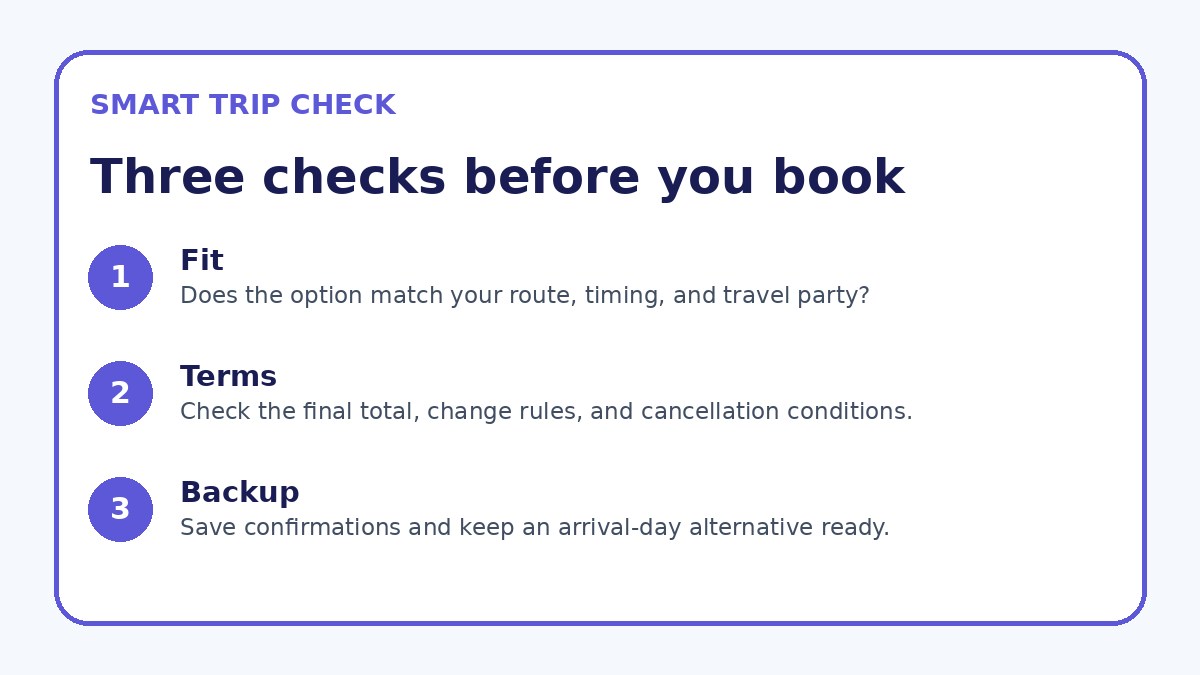
Work backward from your meeting times in Gyeongju. List the earliest arrival that still gives you time to transfer from the airport to your final meeting location, factoring in customs, baggage claim, and local transport. For return travel, consider whether evening departures increase the chance of delay—late flights often face cascading delays—and whether you need late-arrival hotel arrangements. If a meeting is fixed and cannot move, prioritize itineraries with generous connection buffers and later rebooking options, even if that increases fare or total travel time slightly.
Flexibility matters: when you have tight ground transfers in Gyeongju or critical morning meetings, build in contingency time at each step. Use realistic walking, check-in, and security times rather than theoretical minimums. If possible, travel the evening before for an important morning meeting; the added overnight cost can be smaller than the productivity and reputational cost of a missed or delayed meeting. Always confirm local transfer options from the arrival airport to your meeting spot and estimate the required time under typical traffic to ensure the flight arrival time truly fits your schedule.
Flight details to verify
- Confirm your exact meeting times and final Gyeongju address before searching for flights.
- Note traveler details: frequent-flyer number, contact phone, carry-on dimensions, and checked-luggage requirements.
- When comparing options, calculate door-to-door time including transfer between airports if applicable.
- Check the carrier’s fare rules on the final booking page for change, cancellation, and baggage allowance specifics.
- Prefer single-ticket itineraries when checking bags; if booking separate tickets, add generous connection buffer time.
- Save or screenshot the booking confirmation and fare conditions immediately after purchase for quick reference at check-in.
Fare conditions: what to verify before you hit book
Fare rules determine how disruptive a change will be. Before completing any purchase, inspect the fare conditions on the airline or booking page: change fees, refundability, and how fare differences are handled. For business travelers, flexible fares that permit free or low-cost changes can provide peace of mind. Note that extras like seat selection, priority boarding, and baggage allowances are often separate line items—confirm whether the fare you see includes the baggage allowance you need or whether it will be added at checkout. Save a copy of the full fare rules and the pricing breakdown as shown immediately prior to payment.
Also verify who will manage irregular operations such as delays or misconnected flights. If both segments are on one ticket with the same carrier or an interline agreement, the carrier typically rebooks you; on separate tickets, you may be responsible for missed connections and any rebooking costs. Confirm the final carrier(s) for each flight leg, the exact permitted carry-on dimensions and checked-bag rules, and whether your loyalty status affects baggage allowances or rebooking priority. When comparing offers you can use tools such as Trip.com to view current availability, but rely on the airline’s booking page for final condition details.
Flight Guide questions travelers ask
How much airport time should I plan in Seoul for a domestic flight to Gyeongju?
For domestic departures, many business travelers aim to arrive at the departure terminal at least 60–90 minutes before scheduled departure to clear check-in and security comfortably when checking luggage. If you only carry a compact, compliant carry-on and have web or mobile check-in, you can reduce that time, but still allow extra minutes for unexpected lines or transport delays to the airport. If your itinerary includes different airports in Seoul for departure and arrival, add the expected ground transfer time and a buffer to avoid tight connections.
Can I rely on airlines to transfer my checked baggage when I have a connection?
If both flight segments are issued on a single ticket and the airline manages the connection, carriers commonly transfer checked luggage for you; this reduces the risk of missed bags. However, if you purchase separate tickets or switch between carriers without an interline agreement, you are usually responsible for collecting and re‑checking baggage at the transfer airport. Always verify the baggage transfer policy and check the booking confirmation or carrier’s final booking page for explicit statements about checked-bag handling on connections.
What packing approach best reduces delays and baggage risk for short business trips?
Pack a compact carry-on that includes your laptop, chargers, essential documents, and one outfit for the meeting to avoid checking luggage. Use protective sleeves and cable organizers to speed security checks. If you must check equipment or promotional materials, use sturdy, clearly labeled cases and purchase itineraries that keep all segments on a single ticket to limit transfer risk. Verify carry-on dimensions and prohibited items on the airline’s booking page so you don’t face unexpected gate check or baggage fees.
Final decision note
Choosing between speed, cost, and baggage risk defines the practical decision for Seoul to Gyeongju flights. For tight schedules, prioritize direct or shortest door-to-door itineraries and travel light with a well-planned carry-on. If you need to transport larger items, prefer single-ticket connections with longer buffers and confirm baggage transfer policy on the carrier’s booking page. Always verify fare change and cancellation rules before purchase and record those details. Prepare exact travel dates, passenger names, luggage details, and meeting times before checking live options to ensure the flight you book matches both your schedule and baggage needs.
Continue planning
Check current options and final conditions
Use the provider page to confirm live availability, the final total, cancellation terms, and every condition that matters to your trip.
This evergreen planning guide was created with AI-assisted drafting and a structured quality review. It does not display live prices, schedules, availability, visa guidance, or provider rankings. Verify current details before booking. Some links are affiliate links; we may earn a commission at no additional cost to you.