If you’re planning to explore Cebu alone, deciding whether to rent a car often comes down to pickup and return terms more than the rental rate. The practical answer: driving can significantly increase flexibility for island routes, inland waterfalls, and off-the-beaten beach coves, but only when pickup and return logistics match your arrival and exit plans. Solo travelers should evaluate airport pickup hours, after-hours return fees, mileage limits, whether one-way returns are allowed, and the insurer’s policy for single drivers. This article focuses on those friction points and how they affect the drive-or-not decision, then walks through insurance language you must read, route value to determine if driving helps, and a reliable non-driving fallback for every common scenario in Cebu.
Route value: where driving genuinely helps your Cebu plan
Driving in Cebu is most valuable when your itinerary includes multiple spread-out stops—for example, inland waterfalls like Kawasan, mountain viewpoints around Cebu City, and southern coastal towns. When sites are distributed across mornings and late afternoons, a car gives you schedule control and avoids waiting for limited public transport. Consider also whether you want to combine inland and coastal legs on the same day: a car reduces transfer time and lets you start early to beat traffic or return after sunset without relying on intermittent buses.
But weigh that benefit against city traffic and parking friction. Cebu City, Mandaue, and heavily touristed beaches can have congested streets and scarce secure parking; parking time and fees add stress for a solo traveler. If most of your planned stops sit along established bus or van routes, driving may add complexity rather than convenience. Use route mapping to total driving hours versus public transport time, then ask whether the time savings justify pickup and return hassles and rental contract limits.
Decide whether driving earns its place
| Mobility strategy | Best for | Cost or friction to check |
|---|---|---|
| Self-drive rental car | Solo travelers who need full itinerary flexibility across distant or multiple sites. | Higher pickup/return friction, parking and insurance complexity, and potential one-way fees. |
| Taxi or ride-hailing for every leg | Short trips, city navigation, and avoiding rental logistics entirely. | Can be expensive for long multi-stop days and depends on driver availability in rural areas. |
| Motorbike rental | Solo riders comfortable on two wheels who want low cost and easy parking. | Greater personal risk, limited luggage, and insurance often more restrictive or void for riders. |
| Public transport plus guided day tours | Budget travelers or those wanting local knowledge without driving responsibilities. | Less flexibility on timing and route choices; may require more transfers and waiting. |
Check live rental choices only after the route test
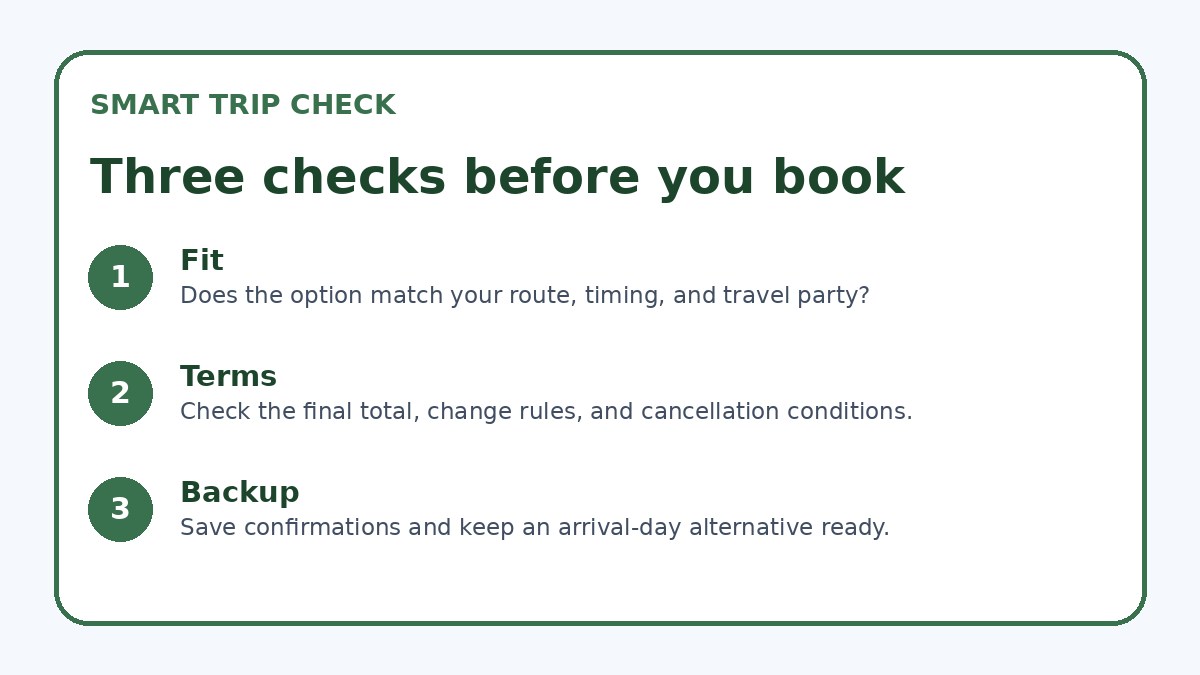
Use the exact driver, dates, pickup point, and return plan to compare current conditions.
Insurance wording to read: what protects a solo renter
Insurance sections often look dense but contain the clauses that decide whether you’re financially exposed after an incident. Look for explicit language on named drivers and single-driver policies, the amount of excess (deductible), and what damages are excluded—commonly tyres, undercarriage, windscreen, and roof damage. Note whether the collision damage waiver (CDW) is optional or included, and whether upgrading reduces the excess or only covers certain incidents. Also check how theft cover applies: many policies require secure parking and locked doors, and some void cover if the vehicle is left unattended with the engine running.
Pay attention to administrative procedures that affect a solo traveler after an accident: required police reports, approved repair centers, and where to present damage on return to avoid dispute. If roadside assistance is included, note its response radius and operating hours. Finally, verify whether claims require you to be present for inspections on return or if photographic evidence emailed to the provider suffices. On the provider’s final booking page, confirm exact wording for ‘named driver’, excess amount, excluded items, and the process for filing claims.
Compare the full rental conditions
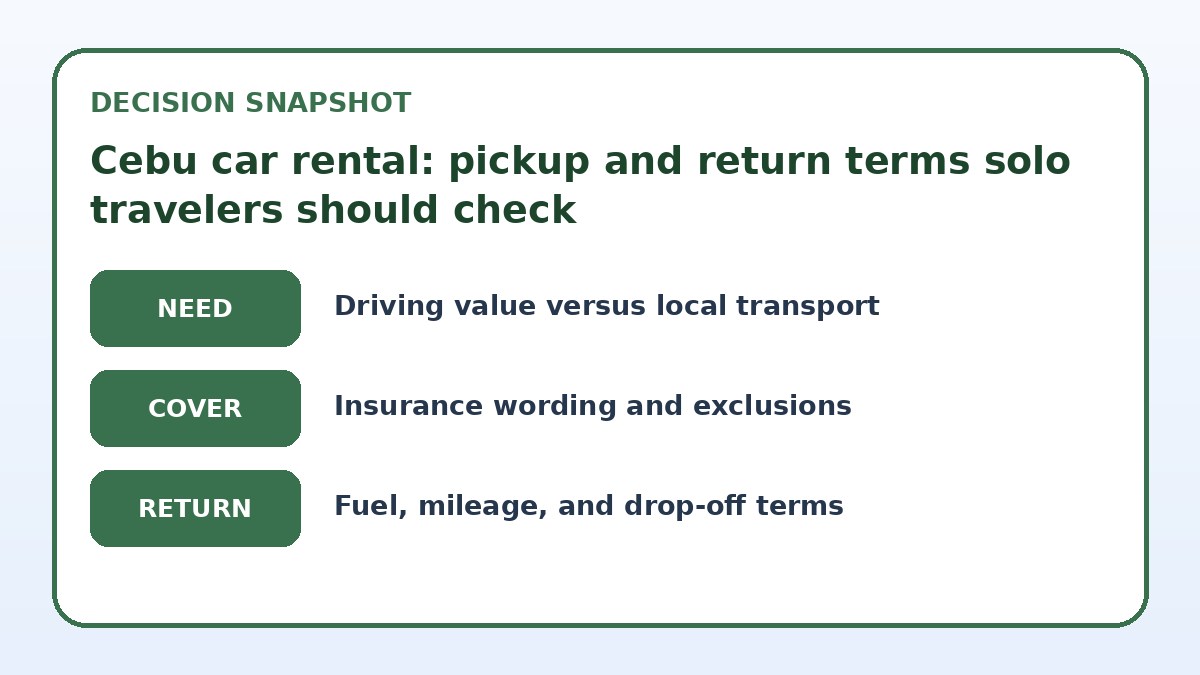
Confirm insurance wording, exclusions, deposit, fuel, mileage, and return terms on the final page.
Pickup and return friction points solo travelers face
Pickup friction can erode the convenience of renting: airport counters close early, off-airport branches may need a shuttle, and late arrivals can trigger mandatory after-hours fees. Look for precise pickup instructions—do you go to the arrivals hall, a curbside kiosk, or a remote lot? Check ID, license, and payment requirements; many companies require the physical credit card used for payment at pickup. Solo travelers should also confirm if the car comes with a full tank, how fueling is handled on return, and whether staff perform a walk-around with you to note pre-existing damage.
Return friction matters just as much. Some operators charge for late returns by the hour, others by the day; many require returns during staffed hours for inspection. If you plan to leave early for a flight, ask whether after-hours drop-off requires keys in a dropbox plus digital photos, and whether this still triggers inspection fees. One-way returns—dropping the car at a different island or branch—can be restricted or subject to a relocation fee. Before booking, check the fine print on the provider’s final page for exact pickup location, after-hours processes, fuel policy, and one-way availability.
Car rental terms to verify
- Match the rental’s stated pickup hours and location to your arrival time—confirm after-hours handover procedures if you arrive outside staffed hours.
- Verify the exact named-driver rules and submit any additional driver details required before pickup to preserve insurance cover.
- Confirm fuel policy: full-to-full terms, who pays for missing fuel, and whether refuelling receipts are required on return.
- Read the excess (deductible) and CDW wording on the final booking page and note how to reduce excess if available.
- Ask about permitted mileage, island crossings, and one-way dropoff options, and check for relocation or ferry-crossing restrictions.
- Document pre-existing damage with time-stamped photos during pickup and confirm the branch records these before you drive away.
Non-driving fallback: reliable alternatives for solo travelers
If driving doesn’t fit your pickup/return window or insurance comfort level, plan a fallback that keeps mobility without a car. Combine point-to-point options: taxis or ride-hailing for airport transfers, booked day tours for remote attractions, and metered taxis or private drivers for longer days where convenience matters. For trips to waterfalls and rural reaches, many guided operators offer door-to-door pickup and knowledge of local access points, saving you the navigation stress and parking uncertainty of self-driving.
Another practical fallback is a short-term motorbike rental for confident riders—cheaper and easier to park—but this carries its own safety and insurance caveats, especially on unfamiliar roads. For budget-minded solo travelers, stick to registered vans (V-Hires), buses, and scheduled ferries for inter-island hops. In every fallback, verify pickup and drop-off terms, cancellation policies, and whether the operator provides helmets, local guidance, or luggage help—details you'll confirm on the provider’s booking page.
Car Rental & Road Trip questions travelers ask
Can I pick up a rental car at Mactan-Cebu International Airport late at night?
Many operators serve Mactan-Cebu International Airport, but pickup hours vary by company and branch. If your flight arrives late, verify on the rental’s final booking page whether the counter or shuttle operates at that hour, whether after-hours pickup is available, and what fee applies. Also confirm whether a driver meeting point is inside arrivals or at an external lot. If after-hours pickup is limited or costly, plan a taxi to your first-night accommodation and collect the car the next morning to avoid extra charges.
Will my insurance cover damage if I drive to remote beaches or take a ferry with the car?
Insurance rules differ on permitted geography and ferry crossings. Some policies explicitly forbid taking the vehicle onto certain island ferries or rural tracks; others require documented permission. On the provider’s booking page, look for language about ‘island use’, ‘off-road’ exclusions, and required permissions for ferry transport. If coverage is unclear, ask the provider in writing before booking. If the policy forbids the route, consider arranging transport with an operator that specialises in inter-island logistics or using a local tour instead.
What should I do if the rental agent disputes pre-existing damage on return?
If a dispute arises, present your time-stamped pickup photos and the documented branch check-in form ideally signed or initialed by staff. Request the agent fill out a damage report; refuse to sign any admission of fault. If you have roadside assistance or insurance contact details, call them immediately and follow their incident reporting process. If the rental company insists on charging, ask for an itemised repair estimate and keep copies of all communications. You can escalate with your credit-card provider or insurer, but having clear photos and the original rental condition checklist significantly strengthens your case.
Final decision note
For solo travelers in Cebu, the decision to rent hinges less on a headline daily rate and more on the pickup and return terms, insurance specifics, and how those terms match your arrival and departure plans. Drive when your itinerary demands flexibility across dispersed attractions and you can secure clear named-driver cover, reasonable after-hours procedures, and permitted route allowances. If any of those items are uncertain or cost-prohibitive, rely on taxis, guided day tours, or public transport combined with targeted hires. Before you finalize any booking, read the provider’s final page for exact pickup location and hours, named-driver wording, excess amounts, fuel policy, and any geographic or ferry restrictions.
Continue planning
Check current options and final conditions
Use the provider page to confirm live availability, the final total, cancellation terms, and every condition that matters to your trip.
This evergreen planning guide was created with AI-assisted drafting and a structured quality review. It does not display live prices, schedules, availability, visa guidance, or provider rankings. Verify current details before booking. Some links are affiliate links; we may earn a commission at no additional cost to you.