Practical answer first: if you value minimizing stress and quicker door-to-resort travel, pick the most direct itinerary you can find with a realistic connection buffer; if you need flexible dates or cheaper fares, accept one well-timed connection and a refundable or changeable fare. For solo travelers this tradeoff is about time, unpredictability, and how much convenience you’re willing to buy. Before you search, settle on your exact travel dates, the airports in Seoul and Bali you prefer, your maximum total travel time, and how much flexibility you need for returns or last-minute changes. Use those specifics to filter flight searches for total journey time, number of connections, minimum connection times, and fare rules rather than relying on headline prices alone.
See live routes for your exact travel day
Compare direct and connecting choices with the same baggage and traveler details.
Routing: direct versus connecting itineraries
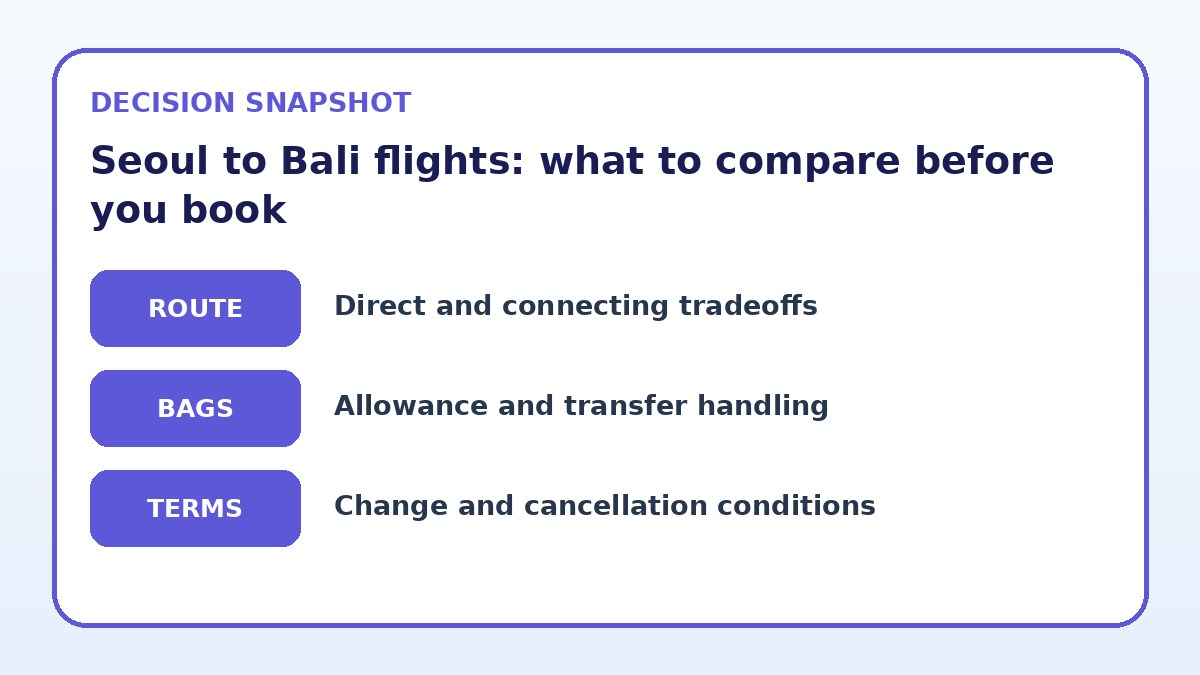
On the Seoul to Bali route you’ll typically compare direct (if available) or one-stop itineraries. Direct flights minimize complication by removing connection risk and often reduce total travel time, which is advantageous for solo travelers arriving late or carrying checked bags. Connecting itineraries can open up more schedule options and lower fares, but they add variables: airport changes, customs/immigration flows if your connection requires re-checking luggage, and the need to allow buffer time for delays.
When you compare routes, look beyond the billed flight time. Calculate door-to-door travel including transfers to and from airports, typical immigration lines, and a safety buffer for delays. If a connection shortens cost but reduces reliability—especially for late-night arrivals or tight onward transfers—ask yourself whether the savings are worth the added stress. For solo travelers who value flexibility, prefer routings that offer multiple daily options or easy alternatives to rebook if something goes wrong.
Baggage and connection risk: practical checks
Baggage rules and connection handling can be the deciding factor. Check whether your itinerary is on one ticket or split across carriers; single-ticket itineraries usually protect checked bags through to the final destination and give you assistance if a connection is missed. If you book separate tickets, you may need to collect and re-check baggage and pass through immigration, which adds time and increases connection risk for solo travelers who have to manage everything themselves.
Before booking, verify exact baggage allowances (weight, piece limits, fees) on the airline’s official booking page and confirm whether through-checked baggage is offered on connecting itineraries. Also confirm the minimum connection times the operating airports recommend: a published short layover might appear in search results but won’t be helpful if it’s below the airport’s safe minimum for international transfers. When in doubt, choose an extra hour or more for connections involving checked luggage or terminal changes.
Compare flight-selection strategies
| Flight strategy | Best for | Risk to check |
|---|---|---|
| Direct or near-direct flight | Travelers prioritizing minimal hassle and shorter total travel time | Usually higher fares and fewer schedule alternatives, with limited flexibility on dates |
| One-stop on a single ticket | Travelers seeking lower fares while retaining airline protection for connections | Slightly longer travel time and some connection complexity, but better baggage and rebooking support |
| Separate tickets for cheapest routing | Solo travelers prioritizing lowest upfront cost and willing to manage logistics | Higher connection risk, baggage re-checking, and no guaranteed protection if a delay causes a missed leg |
| Flexible or refundable fare on any routing | Travelers who need date flexibility or want peace of mind for last-minute changes | Higher fare, but reduces stress and potential extra costs if your plans change |
Recheck the complete itinerary
Confirm airports, connection handling, baggage, and change conditions before deciding.
Schedule fit: aligning your days and energy
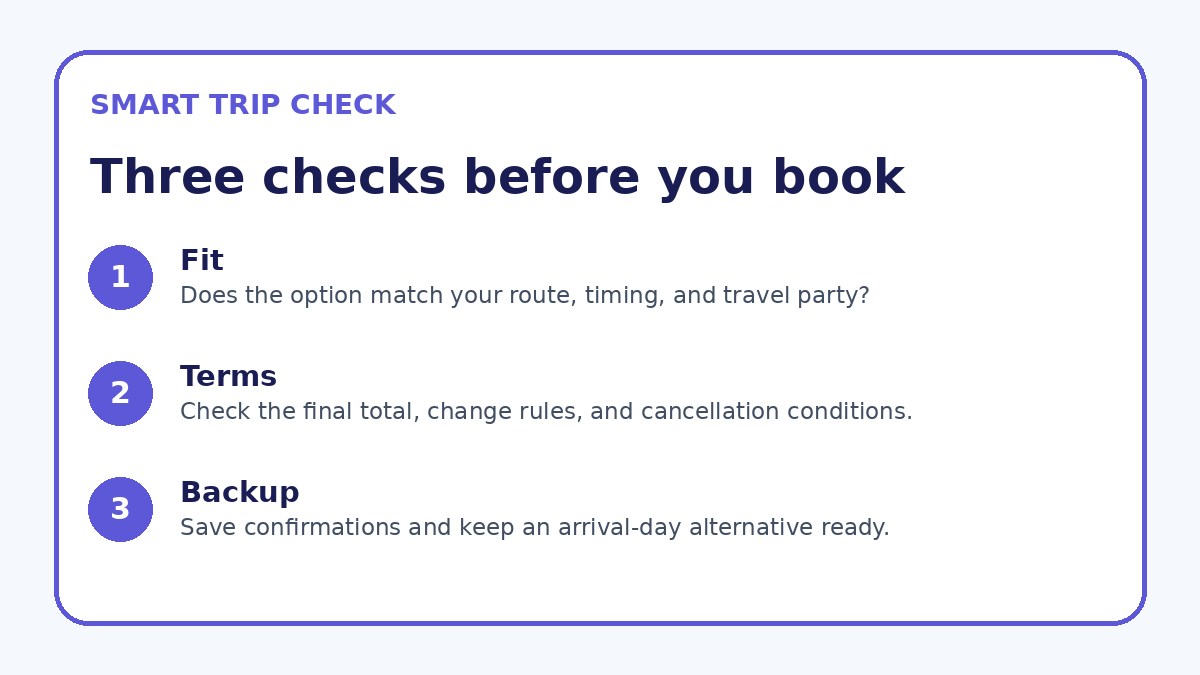
Schedule fit is more than flight duration—think about your circadian rhythm, arrival time at your Bali hotel, and how much recovery time you want after travel. Solo travelers often prefer arriving during daylight and with enough time to reach accommodation safely, especially when arriving at an unfamiliar airport. Consider the local transfer options from your arrival airport to your accommodation: late-night arrivals can mean limited transfers or higher taxi costs and may affect your travel comfort.
Also account for practical day-of-travel windows: leave ample time for check-in and security, and plan an arrival buffer for activities the following day. If your itinerary includes activities, connections to ferries, or inter-island transfers after landing, build those into your schedule calculations. If flexibility is essential, prioritize flight options that allow easy date changes or that offer multiple return options so you can shift plans without scrambling.
Flight details to verify
- Set your exact travel dates, preferred Seoul and Bali airports, and acceptable total journey time before searching flights.
- Confirm whether each itinerary is a single-ticket or separate tickets and verify through-checked baggage rules on the carrier’s booking page.
- Check the fare’s change and cancellation terms, including any change fees and how fare differences are handled.
- Allow an extra buffer for connections when you have checked luggage or need to change terminals; add at least one hour beyond the published minimum if unsure.
- Plan arrival time preferences: daytime arrivals for easier transfers and safer solo travel, or late arrivals only if you’ve arranged ground transport.
- Before payment, re-check baggage allowances, seating rules, and any COVID or entry advisories on the airline’s final booking screen and your destination’s official sources.
Fare conditions: what to verify before you click buy
Fare rules determine how useful a ticket is if your plans change. Look at change and cancellation terms, fee structures, rebook allowances, and whether fare differences apply. Some fares allow free changes within a certain window while others charge a flat fee plus any fare difference. For solo travelers who may need to alter plans, a slightly higher refundable or change-permitted fare can be less risky than a cheap non-changeable ticket that becomes unusable.
Always verify these details on the carrier’s final booking page or your chosen OTA before payment. Confirm exactly which changes are permitted, who bears the cost of fare differences, and how refunds are handled. If using separate carriers for different legs, check both providers’ policies because protection for missed connections typically doesn’t apply across independent tickets. Optionally, use Trip.com to compare current availability and conditions, but confirm the final terms with the operating carrier at checkout.
Flight Guide questions travelers ask
Should I always pick the cheapest Seoul to Bali flights when traveling solo?
Not always. The cheapest fare can be tempting, but it may come with strict change penalties, no checked baggage, and split-ticket risks that add stress if plans shift or delays occur. For solo travelers, evaluate how likely your dates are to change, whether you need checked luggage, and how comfortable you are handling a missed connection on your own. Sometimes paying a bit more for a single-ticket itinerary or a flexible fare offsets potential rebooking costs and the hassle of managing disruptions alone.
How much connection time should I allow when routing through a third country?
Aim for connection times that cover passport control, security, and potential terminal transfer plus a margin for delay. If your bags are checked through on a single ticket, you can often accept shorter connections, but factor in the airport layout and typical immigration queues. For separate tickets where you must re-check luggage or pass immigration, add significant buffer time and avoid very tight layovers. Check the operating airports’ recommended minimum connection times and add at least an extra hour if you are unsure or traveling during peak periods.
What exactly should I verify on the airline’s final booking page before paying?
On the final booking page confirm the total itinerary (flight numbers, connection airports, and times), baggage allowances and fees, exact change and cancellation rules including fees and fare-difference responsibility, and whether checked baggage is through-checked on connecting legs. Also verify whether your ticket is refundable or changeable and the steps required to process changes. If you booked through an OTA, double-check these same details with the operating carrier before completing payment to ensure no surprises at check-in or during travel.
Final decision note
For Seoul to Bali flights, solo travelers balance time and convenience against price and flexibility. Start by deciding whether your priority is minimizing travel time and connection risk or preserving flexible dates and lower fares. Use exact travel dates, chosen airports, and baggage needs to filter options: favor single-ticket or direct routes if convenience and low stress matter most; choose flexible fares or careful layovers if your schedule may change. Verify the carrier’s baggage and fare conditions on the final booking page before paying, and build sensible connection buffers. That deliberate preparation will reduce surprises and keep your trip start calm and manageable.
Continue planning
Check current options and final conditions
Use the provider page to confirm live availability, the final total, cancellation terms, and every condition that matters to your trip.
This evergreen planning guide was created with AI-assisted drafting and a structured quality review. It does not display live prices, schedules, availability, visa guidance, or provider rankings. Verify current details before booking. Some links are affiliate links; we may earn a commission at no additional cost to you.