Practical answer first: if you’re traveling Seoul to Busan with extra luggage, prioritize fares that explicitly include or allow paid extra bags with flexible change/cancellation rules. That means confirming baggage allowance, the fee and refund policy for added pieces, whether name or date changes are permitted, and how refunds or credits are calculated. For many travelers the tradeoff is clear: cheaper no-frills fares often save money upfront but impose higher risk and cost when plans change or bags increase. By contrast, slightly higher flexible fares or bundled options reduce uncertainty and administrative work at check-in but may still carry non-refundable fees for overweight or oversized items. Read the final booking page and airline contract terms carefully, and have your exact travel dates, number of checked bags, and passenger details ready before comparing live options.

See live routes for your exact travel day
Compare direct and connecting choices with the same baggage and traveler details.
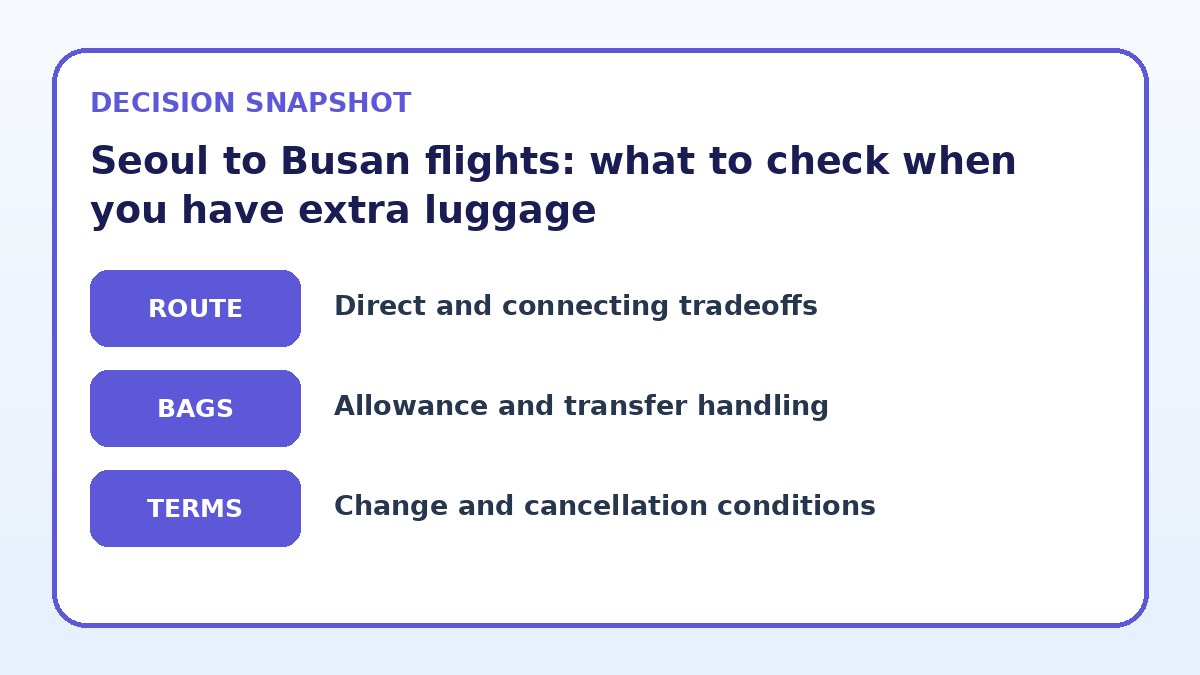
Routing: direct routes, connections, and baggage handling
When comparing Seoul to Busan flights, start with routing. If direct flights are offered on your travel dates, they normally reduce the number of times checked bags must be transferred between aircraft and minimize the chance of misconnected luggage. If you must connect — for example via a domestic hub or a regional carrier — each transfer increases handling events and the potential for delays that force rebooking. Consider the connection airport’s transfer procedures and whether you’ll need to reclaim and recheck bags, which sometimes happens with separate tickets.
Also check how the carrier or ticketing agent lists baggage responsibilities across legs. If your itinerary is sold as a single ticket, the airline may be responsible for transferring bags through tight connections; on separate tickets you often bear that risk. Before booking, confirm whether the carrier will tag bags to the final destination, whether the connection time meets the airline’s minimums, and how late changes affect checked luggage — especially if you plan to add an extra piece after booking.
Baggage and connection risk: extra pieces, overweight, and handling
Extra luggage changes how you should choose a fare: some fares include a checked bag while others charge per piece. Confirm whether the fare allows paid-for additional pieces online in advance, at the airport counter, or only at the gate. Airlines differ on when and how they accept extra-bag payments; some let you prepay a lower fee, while others charge higher fees at the airport. Also check the dimensions and weight rules for items that might be oversized or overweight, and whether those fees are charged per segment or per journey.
If you have a tight connection or plan to travel on separate tickets, accept that lost or delayed luggage risk rises. That can produce costs beyond replacement clothing — you might need to rebook flights or buy essentials. Factor in whether the airline provides compensation or emergency kit coverage for delayed bags on domestic legs, and verify on the airline’s booking page whether baggage fees are refundable if a flight is canceled or rebooked. Knowing these specifics helps decide if a flexible fare or travel protection is worth the extra cost.
Compare flight-selection strategies
| Flight strategy | Best for | Risk to check |
|---|---|---|
| Lowest-fare basic ticket with pay-per-piece baggage | Travelers who prioritize upfront ticket cost over flexibility and accept higher risk for changes | Low base price but steep fees for added bags, limited or costly changes, and minimal refund rights |
| Bundled fare with one checked bag included | Travelers with a predictable single checked bag who want fewer surprises at check-in | Higher initial fare than basic, but fewer per-bag decisions; changes may still carry fees or restrictions |
| Flexible/refundable fare with baggage options | Travelers who want low rebooking risk and more straightforward refunds when plans change | Higher ticket price upfront, though adding large or overweight items may still incur separate charges |
| Separate cheap tickets plus prebooked extra-bag on one leg | Complex itineraries where a low-cost segment offsets paying for extra luggage on the critical leg | Higher connection and luggage transfer risk; if legs are on different tickets you assume lost-bag and rebooking liabilities |
Recheck the complete itinerary
Confirm airports, connection handling, baggage, and change conditions before deciding.
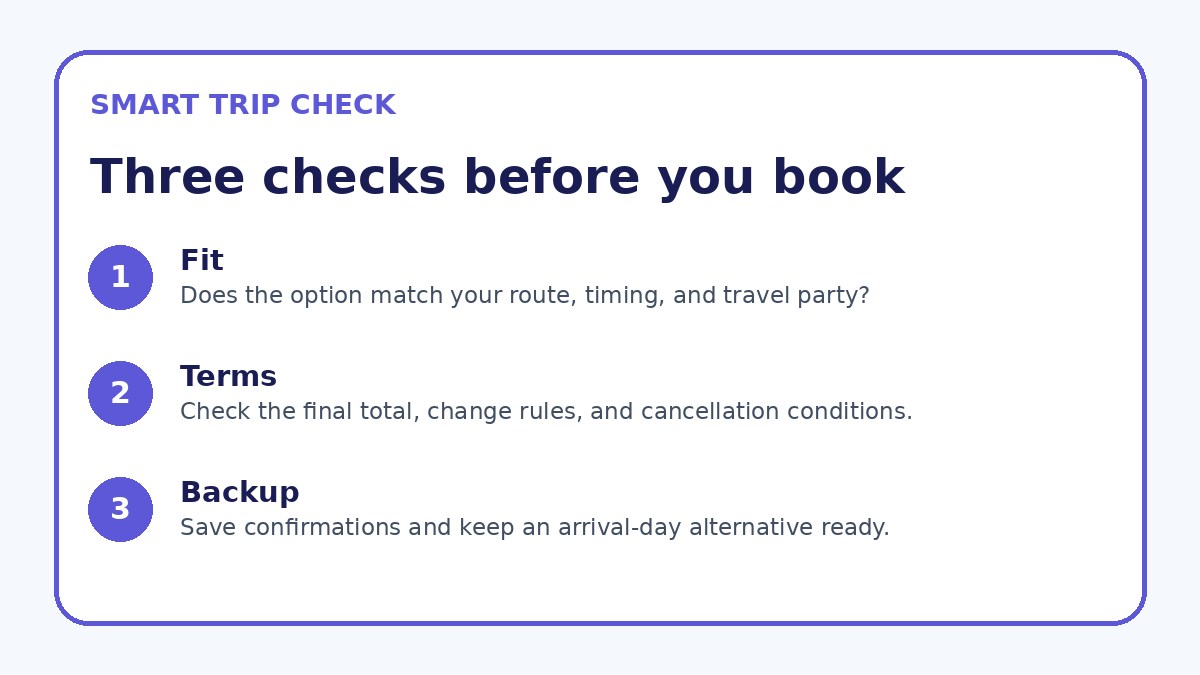
Schedule fit: buffer time, check-in, and airport logistics
Schedule fit is about more than total travel time; it’s about buffer and predictability when you’re handling extra luggage. Choose itineraries that provide enough time for check-in and bag drop — some terminals and counters close earlier for domestic flights than you might expect. When flights are close together or travel during peak periods, longer check-in lines or security queues can turn a comfortable connection into a scramble, increasing the chance you need to change flights or pay for rerouting.
Also think about airport transit to and from Seoul and Busan airports: how long will it take you to reach the terminal with heavy or multiple bags? Factor in time for re-packing or paying suitcase fees at the counter. When comparing schedules, prefer departures and arrivals with straightforward ground transport options and predictable check-in windows. Before booking, verify the airline’s recommended arrival time with baggage, plus counter and gate closing times stated on the final booking page.
Flight details to verify
- Confirm exact traveler names and birthdates and ensure they match ID to avoid name-change fees when modifying a booking.
- Decide the number, weight, and dimensions of checked bags and verify the carrier’s allowed pieces and overweight/oversize fees on the booking page.
- Compare whether baggage fees are lower when prepaid online versus paid at the airport and note the provider’s stated refund rules.
- Check fare change and cancellation terms on the airline’s final booking page, including whether refunds are cash, credit, or vouchers.
- Allow additional buffer time for check-in and connections when carrying extra luggage; verify terminal counter closing and bag-drop times.
- Document the fare conditions in a screenshot or saved confirmation and, if unclear, request written clarification from the airline before payment.
Fare conditions: change fees, refunds, and how to verify them
Ticket rules determine the practical cost of changing plans. Fares labelled as “basic” or “non-refundable” often have strict change or cancellation policies and limited or no baggage allowances. Flexible or refundable fares usually permit date or name changes with lower penalties and may allow refunds for canceled trips, but they can still have baggage fees charged separately. Always read the fare conditions shown at checkout: that page should state whether changes are permitted, the fee schedule, how refunds are processed (credit, voucher, or cash), and whether taxes or third-party booking fees are refundable.
When provider-specific facts could change, verify the airline’s exact policy on the provider’s final booking page before you purchase. Look for explicit language about baggage fee refunds after cancellations, the timing and method of refunds, and rules for adding or changing checked pieces post-purchase. If the site is unclear, call the airline or your booking agent and get the terms in writing (email or confirmation text) before you enter payment details. Trip.com can be used to compare live availability and conditions but check the airline’s final page for binding terms.
Flight Guide questions travelers ask
If I add an extra checked bag after booking, will I be able to change my flight without losing the bag fee?
Policies vary: some airlines let you pay for an extra bag at booking or later and will carry that payment across a rebooked date if the fare permits changes; others treat baggage fees separately and may require re-payment for the new ticket. Always check the airline’s final booking page where the carrier explains whether pre-paid add-ons are transferable or refundable on changes. If this is not explicit, contact customer service and get confirmation in writing so you know whether changing dates will affect your paid baggage allowance.
How should I compare direct and connecting Seoul to Busan options when I have bulky or many bags?
Compare the number of times bags will be handled and whether the itinerary is on a single ticket. Direct flights minimize handling and the chance of misconnection, which benefits bulky luggage. Connecting itineraries may be cheaper but increase risk and time required at transfer points. If you must connect, ensure minimum connection times are generous and confirm whether bags are through-checked; if legs are on separate tickets, plan extra buffer and accept that you’ll likely need to recheck baggage and assume a higher delay risk.
What exact details should I have ready before checking live Seoul to Busan fares with extra luggage?
Have the exact travel dates and preferred time windows, full passenger names as on ID, the number of checked pieces and their weights/dimensions, and whether you need special handling (sports equipment or oversized items). Also know whether you want refundable or changeable fares, or if you prefer to prepay baggage online. With those details you can filter search results effectively and read the fare conditions on the final booking page to confirm baggage transferability and refund rules before you pay.
Final decision note
Choosing the right Seoul to Busan flights when you have extra luggage is a practical balancing act between upfront price and the cost of flexibility. Start by deciding how many bags you will actually bring and whether you want the peace of mind of a bundled or flexible fare. Compare routing to reduce handling events — direct flights if possible — and check fare rules for change, cancellation, and baggage refunds on the carrier’s final booking page. Prepare exact traveler details before you search, and if policies are unclear, get confirmation in writing. These steps reduce surprises at check-in and make it easier to manage extra luggage without costly last-minute decisions.
Continue planning
Check current options and final conditions
Use the provider page to confirm live availability, the final total, cancellation terms, and every condition that matters to your trip.
This evergreen planning guide was created with AI-assisted drafting and a structured quality review. It does not display live prices, schedules, availability, visa guidance, or provider rankings. Verify current details before booking. Some links are affiliate links; we may earn a commission at no additional cost to you.