Practical answer first: for most families traveling Osaka to Hiroshima, start by comparing a rail-first plan (shinkansen or regional express to a Hiroshima-area station) with a mixed plan that uses coach or ferry plus local trains for better terminal fit and fewer transfers. Choose the rail-first option if you value straightforward transfers, time predictability, and easy luggage handling at major stations. Consider a mixed plan when your accommodations sit closer to a coastal ferry terminal or when saving walking with young children matters more than shaving minutes. When you build the route, map every transfer as an end-to-end journey—hotel door to final door—and check terminals, luggage rules, seat reservations, and backup options. If you want a snapshot of current schedules and availability, compare providers on a live site like Trip.com, then verify the operator’s own booking page before committing.
Choosing between rail, coach, ferry, or a mixed plan
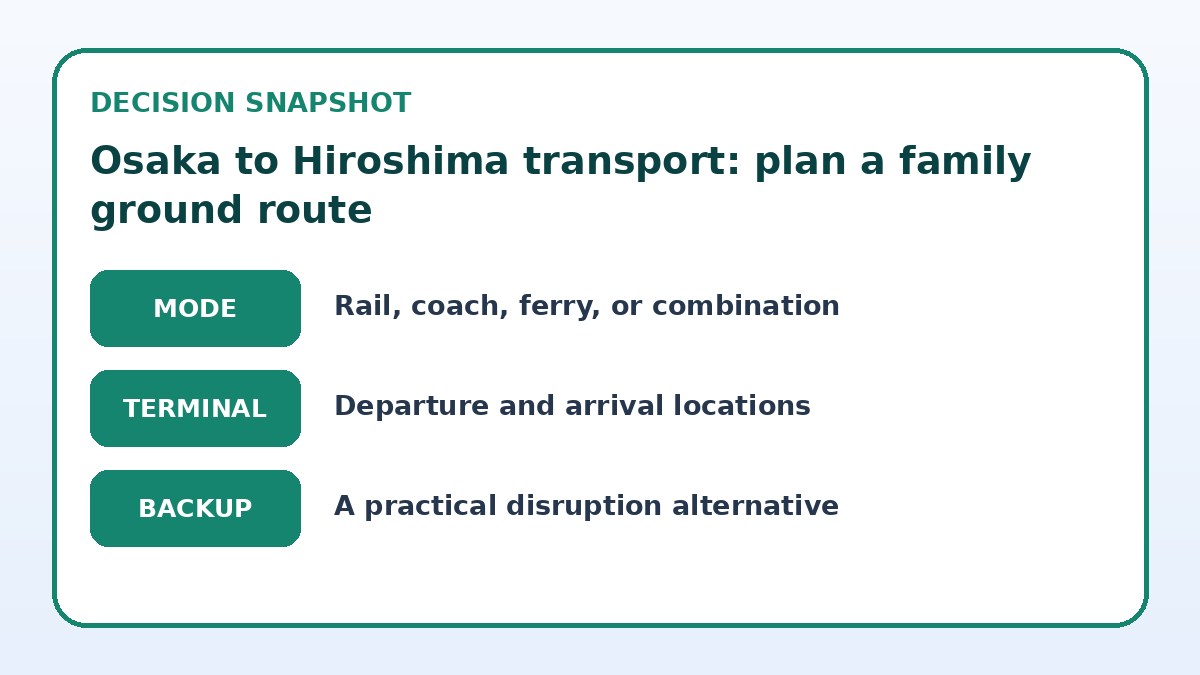
Start by matching mode strengths to your family’s priorities. Rail offers steady schedules, frequent departures between major cities, and integrated station facilities that simplify restroom and dining needs. Coaches may deliver lower walking demands at street level and sometimes more direct stops near suburban hotels. Ferries add comfort and space for children to move around but require attention to dock location and seasonal schedules. For families, the deciding factors are terminal proximity to your lodging, the number of transfers, and how much active luggage handling you want to avoid.
A mixed plan can combine a long-distance rail segment with a shorter bus or ferry that drops you closer to your final neighborhood—useful when your Hiroshima accommodation is off the main rail corridor. When comparing options, map door-to-door time including transfer walking, elevator waits, and transit between terminals in Osaka and Hiroshima. Don’t only compare ride durations; factor in the effort of moving between platforms, bus bays, or docks while managing kids and baggage.
Choose the end-to-end journey plan
| Journey approach | Best for | Friction to check |
|---|---|---|
| Rail-first (shinkansen/regional express focus) | Families who prioritize punctuality, simple transfers inside major stations, and easy station facilities. | May require extra walking from central stations to certain hotels; higher footfall can be tiring with small children. |
| Coach-focused (long-distance bus to central terminals) | Families wanting street-level boarding, fewer platform changes, and sometimes more direct hotel-area drops. | Less frequent schedules mean tighter timing and longer recovery if you miss a departure. |
| Ferry-inclusive (combine ferry with local trains or buses) | Families who value a relaxed, scenic leg and have accommodations near docks or coastal areas. | Dock locations can add last-mile transfers; ferry schedules may be less flexible than high-frequency rail. |
| Hybrid door-to-door plan (mix modes by door proximity) | Families focusing on minimizing walking and transfers between hotel doors rather than minimizing raw travel time. | Requires more planning and coordination; might sacrifice directness or total journey time for convenience. |
Check live intercity options
Look beyond the ride itself and compare terminals, transfers, luggage, and arrival fit.
Terminal fit and luggage/transfer friction
Terminal fit matters more than mode speed. Major stations in Osaka and Hiroshima tend to concentrate services and have elevators, coin lockers, and family restrooms, which reduce friction. However, lower-profile bus terminals or ferry docks may deliver closer proximity to certain neighborhoods or hotels, cutting taxi time. Assess the streets, elevator locations, and the presence of escalators on maps and station guides. If you’re carrying strollers or large suitcases, plan routes that avoid long stair climbs and packed platforms.
Make luggage a planning variable: decide whether to use a single larger suitcase and a stroller or go for several small bags that are easier to lift. For long transfers, look at station layouts online and allow buffer time to move between platforms or bays. If a hotel can temporarily hold luggage before check-in or after checkout, that reduces transfer stress. When booking, verify the operator’s luggage rules and the physical transfer path—provider pages will list permitted baggage size and any special carriage procedures.
Timing flexibility and building schedule buffers
Families need realistic rhythm: meal stops, restroom breaks, and time for restroom or leg-stretch stops. Build schedule buffers rather than booking the earliest possible connections. If you plan to use high-frequency rail services, a single missed connection is often recoverable; with infrequent buses or ferries, a missed departure can add a long delay. Plan layovers that align with meal times or predictable low-energy windows for children to avoid travel-day meltdowns.
Block calendar time for transfers: add 15–30 minutes within major stations and 30–60 minutes for connections that require leaving a terminal or crossing streets. If you’re traveling with toddlers or grandparents, increase those buffers. Also think about arrival time at your Hiroshima lodging—arriving late in the evening may complicate check-in and settling kids in. If timing is tight, favor options with multiple daily departures or ones where a later service is easy to switch to without major penalties.
Compare the practical alternatives
Use the final page to confirm what is actually offered on your dates and save a workable fallback.
Intercity travel checklist
- Map door-to-door travel: note your Osaka lodging address, terminal names, transfer paths, and Hiroshima hotel address on a single map.
- Confirm terminal access: check elevators, escalators, and stroller routes at each station or dock on operator or station guides.
- Verify luggage rules and seat reservation requirements on the carrier’s official booking page before purchasing tickets.
- Add at least 30 minutes buffer for station transfers and 60 minutes for any connection that requires leaving a terminal.
- Save emergency contacts: carrier support number, local taxi services, and your accommodation’s after-hours phone.
- Identify an alternate later service and a nearby arrival-area hotel in case delays or cancellations force an overnight stay.
Disruption backup and what to verify before booking
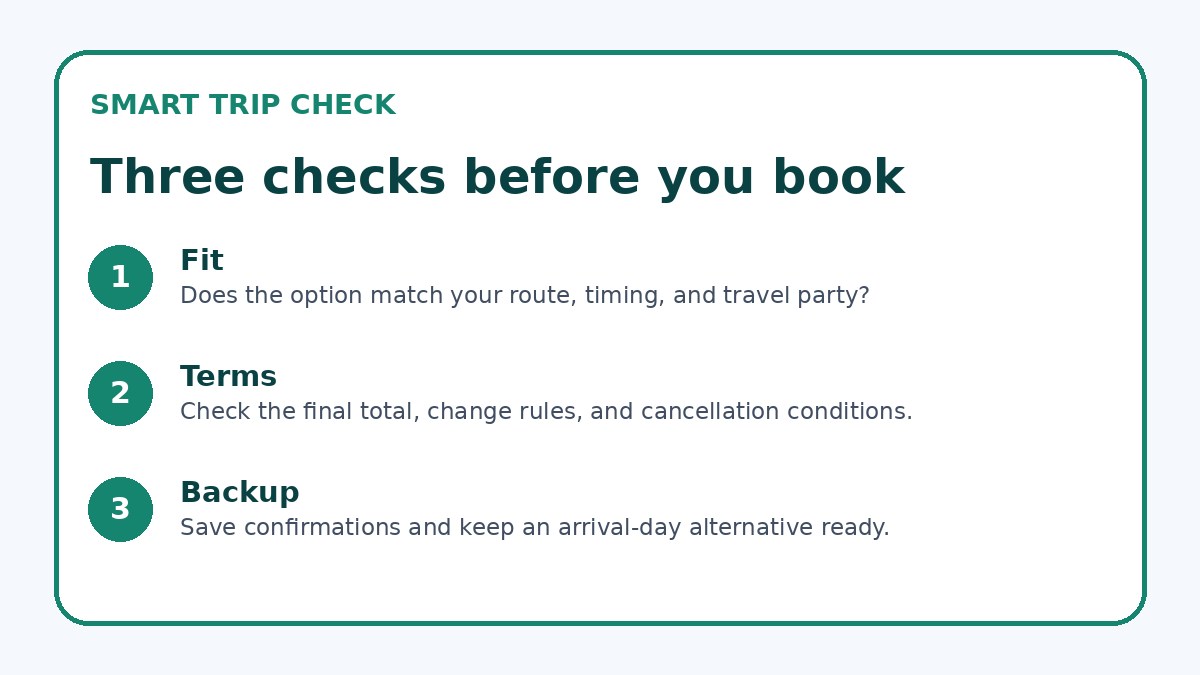
No matter which plan you pick, prepare a straightforward backup: an alternate train or bus later the same day, a taxi app or local cab number, and a nearby hotel option close to your arrival terminal. Make a simple contingency checklist for the family: where to wait if separated, how to contact each other, and what to do with tickets if plans change. Also identify whether refunds or rebookings are allowed on short notice—policies vary by operator, so read the provider’s final booking page.
Before you click buy, verify five things on the operator’s page: exact terminal locations, seat reservation requirements, luggage allowances and surcharges, boarding procedures for families (priority boarding, stroller storage), and how to manage changes or cancellations. If you used an aggregator like Trip.com to compare options, use it as a first look and then confirm the specifics on the carrier’s official site. Save emergency contact numbers for your chosen operator and local transport authorities in case you need rapid assistance.
Rail & Intercity Transport questions travelers ask
Is shinkansen travel the simplest option for families between Osaka and Hiroshima?
Shinkansen travel can be one of the simplest options because it concentrates services in major stations with family-friendly facilities and predictable timetables. That predictability helps when coordinating with meal times and child routines. However, simplicity depends on your hotel locations: if your accommodation is far from the main station, a coach or hybrid route that drops you at a closer terminal may be more convenient overall. Always check station-to-hotel walking routes, elevator locations, and whether seat reservations are recommended or required on the specific service you intend to use.
How should families handle luggage and strollers during transfers?
Plan luggage strategy before departure: use fewer larger items if you prefer taxi transfers, or pack more manageable smaller bags if you expect stairs or crowded platforms. Check station maps for elevators and escalators, and note where coin lockers or left-luggage services are available. For strollers, see whether a stroller needs to be folded for boarding—some carriers and platforms are easier to use with a folded stroller. If you’re uncertain, contact the operator or hotel to confirm storage and boarding procedures on their official booking pages.
What’s the best disruption backup for a family traveling this route?
Build a layered backup: first, identify the next service(s) later the same day on your chosen mode; second, keep a taxi app or local cab number for short hops where time is essential; third, pre-select one or two nearby hotels near your arrival terminal in case you need to stay overnight. Also create a simple family plan for small emergencies—where to meet if separated, who has key documents, and how to contact the operator. Verify change and refund policies on the operator’s official page so you understand options if you must rebook.
Final decision note
When planning Osaka to Hiroshima transport with a family, prioritize door-to-door practicality over single-leg speed. Compare a rail-first plan, coach routes, ferry options, and hybrid approaches against real start and end points: your hotels, luggage needs, and who’s traveling with you. Build realistic buffers, verify luggage and seating policies on carrier pages, and prepare simple backups for missed connections. A few minutes of planning—mapping station access, elevator locations, and alternate services—will pay off during the journey and keep the day manageable and enjoyable for everyone.
Continue planning
Check current options and final conditions
Use the provider page to confirm live availability, the final total, cancellation terms, and every condition that matters to your trip.
This evergreen planning guide was created with AI-assisted drafting and a structured quality review. It does not display live prices, schedules, availability, visa guidance, or provider rankings. Verify current details before booking. Some links are affiliate links; we may earn a commission at no additional cost to you.