If you’re traveling solo in Seoul, the single most practical question about renting a car is whether you should collect it at the airport or in the city. Driving adds flexibility for day trips to the outskirts—DMZ, coastal roads, or national parks—but it also adds friction: navigation, parking, tolls, and different insurance needs. For many solo travelers, public transport plus day tours is an easier alternative. This guide gives a clear recommendation up front, then breaks down route value, insurance language to verify, pickup and return friction, and a fallback if you choose not to drive. Use the decision criteria here to compare options and what to check on the rental company’s final booking page before you commit.
Decide whether driving genuinely improves your Seoul itinerary
Start by listing the places you realistically want to visit that are difficult to reach by public transport. Within Seoul, top tourist neighborhoods, museums, markets, and most parks are well served by subway and buses. Driving only noticeably improves itineraries that include remote coastal routes, hiking areas on the outskirts, or day trips to regions where public transport requires long transfers. If your plan is multiple day trips to different provinces or early morning departures for distant sites, a car can be worth the extra effort.
Also weigh solo-traveler factors: comfort with local driving conditions, fatigue from long drives, and the responsibility of parking and tolls. Solo travelers face all navigation and decision-making alone, so factor in the mental load of city traffic and unfamiliar signposting. If you decide driving adds real value, the pickup location becomes your next decision—do you want the car as soon as you land, or prefer to begin from a city base after settling in?
Decide whether driving earns its place
| Mobility strategy | Best for | Cost or friction to check |
|---|---|---|
| Airport pickup and return | Solo travelers starting or ending near the airport who plan long highway drives immediately after landing or before departure. | May include airport service fees, shuttle waits, and extra return rules; can be less convenient if most activity is inside Seoul. |
| City pickup and return | Travelers staying in Seoul who want a car only for local day trips and prefer avoiding airport logistics with luggage. | Requires carrying luggage to branch and may increase inner-city parking and navigation hassle. |
| Public transit plus occasional taxi or day-rental | Solo travelers who primarily stay in Seoul but want one or two car-based day trips without full-trip rental responsibility. | Less flexible on short notice and may cost more per day when booking last-minute rentals or private drivers. |
| Rideshare/subscription services and guided day tours | Those who dislike driving entirely but want regional access; good for language comfort and avoiding insurance complexity. | Higher per-trip cost for remote locations and less control over timing compared with self-driving. |
Check live rental choices only after the route test
Use the exact driver, dates, pickup point, and return plan to compare current conditions.
Route value: how pickup location affects where you can go
Airport pickups typically place you on major expressways quickly, saving time when your first destination is outside Seoul. That can be decisive if you arrive late and want to reach a guesthouse near a distant national park the same evening. Conversely, if your biggest days are inside Seoul, airport pickup forces an extra city-leg with luggage and may add time spent navigating into central districts. Consider whether you’ll drive mostly on highways or in dense urban neighborhoods—the former favors airport pickup, the latter tilts toward city locations.
Also consider return logistics: returning a car to the airport can be convenient when you have an early flight, but airports sometimes charge extra drop-off fees or have specific return windows and lanes. Returning to a city branch may be easier if your last day is a leisure day in Seoul, letting you drop the car near your accommodation and use public transit to the airport later. Factor in where your driving loop begins and ends to pick the pickup spot that minimizes deadhead time.
Compare the full rental conditions
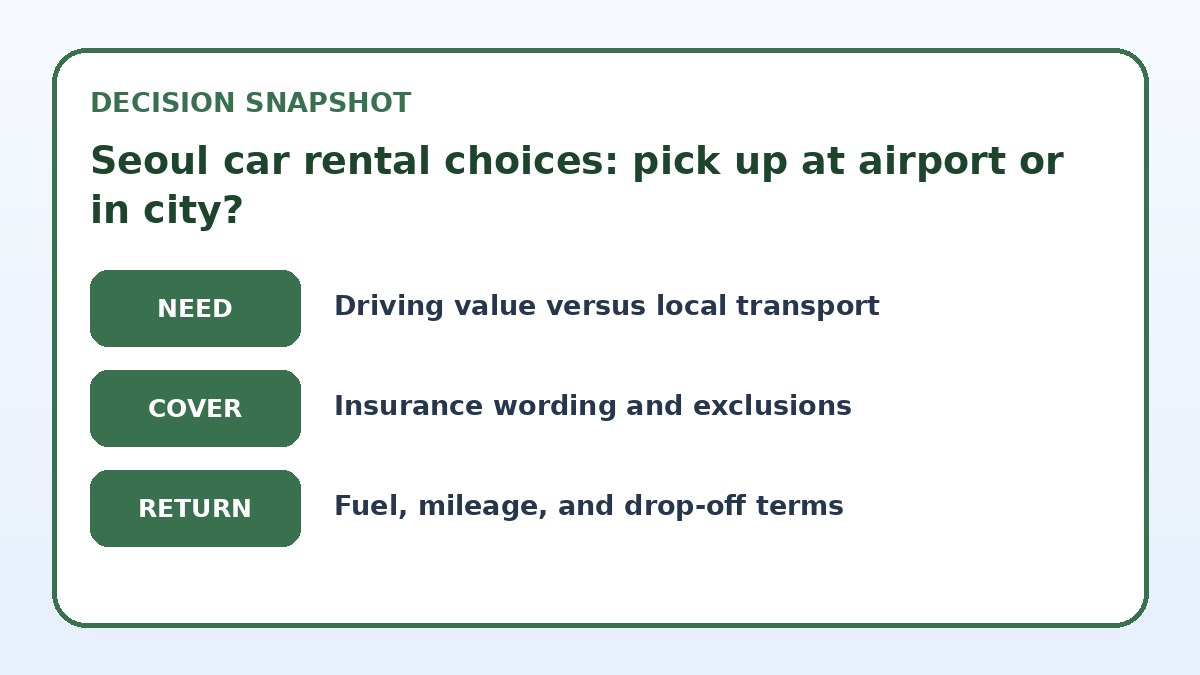
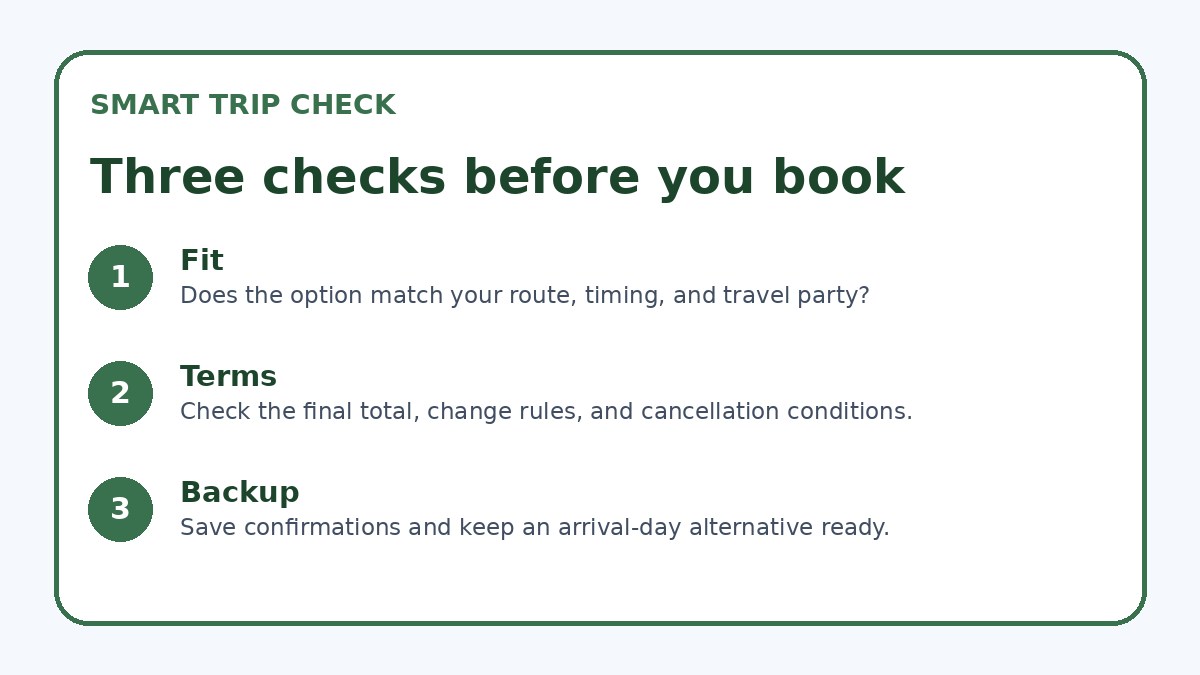
Confirm insurance wording, exclusions, deposit, fuel, mileage, and return terms on the final page.
Insurance wording and what to verify on the booking page
Insurance labels can be confusing; before you book, check the exact wording on the provider’s final page. Verify whether basic liability, collision damage waiver (CDW), theft protection, and third-party liability are included or optional add-ons. Look for exclusions: some policies exclude damage to tires, windshields, undercarriage, or GPS units unless extra coverage is selected. Also confirm whether insurance covers single-driver use, young-driver surcharges, and whether your credit card offers secondary or primary coverage in Korea—if you plan to rely on card benefits, verify the provider accepts that arrangement.
If you intend to cross regional borders (for example, to Jeollanam-do or other provinces), check cross-border permissions; many city branches and airport contracts restrict travel by region. Pay special attention to the deductible amount and whether the provider requires you to file a police report for any incident. The final booking page should list step-by-step claim procedures, contact numbers, and localized instructions—if that information is missing or unclear, ask the provider directly before confirming.
Car rental terms to verify
- Confirm the exact pickup and return addresses, hours, and whether airport shuttles are required for collection or drop-off.
- Read the insurance section on the final booking page carefully: deductible, covered items, single-driver rules, and exclusions.
- Verify whether the rental agreement allows travel to specific provinces or border areas you plan to visit.
- Check your eligibility: accepted driver’s licenses, any required international driving permit, and age restrictions or surcharges.
- Compare parking options at your accommodation and planned stops, including fees, night restrictions, and lot sizes.
- Note toll payment options and ask whether the rental uses an electronic toll device, and how toll charges are billed back to you.
Pickup and return friction, plus a non-driving fallback
Airport pickup can save time but may involve shuttle waits, long queues, and extra fees for airport service. City pickup avoids those airport logistics but can require carrying luggage on public transit to reach the branch. Parking availability at your accommodation is another practical constraint: narrow alleys, apartment complexes, and hotel parking policies can make city-based driving awkward. Also research local parking fees and whether your intended stops have accessible lots versus metered curbside parking.
If you decide not to drive, Seoul’s transit system plus occasional taxis or intercity buses are a robust fallback. For day trips that need a car, consider hiring an English-speaking private driver or joining a small-group day tour: this removes navigation stress and parking problems while preserving access to farther-flung sights. If you still want car access without long-term commitment, book a one-day rental from a city branch for specific excursions, and use public transit the rest of the trip.
Car Rental & Road Trip questions travelers ask
Is it worth renting a car in Seoul if I’m traveling alone?
It depends on your planned destinations outside central Seoul. If you will do several day trips to coastal areas or national parks where public transit is slow or indirect, a car often saves time and increases flexibility. If you mostly intend to explore neighborhoods, museums, and markets within the city, public transit plus taxis are usually more efficient and less stressful. Consider your comfort with driving in unfamiliar traffic, the mental load of parking and tolls, and whether you’re willing to manage insurance and return logistics alone.
What insurance items should solo travelers never skip?
At minimum, confirm there is adequate third-party liability coverage and collision/theft protection with a deductible you can afford. Also verify whether windscreen, tire, and undercarriage damage are covered or excluded. For solo travelers, single-driver policies and clear instructions on accident reporting are crucial because you’ll manage any incident by yourself. If your credit card offers car rental coverage, check whether it’s primary or secondary and whether the rental company accepts that coverage—verify those details on the booking page before relying on card benefits.
How do I choose between airport and city pickup if my flight lands late?
Late arrivals favor airport pickup when you plan to drive directly to an out-of-town destination because you’ll avoid a second trip into the city with luggage. However, if your first night is in central Seoul and you prefer settling into your accommodation and starting fresh the next day, a city pickup the following morning can reduce immediate fatigue. Also consider branch operating hours—some city outlets close earlier—so check pickup window times and any after-hours collection or return procedures on the final booking page.
Final decision note
For solo travelers, the decision between airport and city pickup in Seoul comes down to where your driving actually saves time and how much logistical friction you can handle alone. If your itinerary begins or ends with long highway drives, airport pickup usually reduces wasted time. If you’re based in central Seoul and only want a car for occasional day trips, collecting from a city branch can reduce airport hassle and unnecessary fees. Always verify insurance inclusions, cross-region permissions, pickup and return hours, and parking implications on the rental company’s final page before booking. If driving feels like too much responsibility, Seoul’s transit network plus targeted day rentals or organized tours offers a safe, simpler fallback. Trip.com can be used as one place to compare current availability, but rely on the provider’s booking page for contract details.
Continue planning
Check current options and final conditions
Use the provider page to confirm live availability, the final total, cancellation terms, and every condition that matters to your trip.
This evergreen planning guide was created with AI-assisted drafting and a structured quality review. It does not display live prices, schedules, availability, visa guidance, or provider rankings. Verify current details before booking. Some links are affiliate links; we may earn a commission at no additional cost to you.