If you need to move a family from Osaka to Hiroshima, the practical choice usually narrows to: shinkansen or regional trains for speed and convenience; highway coaches for lower cost and simpler boarding; ferries for relaxed sea travel with luggage space; or driving for maximum flexibility. Which is right depends on your priorities—total trip time, how much luggage or baby gear you’re carrying, travel-group size, and how young your children are. This guide compares the realistic tradeoffs for families, explains the decision criteria to apply when you’re booking, and lists exactly what to check before you buy tickets. Use the summary to pick an approach, then read the sections that matter most to your household’s preferences and mobility needs.
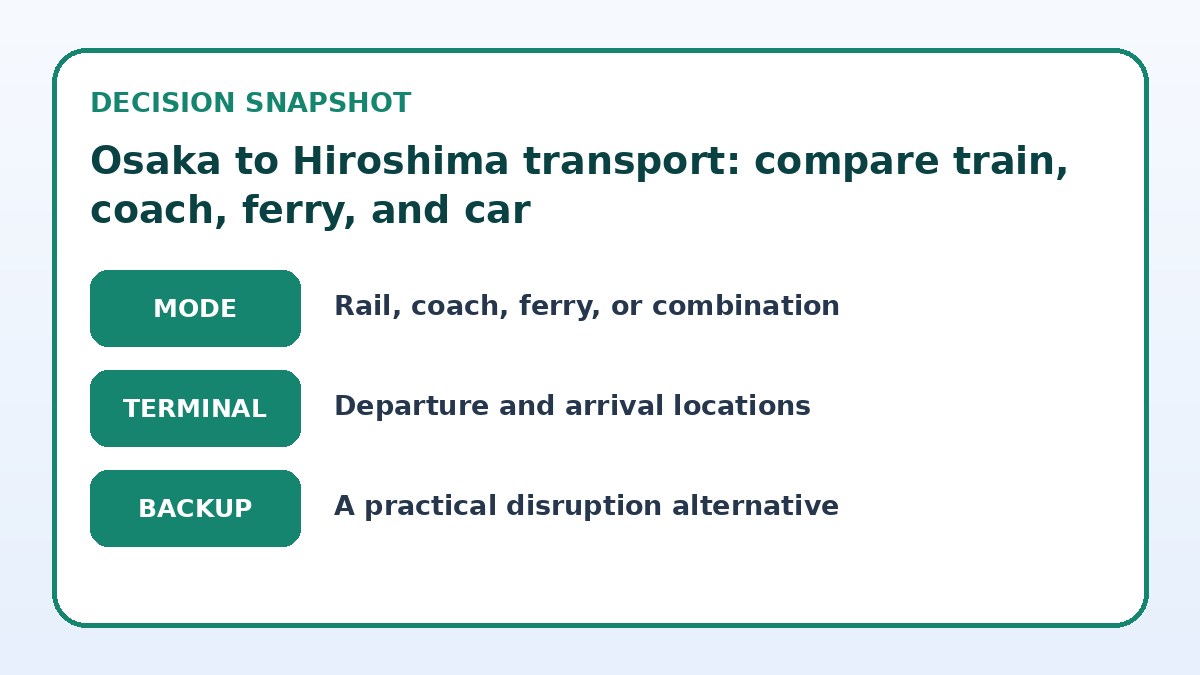
See current options before you compare the details
Availability and final conditions change. Open Trip.com now or keep reading for the practical comparison.
Trains: speed, predictability and station-to-station convenience
Trains—particularly high-speed and direct regional services—are often the default family choice because they cut travel time and reduce time on narrow roads or in traffic. For families with school-age children who can sit calmly, trains minimize the fuss of transfers and let caregivers manage snacks, entertainment, and naps with clear arrival times. Stations in both cities are usually well served by local transit, so planning the first and last mile is essential: look at how you will carry luggage between your accommodation and the station and whether the stations’ exits bring you near taxi ranks or subway lines.
When comparing train options, treat direct versus connecting journeys as different products: a single-seat ride is simpler than one that needs a transfer, even if the total door-to-door time is similar. If you carry a stroller or big suitcases, verify platform access and elevator availability at departure and arrival stations. Also check seat types and reservation rules: families often prefer adjacent reserved seats for peace of mind. Before you commit, verify current schedules and seat-reservation policies on operator pages or a booking platform like Trip.com.
Coaches: budget-friendly with straightforward luggage handling
Highway coaches tend to be cheaper than trains and often simplify luggage logistics with large underfloor storage—useful for strollers, car seats, and more bags. Boarding tends to be simpler than managing large stations, and direct coach services may stop at central, easily reachable terminals. For children who might nap on the move or require frequent bathroom breaks, coaches can be surprisingly family-friendly, provided the journey length matches your children’s tolerance for sitting.
Think about tradeoffs: coaches generally take longer than trains and can be affected by road traffic, which makes arrival windows less predictable. If you need to synchronize with timed activities—hotel check-in or an evening reservation—allow extra buffer. Compare boarding locations versus your accommodation to see if any savings are offset by a complicated taxi connection. Also confirm luggage allowances and how early you must arrive for check-in, because coach companies often close boarding earlier than train platforms do.
| Approach | Best for | Tradeoff to check |
|---|---|---|
| High-speed or direct train | Families who value fast, predictable door-to-door travel with easy local transit access | Higher ticket cost and potential issues with large luggage or strict seat reservations |
| Highway coach | Cost-conscious families needing simple luggage handling and fewer station logistics | Longer travel time and potential delays from road traffic |
| Ferry | Families who prefer a relaxed journey experience and more onboard space | Fewer departures and longer total travel time to reach city centers |
| Driving or rental car | Families wanting schedule flexibility, sightseeing stops, and easy transport of bulky gear | Driver fatigue, parking complexity, and additional planning for tolls and ferries |
Ready to check the option that fits your plan?
Use your exact dates and traveler details so the provider page can show the current total and conditions.
Ferries and sea routes: calmer travel, different timing and experience
Ferry travel can turn the journey itself into a relaxed part of your holiday: more room to walk, fresh air on deck, and usually generous luggage space. For families with very small children or those who prefer to avoid crowded terminals, ferries provide an environment where kids can move and burn off energy. Ferries can also be combined with scenic drives to create a multi-leg adventure rather than simply a point-to-point transfer.
The downside is time: ferries are slower and have fewer daily departures than trains or coaches, so they work best when schedule flexibility is available. Check how port terminals connect to local transport at both ends; some ports are farther from city centers than train stations, which affects total door-to-door time. Always verify boarding rules, baggage restrictions, and whether there are child-friendly facilities onboard on the operator’s booking page before planning around a ferry leg.
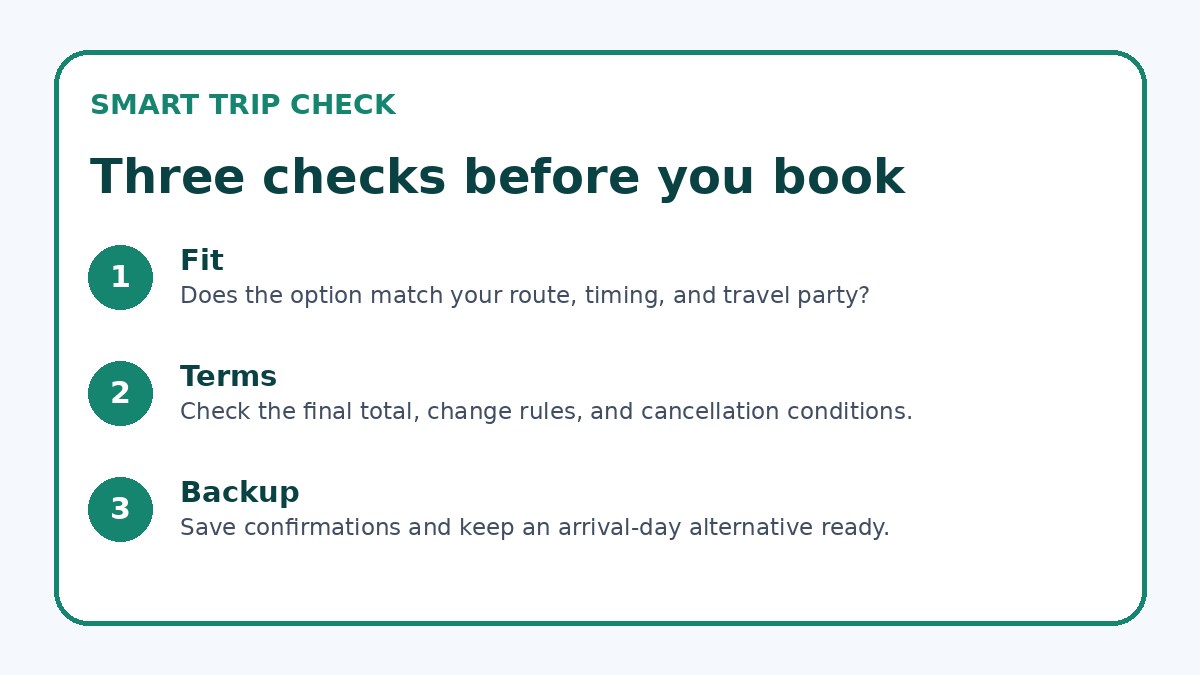
Before you book
- Confirm whether your chosen train or coach requires reserved seats and book adjacent seats if you need to sit together.
- Measure or photograph large items (stroller, car seat, suitcases) and verify luggage rules with the operator before departure.
- Map first- and last-mile transfers: check elevator access, taxi ranks, or shuttle options between station/terminal and your accommodation.
- If choosing a ferry or driving, verify vehicle booking requirements, port distances from city centers, and onboard child facilities.
- Plan arrival buffers around possible delays so you don’t miss onward connections or hotel check-in windows.
- Check cancellation and change policies for each leg before you buy, and keep digital copies of all reservations accessible during travel.
Driving and mixed modes: flexibility versus planning and fatigue
Renting a car or driving offers unmatched flexibility for families: you control departure times, can carry large amounts of gear, and stop when children need breaks. Driving is a strong choice if your itinerary includes rural detours, on-route attractions, or accommodations outside city centers. For multi-stop family trips—beaches, parks, or countryside attractions—having a car reduces the need to repack or struggle with multiple public-transit transfers.
But driving requires extra planning: factor driver rest, parking availability and cost in both cities, and how you will handle overnight stays if the drive becomes tiring. Consider whether someone in your party is comfortable with long-distance driving and local road conventions. If the route includes a ferry leg or toll roads, verify vehicle booking rules, ferry vehicle spaces, and applicable road charges on the rental or ferry operator pages before booking to avoid surprises.
Frequently asked questions
Is taking a shinkansen or high-speed train the easiest option for families traveling between Osaka and Hiroshima?
High-speed or direct trains tend to be the easiest option when you value short travel time and simple connections, because they reduce time on the road and have frequent departures. For families who travel light and can reserve adjacent seats, trains minimize worries about traffic and provide reliable arrival times. However, if you have bulky items, small children who need strollers, or want to save money, coaches or driving might be a better fit. Always confirm seat-reservation rules, platform access and luggage allowances on the operator’s booking pages before finalizing.
Are coaches a good choice if I’m traveling with a stroller and a lot of luggage?
Coaches can be a very practical choice for families with strollers and extra luggage because most offer large external storage bays that reduce the hassle of hauling gear through stations. Boarding is often simpler and requires less walking than big train terminals. The tradeoff is a longer trip and sensitivity to road traffic which can make arrival less predictable. Verify luggage size rules and arrive early for boarding; if you need to connect to time-sensitive plans on arrival, factor in extra buffer time for possible delays.
How should I choose between driving and combining public transport with a ferry?
Choose driving if you prioritize door-to-door flexibility, want to sightsee along the way, or need to transport bulky equipment without repeated handling. Combine public transport with a ferry if you prefer to avoid long drives and want a calmer sea-leg—this can reduce driving stress but adds planning for port transfers. For either option, confirm vehicle ferry booking terms, parking options at both destinations, and check how easy it is to connect from ports or car parks to your accommodation. Always verify operator or rental terms on their booking pages.
Final planning note
Families deciding how to travel from Osaka to Hiroshima should weigh three core tradeoffs: time versus cost, luggage handling versus transfers, and schedule control versus driver fatigue. High-speed and direct trains win on predictability and time savings; coaches are kinder to budgets and bulky gear; ferries offer a relaxed travel environment; driving brings flexibility for multi-stop itineraries. Use the checklist to verify seat reservations, luggage rules, and first/last-mile logistics before booking. For live schedules and to compare booking conditions across modes, you can check operator pages or a booking platform such as Trip.com, but always confirm critical details on the provider’s official page before you finalize travel plans.
Continue planning
Check current options and final conditions
Use the provider page to confirm live availability, the final total, cancellation terms, and every condition that matters to your trip.
This evergreen planning guide was created with AI-assisted drafting and a structured quality review. It does not display live prices, schedules, availability, visa guidance, or provider rankings. Verify current details before booking. Some links are affiliate links; we may earn a commission at no additional cost to you.