
If you’re traveling from Seoul to Gyeongju and want a comfortable long-haul connection, start by deciding whether air travel or a land-and-air mix matches your priorities: comfort, total travel time, or fewer changes. Many first-time visitors assume the fastest itinerary is best, but comfort depends on departure airport, connection length, seat class, and ground transfers on both ends. This guide gives the practical answer up front—how to choose and book a comfortable connection—and then walks through the tradeoffs so you can prioritize what matters most. Read the quick checklist and comparison rows to make an informed decision before you hit the booking page. Verify schedules, baggage rules, and transfer times directly on the carrier or booking platform (Trip.com can be a quick comparison tool), since those specifics change frequently.
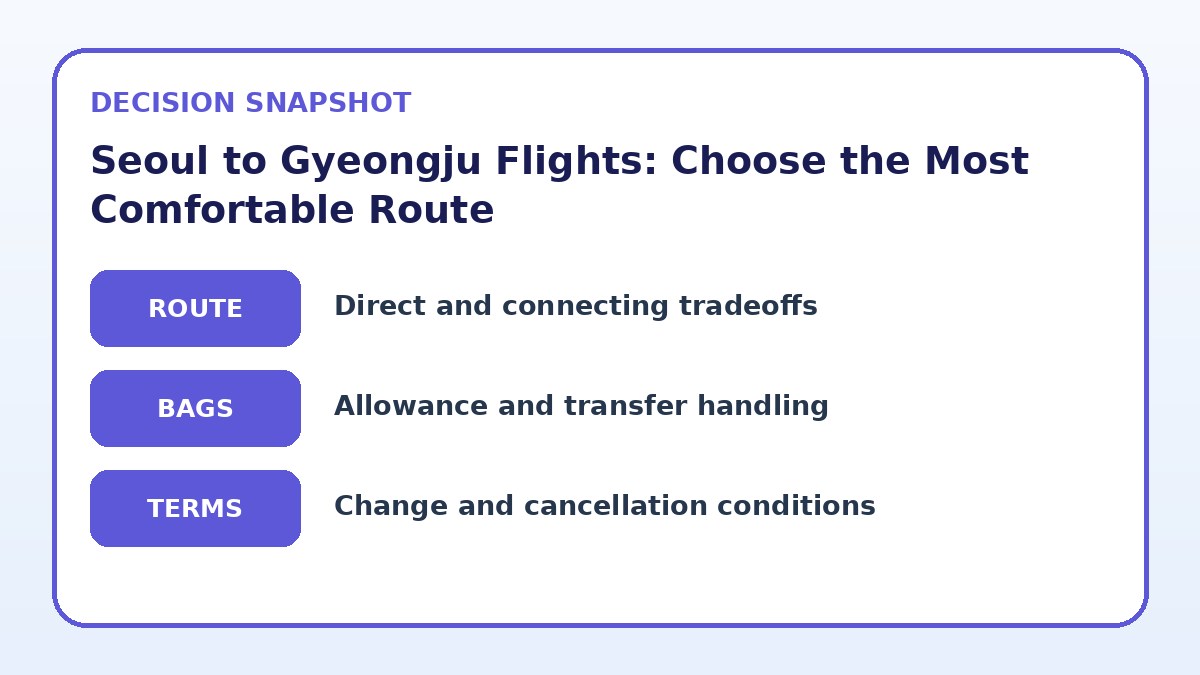
See current options before you compare the details
Availability and final conditions change. Open Trip.com now or keep reading for the practical comparison.
Choosing the route: direct, combined rail+flight, or connecting flights
First decide whether you want a true air-focused route or a mixed approach. There are routes that require flying into a nearby city and completing the trip to Gyeongju by train or bus. A mixed rail-and-flight option often reduces total time in the air and can be more comfortable if you prefer ground-level movement and scenic travel. Consider the hassle of changing transportation modes: you may need to transfer luggage and navigate separate terminals or stations, so factor that into your comfort threshold.
Connecting flights can be useful if direct options are limited, but they add risk and complexity. When you plan a connection inside a single ticket, the airline usually protects you against missed connections and transfers checked baggage for you. If transfers involve a separate ticket or a different airport, allow extra time and be prepared to collect and recheck luggage. For first-time visitors, a single-ticket plan or a rail+flight itinerary with clear station-to-airport transfers often balances comfort and reliability best.
Picking airports and transfer options in Seoul and Gyeongju
Seoul has multiple airports and many rail terminals that feed different routes. For comfort, prioritize the departure point that minimizes a long city transfer from your accommodation. Some travelers prefer the airport with more lounges and services for a relaxing pre-flight experience; others choose proximity to their hotel to reduce rush-hour stress. On arrival near Gyeongju, remember you may touch down at different nearby airports or arrive by train at a main station, each with its own onward-transfer options to the city center or tourist sites.
When comparing options, map the full journey from your door in Seoul to your door in Gyeongju rather than focusing only on flight time. Estimate taxi, shuttle, or rail transfers and typical traffic patterns for the time of day. If you must move between airports in Seoul for a connection, explicitly plan extra time and verify the recommended transfer method on the carrier’s booking page. A small extra connection cushion often turns a stressful itinerary into a comfortable, manageable day.
| Approach | Best for | Tradeoff to check |
|---|---|---|
| Single-ticket connecting flight | Travelers wanting one itinerary with baggage transfer protection | Potentially longer total travel time but lower risk of lost connections or rechecking luggage |
| Separate tickets with tight transfers | Travelers seeking lower base fares or specific carriers | Higher risk and need for longer buffers; you must recheck baggage if not protected |
| Fly-to-nearby-city + rail or bus to Gyeongju | Those prioritizing comfort on ground travel and predictable schedules | Requires planning station-to-airport transfers and may add a mode change with luggage handling |
| Direct rail from Seoul to Gyeongju (no flight) | Travelers who prefer a single, scenic ground journey and minimal airport hassle | Longer travel time on land but simpler logistics and fewer transfers to manage |
Ready to check the option that fits your plan?
Use your exact dates and traveler details so the provider page can show the current total and conditions.
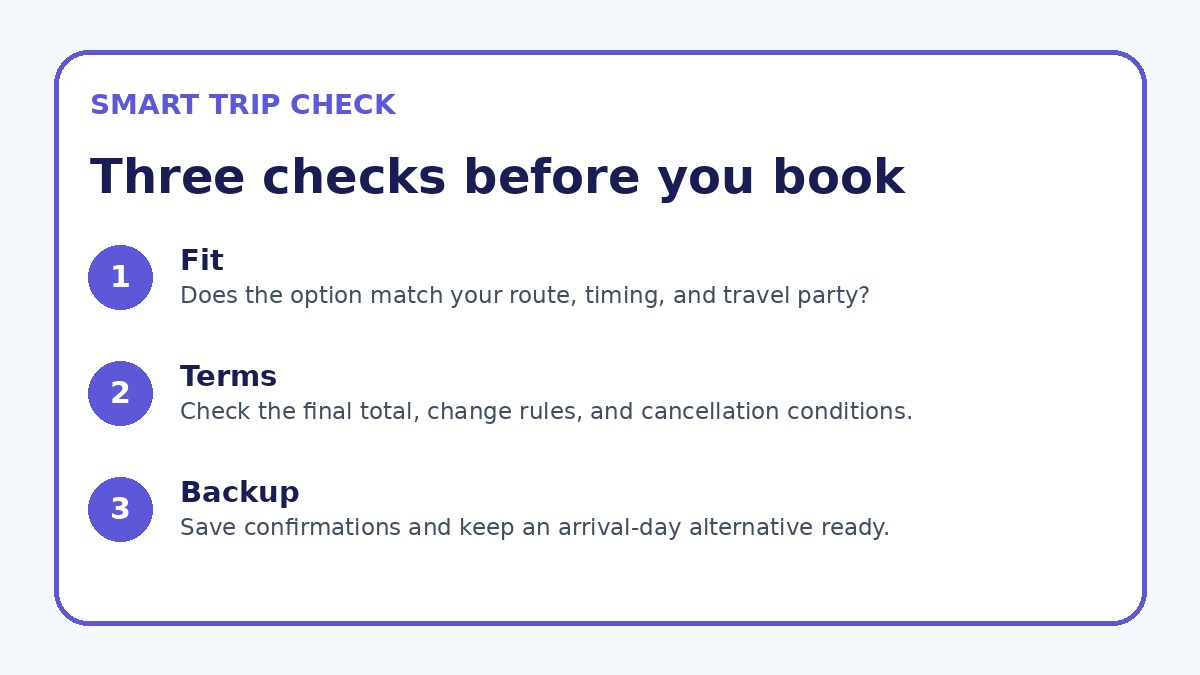
Comfort upgrades and seat choices worth paying for
On longer legs, seat comfort is the single biggest quality-of-life factor. If the long-haul segment lasts several hours, check seat pitch, recline, and whether a premium economy or exit-row seat is available. Consider paying for a seat with extra legroom if you have long legs, need to sleep, or want to stretch more easily during the flight. Also review whether the fare includes checked baggage, a meal, and priority boarding—these amenities reduce friction and improve comfort through the travel experience.
Beyond the seat itself, think about lounge access, priority security lanes, and baggage priority if your budget allows. Lounges provide a calmer place to wait during long connections and can be especially valuable if your itinerary includes a long layover. Before purchasing an upgraded seat or lounge access, confirm the provider’s final booking page for the exact seat map, baggage allowance, and lounge rules as these can change and vary by fare class and carrier.
Before you book
- Confirm whether your itinerary is a single ticket; if not, add at least 90–120 minutes between independent connections.
- Verify baggage allowance and whether checked bags transfer automatically on connecting segments before finalizing payment.
- Compare total door-to-door time including transfers, not just airborne time, and map each transfer step in advance.
- Choose seats with extra legroom or a premium class for the longest segment; confirm seat maps on the booking page.
- If changing airports or modes, research the recommended transfer service and typical journey time for your planned arrival hour.
- Save and screenshot confirmations, terminal names, and carrier transfer instructions so you can access them offline if needed.
Timing, risk management, and what to verify before booking
Plan transfer windows with realistic buffers: account for passport control, security re-screening, potential inter-terminal transport, and traffic to or from rail stations. For first-time visitors, aim for connection windows of at least 90–120 minutes when staying within the same airport, and longer if you must change airports or re-check luggage on separate tickets. If your itinerary involves separate carriers on separate tickets, accept that you take on added risk and give yourself extra cushion.
Before you finalize a booking, verify several provider-specific details on the carrier’s or booking platform’s final page: exact baggage rules and fees, whether seats are reserved, transfer policies for missed connections, and any required documentation. If you use Trip.com to compare options, cross-check the carrier’s page too, because final baggage and transfer protections are decided by the airline or rail operator. Save confirmation emails and note terminal names and transfer instructions so you’re not improvising on travel day.
Frequently asked questions
Is it better to fly all the way or combine a flight with a train to reach Gyeongju?
There’s no universally better option—choose based on your priorities. A full air route can be faster door-to-door if it minimizes ground transfers and if you pick an efficient arrival point. A combined flight-and-rail option is often more comfortable for those who dislike long flights or prefer stretching legs on a train, and it can be more predictable when rail connections run frequently. Compare total transit time, number of transfers, luggage handling, and how much in-transit comfort you need. Verify schedules and transfer guidance on the provider pages because connections and station access vary by route.
How much connection time should I allow in Seoul between flights or when switching to rail?
For first-time visitors, conservative buffers reduce stress. When staying in the same airport for an intra-ticket connection, aim for at least 90–120 minutes to allow for disembarkation, immigration or security, and a leisurely move between gates. If you must change airports or re-check luggage on separate tickets, build in significantly more time—several hours—to cover transit and unforeseen delays. Always check the airline’s published minimum connection times and confirm transfer options on the carrier’s final booking page before booking.
What should I check about baggage and seat assignments before I book?
Before you pay, check whether your fare includes checked baggage, carry-on size allowances, and whether the carrier will transfer checked bags on a connection. Confirm seat assignment availability and seat dimensions if comfort matters for long segments. If you plan to pay for extra legroom or an upgraded class, make sure the booking page shows the seat selected and the applicable baggage allowance. Policies and fees vary by carrier and fare class, so cross-check details on the airline’s final confirmation to avoid surprises at check-in.
Final planning note
Planning a comfortable Seoul to Gyeongju connection comes down to one clear process: compare whole-journey time, the number of transfers, and the comfort features that matter most to you. Prioritize single-ticket itineraries if you want less risk with checked baggage transfers, or choose a mixed rail-and-flight trip if you value ground comfort and scenic travel. Always verify baggage rules, seat maps, and transfer procedures on the carrier’s final booking page, and allow generous buffers when separate tickets or airport changes are involved. Use comparison tools like Trip.com for a quick view of options, but confirm the fine print with the operator before you book. With those checks done, you’ll turn a complicated plan into a relaxed, manageable trip.
Continue planning
Check current options and final conditions
Use the provider page to confirm live availability, the final total, cancellation terms, and every condition that matters to your trip.
This evergreen planning guide was created with AI-assisted drafting and a structured quality review. It does not display live prices, schedules, availability, visa guidance, or provider rankings. Verify current details before booking. Some links are affiliate links; we may earn a commission at no additional cost to you.