If you’re arriving in Da Nang with more or heavier bags than usual, pick the transfer option that reduces physical strain and risk to your schedule. For most travelers with multiple large suitcases, a private transfer (pre-booked car or van) simplifies handling, door-to-door convenience, and luggage security. Public transport — buses, shared shuttles, or taxis hailed at the curb — can work when you have one or two moderate suitcases, tight budgets, or flexible timing, but it requires more lifting and attention to space. This guide gives the bottom-line recommendation up front, then walks through the tradeoffs you’ll weigh: luggage volume, number of people, cost sensitivity, comfort needs, road and route choices, and what to verify before you finalize any booking.
See current options before you compare the details
Availability and final conditions change. Open Trip.com now or keep reading for the practical comparison.
Assess your luggage and group needs
Start by inventorying what you’ll actually bring out of the airport: count hard suitcases, soft bags, backpacks, and bulky items like strollers or sports equipment. A group of two with four medium suitcases has different needs than a solo traveler with one oversized case. Consider not only total volume but how heavy and awkward items are—wheeled luggage is easier to stow than duffels or items requiring two people to lift. Also factor in whether anyone in your party has reduced mobility or needs extra space to sit comfortably.
Once you know the volume and physical demands, match that to vehicle choices. Private sedans often accept two standard suitcases; larger sedans or SUVs take three to four depending on size. Vans or minivans handle more and keep luggage dry and secure. For public options, verify whether buses or shuttles permit checked luggage in a separate hold, or require it to travel in the passenger area. If you’ll be moving between several hotels or have early/late hours, prioritize a solution that removes repeated lifting and waiting.
Compare convenience, cost, and control
Convenience covers pickup location, door-to-door routing, baggage handling, and flexibility if plans shift. Private transfers typically offer meet-and-greet, a guaranteed space for your bags, and direct routes to your destination. That control reduces risk when you’re jet-lagged, traveling with children, or arriving late at night. Public transport can be less convenient: scheduled stops, fixed routes, and possible crowding make moving heavy luggage more stressful. If you’re comfortable handling your own bags and saving money is a priority, public options can still be a reasonable choice.
Cost is relative to group size—private transport per person becomes more attractive when shared among three or four travelers with heavy luggage. Evaluate total door-to-door time and any extra legs of a journey; a cheap bus that requires a second taxi ride may end up costing more in hassle and time. Always compare final prices, cancellation terms, and what’s included: some private providers charge for oversized items, while public buses may require purchasing an extra ticket for a very large item. Verify fees and vehicle capacity on the provider’s final booking page before committing.
| Approach | Best for | Tradeoff to check |
|---|---|---|
| Private transfer (pre-booked car/van) | Groups or travelers with multiple large suitcases who want minimal lifting and direct routes. | Higher per-trip cost and need to verify luggage capacity on the booking page. |
| Taxi or ride-hailing at the curb | Solo travelers with one or two suitcases needing quick, flexible pickup times. | Variable vehicle size and potential difficulty finding a large trunk for bulky items. |
| Airport shuttle or coach with luggage hold | Travelers with standard luggage who prioritize lower cost over door-to-door service. | Fixed stops and schedules; may require extra transfers to reach final accommodation. |
| Public bus or metro plus taxi | Budget-conscious travelers comfortable handling their own bags and making connections. | More physical handling, potential crowding, and longer total travel time. |
Ready to check the option that fits your plan?
Use your exact dates and traveler details so the provider page can show the current total and conditions.
Practical checks before you book
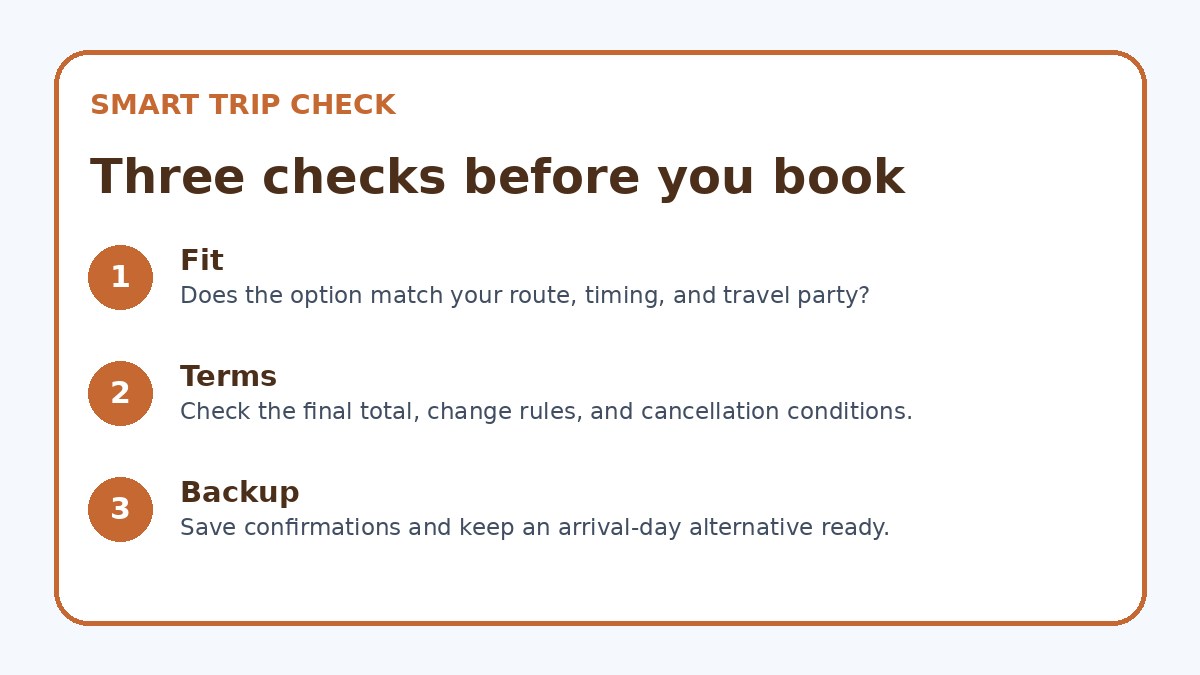
On any booking page, confirm the vehicle type and stated luggage allowance, then translate that into your real bags—don’t assume a vague phrase like “suitable for luggage.” If the supplier permits messaging, ask how many large suitcases fit in the trunk and whether interior space will be free for carry-ons. If you plan to carry fragile or valuable items, ask about insurance or liability rules for checked luggage in private vehicles, and whether drivers will assist with loading. For public providers, verify where luggage is stored: underfloor holds on coaches, overhead racks, or the passenger area.
Check pickup and drop-off specifics: exact meeting points, whether the driver meets you in arrivals, and any additional wait-time charges. Look for clear cancellation and amendment rules in case your flight changes. If using a ride-hailing app at the airport, confirm permitted pickup zones and whether airport staff direct vehicles to central pickup bays. If you prefer comparing current availability or routes, Trip.com can be one place to review options, but always rely on the provider’s own booking page for final terms and details.
Before you book
- Count and photograph all large suitcases and special items to confirm fit with vehicle descriptions before booking.
- Ask the provider for vehicle make/model or trunk dimensions and whether the booking confirms dedicated luggage space.
- Confirm the pickup point, driver contact method, and how flight delays are handled on the provider’s final booking page.
- If transferring to a hotel on a narrow street, verify where the driver will set you down and arrange portage if needed.
- Pack essentials (documents, medication, chargers) in an easily reachable carry-on to avoid opening large bags on arrival.
- Compare door-to-door total travel time, not just headline fares, when weighing public options that require extra transfers.
On arrival: handling luggage and local logistics
Allow extra time for immigration and baggage claim when planning pickup; heavy luggage slows everyone down. If you booked private transfer, communicate real arrival time and flight number so the driver can track delays. At busy times or when multiple flights arrive close together, be explicit about which terminal and exits to avoid missed connections. If you choose public transport, move to the correct bus stop or shuttle bay and keep luggage with you until the vehicle is close; buses can have limited hold space and may leave if loading takes too long.
Be prepared for local road and traffic patterns that affect door-to-door timing. If your accommodation sits on a narrow street where larger vehicles can’t access, confirm whether the driver will drop you at a nearby allowed spot and whether portage services are available. Keep essential items—documents, chargers, medication—in a carry-on you can lift yourself. Finally, tip practices and handling assistance vary; clarify before assuming drivers will manage heavy items without an agreed arrangement.
Frequently asked questions
Can a private car handle oversized sports gear or several big suitcases?
Many private cars and vans can carry oversized items, but capacity varies by vehicle. Before booking, tell the provider exact dimensions and number of items and request confirmation in writing or via the booking portal. If the booking page lists vehicle types, check whether the quoted vehicle is a sedan, SUV, minivan, or larger van—each has different trunk and cargo capacities. Ask about extra charges for bulky gear and whether the driver will help load and unload; verify those terms on the final provider page so you’re not surprised at pickup.
Is it safe to leave luggage in a private transfer vehicle or on a shuttle?
Leaving luggage in a vehicle while you briefly step away is convenient but carries risk; procedures differ between providers. For private transfers, ask about liability for items left in the trunk and whether the driver secures baggage in a locked hold. For shuttles or coaches, luggage in a separate hold may be supervised differently. If you have valuable items, keep them with you in a carry-on or confirm formal insurance or responsibility language on the booking page. Don’t assume uniform policies—get written confirmation before travel.
How should I choose between saving money and minimizing luggage hassle?
Weigh financial savings against the physical and time cost of moving heavy bags. If saving requires extra transfers, stair lifting, or long walks between stops, add a value to your time and convenience—especially after a long flight. For families, older travelers, or groups with many suitcases, a modestly higher fare for a private, direct transfer often pays off in reduced stress. If you do opt for public transport, plan buffer time, pack strategically, and confirm luggage rules so the cheaper route doesn’t become an expensive complication.
Final planning note
Choosing between public and private Da Nang airport transfer options comes down to luggage volume, group size, and how much control you want over pickup and timing. Private transfers provide predictable space and doorstep service that reduce physical strain and coordination, while public and shared options can save money if you have light luggage and flexible timing. Before booking, verify vehicle type, luggage allowances, pickup details, and any extra charges on the provider’s final booking page. Use the checklist to avoid surprises, and pick the approach that keeps your arrival efficient, comfortable, and aligned with how you want to move once you leave the airport.
Continue planning
Check current options and final conditions
Use the provider page to confirm live availability, the final total, cancellation terms, and every condition that matters to your trip.
This evergreen planning guide was created with AI-assisted drafting and a structured quality review. It does not display live prices, schedules, availability, visa guidance, or provider rankings. Verify current details before booking. Some links are affiliate links; we may earn a commission at no additional cost to you.