If you’re traveling solo in New York City, the practical decision is simple: prioritize the neighborhood that cuts your daytime transit and evening safety concerns, then choose the smallest room that still meets your sleep, work, and storage needs. For many solo travelers that means accepting a compact room near a subway line rather than a larger room in a farther neighborhood. But your priorities—late-night plans, working remotely, or tight sleep needs—can flip that tradeoff. This guide lays out how to compare the key factors you’ll see while booking (location, transit access, room type, soundproofing, building amenities, and flexibility) so you can make a confident choice. I’ll also explain how to read listings and what to verify on the booking page before you commit.
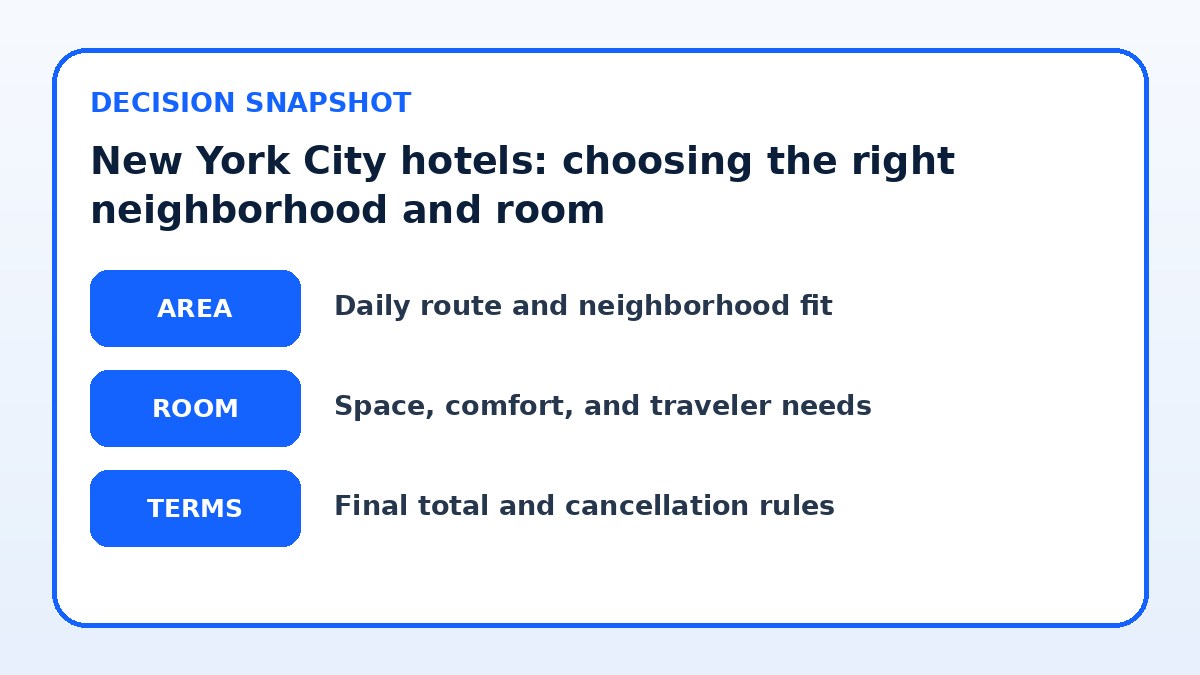
See current options before you compare the details
Availability and final conditions change. Open Trip.com now or keep reading for the practical comparison.
Weigh location by what you’ll actually do each day
Start by mapping your expected activities: museums, shows, business meetings, restaurants, or nightlife. New York City’s neighborhoods differ wildly in character and transit connectivity. Staying near the core of your plans cuts commute time and gives you flexibility; if you plan to be on the West Side all week, a Midtown West or Chelsea base makes sense. If your plans scatter across Manhattan and Brooklyn, prioritize proximity to a major subway hub rather than a single attraction. For evenings, consider how comfortable you’ll feel walking back or grabbing a late ride—safety and late-night transit options should influence whether you accept a smaller, closer room or prefer a larger space farther out.
Don’t assume a single neighborhood fits every day: you can mix the advantages of location and comfort by shortening some days’ travel and booking one or two nights in a different area if it suits a particular itinerary. Also evaluate how often you’ll return to the room during the day; if you’ll only sleep and shower there, size matters less. Finally, check nearby grocery, pharmacy, and coffee options—having essentials within a short walk is a practical comfort many travelers undervalue when comparing hotels.
Room comfort: what matters most for solo travelers
For solo travelers, bed quality, soundproofing, and a usable workspace often matter more than square footage. A comfortable mattress and blackout curtains will affect your mood and daytime energy more than extra living space. If you work on the road, prioritize either a room with a proper desk or a lobby/lounge that reliably offers a quiet spot to concentrate. Read room descriptions carefully for bed size and workspace photos. When details are vague, message the property to confirm—then verify any promises on the final booking page because amenities and room setups can change.
Storage and bathroom layout also influence daily comfort. A small closet, luggage rack, or under-bed storage keeps your room tidy; a cramped bathroom can make routines feel cramped and slow. If you value privacy and peace, check whether rooms face the street or an inner courtyard and whether windows are double-glazed. Photos can be selective—look for wide-angle shots, and pay attention to reviewer comments about noise or cleanliness. Where possible, ask whether the property offers quiet-room requests or reduced housekeeping to limit disruptions during your stay.
| Approach | Best for | Tradeoff to check |
|---|---|---|
| Central location, compact room | Solo travelers prioritizing sightseeing and short transit times | Smaller living space and possible street noise; fewer in-room amenities |
| Larger room farther out | Those needing quiet, workspace, or longer stays | More daily commuting time and potential cost of extra transport |
| Neighborhood charm with moderate transit | Travelers valuing evening ambiance and local cafés | Slower access to distant attractions and possibly fewer late-night transport options |
| Business/amenity-focused hotel near hubs | Solo travelers who value reliable services and 24-hour front desk support | Typically higher rates and a more impersonal atmosphere |
Ready to check the option that fits your plan?
Use your exact dates and traveler details so the provider page can show the current total and conditions.

Transit access versus neighborhood character
Transit access is a measurable tradeoff: being next to a major subway line saves time but may mean a busier, louder street. If your days will be packed with site-hopping, prioritize stations with multiple lines or easy Midtown access. For multi-borough travel, staying near a Manhattan hub like 34th Street, Times Square, or a major Brooklyn station reduces transfers. However, these hubs are often more commercial and can lack local charm at night. If you prefer quieter residential streets and local cafés, consider a slightly longer commute balanced against more pleasant evenings.
When evaluating neighborhoods, compare travel time, frequency of trains, and the typical crowd at your arrival times. Off-peak late-night services and weekend construction can alter convenience—check transit alerts close to booking. Also weigh taxis and rideshares as part of the equation: in some cases, paying for occasional short rides from a quieter neighborhood can be cheaper than a pricier central hotel. Ultimately, match the transit tradeoff to your tolerance for noise, walking, and marginal travel time.
Before you book
- Map your daily activities and pick two neighborhoods that minimize your average transit time.
- Confirm exact room size, bed type, and presence of a desk on the hotel’s final booking page before reserving.
- Check recent guest comments for recurring noise, elevator or cleanliness complaints and factor them into your decision.
- Verify the property’s cancellation policy, deposit requirements, and payment options on the booking page.
- Ask the property about quiet-room requests, and whether street-facing rooms are available if noise is a concern.
- Compare availability and policies across the hotel’s site and one comparison site (Trip.com optionally) before booking.
Practical booking tips and what to verify
When you reach the booking stage, focus on verifiable details: room size or exact bed dimensions, refund and cancellation policies, whether breakfast is included, and any extra fees for Wi-Fi or facilities. Photos and promotional blurbs can be optimistic—always check the property’s official listing or contact the property directly if a specific feature (desk, kitchenette, soundproofing) is essential. If you use comparison sites like Trip.com to see current availability, cross-check the hotel’s own booking page as policies and room inventory can differ across channels.
Also confirm housekeeping frequency and early check-in/late check-out possibilities if your schedule demands flexibility. For safety and convenience, verify building access procedures, whether there is a 24-hour front desk, and any ID or deposit requirements listed on the final booking page. Finally, read recent guest comments for recurring issues—noise, elevator reliability, or cleanliness—then weigh those reports against the tangible benefits of the location and room features before you commit.
Frequently asked questions
Is it better to stay in Manhattan or Brooklyn as a solo traveler?
That depends on priorities. Manhattan puts you closer to many museums, Broadway, and major subway hubs, which reduces travel time between tourist sites. Brooklyn neighborhoods offer more residential calm, local restaurants, and lower street noise in many areas, but you may add 15–30 minutes of transit for many Manhattan destinations. Choose Manhattan if you want minimal daily transit and late-night convenience; choose Brooklyn if you prefer quieter evenings and a neighborhood feel and don’t mind extra commute time. Check subway lines and transfers for your planned itinerary before booking.
How can I tell if a hotel room will be noisy from listings alone?
Listings alone rarely guarantee quiet. Look for clues: rooms described as facing an inner courtyard or garden usually indicate less street noise; mentions of double-glazed windows or soundproofing are positive but verify on the booking page. Pay attention to guest reviews that mention traffic, nightlife, or thin walls. Photos can hint at proximity to the street—windows opening onto busy avenues are a red flag. When in doubt, message the property directly to request a quieter room and confirm their response on the final booking confirmation.
How much should I prioritize a desk or workspace in New York City hotels?
Prioritize a desk if you expect to work in the room regularly; coffee shops and hotel lobbies are options but aren’t consistent for privacy or reliable power outlets. If you’re remote-working several hours per day, a dedicated desk and comfortable chair will save time and frustration. For occasional email-checking or short tasks, a small table or lap desk may suffice. Verify workspace availability and whether the hotel offers a reliable business lounge or quiet public areas on the booking page if productivity is a key factor.
Final planning note
Balancing location and room comfort in New York City comes down to honest priorities: save time and reduce complexity with a central, compact room if your days are packed; choose a larger, quieter room further out if you need sleep, workspace, or longer stays. Map your days, weigh transit versus evening preferences, and confirm specific room features on the final booking page before committing. Use recent guest feedback to flag persistent issues and compare options across the hotel’s site and a comparison platform like Trip.com if helpful. With those steps you’ll pick a hotel that fits how you actually want to spend your NYC time.
Continue planning
Check current options and final conditions
Use the provider page to confirm live availability, the final total, cancellation terms, and every condition that matters to your trip.
This evergreen planning guide was created with AI-assisted drafting and a structured quality review. It does not display live prices, schedules, availability, visa guidance, or provider rankings. Verify current details before booking. Some links are affiliate links; we may earn a commission at no additional cost to you.