
If you’re planning Lisbon travel deals for a family, the practical answer is to target the shoulder seasons around peak summer and lower-winter months to balance weather, crowds, and cost. For families that need a kinder climate for stroller walks, school-calendar-friendly travel, and easier access to attractions without long lines, shoulder months usually offer the best blend of comfort and flexibility. Decide first whether your priority is quieter mornings for museums and attractions, lower nightly rates for bigger accommodations, or milder days for outdoor exploration. Once you choose the family priority, compare arrival options (flight schedules and connections), neighborhood accommodation types (apartments vs. family rooms), and cancellation/transfer policies so you can adapt if plans change.
See current options before you compare the details
Availability and final conditions change. Open Trip.com now or keep reading for the practical comparison.
Why shoulder seasons work for families
Shoulder-season travel narrows the gap between the crowded heat of high summer and the quiet cool of winter, which often suits families who want milder weather and fewer crowds. With smaller visitor numbers, waits at popular attractions, family-friendly restaurants, and trams are typically shorter, which lowers stress and gives you more predictable mornings to fit in museum visits or playground time before naps. For families with school-age children, shoulder months may also align with school breaks or partial-week flexibility, so you can avoid both the busiest and the coldest extremes.
Another family advantage is that quieter periods can make it easier to secure larger rooms or apartments without pushing your budget as far as peak summer would. Hosts and hotels may be more willing to negotiate check-in times, crib requests, or late arrivals during these periods, though you should confirm any special arrangements directly on the provider’s booking page. Shoulder travel also gives you better options for day trips outside Lisbon because trains, ferries, and car hires can feel less crowded and more reliable for family itineraries.
Where to base your family in Lisbon
Choosing a neighborhood should start with how your family likes to spend the day. Central districts shorten transit to main sites and reduce walking with tired kids, while residential neighborhoods provide calmer evenings and often better apartment-style accommodations with kitchens. If your family values easy access to green space and riverside walks, prioritize areas with parks or promenades; if you want short sightseeing bursts between rest times, aim for a central base near trams or metro lines so you can return quickly to the room.
When comparing specific apartment or hotel options, check the layout for separate sleeping areas, kitchen facilities, and laundry access—these features make shoulder-season stays more comfortable because you can eat earlier or manage unpredictable meal hours. Verify bed/crib availability, room configuration, and any extra-person rules on the provider’s final booking page. Also consider proximity to a local market or grocery store for quick family meals and snacks, especially if you plan to travel with young children.
| Approach | Best for | Tradeoff to check |
|---|---|---|
| Fly direct with shorter travel time | Families wanting to minimize travel fatigue and transit with young children | Often costs more; confirm schedule and luggage allowances before booking |
| Book connecting flights for lower fares | Families prioritizing budget over total travel time | Longer door-to-door time and potential for tighter transfer windows |
| Stay central in a compact family room | Families who want fast access to major sights and simpler logistics | Less living space and fewer in-room amenities for meal prep |
| Rent an apartment or family suite farther out | Families who value space, kitchen facilities, and quieter evenings | Requires more transit into the center, so compare transport time and costs |
Ready to check the option that fits your plan?
Use your exact dates and traveler details so the provider page can show the current total and conditions.
Booking strategies and what to compare
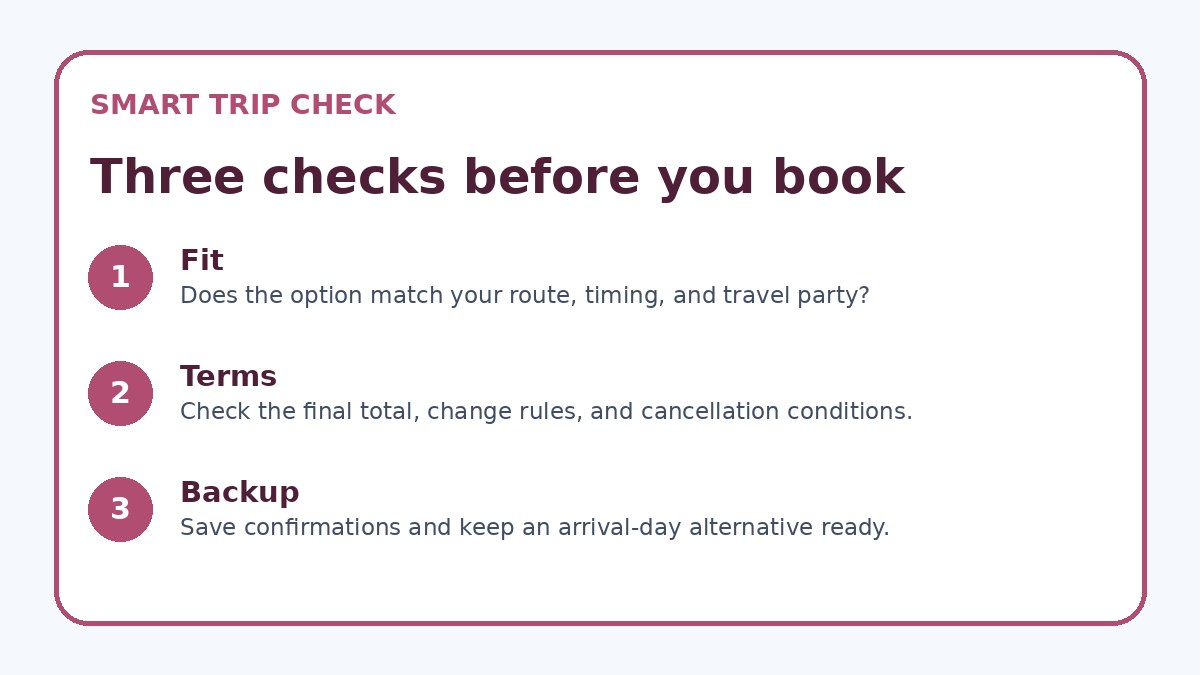
Start by defining your travel tradeoffs: shorter travel time versus lower cost, a central small room versus a slightly farther apartment with more space, or a fully refundable rate versus a lower non-refundable fare. Use those priorities to filter flight and accommodation searches. If you’re comparing flights, look at total door-to-door travel time including connections and transfers; for young children, fewer hours on the move often outweigh marginal savings. On accommodation, compare nightly rates, cleaning fees, and cancellation rules; those extra fees can change which option is actually the better deal for families.
When you reach a provider page, verify check-in windows, extra-bed policies, and whether the property supplies cots or high chairs. If you’re using an aggregator or a service like Trip.com to compare availability, treat it as a starting point—confirm the final terms on the hotel or airline’s booking page before paying. Also check public-transport connections, stroller-accessible routes, and whether museums require timed-entry reservations during shoulder months; prebook where timing matters for your itinerary.
Before you book
- Set your family priority (short travel, lower cost, more space, or quieter nights) to guide filtering and comparison.
- Compare flight options by total travel time, connections, and luggage rules; verify the final itinerary on the airline page.
- Filter accommodations for family-friendly layout, crib availability, kitchen access, and cancellation terms before booking.
- Map daily logistics: proximity to public transport, grocery stores, playgrounds, and any timed-entry attractions you want to visit.
- Confirm check-in policy, late-arrival procedures, and local contact numbers on the host or hotel booking page.
- Pack a flexible day-bag for shoulder-season weather: light layers, rain protection, snacks, and basic medicine for children.
Daily planning and family-friendly activities
Plan days around a predictable rhythm: active morning outings, a midday rest, and shorter afternoons with flexible options. Shoulder-season weather can be changeable, so stack a few indoor alternatives—small museums, aquariums, or indoor play spaces—near your morning route. For outdoor-focused families, include a mix of gentle walks, tram rides, and visits to gardens or riverfronts that are enjoyable without full summer crowding; early starts often secure the best parts of the day while kids are fresh.
Factor in meal routines and local dining hours: family-friendly neighborhoods often have early-service cafés and casual restaurants where staff are used to children. If your children nap, plan a quiet return to base midday or select restaurants with takeout options so you can eat in your apartment. Keep one flexible day for lower-key exploration or to recover from travel; shoulder-season travel commonly allows you to switch plans with fewer constraints than peak periods, but always confirm opening hours and reserved-entry requirements before you leave.
Frequently asked questions
Are Lisbon shoulder seasons good for avoiding crowds with children?
Yes—shoulder seasons typically reduce peak congestion compared with high summer, making queues at family attractions shorter and public spaces easier to navigate. For children who are overwhelmed by crowds or long lines, this can make sightseeing days more relaxed and allow morning visits to popular spots when they’re most manageable. However, crowd levels can still vary with local events, school holidays, or weekend patterns, so check attraction reservation requirements and local calendars on the provider or venue pages before finalizing your schedule.
What transport should families expect when moving around Lisbon in shoulder months?
Public transport will usually function year-round, with trams, buses, and metro lines serving most family-friendly routes; consider how much walking your children can handle between stops. If you plan day trips outside the city, compare train and ferry timetables and how they fit with your kids’ routines. When choosing between a central base and a quieter apartment, factor in the time and complexity of transfers—shorter travel times can prevent meltdowns, while apartments offer conveniences such as kitchens that simplify family meals. Always verify timetables and accessibility details on official transport pages.
How do I find family-friendly Lisbon travel deals without sacrificing comfort?
Start by filtering searches for properties that explicitly list family amenities like extra beds, kitchenettes, and laundry; then compare total costs including cleaning or service fees to understand real value. Look for flexible cancellation or change policies so you can adapt to family needs; verify those policies on the booking provider’s final page before paying. Consider slightly off-center neighborhoods for larger, apartment-style stays that may cost less per night and provide more space to manage early bedtimes and meal prep. You can use comparison services, including Trip.com, for initial availability checks, but confirm terms and fees on the supplier’s page.
Final planning note
Planning Lisbon travel deals around shoulder seasons helps families strike a useful balance between comfort, accessibility, and value. Make your decision by clarifying what matters most—minimizing travel time, maximizing living space, or reducing daily crowds—then use that priority to compare flights, neighborhood bases, and accommodation policies. Always verify cancellation rules, check-in procedures, and transport timetables on provider pages so you won’t be surprised by logistical details at the last minute. With a clear priority and a few flexible options reserved, your family can enjoy Lisbon’s hills, trams, and riverside life with less stress than peak-season travel.
Continue planning
Check current options and final conditions
Use the provider page to confirm live availability, the final total, cancellation terms, and every condition that matters to your trip.
This evergreen planning guide was created with AI-assisted drafting and a structured quality review. It does not display live prices, schedules, availability, visa guidance, or provider rankings. Verify current details before booking. Some links are affiliate links; we may earn a commission at no additional cost to you.