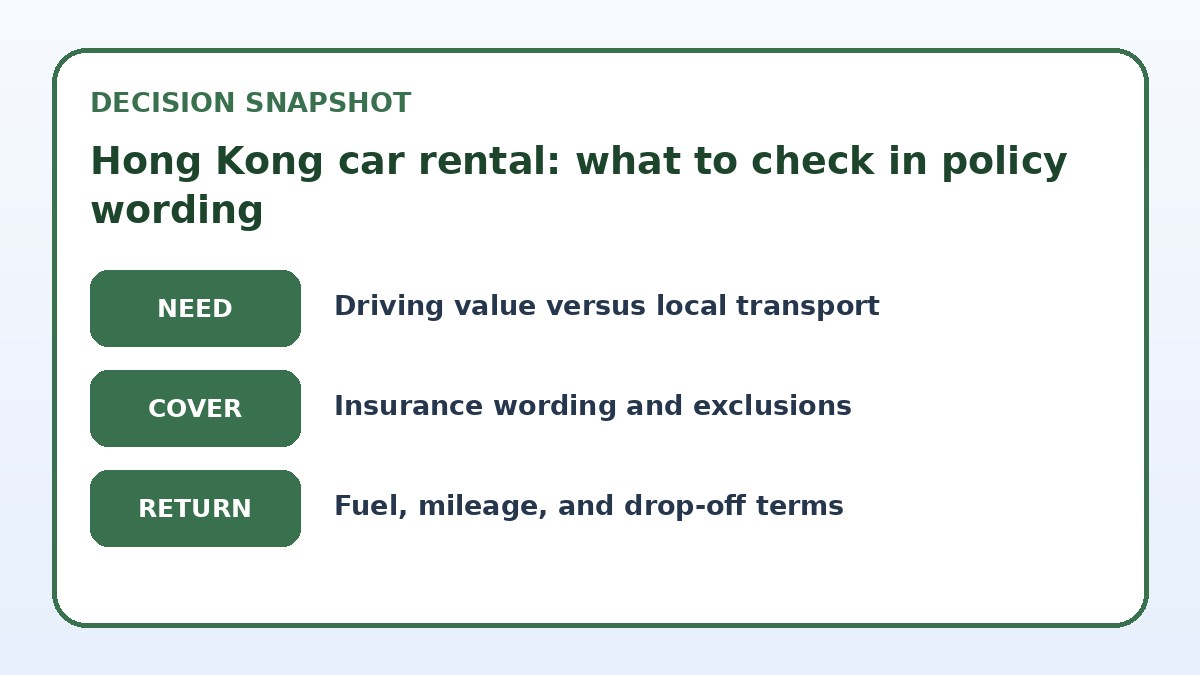
For most solo travelers, the first question is whether driving in Hong Kong actually improves your trip. Hong Kong’s dense public transport, efficient taxis, and well-connected cross-border services often make driving unnecessary within the city. But renting a car can be useful for specific itineraries—remote Lantau bays, rural New Territories exploration, or making cross-border trips where a vehicle is genuinely time-saving. The harder part is understanding the insurance wording: rental contracts and credit-card protections use different terms, caps, and exclusions that determine what you might pay if something goes wrong. This guide gives a clear yes/no lead on when to drive, explains the key insurance phrases to watch for on the rental agreement, outlines pickup and return frictions solo travelers often face, and offers a solid non-driving fallback so you can plan without surprises.
Decide whether driving improves your Hong Kong itinerary
Begin by mapping what you actually intend to visit. For many solo travelers staying on Hong Kong Island, Kowloon, or major Lantau sights, the MTR, tram, taxis, and ferries are efficient, frequent, and straightforward. Consider travel time door-to-door, not just distance: frequent services and dedicated lanes make public transit faster during peak hours. If your plan involves early-morning or late-night movement, or multiple stops in rural New Territories villages that are poorly served by buses, a rental can add convenience and time savings that justify the extra steps.
Weigh the non-financial costs too. As a solo driver you take on navigation, parking searches, tolls, and the mental load of unfamiliar roads—factors that reduce sightseeing time and increase fatigue. Add the administrative friction of reading and negotiating insurance wording at pickup, which can take 20–45 minutes. If those costs outweigh the time or flexibility gains, choose public options. If the drive genuinely shortens transfers or opens routes you can’t otherwise access, proceed but prepare to scrutinize the insurance language carefully.
Decide whether driving earns its place
| Mobility strategy | Best for | Cost or friction to check |
|---|---|---|
| Rent a car with full insurer and zero excess | Solo travelers needing remote or cross-border flexibility | Higher upfront rental and coverage cost, plus more paperwork and stricter pickup checks |
| Rent with basic CDW and use credit-card coverage | Those with strong card benefits wanting lower desk costs | Possible reimbursement hassles and potential gaps for specific exclusions or primary/secondary rules |
| No rental; rely on public transit and taxis | Urban itineraries and low-stress solo travel | Less flexibility for rural sites and tightly timed multi-location days |
| Mixed plan: short local hire or day tours for tricky legs | Travelers wanting occasional driving benefits without full rental burden | May be costlier per day and requires pre-booking, but reduces insurance exposure |
Check live rental choices only after the route test
Use the exact driver, dates, pickup point, and return plan to compare current conditions.
Understand the insurance wording that affects solo travelers
Insurance sections in rental contracts use specific terms that determine who pays and how much after an incident. Key phrases to verify are Collision Damage Waiver (CDW) or Loss Damage Waiver (LDW), which limit the rental company’s damage claim against you but do not always remove your financial responsibility; Excess or Deductible, the maximum you pay per incident; Third-Party Liability limits for damage to others; and named exclusions such as windscreen, undercarriage, or unsealed-road use. Each item can drastically change your exposure. Insist the agent point to the exact clause that defines your liability caps and write down the numeric limits on the rental agreement.
Also check how additional cover products interact: a credit-card benefit, an intermediary’s supplementary insurance, or a broker-sold “zero-excess” policy. Ask whether those products are primary or secondary coverage—will they pay before the rental company’s insurer?—and whether they require you to pursue reimbursement after paying the rental company. Request examples of common claim scenarios in plain language: minor scrapes, windshield chips, theft with broken locks, and single-vehicle accidents. If any clause is unclear, get a printed clarification or walk away until you understand the exposure.
Compare the full rental conditions
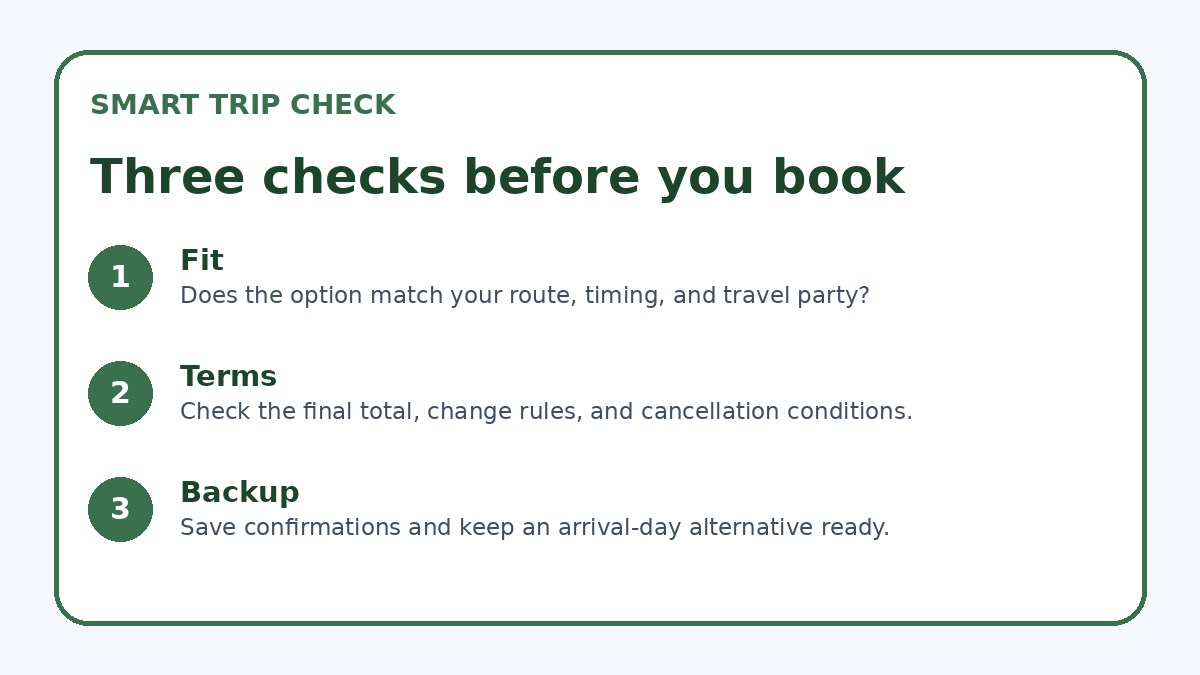
Confirm insurance wording, exclusions, deposit, fuel, mileage, and return terms on the final page.
Pickup and return friction: what to expect and demand
At pickup, expect the agent to explain insurance options and to ask you to sign documents that include damages clauses. Don’t sign blank forms or accept vague verbal assurances. Ask for time to read the policy wording, and if the standard paperwork lists an Excess, ask what steps or additional products reduce it. Photograph the vehicle thoroughly—interior and exterior, including existing scratches, tyres, lights, and the odometer—and timestamp the images on your phone. Request a written inventory of pre-existing damage that the rental agent signs; many disputes later hinge on whether the damage was documented.
On return, allow adequate time to complete the vehicle inspection with the agent present. If you can’t wait for an agent to inspect due to a flight or connection, take dated photos and email them immediately to the rental company with a timestamp and your rental agreement number. Verify whether fuel charges, late return penalties, toll processing fees, or cleaning surcharges are spelled out in the contract and ask for those terms to be added in writing if they were only described verbally. For solo travelers, minimizing paperwork ambiguity reduces the chance of post-hire charges appearing on your card.
Car rental terms to verify
- Photograph the vehicle inside and out with timestamps and save images before driving off the lot.
- Ask the rental agent to write the exact Excess/Deductible amount on the contract and initial that line in front of you.
- Confirm in writing whether any third-party or credit-card coverages are primary or secondary and request proof of terms if offered by the agent.
- Request a signed, itemised record of pre-existing damage and cross-check it against your photos before leaving the pickup location.
- Keep scanned copies of the full rental agreement and all insurance receipts in cloud storage accessible from your phone.
- If returning the car after hours or before an agent can inspect, email time-stamped photos immediately to the rental company and retain delivery confirmation.
Non-driving fallback: transport options that work for solos
Design a fallback that will get you to the same highlights without a rental. Hong Kong’s public transport network covers most tourist routes, with the MTR and franchised buses connecting urban and many suburban areas. For locations off regular routes, consider a mix of taxis, ride-hailing where available, short private hires for single-day excursions, or local minibuses for rural corridors. Day tours and local guides can replace the need to drive for rural or cross-border trips while also removing insurance and parking responsibilities from your plan.
When preparing a fallback, research door-to-door durations and compare total costs, not just per-kilometre rates. Factor in luggage transfers, the timing of the last return service, and whether a late-night taxi will be needed. If time is tight, pre-book a driver for specific legs rather than committing to a multi-day rental. Keep a shortlist of reliable local transport providers and one or two day-trip operators; if your rental plan becomes impractical at pickup due to insurance terms you won’t accept, you’ll be able to switch quickly without disrupting your itinerary.
Car Rental & Road Trip questions travelers ask
How do I tell if a rental company’s ‘zero excess’ policy is genuine?
Ask for the policy document and read the exclusions carefully. A true zero-excess option will state a zero monetary Excess/Deductible for specified damage categories and name any exceptions — for example, windscreen, tyres, undercarriage, or driving on unsealed roads. Verify whether the zero-excess is provided by the rental company’s insurer or a third-party broker; if it’s brokered, ask whether claims require first paying the rental company and then claiming reimbursement. For solo travelers, insist on a printed clause in your rental agreement that confirms zero excess in writing and note any conditions (driver age limits, geographic limits).
Will my credit card insurance cover a Hong Kong car rental?
Many credit cards offer rental-car coverage, but terms vary greatly: some apply only to CDW/LDW, some exclude certain vehicle classes, and many make their protection secondary to the rental company’s insurance. Before relying on your card, call the issuer and request a written confirmation of coverage for Hong Kong rentals, including whether it is primary, deductible amounts, driver age limits, and any paperwork required in a claim. Keep the card benefits document and the issuer’s claim contact details with you. At pickup, confirm the rental company accepts the card’s coverage and whether they require a deposit regardless of card benefits.
What wording signals liability for third-party claims and personal injury?
Look for explicit Third-Party Liability or Liability to Others limits in the policy wording; these figures show the insurer’s maximum payout for damage or injury to others. Note whether the rental’s included insurance has statutory minimums or higher commercial limits. Also search for wording about personal accident insurance — often optional and limited — and whether legal costs or bodily injury are covered separately. If the policy limits seem low, ask about increasing third-party limits or buying supplemental protection. Verify whether local traffic fines, criminal liabilities (for example, driving under influence), and contractually excluded activities are explicitly excluded from coverage.
Final decision note
Solo travelers should make a pragmatic call: avoid renting in central Hong Kong unless your route truly demands a car. If you decide to rent, the most valuable time you spend will be at the desk reading and clarifying the insurance wording. Focus on concrete figures—Excess/Deductible amounts, Third-Party Liability limits, named exclusions, and whether added products are primary or secondary. Photograph the car, get pre-existing damage documented, and insist on written confirmations for any verbal promises. Keep a ready non-driving fallback in case the final contract contains unacceptable liabilities. With these steps you can choose driving only when its benefits outweigh the paperwork and potential financial exposure.
Continue planning
Check current options and final conditions
Use the provider page to confirm live availability, the final total, cancellation terms, and every condition that matters to your trip.
This evergreen planning guide was created with AI-assisted drafting and a structured quality review. It does not display live prices, schedules, availability, visa guidance, or provider rankings. Verify current details before booking. Some links are affiliate links; we may earn a commission at no additional cost to you.