If you're travelling alone from Melbourne to Queenstown, the two most useful things to lock in early are what you’ll take in your bag and how much buffer time you need at each airport. For most solo travellers a single carry-on plus a small personal item is enough for a short stay, while those keeping ski or outdoor gear will need to plan checked luggage and transit connections. At Melbourne Tullamarine and Queenstown Airport, security lines, baggage drop procedures and peak periods change day-to-day; plan extra time for busy mornings and public-holiday weekends. This guide gives a clear rule-of-thumb for arrival time, a simple checklist for luggage decisions, and the key provider details you must verify on the airline’s final booking or check-in page before you travel.
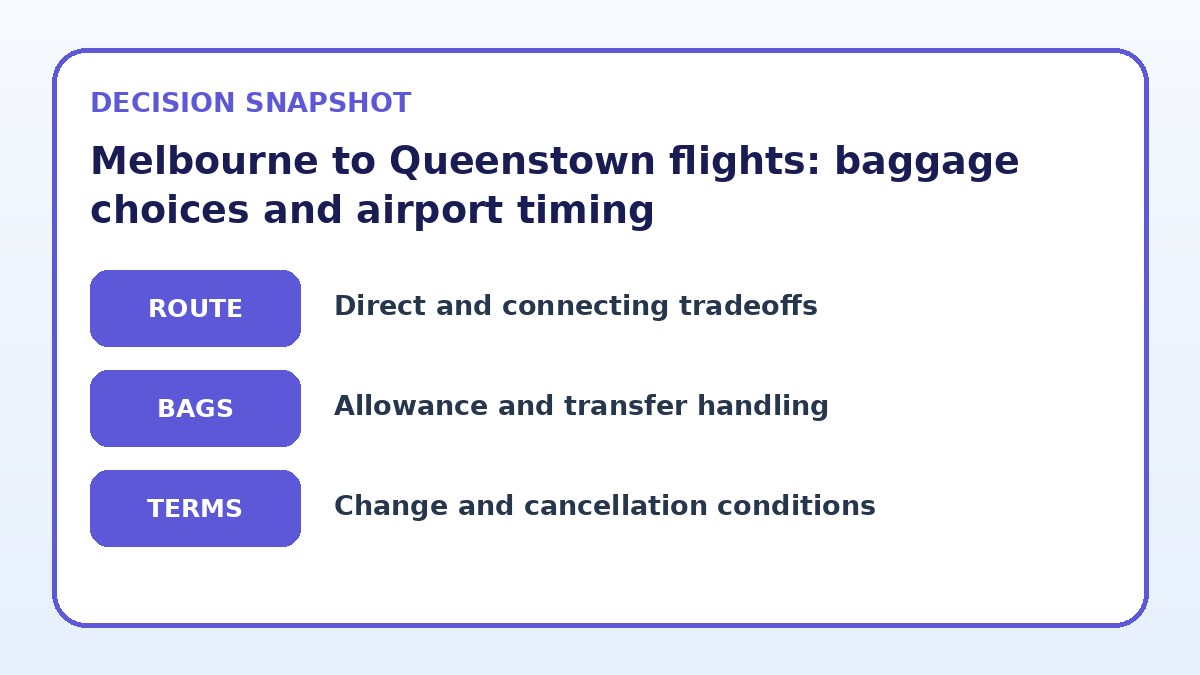
See current options before you compare the details
Availability and final conditions change. Open Trip.com now or keep reading for the practical comparison.
Decide what to carry: carry-on versus checked luggage
Start by listing activities and weather for Queenstown, then map those needs to bag types. If you’re staying a short time and plan no heavy equipment, a carry-on sized to your airline’s limits plus a personal item (daypack or laptop bag) typically covers clothes, toiletries, and a daypack for excursions. Carry-on keeps you mobile: you avoid checked-bag fees, reduce the risk of lost luggage, and skip the wait at the carousel after arrival. However, ensure the bag fits the airline’s stated internal dimensions and weight, because airlines enforce different size limits and gate-checking is possible if the flight is full.
Checked luggage is the right choice when you bring bulky items—ski boots, oversized layers, or guided-tour kit. Before you check a bag, compare the airline’s allowance and fees on the final booking page; many carriers let you pre-pay cheaper than airport rates. Pack fragile or valuable items in your carry-on and use compression or protective cases for gear in checked bags. Note that adding checked luggage increases time at both ends of your trip: extra time to drop and to claim the bag, and potentially longer processing if the arrival terminal is busy.
Timing your arrival at Melbourne Airport
For most Melbourne departures, plan airport arrival times to include check-in, security, and any extra screening. If you checked luggage, account for a 15–30 minute drop-off queue at peak times. If you only have carry-on and have checked in online with a mobile boarding pass, you can save time but still allow for security screening queues and walking to the gate. Factor in transport time from your accommodation, potential traffic delays, and the need to buy last-minute essentials or sort travel documents at the airline counter.
When comparing options, read the airline’s check-in and boarding cut-off times on the final booking page because these vary by carrier and fare class. If your itinerary includes connections, protect yourself with a longer buffer at your origin: longer minimum connection time helps reduce stress if the first sector is late. For early morning flights or busy holiday periods, add an extra 30–45 minutes to your arrival plan. If you want predictable timing, aim for flights outside the busiest windows—mid-morning or late afternoon—if schedules allow.
| Approach | Best for | Tradeoff to check |
|---|---|---|
| Carry-on only | Short trips, faster arrival and exit, minimal fuss | Limited clothing and no bulky gear; must meet airline size rules |
| Checked luggage | Trips needing bulky equipment or long stays | Extra time at drop-off and claim, possible fees and handling risk |
| Priority/fast-track lanes | Travellers valuing saved time and less queueing stress | Additional cost and limited availability depending on carrier |
| Early versus late flights | Early for quieter security lines; late for less chance of early-morning delays | Early may need earlier wake-up and transport; late can mean busier road traffic |
Ready to check the option that fits your plan?
Use your exact dates and traveler details so the provider page can show the current total and conditions.
Arrivals and baggage handling at Queenstown
Queenstown Airport is compact but can feel congested during peak tourism months; after landing, follow signage to immigration (for international arrivals) and baggage claim. If you travelled carry-on only, you will move through arrivals faster—no waiting at carousels and fewer touchpoints. If you checked luggage, allow time for belts to cycle and expect some variability in wait times depending on the number of incoming flights. For gear or oversized items, confirm handling procedures with the airline on the booking page and consider travel insurance that explicitly notes sports equipment coverage.
Plan ground transport after you know your likely arrival window: shuttle services, rideshares, and taxis operate regularly but queue lengths vary by season and time of day. If you need immediate onward travel—ski transfers or a guided pickup—communicate estimated arrival and baggage details to your transfer provider in advance. For solo travellers who want to move quickly after landing, choose accommodation near central Queenstown or book a private transfer to reduce multiple handling of bags. Keep essential items like medication and base layers in your carry-on for immediate access upon arrival.
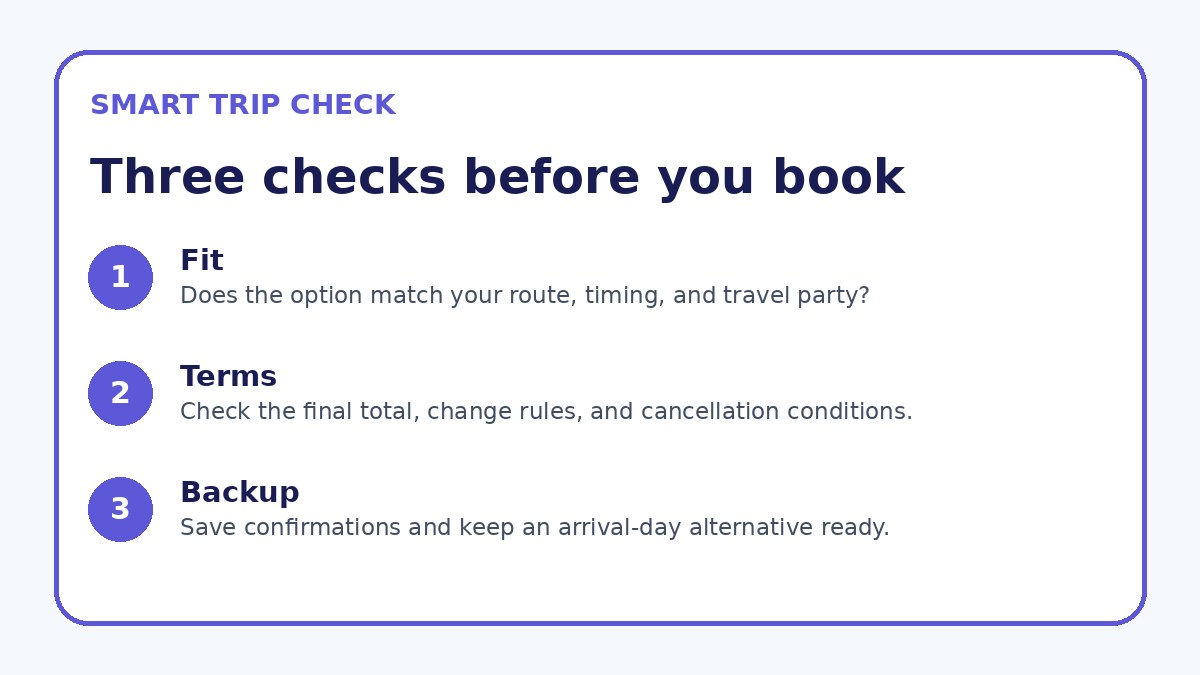
Before you book
- Check the airline’s exact carry-on dimensions and weight on the booking or airline website and measure your bag to comply.
- If bringing skis or bulky items, pre-book checked baggage allowance and verify size/weight policies on the airline’s final page.
- Set online check-in reminders and download your boarding pass to reduce airport queue time.
- Allow 90 minutes for domestic departures from Melbourne with carry-on only; add 30–60 minutes for checked bags or busy travel dates after verifying with your airline.
- Pack essentials—medication, travel documents, a warm layer and chargers—in your personal item for immediate access on arrival.
- Contact ground transfers in Queenstown with your flight number and expected arrival time so they can adapt to delays or early landings.
Practical check-in, security and boarding strategies
Online check-in is essential for solo travellers aiming to minimize airport time. Use the airline’s app or website to select seats, confirm baggage allowances, and download boarding passes. If there’s a seat-selection fee, weigh the cost versus the benefit of guaranteed aisle or window seating that helps you arrange carry-on stowage. At security, pack liquids and electronics in an accessible way to move through screening quickly; wearing easy-to-remove shoes and minimal metal helps speed the process. If you qualify for priority lanes—by fare, membership, or paid upgrade—this can save significant time.
Boarding typically starts earlier than travellers expect; check the boarding time on your boarding pass and be at the gate at least 20 minutes before departure for domestic flights and 30–45 minutes for international sectors. Solo travellers should note that last-minute gate changes happen; monitor airline notifications and airport screens. If you have a tight onward connection in Queenstown or elsewhere, speak with gate staff as soon as you learn of any delay so they can advise on rebooking or assistance options. Always keep a portable phone charger and necessary documents in your personal item.
Frequently asked questions
How much time should a solo traveller leave between connections when flying Melbourne to Queenstown?
Connection time depends on whether the itinerary is through a single ticket and if you need to clear immigration or re-check luggage. For single-ticket connections where checked bags are transferred, a standard buffer is often 60–90 minutes for domestic-to-domestic or domestic-to-international short connections, but check the airline’s minimum connection time on the booking page. If you must re-check baggage or change terminals, allow at least 2–3 hours. Always verify connection rules and minimum times on the carrier’s final booking page, and consider an extra cushion if you prefer low-stress transfers.
Is it better to fly direct or with a connection for Melbourne to Queenstown itineraries?
Direct flights reduce the complexity of managing bags and eliminate transfer risk, making them a good choice for solo travellers prioritising simplicity. Connecting itineraries sometimes offer better timing or lower fares but add variables: you must confirm whether baggage is checked through and allow more buffer time for missed connections. Compare total door-to-door travel time, transfer logistics, and the airline’s change-assistance policies on the booking page. If you carry specialised equipment, a direct flight often simplifies handling and reduces the chance of delays in getting your gear.
What should solo travellers do if their checked bag is delayed or lost on arrival in Queenstown?
Report the delay to the airline’s baggage office at the airport immediately and keep the property irregularity report. Provide contact details and a local address or phone number if possible; airlines usually offer tracking and updates. While waiting, use essentials from your carry-on and check if your travel insurance policy covers emergency purchases and delayed baggage. Before leaving home, snapshot receipts and item lists for high-value goods. Finally, verify on the airline’s final booking or baggage policy page what their compensation and delivery procedures are for delayed or lost bags.
Final planning note
For solo travellers on Melbourne to Queenstown flights, the clearest time- and stress-saving choice is to decide early whether you can travel carry-on only or need checked luggage. Carry-on travel speeds through airports and simplifies connections, while checked bags are necessary for bulky gear but require extra time and planning. Use online check-in, confirm baggage rules on the airline’s final booking page, and build sensible buffers around peak periods or connections. Communicate with transfers in Queenstown so baggage handling and pickups align with your arrival. With a few organised steps you reduce downtime and keep the trip flexible and enjoyable.
Continue planning
Check current options and final conditions
Use the provider page to confirm live availability, the final total, cancellation terms, and every condition that matters to your trip.
This evergreen planning guide was created with AI-assisted drafting and a structured quality review. It does not display live prices, schedules, availability, visa guidance, or provider rankings. Verify current details before booking. Some links are affiliate links; we may earn a commission at no additional cost to you.