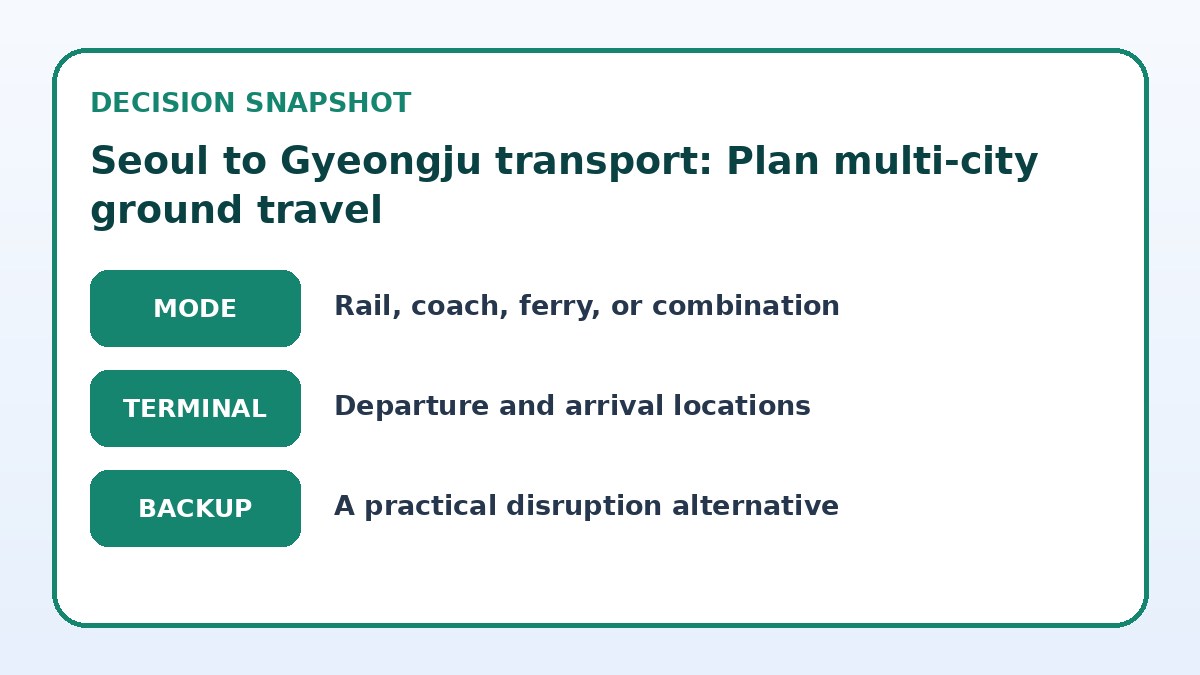
Practical answer first: for most first-time visitors, build a multi-city ground-transport plan that centers on a high-speed or intercity train segment between Seoul and Gyeongju, with local buses or taxis for last-mile travel inside each city and one planned overnight in Gyeongju or en route if you prefer a relaxed pace. Start by deciding whether you want fastest transit (fewer connections, higher flexibility for same-day returns) or a sightseeing route (stop in Daegu or nearby towns, add regional buses). Once you choose that approach, map out arrival and departure stations, a primary and backup transfer option, and where you’ll store luggage. Verify timetables, seat reservation policies, and station access on the provider’s booking page before finalizing, and consider using a travel comparison site such as Trip.com to check current schedules and availability alongside official operator pages.
See current options before you compare the details
Availability and final conditions change. Open Trip.com now or keep reading for the practical comparison.
Deciding your route: direct transit versus multi-stop exploration
When planning Seoul to Gyeongju transport, your first decision is whether to travel directly or build a multi-stop route. A direct intercity train or express bus reduces decision points and is simpler for first-time visitors who prefer fewer transfers and clearer luggage handling. Direct options usually concentrate on major stations in Seoul and Gyeongju, which tend to have straightforward connections to taxis and local buses. This approach works well if you have limited time or prefer to reserve most sightseeing for a dedicated stay in Gyeongju.
By contrast, a multi-stop plan intentionally breaks the journey—common choices include stopping in Daegu, Andong, or other regional towns to visit markets, temples, or university areas. This adds flexibility and sight-seeing opportunities but increases complexity: you must coordinate multiple timetables, factor in extra transfer time, and arrange luggage movement. For a comfortable multi-stop schedule, plan realistic buffer times between connections and identify clear backup options such as later trains or intercity buses in case of delays.
Choosing transport modes and what to compare before booking
Focus your comparisons on three elements: total door-to-door travel time, number of transfers, and luggage handling. Trains typically offer stable travel times and easy onboard storage, while long-distance buses may provide routes closer to rural attractions but can be slower depending on traffic. If you value predictability, give priority to trains between major hubs. If you want access to smaller stops along the way, examine regional express buses and note terminal locations so you can compare onward transfer options in Gyeongju.
When you reach provider pages to confirm bookings, verify schedule details, seat-reservation rules, permitted luggage sizes, and exact station names—small differences in station location change the ground transfer plan. If a train option offers both direct and connecting services, compare total journey time plus transfer complexity rather than only in-vehicle time. For any listed connections, check minimum connection time recommendations on the operator’s site and identify one later alternative in case you miss a connection.
| Approach | Best for | Tradeoff to check |
|---|---|---|
| Direct high-speed or express train | Travelers prioritizing speed, predictability, and fewer transfers | Less opportunity to visit towns along the way and potentially higher last-mile costs |
| Long-distance intercity bus | Visitors wanting routes that stop closer to regional attractions | More exposure to traffic delays and more variable journey times |
| Multi-stop rail + regional bus combo | Sightseeing-oriented travelers who want flexible stops en route | Requires careful schedule coordination and more luggage handling |
| Private transfer or taxi segments | Small groups or travelers with lots of luggage seeking door-to-door ease | Higher cost and potential limited availability for long distances |
Ready to check the option that fits your plan?
Use your exact dates and traveler details so the provider page can show the current total and conditions.
Practical ground logistics in Seoul and Gyeongju
In Seoul, choose a departure station that matches your accommodation and morning rhythm. Major stations have clearer public-transport links, while peripheral terminals may require longer taxi rides. Factor in peak-hour congestion and how comfortable you are moving luggage on subways. Leave extra time for ticket pickup or station navigation if you haven’t used the specific terminal before. If you plan to store bags at a station locker or hotel, confirm that service ahead of travel on the provider’s site or at your accommodation.
Gyeongju’s main arrival points may be located outside the historic core, so plan your first-mile onward transport—local buses, taxis, or organized shuttles—to your hotel or to the main attractions like the historic area. If your schedule includes late-evening arrival, pre-book a taxi or have clear directions for night bus services. Also identify a nearby convenience store or café where you can ask for directions or validate a connection. For multi-day itineraries, consider how you’ll leave Gyeongju for your next destination to avoid backtracking.
Before you book
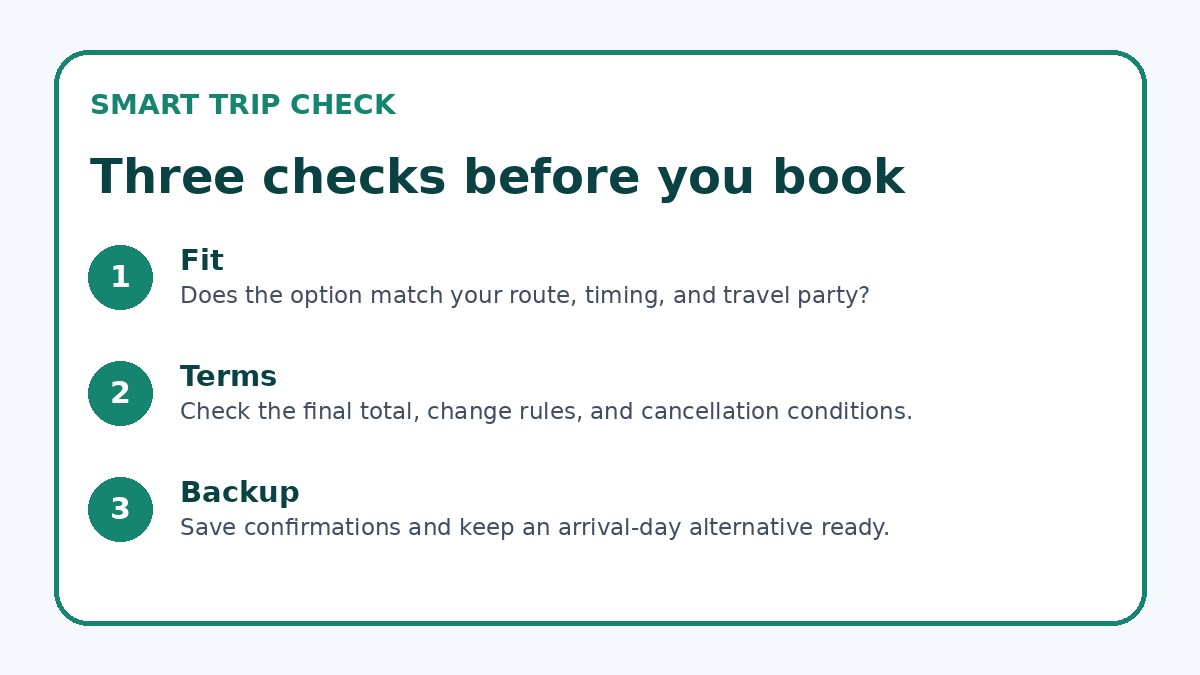
- Confirm exact departure and arrival station names and note the nearest subway or taxi routes for both stations.
- Verify train or bus schedules and any seat reservation rules on the operator’s official booking page before payment.
- Decide how many transfers you’ll accept and build at least 30–60 minutes buffer per connection if you are unfamiliar with stations.
- Arrange luggage plans: check onboard storage limits, station lockers, or hotel hold options and pack accordingly.
- Book at least your first night in Gyeongju or arrange a backup stay in a nearby city to avoid last-minute searches.
- Save digital copies of bookings, contact numbers for your accommodation, and a fallback transport option like a local taxi app.
Timing, comfort and contingency planning
Decide how much buffer you need between connections based on your tolerance for risk and the complexity of transfers. If you’re unfamiliar with Korean station layouts or language, allocate extra buffer time for finding platforms, buying or collecting tickets, and navigating wayfinding signs. For overnight travel, consider whether a late-night arrival in Gyeongju will affect hotel check-in or local transport availability. Keep local emergency contact numbers and a plan for reaching your accommodation if services are disrupted.
Build contingency options into your plan: a later train or bus you could use, a list of taxi phone numbers, and an electronic copy of confirmations. If you must change plans on the road, prioritize options that minimize repeated luggage moves—staying an extra night where you end up is often less stressful than racing to catch a tight onward connection. Before final bookings, verify cancellation and change policies on the operator’s page so you understand fees and timelines for adjusting your route.
Frequently asked questions
Should I book train seats in advance or wait to buy on the day?
If you prefer certainty—specific departure times and guaranteed seats—book in advance through the operator’s site or an authorized agent. Advance booking is useful for peak travel periods or if you have a tight itinerary, since it removes the risk of sold-out services. If you have flexible dates and can tolerate a later departure, buying on the day can work, but you must be prepared for the possibility of standing or taking a later service. Always verify refund and change terms on the booking page before committing.
How do I handle luggage when transferring between train and bus in Korea?
Plan luggage handling ahead: trains commonly have overhead racks and designated storage areas, while intercity buses may store larger bags in underfloor compartments. If your route includes transfers, minimize repeated handling by packing one main bag you can manage alone, or use station luggage storage if available. For complex multi-stop plans, note where you can leave an item at a hotel or locker. Before travel, confirm luggage size allowances and any extra fees on the provider’s final booking page.
Is it better to stop in Daegu or go straight to Gyeongju from Seoul?
Stopping in Daegu adds a substantial chance to visit markets, restaurants, and cultural spots en route and can break the journey if you prefer shorter legs. Going straight to Gyeongju is simpler and gives you more time at your destination without extra transfers. Choose based on your energy levels and priorities: if you like paced travel and exploring regional cities, schedule a stop with enough time to reach attractions; if you want a focused Gyeongju stay, pick a direct route and keep your itinerary concentrated there.
Final planning note
Building a Seoul to Gyeongju transport plan starts with choosing the kind of trip you want: fastest, simplest, or exploratory. Anchor your plan on a reliable core segment—typically a train—and add local buses, taxis, or a scheduled stop to match your sightseeing goals. Work out station-level logistics, luggage handling, and reasonable connection buffers before locking in bookings, and double-check timetables and reservation rules on provider pages. Leave one practical contingency, such as a later service or a nearby hotel, so you can adapt without stress. With those pieces in place, you’ll spend less time managing travel and more time enjoying Gyeongju’s historic sites.
Continue planning
Check current options and final conditions
Use the provider page to confirm live availability, the final total, cancellation terms, and every condition that matters to your trip.
This evergreen planning guide was created with AI-assisted drafting and a structured quality review. It does not display live prices, schedules, availability, visa guidance, or provider rankings. Verify current details before booking. Some links are affiliate links; we may earn a commission at no additional cost to you.