Short answer: for most Manhattan-centered business trips, driving is often more friction than advantage — but if your schedule includes multiple off-hours meetings, suburban client visits, or carrying equipment, a car can be the right tool. This article focuses on the pickup and return terms that affect whether driving improves your NYC itinerary: where you take the vehicle, what the contract locks you into, how insurance and damage waivers read, and the likely sources of extra fees at return. Read these sections with your booking page open and make the call based on route value, pickup/return friction, and insurance coverage gaps. If you decide not to drive, I include a solid fallback plan so you can move between meetings reliably without a rental.

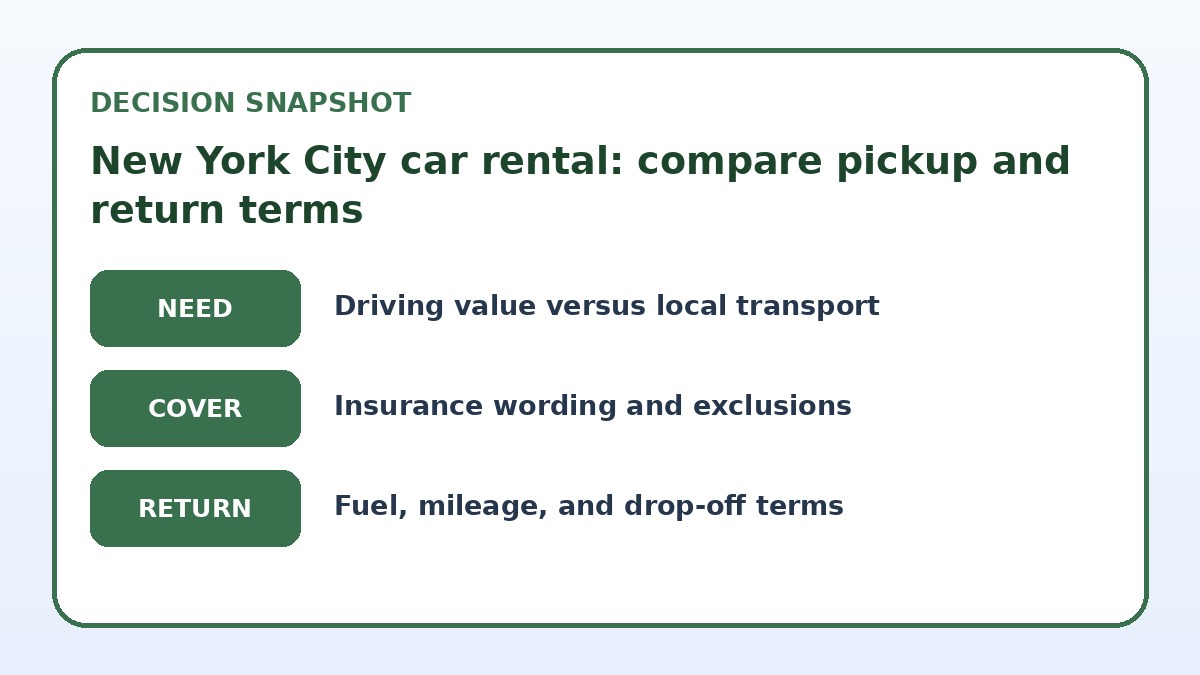
Route value: when a car genuinely helps a business trip
Assess the actual routes you’ll drive. If all meetings are in Midtown, downtown Manhattan, or the core financial district, driving usually adds time and parking costs; congested streets, restricted lanes, and loading rules make door-to-door driving slower than subway or rideshare during business hours. A car becomes useful when you have multiple off-peak meetings in outer boroughs, remote office parks, customer sites in New Jersey or upstate, or when you must transport bulky samples, technical equipment, or a team with luggage. Map realistic drive times between appointments at the times you’ll travel, and compare them with transit or rideshare travel times that include walking and waiting.
Think about schedule resilience. Cars offer flexibility for urgent detours, early-morning or late-evening returns, and routes without reliable public transit. But that flexibility carries costs: parking time, garage dropoff fees, and the risk of tickets when you’re running behind. For multi-stop itineraries across boroughs during non-peak traffic — or when client visits are widely spaced — the car often wins. For dense, time-sensitive downtown schedules, the cumulative friction of driving usually outweighs any marginal gains in convenience.
Decide whether driving earns its place
| Mobility strategy | Best for | Cost or friction to check |
|---|---|---|
| Rent a car and keep it all day | Multiple off-peak or suburban client visits and carrying equipment | Higher parking/tolls and potential insurance gaps; return disputes possible without careful documentation |
| One-way rental with different drop-off | Point-to-point travel across regions or end-of-trip at airport | Convenient routing but often incurs significant one-way or drop-off fees and stricter fuel/damage terms |
| Rideshare and taxis | Short urban hops, unpredictable schedules, and no parking concerns | Costs can add up for many trips and less control for bulky cargo or late-night reliability |
| Public transit plus local courier | Dense downtown itineraries with occasional cargo needs | Lowest parking/headache burden but less door-to-door speed and requires coordination with couriers |
Check live rental choices only after the route test
Use the exact driver, dates, pickup point, and return plan to compare current conditions.
Insurance and coverage wording: what to verify before accepting
Insurance language in rental contracts is where small phrases create big exposure. When you review the rental page, check exactly what the collision damage waiver (CDW) covers and what it excludes, whether loss of use, administrative fees, and diminished value are excluded, and whether coverage requires an additional daily charge. Don’t assume corporate cards’ coverage is complete; verify whether corporate or personal credit-card protections are primary or secondary and whether they permit commercial-use or out-of-state driving. Also confirm whether the insurer or card requires you to file a police report for any incident and how that affects claim processing.
Look for precise requirements about authorized drivers and cross-border travel. Many contracts add fees or void coverage if an unauthorized driver operates the vehicle or if you drive into New Jersey, Connecticut, or upstate areas not listed. Read the deductible amount and whether the rental firm offers a supplemental loss waiver that reduces or removes the deductible. Finally, make a habit of photographing the vehicle on pickup and documenting the odometer and fuel level in writing; that evidence matters if damage charges surface at return.
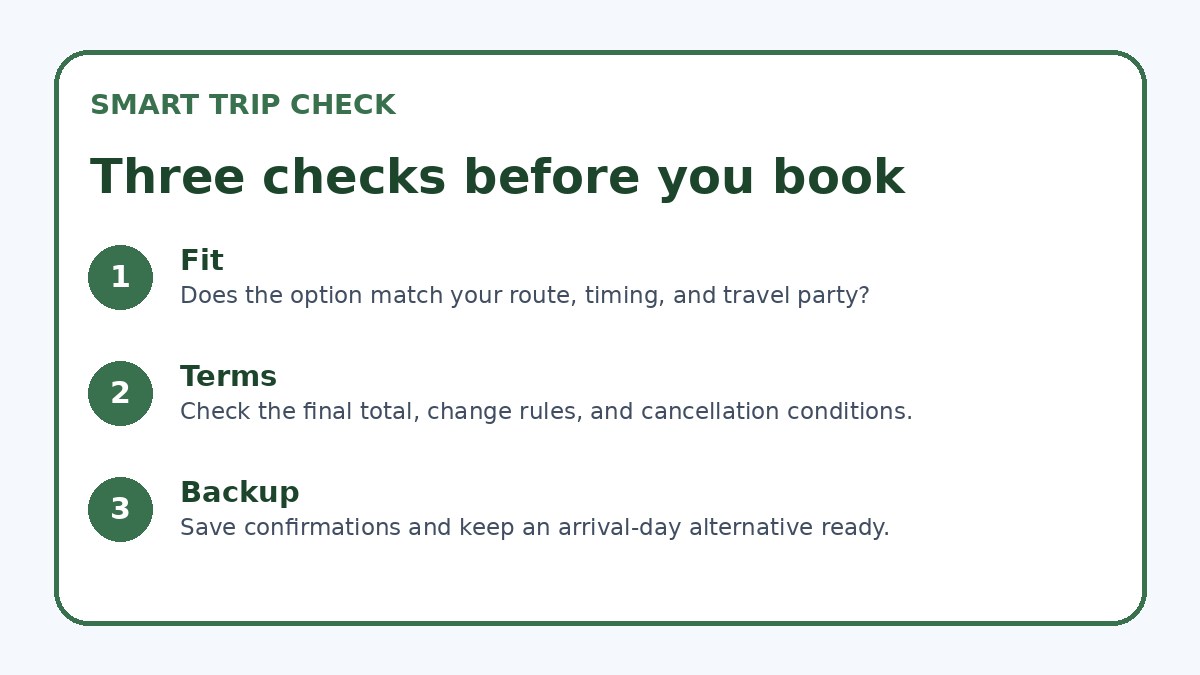
Compare the full rental conditions
Confirm insurance wording, exclusions, deposit, fuel, mileage, and return terms on the final page.
Pickup and return friction: timing, locations, and documentation
Pickup friction starts with where you collect the car. Airport counters often offer extended hours and key drop boxes but can add shuttle time and congestion during peak arrival windows; city-location desks might be closer to your meeting, but after-hour access and vehicle availability vary. On the booking page, confirm whether the pickup requires a reservation window, whether there are mandatory identity checks beyond your driver’s license (corporate IDs, proof of work), and whether extra document scans are taken. At pickup, insist on a thorough walkaround and a signed condition report to reduce disputes later.
Return friction is typically where hidden fees appear. Verify the fuel policy (full-to-full vs. prepay), after-hours drop-off procedures, and charges for returning to a different location or an airport versus neighborhood office. Ask how the provider documents damage discovered after return and what timeframe they use to bill you. If you expect to return late or outside normal hours, confirm whether key drop is allowed and whether a return receipt will be emailed or posted; without a receipt, you may face delayed or disputed charges.
Car rental terms to verify
- Before booking, list every meeting address and map drive times and parking options at the scheduled times.
- At pickup, insist on a signed walkthrough record noting existing damage, fuel level, and odometer reading; photograph the car from multiple angles.
- Confirm insurance specifics on the booking page: CDW scope, deductible amount, secondary vs. primary card coverage, and cross-state permissions.
- Read the fuel and mileage rules and note whether prepay fuel, full-to-full, or capped mileage applies to avoid unexpected charges.
- Verify exact drop-off instructions for your return location, after-hours procedures, and whether a return receipt will be provided immediately.
- Keep company expense and rental policy information accessible and verify whether the corporate card covers supplemental waivers or requires pre-authorization.
Non-driving fallback: reliable alternatives for busy schedules
If you opt not to rent, build a plan using a mix of transit, rideshare, and on-demand car services. For Manhattan core schedules, a combination of subway and short rideshare legs often beats driving for predictability and cost. Arrange rides in advance for early-morning or late-night transfers when transit options thin out, and ask local assistants or your contacts to book cars through a corporate account to track receipts and ensure timely pickups. For transporting equipment, consider arranging a dedicated courier or pre-booked cargo-capable car with a vetted driver.
Document contingencies so you don’t lose time between meetings. Identify the closest subway lines and their typical off-peak frequencies, pinpoint reliable rideshare pickup points that avoid restricted lanes, and set firm lead times for when to order a car to allow buffer for traffic. Keep a small portable lockable case for samples that a courier or rideshare driver can carry; this reduces the need for a rental when you just need secure transport. Finally, confirm mobility budgets and reimbursement policies with your company to avoid surprises.
Car Rental & Road Trip questions travelers ask
If my company card covers rentals, do I still need the rental company’s damage waiver?
Not always. Company-card programs vary widely: some offer primary coverage that behaves like the rental company’s waiver, while others are secondary and only cover gaps after your personal insurance or the rental’s policy pays. On the provider’s booking page, check the waiver wording and the deductible. Confirm with your corporate card administrator whether business-use claims are covered and whether any documentation (police report, repair estimate, photos) is required for a claim. If a gap remains and a low deductible is important, consider taking the rental’s supplemental waiver for peace of mind.
What should I photograph at pickup and return to avoid disputes?
Photograph the front, rear, both sides, roof, and interior at pickup, plus close-ups of any pre-existing scratches, dents, or stains. Capture the odometer reading and the fuel gauge and get a time-stamped image if possible. At return, repeat the process and photograph the drop-off location, any keys or receipts you handed over, and the condition of the vehicle immediately after you leave it. Save all images, timestamps, and the signed condition report; these items are the primary evidence if a provider later alleges new damage or fuel discrepancies.
How do after-hours returns typically work and what risks do they pose?
After-hours returns often use a key-drop box or require you to leave keys with security; some locations ask you to park in a specified area and email a photo. The main risk is not receiving an immediate return receipt, which can delay confirmation of the vehicle’s condition and fuel level and leave you open to later charges. Before booking, confirm on the provider’s final page how they document after-hours returns, whether they issue an electronic receipt, and any time window for reporting disputes. If you need airtight confirmation, arrange a return during staffed hours or get a timestamped image and email it to the rental firm after dropping the car.
Final decision note
For business travel in New York City, start with route value: if your meetings sit in the Manhattan core, skip the rental and rely on transit and rideshare; if you must cover outer-borough or regional sites, a car can save time. The pickup and return terms are where cost and risk accumulate — check insurance wording, authorized-driver rules, fuel and mileage policies, and the exact return procedure before you commit. Photograph the vehicle at pickup and return, keep reservation pages and receipts, and verify corporate card coverage. If you want a quick place to compare current options, Trip.com can show available inventory and terms, but always confirm the contract language on the provider’s final booking page before you sign.
Continue planning
Check current options and final conditions
Use the provider page to confirm live availability, the final total, cancellation terms, and every condition that matters to your trip.
This evergreen planning guide was created with AI-assisted drafting and a structured quality review. It does not display live prices, schedules, availability, visa guidance, or provider rankings. Verify current details before booking. Some links are affiliate links; we may earn a commission at no additional cost to you.