If you and your partner want stress-minimized travel between Prague and Vienna, pick the transport option with the flexibility that matches your rhythm — not only on the vehicle but for transfers, luggage and the whole door-to-door plan. For most couples the practical choice lies between direct/intercity trains for roomy comfort and low-transfer friction, and coaches for simpler ticket change rules and lower upfront cost. Mixed itineraries (train plus regional connection) can be smart when one of you needs a different return time, while renting a car gives ultimate control over timing but adds driving, parking and transfer complexity. Start by deciding whether changing plans on short notice, carrying large luggage, or needing late arrivals matters most; use those priorities to compare ticket rules, refund/exchange windows and what you’ll actually do after the ride ends.

Terminal fit and door-to-door practicality
Start by mapping where you will actually begin and end in each city: a train station's central location may save taxi time, while a coach terminal might be slightly farther from your hotel. For couples, the difference between a short walk and a taxi ride changes the real cost and convenience. Think about luggage: pulling two suitcases up multiple staircases or waiting for a long bus transfer erodes the advantage of a cheap ticket. Also factor late-night arrivals—some terminals have limited transport options later in the evening and you may prefer a service that gets you closer to your accommodation.
Assess connecting needs: a direct long-distance train that arrives at the city center will usually beat a cheaper option that needs a separate regional transfer. When comparing options, translate advertised journey time into door-to-door time by adding predicted transfer and waiting times, plus any taxi or rideshare you expect to need. For couples who prefer to avoid complicated transfers, prioritize fewer steps between origin and final lodging even if the ticket itself costs a bit more.
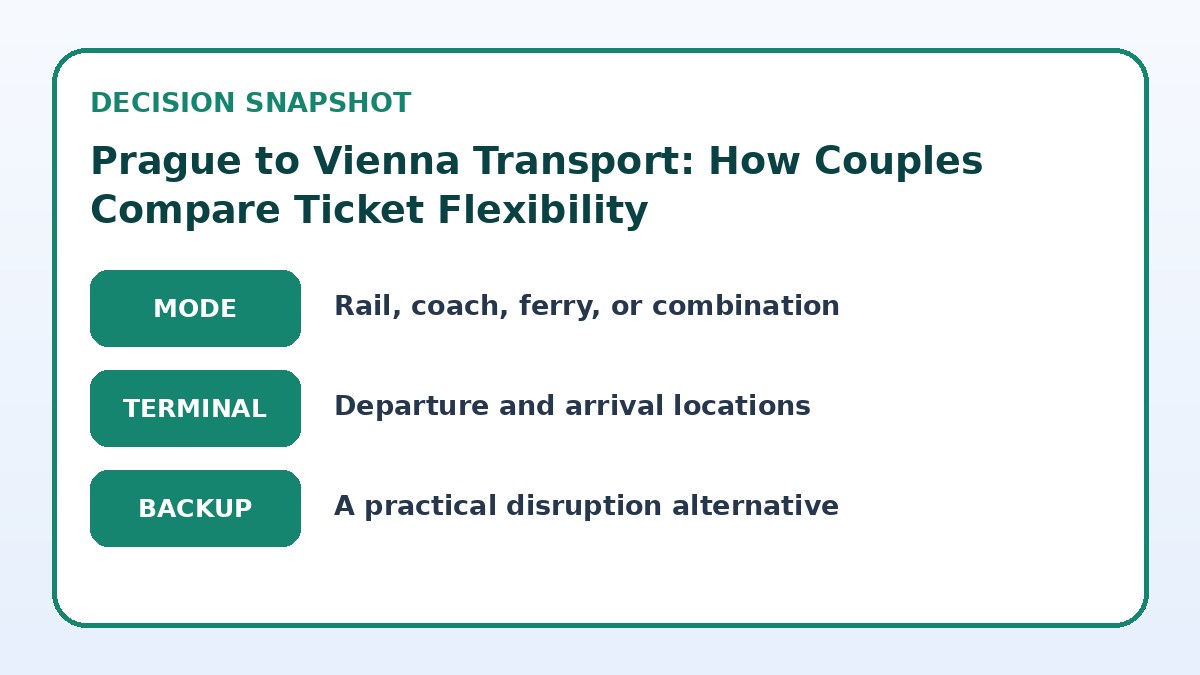
Choose the end-to-end journey plan
| Journey approach | Best for | Friction to check |
|---|---|---|
| Direct intercity train with flexible fare | Couples who want fewer transfers, space for luggage and predictable door-to-door timing. | Flexible fares can cost more and specific change rules apply; verify reservation and change terms before buying. |
| Budget coach with open-change options | Couples prioritizing low planning cost and looser same-day travel options. | Longer travel time and potential terminal distance increase door-to-door friction; luggage rules may be stricter. |
| Mixed itinerary (regional train + intercity) | Couples balancing cost and schedule variety when one partner needs a different return. | More transfers increase coordination and luggage handling; confirm whether each leg uses separate tickets and rules. |
| Self-drive or hire car | Couples wanting full control of timing, stops and privacy en route. | Adds driving, parking and cross-border logistics; compare total door-to-door time and verify rental cross-border rules. |
Check live intercity options
Look beyond the ride itself and compare terminals, transfers, luggage, and arrival fit.
Luggage, transfers and on-trip friction
Ticket flexibility often hides practical luggage rules and transfer friction. Trains typically allow larger carry-ons and make moving between cars easy; coaches may have stricter hold-baggage limits and longer loading waits. If one partner travels with bulky items—bike bag, stroller, musical instrument—verify how that item is handled on each transport mode and whether it affects ticket change rules. Also check whether you need seat reservations that are separate from the ticket; mismatches can cause extra fees or rebooking hassle when your plans change.
Transfers matter for couples who prefer to coordinate arrival and departure pacing. A single through-ride reduces the need to coordinate two separate tickets, while mixed itineraries or cheap coach-to-train combos can require waiting at intermediate stops where amenities may be limited. To reduce friction, pick services with straightforward platform information, easy luggage storage, and an accessible terminal layout, and when in doubt, choose the option that minimizes the number of handoffs between vehicles.
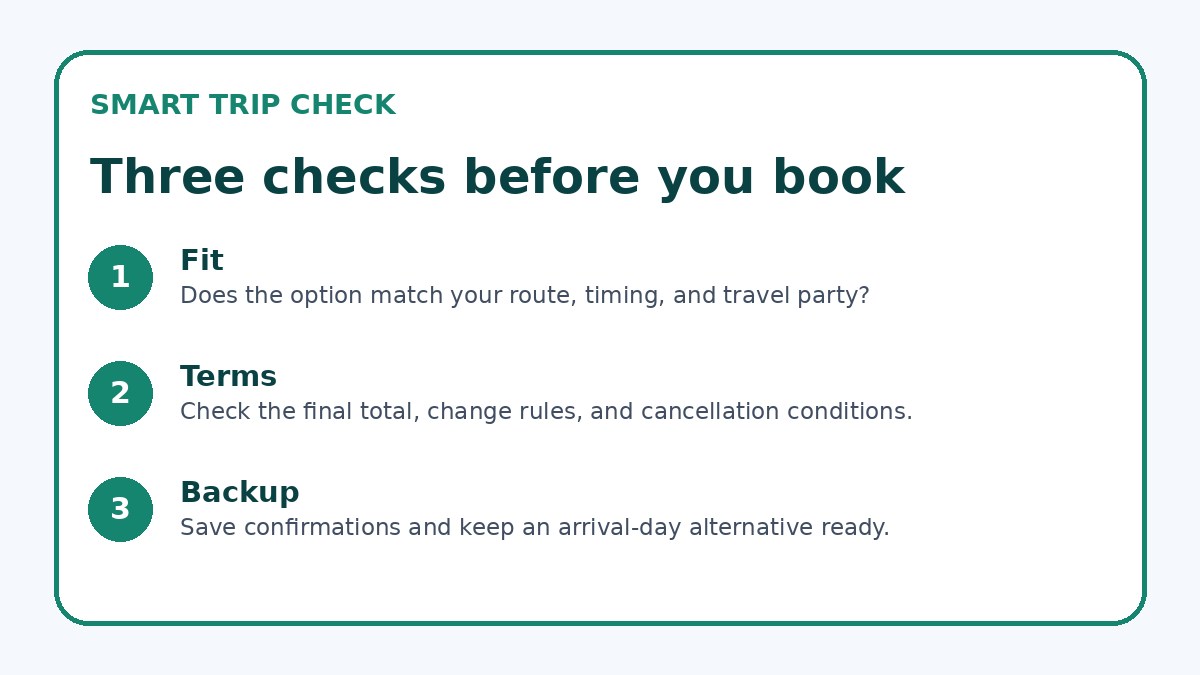
Timing flexibility and changing plans
Look at how each ticket type treats changes and cancellations in realistic scenarios: If one partner needs to extend the trip by a day, will you be able to change only that passenger’s booking? Flexible fares on trains sometimes allow name changes or partial rebooking, but many discount fares are non-refundable or tied strictly to a specific train. Coaches can offer looser change windows or open tickets that let you take any service on a day, but that varies widely. Another practical point: check how refunds are processed and how long it takes to get credit back, because couples often split costs and need usable credit quickly.
For last-minute shifts, confirm whether walk-up alternatives exist at the terminal and whether those alternatives require a completely new ticket. If you expect to travel on busy days, weigh the risk of not having confirmed seats: flexible but unreserved options can become stressful if the route fills. Couples who prize spontaneous changes should prioritize fares and providers that explicitly state same-day change, name-only adjustments, or clear rebooking fees on their booking pages; always verify those rules at purchase.
Compare the practical alternatives
Use the final page to confirm what is actually offered on your dates and save a workable fallback.
Intercity travel checklist
- Map door-to-door travel time: add taxi/rideshare, transfers and walking to the advertised journey time before comparing options.
- Check change and cancellation rules on the final booking page, noting any passenger-specific or seat-reservation conditions.
- Confirm luggage allowances and whether special items require a separate booking or fee for your chosen mode.
- Verify terminal locations in both cities relative to your accommodation and evening plans to avoid costly late taxis.
- Download or print booking confirmations and the provider’s stated disruption policy for quick reference during delays.
- Plan a backup connection or later service and ensure both partners know the meeting point and who handles rebooking.
Disruption backup and practical contingencies
Plan a realistic disruption backup: late trains, strikes, or road congestion can force you to improvise. Establish a backup meeting point and a shared folder with tickets, booking references, and contact numbers so both partners can act independently if separated. Consider buying two different types of backup tickets (for example, a later coach or local train) that you only use if your primary option fails—this can preserve flexibility without committing both travelers to the same rigid rule set.
Also prepare for accommodations or transport that don’t support quick refunds. If you must book a nonrefundable hotel night, ensure your tickets allow time buffers so delays won’t create cascading costs. For cross-border travel like Prague–Vienna, check at booking whether a single ticket covers connecting segments or if each leg is separate; in the latter case, build longer transfer windows into your schedule. Finally, when the provider’s booking page includes a specific disruption policy, save a screenshot or PDF so you can reference exact terms when filing claims or asking for assistance.
Rail & Intercity Transport questions travelers ask
Are train tickets from Prague to Vienna generally more flexible than coach tickets for couples?
Flexibility varies by fare type rather than transport mode. Many intercity trains offer specific flexible fares that permit changes or refunds within defined windows, but discounted train fares are often restrictive. Coaches sometimes sell open or flexible tickets that let you board any service on a day, which may feel more convenient for spontaneous plans. For couples, the key is to compare the exact change and refund conditions on the booking page: one partner’s need to change dates should be covered without blocking the other’s return or adding disproportionate fees.
If we need to split up for different return dates, what should couples check before booking?
If you plan different return dates or routes, verify whether a ticket is transferable or tied to a specific passenger and whether name changes are allowed. When bookings are passenger-specific, you may need separate tickets for each partner. Also check seat-reservation policies—reserved seats could complicate one partner switching trains. Confirm baggage handling and ensure both of you can independently access customer support if a change is needed while separated. Always make any passenger-specific adjustments on the provider’s official booking page to record the change formally.
How should we choose between a cheaper nonrefundable ticket and a pricier flexible option?
Estimate the real cost of possible changes: add potential rebooking fees, extra nights, or last-minute replacement tickets you’d pay if plans shift. For couples, consider who is more likely to need flexibility—if one partner has a variable schedule, buying flexibility for that traveler only (when permitted) can be efficient. Also weigh emotional cost: if a cheaper ticket risks stress or missed connections on a significant trip, a flexible fare can be worth the premium. Verify exact refund and change timelines on the booking page before deciding.
Final decision note
For couples traveling between Prague and Vienna the right choice depends less on a single ‘best’ carrier and more on matching ticket rules to your shared habits. If you prize minimal transfers, train options with flexible fares often deliver the most straightforward door-to-door experience; if you value simple same-day changes and lower upfront cost, a coach could suit you. Mixed itineraries and rental cars solve specific needs but add transfer or driving complexity. Before you commit, run through the checklist items above and always confirm change, cancellation and luggage rules on the provider’s final booking page—Trip.com can be a place to compare live availability, but verify terms directly with the seller.
Continue planning
Check current options and final conditions
Use the provider page to confirm live availability, the final total, cancellation terms, and every condition that matters to your trip.
This evergreen planning guide was created with AI-assisted drafting and a structured quality review. It does not display live prices, schedules, availability, visa guidance, or provider rankings. Verify current details before booking. Some links are affiliate links; we may earn a commission at no additional cost to you.