Decide first: will driving in Toronto genuinely improve this business trip, or add hassle and cost? If your meetings scatter across the GTA, or you need flexibility for early-morning or late-night site visits, a rental car can save time and avoid transfers. But if your schedule keeps you inside downtown core meetings, with hotels near Union Station or the Financial District, public transit plus rideshare often beats the combined friction of parking, tolls, and contract fine print. This article gives the practical answer up front: evaluate route value, check contract and insurance wording, anticipate pickup and return friction at airport versus city locations, and prepare a clear non-driving fallback. Read on to learn the exact pickup/return clauses and verification steps you must check before confirming a Toronto car rental for business.

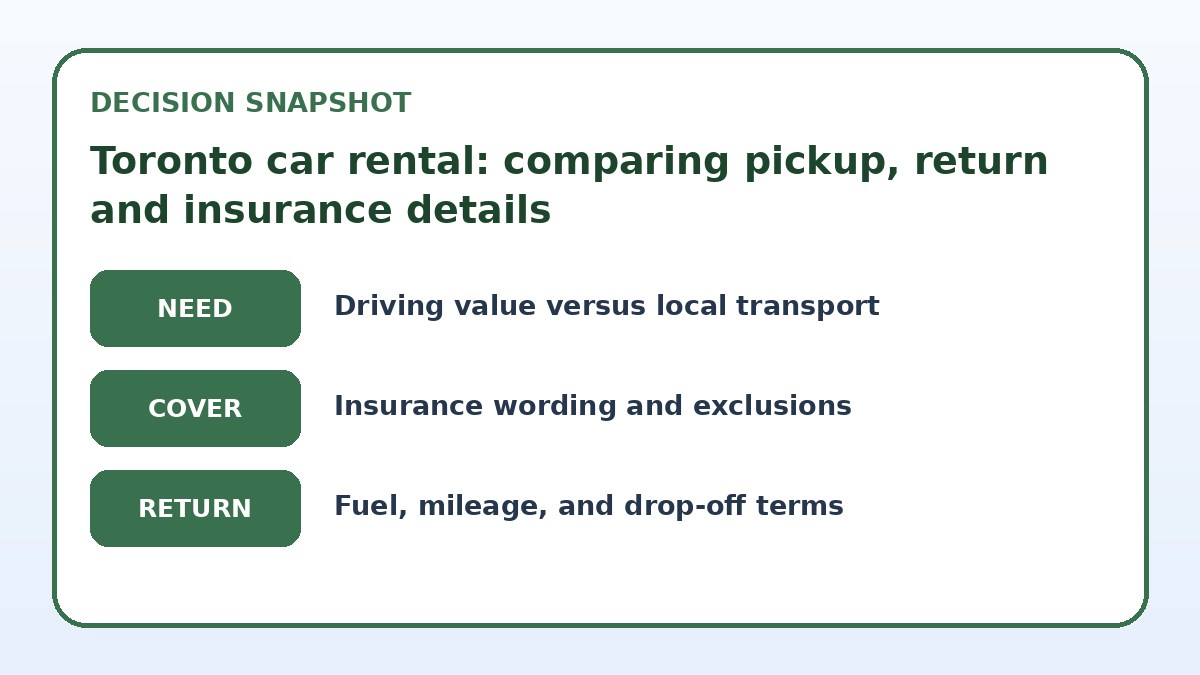
Should you drive in Toronto?
Start by mapping your calendar against Toronto’s geography. If your meetings are inside the downtown peninsula—Financial District, King Street, Front Street—or within comfortable walking distance of a major transit hub, driving often introduces more costs than value: paid parking, time finding spaces, traffic delays during peak times, and the administrative burden of rental terms. Conversely, if your itinerary includes suburban offices in Mississauga, North York, Scarborough, or multiple client sites spread across the Greater Toronto Area, door-to-door driving can save travel time and make tight schedules feasible.
Decide with two criteria: travel time savings and productivity gains. Estimate door-to-door transit times (including walking, transfers, and likely rideshare legs) and compare them with driving under typical traffic at your meeting times. If driving delivers consistent savings of 20–30 minutes per leg or enables meetings impossible by transit, it’s worth the added contract checks and parking planning. If not, choose public transit and rideshare as the lower-friction option and avoid rental-specific complications.
Decide whether driving earns its place
| Mobility strategy | Best for | Cost or friction to check |
|---|---|---|
| Self-drive rental car from airport or downtown branch | Multi-site suburban schedules, transporting equipment, or when driving saves significant door-to-door time. | Adds parking fees, toll handling, inspection risk, and requires careful contract and insurance verification. |
| Rideshare and taxis on demand | Short urban hops, late-night travel, and when avoiding parking and inspection obligations is important. | Higher per-trip cost for many legs and less control over vehicle type and storage for bulky items. |
| Public transit (TTC/GO Transit) plus occasional rideshare | Downtown meetings concentrated near transit hubs and predictable schedules with minimal administrative friction. | Slower for suburban sites, limited late-night service, and potentially more walking between venues. |
| Chauffeured car or corporate car service | High-value meetings where time is critical and you need a driver who handles parking and local navigation. | More expensive than self-drive and may require advance booking and company approval. |
Check live rental choices only after the route test
Use the exact driver, dates, pickup point, and return plan to compare current conditions.
Route value: when driving adds real business value
Driving adds value when you must reach suburban offices at times that transit doesn’t serve efficiently, when you transport samples, prototypes, or sensitive equipment, or when you need to visit several sites in a single day with tight turnarounds. For these use cases, a rental can keep you on schedule and cut waiting and transfer times. Quantify the benefit: how many additional meetings become possible with a car, how much time will you save per meeting, and whether that time directly contributes to billable work or critical outcomes.
Also evaluate parking and entry logistics at each destination: some suburban sites provide free visitor parking, while downtown clients may expect you to valet or use paid lots. When a client reimburses parking or provides permits, driving becomes more attractive. Build a quick route matrix before booking: list start/end addresses, projected departure times, and compare realistic transit versus driving durations. This practical exercise should determine whether rental costs and contractual restrictions are justified by measurable business benefits.
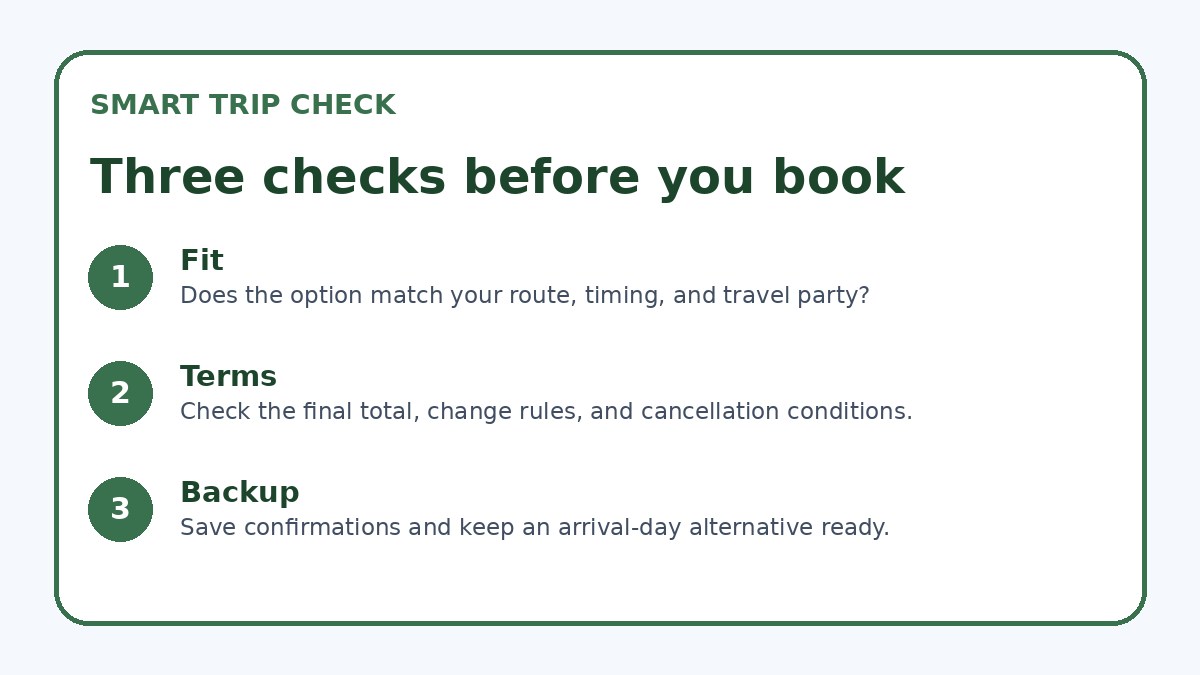
Compare the full rental conditions
Confirm insurance wording, exclusions, deposit, fuel, mileage, and return terms on the final page.
Insurance and contract wording to check
The most important wording to verify is what your corporate insurance, personal credit card, and the rental company actually cover. On the booking or final contract page, confirm whether collision damage waiver (CDW) or loss/damage waivers are optional or included, how liability limits are described, and what counts as an excluded driver or prohibited use. If your company has a fleet or corporate coverage policy, check whether it is primary (covers the loss first) or secondary (kicks in after other coverage). Record policy numbers and contact names so you can reference them if an incident occurs.
Also check specific language on cross-border travel if you plan to go into the U.S., on mileage caps or per-kilometre charges, and on toll handling and electronic tolling devices. Note any requirements for additional named drivers, age-related surcharges, or restrictions on commercial use. Where wording is unclear, take screenshots or save the rental company’s terms page and ask the company’s corporate travel manager or insurer to confirm in writing before you accept add-ons at pickup.
Car rental terms to verify
- Map every meeting address and estimate door-to-door travel times by driving and by public transit during scheduled meeting times.
- On the rental company’s final booking page, save or screenshot the exact insurance and waiver wording, including exclusions and whether CDW is primary or optional.
- Confirm pickup location details: terminal counter, off-site shuttle, required ID, and expected wait or shuttle time before you travel.
- Verify return procedures: after-hours drop-off policy, inspection protocol, and whether you must supply fuel to a specified level or pay a refuelling fee.
- Check authorized driver rules and add any additional drivers in advance to avoid unauthorized driver penalties at pickup.
- If crossing into the U.S. or traveling outside Toronto, confirm cross-border permission, additional fees, and required documentation on the booking page.
Pickup and return friction, and a non-driving fallback
Pickup friction varies by location. Airport counters at Toronto Pearson (YYZ) typically require more time for shuttles, lot access, and paperwork, while downtown branches may offer curbside or short-walk pickups but have tighter inspection expectations on return. Confirm whether the return location accepts after-hours drops, whether a shuttle is needed between terminal and lot, and the process for final damage inspection. On the rental company’s final booking page, verify whether fuel policies, exact return hours, and inspection procedures are stated and whether you must provide photo evidence at drop-off.
Always prepare a non-driving fallback. If you decide against renting, you can combine GO Transit, TTC (subway/streetcar/bus), and rideshare for flexible city coverage; for suburban reaches, schedule a rideshare or a local car service in advance. Keep a list of key addresses and approximate fares or travel times, and confirm whether your company will reimburse receipts for rideshare. This fallback reduces stress if contract terms or insurance gaps make renting impractical at the last minute.
Car Rental & Road Trip questions travelers ask
What should I check about tolls, parking, and electronic toll devices before renting in Toronto?
Confirm whether tolls are billed through an electronic transponder, a pay-by-plate system, or billed by the rental company with administrative fees. On the final booking page, find exact wording about toll handling and any associated service charges. For parking, ask whether the company charges for toll or parking violations and whether they notify you before charging. If you expect to use toll roads or park in paid lots frequently, decide whether to accept the rental company’s toll package or to pay tolls directly when possible to avoid surprise fees.
How do I know if my credit card or company insurance covers a rental in Toronto?
Look for explicit statements on the rental booking page about what insurance options are offered and which are optional add-ons. Contact your company’s travel or risk manager to confirm corporate coverage scope and whether it’s primary. For credit card coverage, read your card issuer’s rental car benefit guide to determine whether it covers Canadian rentals, the required card-holding driver, and how to file claims. Keep policy numbers and a contact for claims handy, and request written confirmation if corporate policies will be relied upon.
What are the most common return-day problems and how can I avoid them?
Common issues include disagreement over pre-existing damage, fuel level disputes, late returns, and unprocessed charges for tolls or parking violations. Avoid them by photographing the car at pickup and again at return (wide shots and close-ups of any marks), noting fuel level on the contract, and returning within the agreed hour. If returning after hours, follow the company’s documented drop-off procedure and keep confirmation of the returned key or electronic dropbox receipt. Save all receipts and return photos until final billing is confirmed.
Final decision note
For business travelers in Toronto, the decision to rent depends on measurable route value, careful reading of insurance and contract wording, and realistic planning for pickup and return friction. If your schedule stays downtown, transit plus rideshare will usually be the lower-friction, lower-administration choice. If you need suburban reach, equipment transport, or multiple distant meetings, a rental car becomes attractive — but only after you verify waivers, authorized driver rules, toll handling, and return procedures on the booking page. Prepare a non-driving fallback, document the rental condition with photos, and carry confirmation of any corporate or credit-card coverage before you drive. Trip.com can be used to compare current availability, but always verify the final terms on the provider’s booking page.
Continue planning
Check current options and final conditions
Use the provider page to confirm live availability, the final total, cancellation terms, and every condition that matters to your trip.
This evergreen planning guide was created with AI-assisted drafting and a structured quality review. It does not display live prices, schedules, availability, visa guidance, or provider rankings. Verify current details before booking. Some links are affiliate links; we may earn a commission at no additional cost to you.