Practical answer first: before committing to any Melbourne travel deal, add every out-of-pocket cost for the same dates, same travellers, and the identical itinerary — flights, airport transfers, baggage and seat fees, accommodation taxes and extras, meeting-space or workspace charges, and likely incidentals — then compare that summed total across options. A bundled package can look cheaper until you spot a non-refundable fare, mandatory resort fee, or restricted ticket that blocks itinerary changes for an important meeting. For business travelers the critical question is not whether a package has a lower headline price but whether it saves time, reduces risk, and keeps necessary flexibility. Use the provider’s booking page to verify final baggage allowances, change and cancellation fees, included meals, and what counts as a confirmed business service before you proceed.
Test package value fairly
| Booking approach | Best for | Tradeoff to check |
|---|---|---|
| All-in-one airline+hotel package | Travellers who want a one‑stop booking and minimal coordination. | May lock components together with restrictive change or cancellation rules; verify each inclusion and change policy. |
| Separate flight and hotel bookings | Business travellers needing maximum flexibility for flight or hotel changes. | Requires more time to manage but lets you pick refundable fares and negotiable hotel rates independently. |
| Flight plus hotel, bundled by a corporate or managed travel agent | Employees whose company enforces policy and prefers consolidated invoicing and duty-of-care support. | Policy-compliant options may be pricier but simplify approvals; check invoicing, supplier policies, and blackout dates. |
| Base flight fare with preferred hotel and separate ground transfers | Travelers prioritising lowest base fare while selecting reliable local transfers and lodging separately. | May look cheapest at first but add-on fees for baggage, seats, and transfers can erase savings; confirm all add-on prices. |
Check current package and separate options
Use identical dates, travelers, room needs, baggage, and flexibility so the comparison stays meaningful.
What to compare first: identical baseline for fair deals
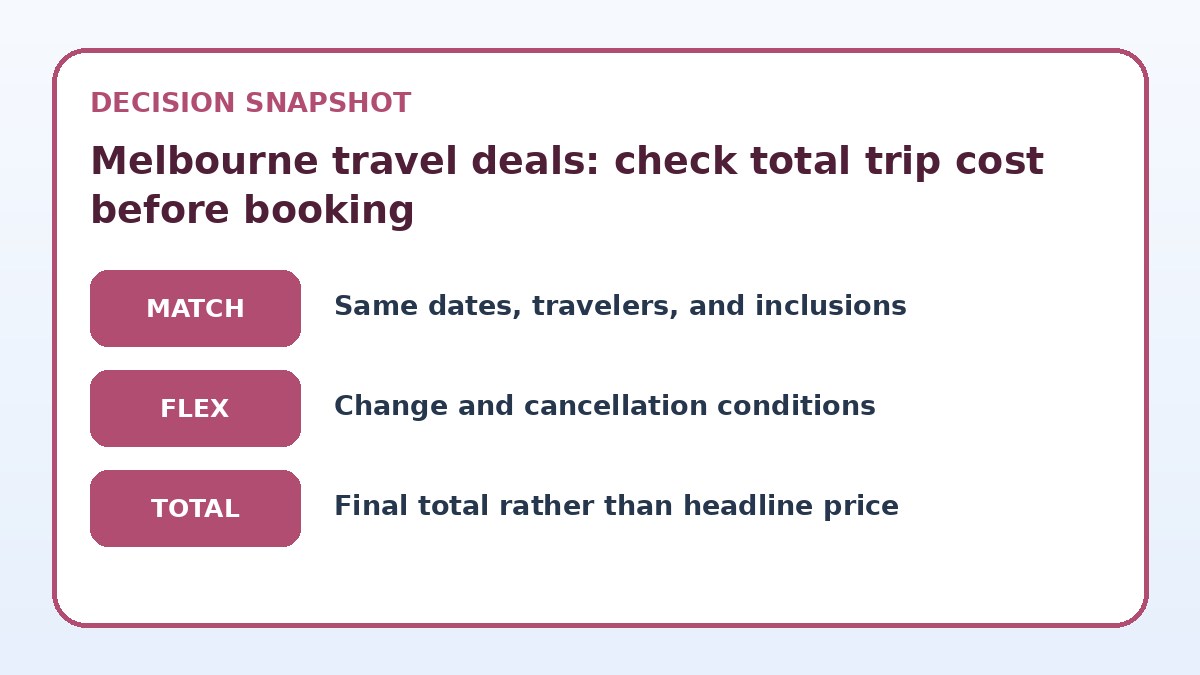
Start every comparison by fixing the baseline: the same origin and return dates, identical number of travellers, and the same morning or evening meeting constraints. If you evaluate a bundled hotel+flight offer against separate bookings, don’t accept different flight times, connection lengths, or room categories as equivalent. Those differences change costs (overnight stays, late transfers) and the usefulness of the option for a business trip. Only after you’ve normalized those variables can you compare net cost, convenience, and risk.
Make a checklist to force parity: flight times and class, baggage allowance, seat selection, hotel room type and nightly taxes, breakfast or business centre access, included transfers, and change/cancellation rules. Use the providers’ final booking pages and terms and conditions to confirm what the booking includes and which items are add-ons. If a statement on a listing is vague, click through to the checkout or contact customer service to resolve it before you count it as included.
Inclusions matter: what is really “included” in a package
Headlines like ‘includes transfers and breakfast’ require scrutiny. Verify whether airport transfer means a private car, shared shuttle, or a voucher for a taxi; whether breakfast is continental only or includes hot options; and whether Wi‑Fi is free in-room or only in public areas. For business travellers, small differences matter: access to a functioning business centre, guaranteed workspace, reliable hotel Wi‑Fi speeds, and late checkout can reduce day-of-meeting stress and extra costs.
Always check the final provider page to see which inclusions are confirmed and which are optional paid upgrades. Some bundles advertise complimentary meeting-room access but then require advance booking or charge hourly rates. Confirm whether the bundle’s included benefits apply to all travellers on the booking and whether any value relies on third-party services (local transfers, guided logistics) that the provider doesn’t control.
Look past the headline total
Compare inclusions and change conditions before deciding whether a package is genuinely useful for this trip.

Deal comparison checklist
- Lock the exact travel dates, number of travellers, and required meeting start times before pricing any option.
- Open the provider’s final booking/checkout page and copy the stated baggage allowance, seat-assignment fees, and change/cancellation rules.
- Confirm whether transfers, breakfast, Wi‑Fi, business‑centre access, and meeting-room use are explicitly included or paid extras.
- Ask your travel or finance manager if separate invoices are required for corporate reimbursement and verify the supplier can provide them.
- Compare refundable versus non‑refundable fares by quantifying the maximum change penalty you would face for a schedule shift.
- If a bundle is unclear, request written confirmation from the provider listing all inclusions and cancellation terms before payment.
Flexibility and risk: refundable fares, changes, and reconfirmation
A headline saving vanishes if your flight is non‑refundable and a client reschedules. For business travel, prioritise flexibility: refundable fares, free or low‑cost changes, and clear rebooking rules. When comparing bundles to separate bookings, check whether the hotel or flight portion can be changed independently and how change fees are applied. If the package locks you into a non-transferable combined fare, a mid-trip change could be costly or impossible.
Read the cancellation and change policies on the provider’s final booking screen — not just the listing copy. Verify how refunds are processed (credit, voucher, or original payment method), the time window for free changes, and whether third-party components (for example a ground operator) have stricter rules. If you need recurring flexibility for meetings, choose the option that minimizes penalty exposure even if it costs a bit more up front.
Traveler-specific value: what business travellers should prioritize
Decide which services save you time or reduce friction on the day of travel. For a short in‑city meeting schedule, prioritise central hotels with quick transit access, reliable express transfers to the airport, and good on-site Wi‑Fi. If your calendar needs last-minute adjustments, value refundable tickets and flexible hotel rates above headline savings. Evaluate whether a bundled package includes meeting-ready amenities like breakfast meeting rooms or printing services that otherwise you'd have to book separately.
Consider corporate policy and reimbursement rules when assessing value. Some companies require itemized receipts or pre-approved vendors; a mysterious package price may complicate expense reporting. Confirm whether the bundle issues separate invoices for flights and accommodation if needed for corporate accounting. When in doubt, capture screenshots of final terms from the booking page and forward them to your travel manager before committing.
Travel Deals & Booking Strategy questions travelers ask
Is a bundled flight+hotel package usually cheaper than booking separately for Melbourne business trips?
A bundle can be cheaper in some cases, but there’s no universal rule. For business trips, the deciding factor isn’t just headline price but the total, verifiable out‑of‑pocket cost for identical dates and services. Compare the final checkout totals for identical flight times, baggage allowances, room types, and included extras. Also check change and cancellation rules: a cheaper non‑refundable bundle can cost more if your meeting moves. Verify inclusions on the supplier’s final page or contact customer service before booking.
What specific fees should business travellers watch for when evaluating Melbourne travel deals?
Common pitfalls are baggage and seat-selection fees, mandatory resort or city taxes, airport transfer surcharges, meeting-room booking fees, and charges for business‑class amenities like guaranteed Wi‑Fi. Also watch how refunds are processed — voucher versus card refund — and whether the invoice separates line items for expense reporting. Confirm the provider’s terms on the final booking page and ask for clarification in writing for anything labelled as ‘additional fees’ or ‘service charges’.
How do I ensure a package’s flexibility matches my company’s travel policy?
Start by reviewing your corporate travel policy for refundable fare requirements, preferred vendors, and invoicing rules. When a package looks suitable, check the booking confirmation page for change and cancellation fees and whether the supplier issues separate receipts for flights and hotels. If the package terms don’t align, contact the supplier or your travel manager to request an alternative or written exception. For complex rules or high‑risk schedules, consider booking flights and hotels separately to preserve flexibility.
Final decision note
For business travel to Melbourne, the practical step before booking is to compare apples to apples: identical dates, travellers, and service levels. Don’t be swayed by a low headline price — verify inclusions and final checkout totals, check change and cancellation terms on the provider’s booking page, and factor in transfer and baggage fees. If corporate policy matters, confirm invoicing and reimbursement requirements in advance. When in doubt, request written confirmation of inclusions and penalties; you can also use platforms like Trip.com to view current availability, but always verify terms on the supplier’s final booking screen before you pay.
Continue planning
Check current options and final conditions
Use the provider page to confirm live availability, the final total, cancellation terms, and every condition that matters to your trip.
This evergreen planning guide was created with AI-assisted drafting and a structured quality review. It does not display live prices, schedules, availability, visa guidance, or provider rankings. Verify current details before booking. Some links are affiliate links; we may earn a commission at no additional cost to you.