
If you and your partner want the most practical way to travel from Melbourne to Adelaide, focus first on what matters to you both: time on the move, comfort, scenery, privacy, and how flexible your schedule must be. For most couples balancing weekend time, luggage and a relaxed mood, flying is the fastest way; taking the train or driving can win on comfort, shared space and scenery. This guide quickly gives the practical answer up front, then walks you through the tradeoffs, decision criteria and booking checks so you can compare options without second‑guessing. Use these points to decide whether speed, together-time, or the journey itself is your priority, and what to verify before you book.
How to decide: priorities that matter for couples
Start by listing three priorities for this trip: minimise travel time, maximise comfort and privacy, or make the journey a key part of your holiday. Couples often differ—one may want the fastest arrival while the other prefers a scenic, relaxed approach—so clarifying this up front avoids frustration. Consider luggage and mobility needs too: how much baggage will you both carry, and are you comfortable lifting bags up steps or stowing them in tight overhead bins? Practical concerns like morning commitments, the ability to nap, and whether you want a car at your destination should all shape the decision.
Also think about flexibility and stress tolerance. Flights offer fixed departure times and often rigid change policies; trains and self-driving let you alter itineraries more easily, though long drives require two focused drivers or planned rest stops. If either of you is prone to motion sickness, know how the mode affects comfort: smooth rails or cockpit-style car rides can be very different for passengers. Finally, check whether you want privacy to talk, read, or share snacks—some options deliver that better than others.
Flying: when speed and convenience win
Choose air travel when your top priority is getting from door to door quickly. For couples with limited time—weekend breaks, short business overlaps, or tight itineraries—flight schedules can save hours compared with surface travel. When evaluating flights, compare total door-to-door time: include travel to and from airports, security and boarding windows, and how early you need to arrive. Decide how much you value seat choice together and extra baggage; these affect comfort and whether you sit side-by-side for the whole trip.
Before booking, verify connection details and baggage allowances on the carrier’s official booking page instead of relying on summary sites. If a direct flight is available, check whether it fits your time constraints; if only connecting options exist, compare layover length and transfer ease. Also check airport-to-city transfer options where you're landing: a longer transfer can nullify a short flight. Trip.com can be a helpful place to check current availability, but always confirm the final itinerary and rules with the airline or your agent.
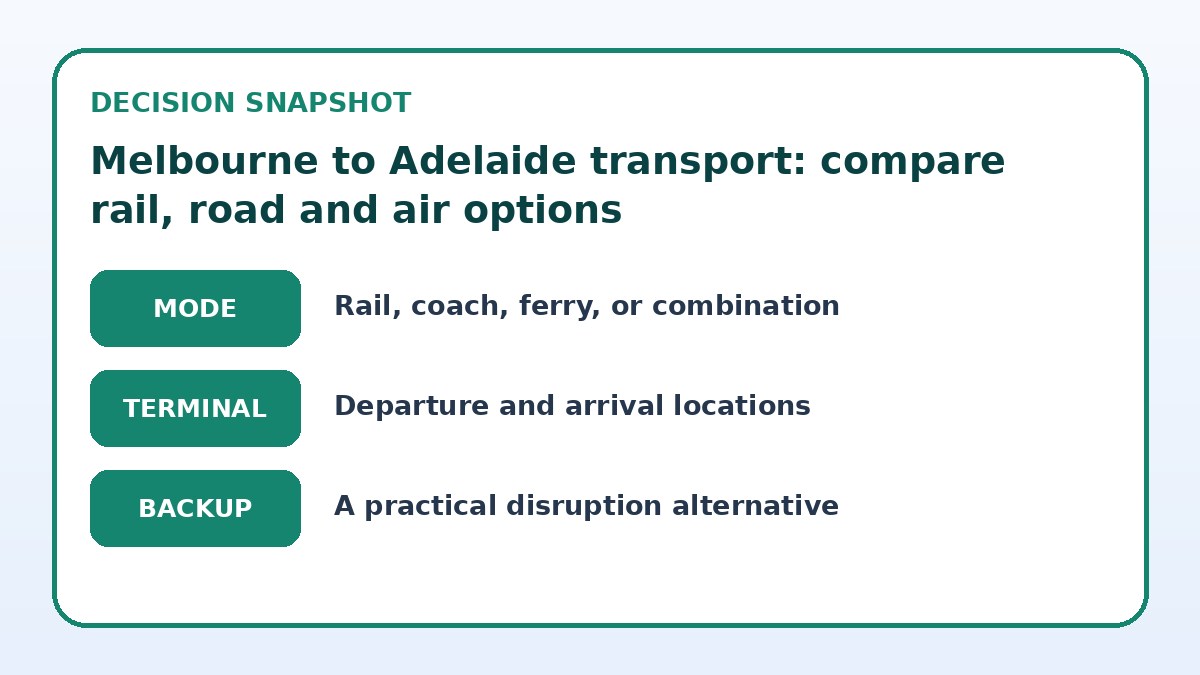
| Approach | Best for | Tradeoff to check |
|---|---|---|
| Fly (direct or connecting) | Couples prioritising speed and compact trip schedules | Less time together in transit; add airport transfers and baggage rules to total travel time |
| Train or coach | Couples who value comfort, scenery and shared journey time | Often longer travel time; check for transfers and station locations that affect logistics |
| Self-drive road trip | Couples seeking flexibility, private stops and a personalised itinerary | Requires active planning, driving responsibility and rest-stop management |
| Mix-and-match (fly one way, drive or train back) | Couples wanting speed one way and experience or flexibility on return | More complex logistics and potentially higher combined costs or transfer planning |
Train and coach: the relaxed, scenic alternative
Trains and coaches suit couples who want the journey to be part of the trip—time together, scenery and no driving responsibility. Trains generally provide more room to move, the ability to stand and visit a café car, and easier luggage handling than budget flights. If you prefer to nap, read, or enjoy uninterrupted conversation while watching changing landscapes, rail travel often beats congested airports. Coaches can be cheaper and reach stops that trains do not, but compare seat comfort, stops and whether overnight travel fits your sleep preferences.
When considering rail or coach options, check whether services are direct or require transfers—an indirect route can stretch travel time significantly. Look at departure and arrival stations’ locations in both cities to understand local transfer times. If you need a car at your destination, plan how you’ll collect or return it from the station. Finally, verify amenities such as reclining seats, power outlets and dining options on the provider’s official pages before finalising plans.
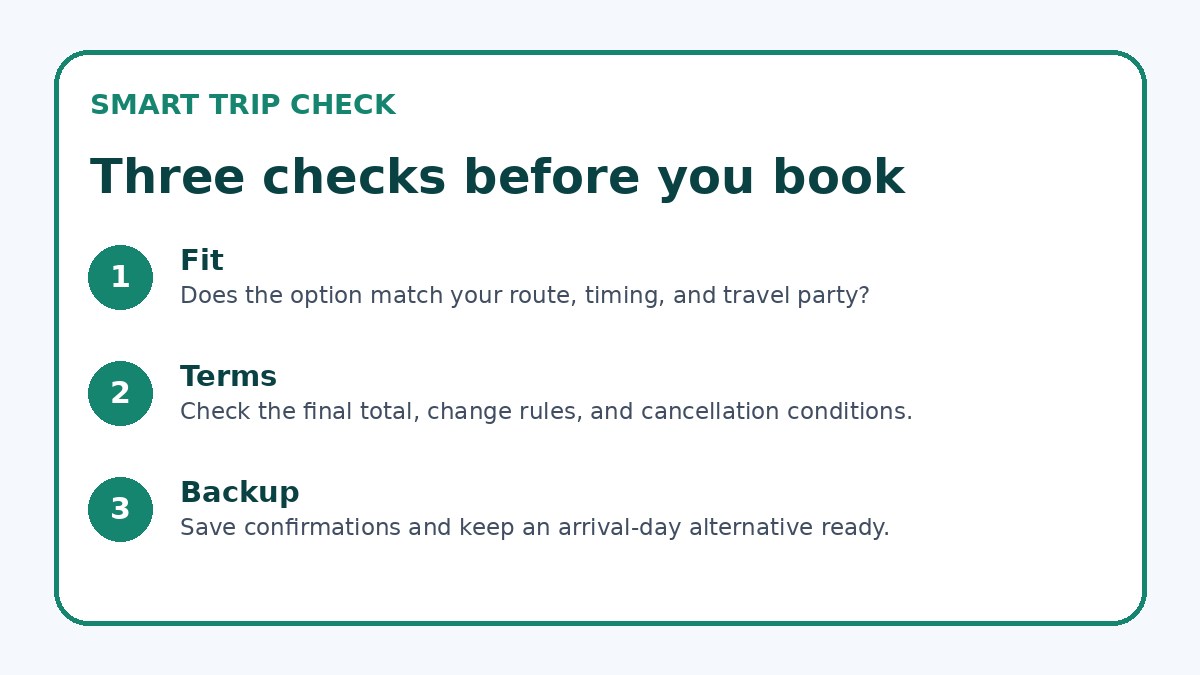
Before you book
- Decide your top three travel priorities together (time, comfort, scenery) and write them down before searching options.
- Compare total door-to-door time for each option, including transfers, check-in, and airport/station travel.
- Verify baggage rules, seat selection policies and change/cancellation terms on the provider’s official booking page.
- Check station and airport locations relative to where you’ll be staying to estimate local transfer time and cost.
- Plan driver shifts, rest stops and overnight breaks if you choose to drive; map fuel stops and alternative routes.
- Book refundable or changeable options where possible if your schedule is flexible, and confirm pickup or rental policies.
Self-drive: freedom with responsibility
Driving lets you control pace, stop where you like and turn the route into part of the holiday with coastal detours or country towns. For couples who enjoy shared navigation, playlists and split driving shifts, a road trip can be deeply rewarding. However, longer drives add fatigue risk and require planning: rest stops, fuel, route choices, and comfortable accommodation if you break the journey overnight. Consider whether one of you will drive most of the time; splitting shifts or planning relaxed daily distances keeps the trip enjoyable rather than exhausting.
Before committing to a drive, map possible routes and estimate realistic daily driving hours to match your energy levels. Check vehicle suitability for luggage and passengers, and whether you prefer a single vehicle or two cars for different needs. If renting, confirm the rental contract, insurance coverage and cross-border rules if your travel plan touches state borders. Always verify driving conditions and roadworks from authoritative sources before departure to avoid surprises.
Frequently asked questions
Is taking the train from Melbourne to Adelaide more romantic than flying?
Many couples find train travel more romantic because it encourages unhurried time together, shared views and easier movement through carriages. Trains let you dine, walk and chat without the rush of airports, and the changing countryside can become part of the experience. That said, romance depends on your travel style: for those who prefer arriving quickly to spend more time at the destination, flying may feel more romantic because it maximises your stay. Decide whether the journey itself or time at the destination matters more to you both.
Should we rent a car in Adelaide or bring our own if we drive?
If you already own a vehicle and enjoy road trips, taking your own car avoids rental paperwork and lets you control comfort preferences. Renting gives flexibility if you don’t want wear on your car, prefer a different vehicle type, or plan a one-way itinerary. If renting, verify the rental company’s terms, insurance coverage, driver age requirements and fuel policies on their official booking page. Also check pick-up/drop-off logistics in both cities to avoid long transfers.
How do we compare total travel time accurately across modes?
Calculate door-to-door time by adding transfers: for flights include travel to airport, recommended pre-departure arrival window, flight duration and transfer on arrival; for trains include travel to the station, boarding time and any transfers; for driving include realistic driving time plus planned stops. Don’t forget time to collect hired vehicles or wait for shuttles. Comparing these totals gives a clearer picture than headline durations alone and helps you choose the mode that fits your schedule.
Final planning note
For couples deciding how to travel Melbourne to Adelaide, the practical choice depends on what you value most together. Fly if you need speed and extra time at the destination; choose train or coach when the journey, comfort and relaxation are priorities; drive if flexibility and personalised stops matter. Make the choice by comparing total door-to-door time, luggage and seating needs, and how much active planning you want to do. Always verify schedules, baggage rules and change policies on providers’ official pages before booking; check Trip.com if you want a quick market view, but confirm details with the carrier or rental company directly. With clear priorities and a simple checklist, you’ll pick the option that makes the trip enjoyable for both of you.
Continue planning
Check current options and final conditions
Use the provider page to confirm live availability, the final total, cancellation terms, and every condition that matters to your trip.
This evergreen planning guide was created with AI-assisted drafting and a structured quality review. It does not display live prices, schedules, availability, visa guidance, or provider rankings. Verify current details before booking. Some links are affiliate links; we may earn a commission at no additional cost to you.