Practical answer first: for most first-time visitors who plan to stay mainly in central Melbourne and use public transport for inner-city sightseeing, picking up a rental in the city is usually less hassle and cheaper overall. If your itinerary includes long drives (Great Ocean Road, Mornington Peninsula, Grampians) or you arrive late at night, airport pickup often wins for convenience and timing. This article explains the tradeoffs so you can make a booking-stage decision: route value (what drives you’ll actually do), insurance and waivers language to check, pickup and return friction, and a clear non-driving fallback if you decide not to rent after all.
Route value: does driving actually improve your Melbourne trip?
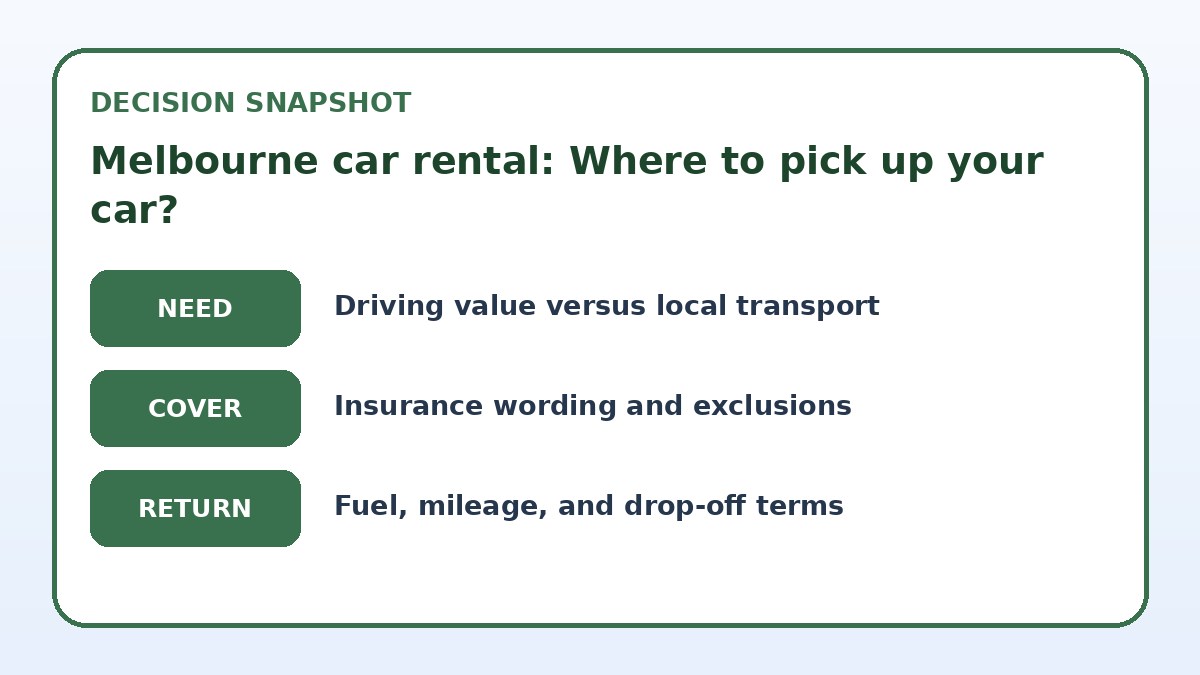
Start by listing the places you absolutely want to visit and how often you’ll travel beyond the CBD. Central Melbourne is compact and well served by trams, trains and short rideshares—driving here adds parking complexity and time spent finding spaces. But if your plan prioritises the Great Ocean Road, Mornington Peninsula wineries, or inland national parks, those routes are far more flexible with a car. Think in terms of days: if two to three full days of your trip are scenic drives or remote hikes, a rental likely improves value.
Also consider day-trip logistics: some regional routes begin early and finish late; airport pickup avoids an inner-city transfer on arrival and lets you leave directly for the highway. Conversely, if you only want a single day-drive and will otherwise use public transport, a downtown pickup for a single 24-hour hire may create lower fees and easier returns. When provider details matter—airport location, vehicle drop-off points, and one-way fees—verify those specifics on the rental provider’s final booking page before you commit.
Decide whether driving earns its place
| Mobility strategy | Best for | Cost or friction to check |
|---|---|---|
| Airport pickup | Travelers with long regional drives or tight arrival/departure schedules | Potential airport surcharges, queues, and fixed desk hours to confirm on the booking page. |
| City pickup | Visitors staying in CBD or nearby suburbs who want to avoid airport fees | Smaller lots and more street parking hassles; check return procedures and opening times carefully. |
| Train/coach to downtown, then city pickup | Those arriving cheaply by public transport but needing a car for select days | Adds a transfer step and timing dependency; confirm office hours and luggage handling rules. |
| No car (public transport, rideshare, tours) | Visitors staying in Melbourne proper who prefer to avoid parking and insurance complexity | Less flexibility for remote routes; compare tour options and coach timetables for day trips. |
Check live rental choices only after the route test
Use the exact driver, dates, pickup point, and return plan to compare current conditions.
Insurance wording: what to read before you sign
Insurance and liability language is the most important fine print in any Melbourne car rental. Look for the excess (financial responsibility after a claim), whether roadside assistance is included, and how the contract defines ‘damage’ versus ‘wear and tear’. Many suppliers offer Collision Damage Waivers (CDW) that lower or remove your excess, but terms vary and exclusions—like windscreen, tyres or undercarriage—are common. Your credit card or travel insurance may offer supplementary coverage; confirm the exact wording and any required steps for making a claim on the final booking page and with your card provider.
Also check the pickup/return requirements tied to insurance: some waivers are voided if you drive on unsealed roads or take the car out of state without permission. If you plan to drive rural or gravel roads (common on some coastal detours), read the supplier’s policy carefully. When in doubt, ask the provider to email the full insurance clause and file a screenshot of confirmation; doing so protects you if the agent at pickup gives different instructions.
Compare the full rental conditions
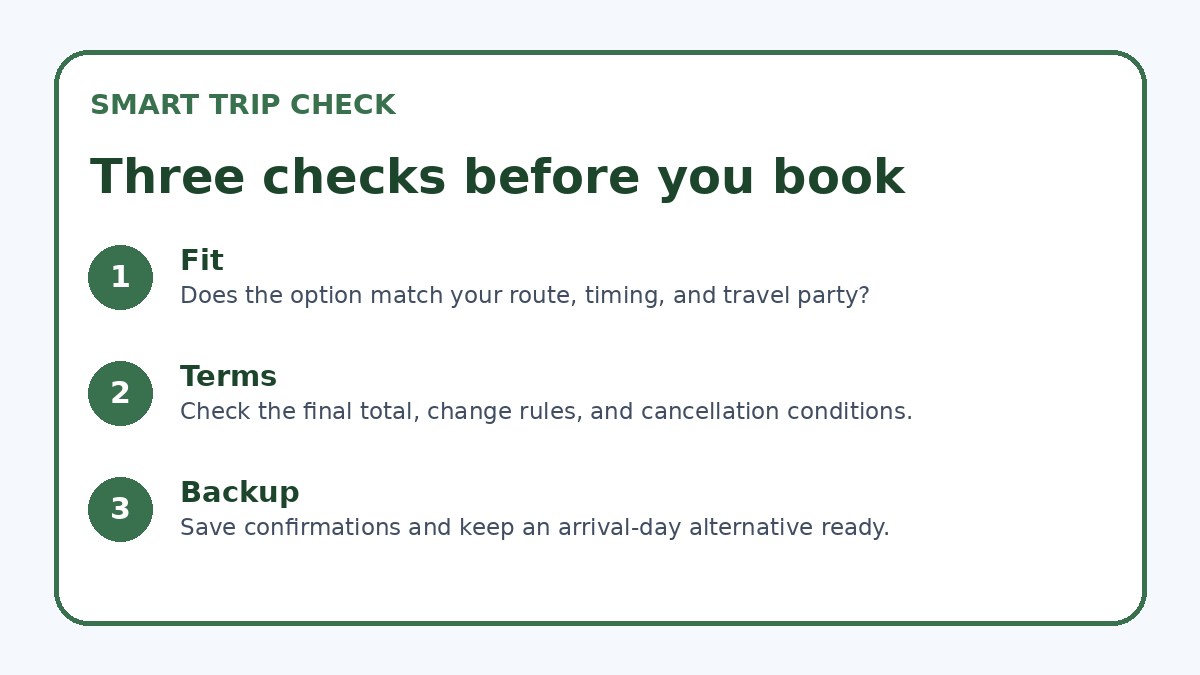
Confirm insurance wording, exclusions, deposit, fuel, mileage, and return terms on the final page.
Pickup and return friction: airport vs city practicalities
Airport pickup often feels easiest because you step from the terminal to a rental desk or shuttle in a single movement, but airports can also have dedicated fees, longer queues during peak arrivals, and more rigid return lanes. If you value immediate access to major highways and have luggage to stow, airport pickup reduces inner-city transfers. However, consider arrival time: late-night flights may limit desk hours or force after-hours collection fees—always verify the supplier’s opening hours, after-hours policies and exact pickup location on the booking page before relying on this option.
City pickup lets you drop luggage at accommodation, use trams to scope parking areas, and avoid airport surcharge fees that some companies apply. Expect smaller city offices with tighter lots and potentially longer walk times to find your car. Also plan your return: city offices may have limited evening drop-off windows or require an out-of-hours key box. Compare the exact return procedure, any late-return penalties and shuttle requirements on the supplier’s final page before booking.
Car rental terms to verify
- List your must-see destinations and mark which require a car versus those reachable by public transport.
- Before booking, screenshot the rental’s full insurance section, excess amount, and any exclusions shown on the provider’s final booking page.
- Compare pickup and return hours for both airport and city offices and note after-hours procedures and penalties.
- If driving regional roads, check whether the rental agreement allows travel on unsealed roads or across state lines and get written confirmation.
- Plan a non-driving backup: buy a myki card, note major tram/train routes near your lodging, and pre-download rideshare apps.
- Confirm where you’ll park overnight in Melbourne—hotel rules, street parking, or secure lots—and estimate likely costs before choosing pickup location.
Non-driving fallback: how to plan if you skip renting
If you choose not to drive, Melbourne’s public transport network plus short regional links cover most visitor needs. Use trams in the CBD, trains for longer suburban or coastal hops, and coach or regional rail for destinations beyond metropolitan limits. For day trips where public transport is sparse, consider guided excursions or regional coach services that depart from central Melbourne; these remove the need to navigate unfamiliar roads and include local knowledge on scenic routes.
Build a fallback by identifying a few key transfers in advance: nearest train station to your accommodation, tram routes you’ll rely on, and apps or phone numbers for taxi and rideshare companies. If a day trip really requires a car, consider hiring a vehicle just for that day from a downtown office—this hybrid approach preserves convenience without committing to a full rental. Always check timetables and booking policies on provider pages; Trip.com can be useful to compare availability but verify final conditions with the operator before booking.
Car Rental & Road Trip questions travelers ask
Is it cheaper to pick up a rental car in Melbourne city or at the airport?
There isn’t a universal answer: airport pickups can include location surcharges and higher demand, while city offices may have lower fees but smaller fleets. Cost depends on factors you control: the length of hire, one-way drop-off fees, and whether you need after-hours collection. To decide, compare the total quoted cost for both pickup locations—including any airport fee, one-way charge and mandatory extras—on the supplier’s final booking page. Also factor in the monetary and time cost of an airport-to-city transfer if you choose a downtown pickup.
Will my credit card insurance cover a Melbourne car rental?
Some credit cards provide rental insurance but coverage varies widely by card issuer and country. Common limitations include exclusions for specific vehicle groups, petrol policy requirements, or bans on unsealed roads. Before depending on card insurance, request the issuer’s written policy covering rental vehicles in Australia and check the rental contract for required paperwork at pickup. If the card’s coverage is insufficient, you can often buy additional waivers from the rental company—verify the exact terms and excess amounts on the supplier’s booking page before you commit.
What should I verify on the rental provider’s final booking page?
Critical items to confirm are office hours and exact pickup location, the stated excess and what the Collision Damage Waiver covers, allowed mileage, fuel policy, and whether driving on gravel or interstate travel is permitted. Also check one-way drop-off rules, late-return penalties, and any airport-specific surcharges. If you need roadside assistance, verify how to contact it and whether it’s included. Save or screenshot the confirmation page and the policy text so you can show it at pickup if details differ.
Final decision note
Choosing airport or city pickup in Melbourne comes down to your itinerary and tolerance for logistical tradeoffs. If your trip centers on regional drives or you value arriving and leaving without extra transfers, airport pickup offers convenience and direct access to major roads. If you’ll spend most time in the CBD and want to avoid airport fees and long queues, a city pickup or hiring only for specific days is likely the smarter choice. Whatever you pick, read the rental contract carefully—especially insurance, allowed roads and return procedures—and keep a non-driving fallback plan so you can adapt if something changes at arrival.
Continue planning
Check current options and final conditions
Use the provider page to confirm live availability, the final total, cancellation terms, and every condition that matters to your trip.
This evergreen planning guide was created with AI-assisted drafting and a structured quality review. It does not display live prices, schedules, availability, visa guidance, or provider rankings. Verify current details before booking. Some links are affiliate links; we may earn a commission at no additional cost to you.