Practical answer first: for most couples traveling together on a short holiday, a nonstop Seoul to Singapore flight is the simpler, lower-risk choice if the schedule matches your plans and the fare difference is modest. Choose a connecting itinerary when the nonstop schedule forces awkward arrival or departure times, when the fare gap is significant enough to justify extra ground time, or when you want to add a short stopover city. When you compare options, prioritize the arrival time in Singapore, total door-to-door travel time, baggage transfer policies, and cancellation or change terms that matter to two travelers. Before you search live fares, note exact departure and return dates, preferred airports in Seoul (ICN or GMP) and Singapore (SIN), number of checked bags, and whether either traveler needs flexible ticket rules or seat selection.
See live routes for your exact travel day
Compare direct and connecting choices with the same baggage and traveler details.
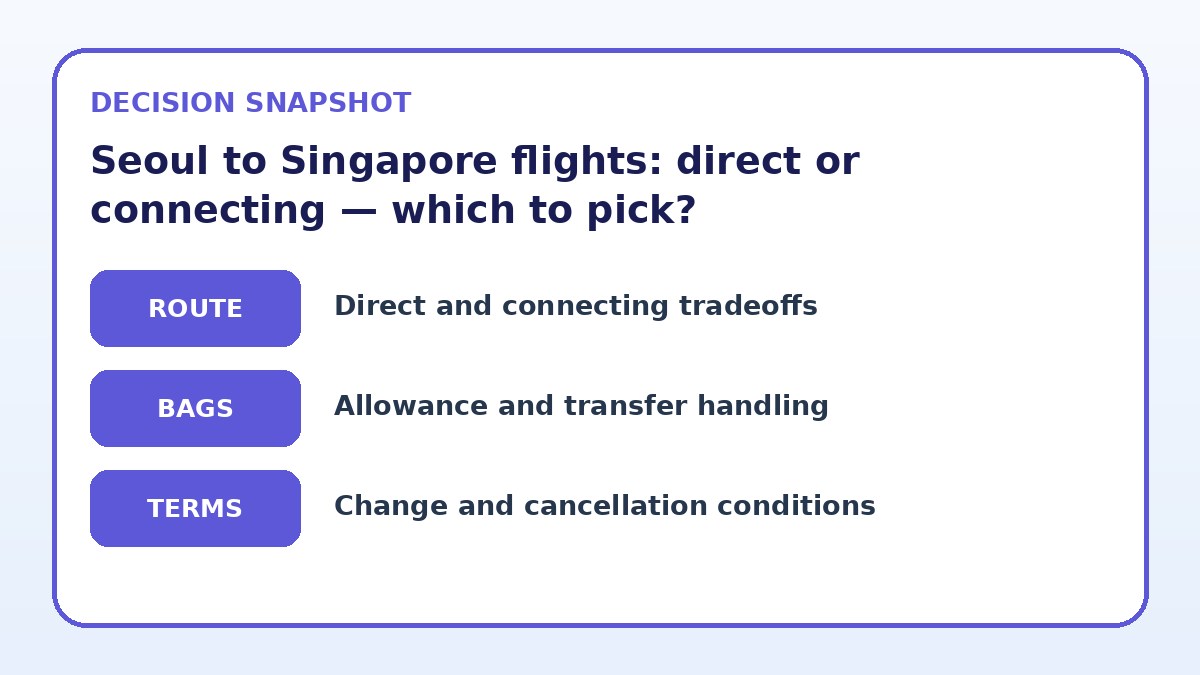
Routing: what to compare between direct and connecting
When comparing routing options for Seoul to Singapore flights, focus on the total door-to-door time rather than only flight hours. A nonstop saves you a connection and can cut travel unpredictability; connections may add significant airport dwell time and potential transit procedures. For couples, small differences in schedule matter—an extra two hours in transit reduces sightseeing or dinner time. Match arrival times to your first-night plans in Singapore and consider whether a mid-route stop would let you break the journey into two enjoyable segments or merely extend travel fatigue.
Examine which airports are used for connections and how transfers are handled. Some connections require changing terminals or even clearing immigration and re-checking bags, which increases the chance of stress for two travelers. If a connecting itinerary offers a shorter total trip time despite one stop, it can be a reasonable tradeoff. Conversely, a nonstop that lands late at night may be less convenient than a connection that arrives earlier in the day—so prioritize schedule fit over route type alone.
Baggage and connection risk: protecting your luggage and time
Baggage handling is one of the clearest risks on connecting itineraries. When both segments are booked on a single ticket with the same alliance or partner airline, checked bags are typically through-checked to the final destination, which lowers the hassle. However, when you piece together separate tickets or fly carriers without agreements, you may need to collect and re-check bags during a connection. For couples, decide whether you’re comfortable managing two bags or prefer to travel light with carry-on only to eliminate the risk entirely.
Connection risk also includes missed connection protections and rebooking policies. If both travelers need guaranteed onward seats—for an event or timed check-in—favor itineraries that explicitly promise protection against missed connections. When comparing options, read the airline’s conditions about missed flights, minimum connection times, and whether re-accommodation is included. If policies are unclear on the provider’s booking page, contact the airline before purchasing. These checks prevent surprises and help you decide whether savings on a connecting fare are worth the potential stress.
Compare flight-selection strategies
| Flight strategy | Best for | Risk to check |
|---|---|---|
| Nonstop flight at a slightly higher fare | Couples who value simplicity, minimal risk, and more usable vacation time. | Usually more expensive and may offer fewer schedule choices for optimal arrival times. |
| One-stop connecting itinerary with same-ticket protection | Couples ready to accept a layover for a lower fare but wanting reduced transfer risk. | Longer total travel time and potential for missed time at your destination. |
| Separate-ticket connections to save money | Budget-conscious couples who can handle baggage transfers and flexible timing. | Higher connection risk and no guaranteed rebooking if a delay breaks your itinerary. |
| Connecting itinerary timed as a short stopover | Couples who want to briefly experience a second city en route without adding another trip leg later. | Adds complexity and possible extra costs for visas, baggage handling, and transit logistics. |
Recheck the complete itinerary
Confirm airports, connection handling, baggage, and change conditions before deciding.
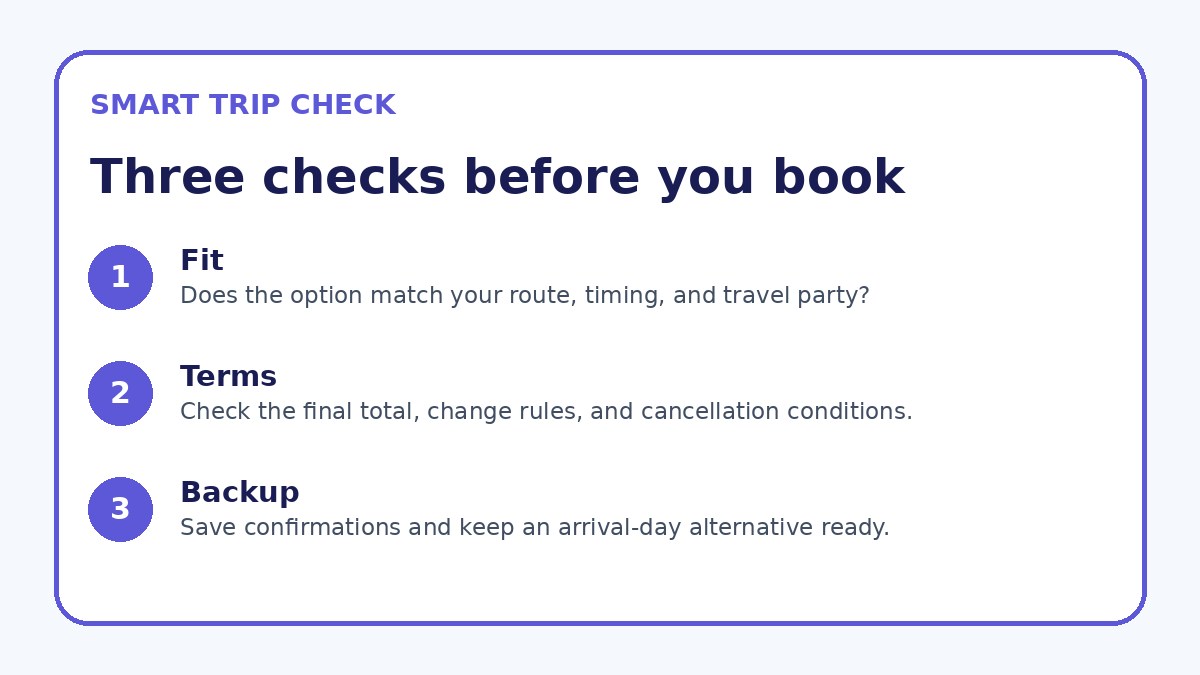
Schedule fit: how arrival and departure times affect couple plans
Think beyond flight duration: arrival time in Singapore determines when your couple plans actually start. If you want to arrive in time for a sunset dinner, a nonstop that lands late morning or early afternoon may be ideal. Conversely, a cheap red-eye nonstop could be tempting but might leave you burnt out the next day. For couples, consider how jet lag, hotel check-in policies, and planned activities like evening shows or tours influence the best arrival window.
Departure timing from Seoul matters too. Early morning departures can mean waking very early, while late-night departures may allow a relaxed day but leave you arriving in Singapore at an awkward hour. If one partner is sensitive to sleep disruption, you might prefer an itinerary with comfortable connection times or a daytime nonstop. Use calendar-based planning: block the exact arrival and departure hours on your itinerary to see what you’ll realistically have for activities, meals, and rest.
Flight details to verify
- Confirm exact travel dates, preferred departure airport in Seoul and arrival airport in Singapore before searching fares.
- Decide and list how many checked bags you will both bring and check baggage rules on each fare option.
- Check each fare’s change and cancellation policy and note the exact fees on the carrier’s booking page.
- Verify whether connecting flights are issued on one ticket or separate tickets and whether bags are through-checked.
- Match proposed arrival times to your first-night plan—dinner reservations, hotel check-in, or early tours.
- If choosing a connection, allow at least the airline’s recommended minimum connection time and add extra buffer for two travelers.
Fare conditions: change, cancellation, seat and baggage rules
Fare conditions often determine which option is better for two travelers. Low-cost connecting fares may appear cheaper but frequently come with restrictive change and cancellation terms, no seat selection, and less generous baggage allowances. Couples who value flexibility—for example, those who might adjust dates—should prefer fares that include free or low-cost changes, or buy a flexible fare even if it costs more up front. Always confirm baggage allowances and whether seats can be pre-assigned for both passengers at booking.
When you compare options on the airline or booking site, verify these specifics on the final purchase page: change fees, refundability, how surname corrections are handled, the cost to add checked bags, and whether both travelers can select seats together. If using separate tickets to save money, recognize the increased risk: one delayed inbound flight could strand the other passenger on their onward ticket. Before booking, write down the exact fare rules so you can quickly reference them if plans change.
Flight Guide questions travelers ask
If a nonstop is more expensive, how do couples decide whether to pay more?
Weigh the premium against the value of your time and the importance of a low-risk arrival. Calculate the hours saved versus the extra cost, and consider what those hours mean on a short trip—an extra afternoon in Singapore can be worth more than money saved. Also factor in stress avoidance: if either partner dislikes rushed transfers or managing baggage, the convenience of nonstop travel often justifies the fare premium. Finally, check fare change and cancellation conditions: a flexible nonstop ticket can be especially valuable if plans may shift.
What should we check about baggage rules when booking connecting flights?
Look for whether checked bags are tagged to the final destination when both legs are on one ticket; that avoids rechecking at the connection. If legs are separate tickets, read the transfer rules carefully: you may need to collect and re-drop bags, which requires longer layovers. Confirm weight and size limits, fees for additional bags, and whether carry-on allowances are strict. If baggage rules are unclear, contact the airline or check the carrier’s booking page to avoid surprises, especially when two travelers share luggage.
How much buffer time should couples allow for connections?
Aim for a realistic buffer beyond the airline’s minimum connection time to reduce stress, especially when you must change terminals, clear security, or collect bags. For domestic-to-international or international-to-international connections, many travelers prefer at least 90–120 minutes; if bags must be re-checked or immigration is involved, add more. Consider your mobility, familiarity with airports, and whether you’ll need to retrieve and reissue luggage. When in doubt, choose the longer layover to protect both of you from cascading delays.
Final decision note
Choosing between nonstop and connecting Seoul to Singapore flights comes down to priorities: if you and your partner want to maximize time in Singapore and minimize logistics, a nonstop that fits your schedule is likely the best choice. If you need a lower fare, an earlier arrival time, or a chance to briefly stop in another city, a well-timed connecting itinerary—preferably on a single ticket with partner airlines—can be a smart alternative. Before you book, gather exact travel dates, baggage needs, and your preferred arrival window; verify fare rules, baggage policies, and connection protections on the airline’s final booking page. Consider Trip.com or the airline site for current availability, but always confirm the carrier’s own conditions before paying.
Continue planning
Check current options and final conditions
Use the provider page to confirm live availability, the final total, cancellation terms, and every condition that matters to your trip.
This evergreen planning guide was created with AI-assisted drafting and a structured quality review. It does not display live prices, schedules, availability, visa guidance, or provider rankings. Verify current details before booking. Some links are affiliate links; we may earn a commission at no additional cost to you.