Practical answer up front: for most couples, start by comparing identical dates, traveler counts, and core inclusions (flight, hotel, transfers) before judging a package's value. If a package bundles exactly what you both want, with flexible change and cancellation terms that match your risk tolerance, it can be simpler — but separate bookings often win on choice and customization. To decide, list the must-haves (neighborhood, flight times, rental car vs rideshares, attraction tickets) and then match them line-by-line against any package. Read the final booking page for the vendor’s change, cancellation, and baggage rules — those terms determine real value. This guide walks you through the four key comparison areas every couple should check, shows common tradeoffs, and gives a practical checklist so you weight convenience versus control when evaluating Los Angeles travel deals.

Test package value fairly
| Booking approach | Best for | Tradeoff to check |
|---|---|---|
| All-inclusive package (flight + hotel + transfers) | Couples who want one reservation and minimal planning effort. | Less control over flight times, room specifics, refunds, and loyalty benefits — confirm final terms carefully. |
| Custom bundle (package builder for specific components) | Couples who want bundled convenience but still pick key options like neighborhood or car rental. | More choice than a set package, but complexity and cancellation rules can still apply across components. |
| Separate bookings (book flights, hotel, and activities individually) | Couples who prioritize flexibility, exact room choice, and loyalty program benefits. | More time to manage multiple bookings and clashing cancellation windows; track each vendor’s policies. |
| Hybrid approach (book flights and hotel separately, bundle activities) | Couples who want control over travel logistics but prefer packaged local experiences. | You gain flight and hotel flexibility, but activity bundles may have fixed dates or limited refunds. |
Check current package and separate options
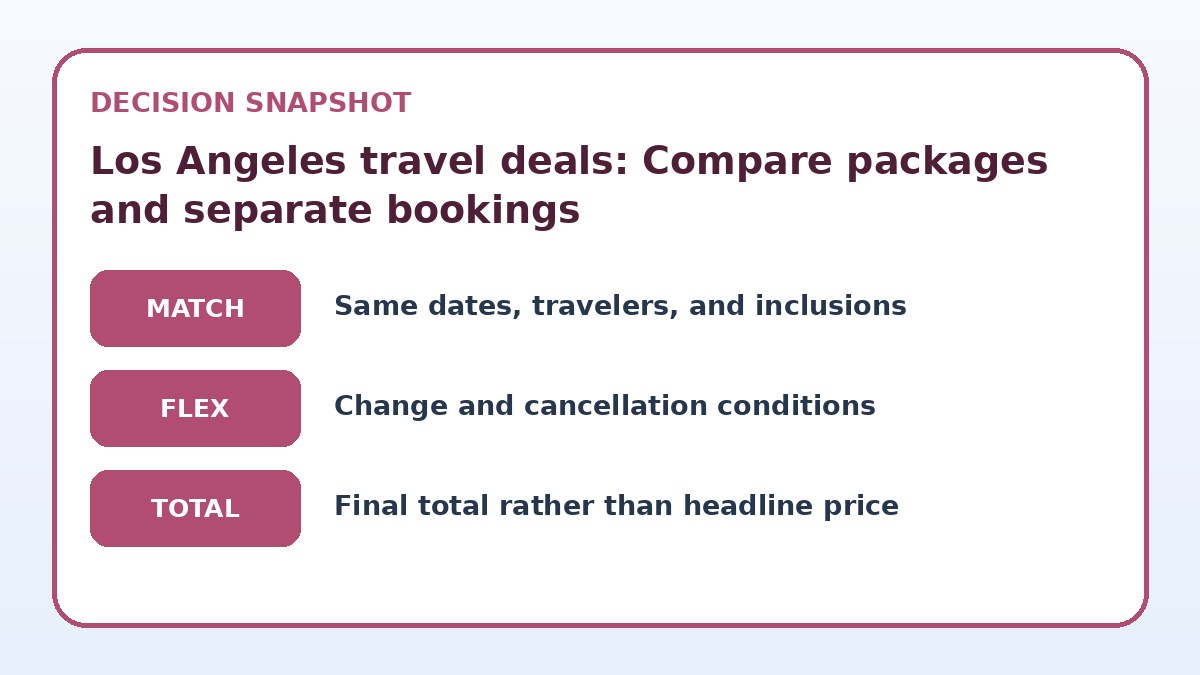
Use identical dates, travelers, room needs, baggage, and flexibility so the comparison stays meaningful.
Inclusions: what’s actually bundled
Start by listing everything you need: outbound and return flights for two, hotel nights in your preferred neighborhood, airport transfers, car rental if desired, and any attraction tickets or experiences. When comparing a package to separate bookings, insist on a line-by-line match: same flight classes, same room type or better, and the same number of tickets or experiences. Vendors sometimes count a seat as included while offering basic economy flights that add fees for seats or baggage; verify seating and baggage allowances on the provider’s checkout screen before assuming they are included.
For couples, check the hotel room configuration. Packages may quote “double occupancy” without specifying bed type, view, or accessibility needs. If one partner needs a specific mattress, late check-in, or adjoining rooms, those details can be handled more reliably when booking the hotel directly. Also watch for extras that look valuable but are conditional — breakfast for one day only, credits that expire during the stay, or transfers that are shared rather than private. Confirm the exact inclusions on the final booking confirmation, not only on the marketing page.
Flexibility: change and cancellation risks
Flexibility is often where bundles cost you most. A single-package cancellation or flight change policy can apply to an entire trip, meaning a change for one partner may require rebooking or paying fees for both. Couples who must keep options open — for work schedule shifts, illness, or travel restrictions — should compare change fees and refundability across package terms and the standalone flight and hotel policies. If flexibility matters, prefer options with free change windows or buy flexible fares separately, and make sure the package’s protections actually cover airline and hotel components.
If you value modifying just one element of the trip, separate bookings are typically easier: change a hotel night without touching your flight, or swap an attraction date without reopening the whole package. But separate bookings can mean juggling multiple cancellation deadlines and different vendor interfaces. Whichever route you choose, write down the latest free-change dates and the exact steps required to cancel or modify on the provider’s final booking page — confirm whether refunds are credited to the original payment method, as travel credits and vouchers change the real cost of flexibility.
Look past the headline total
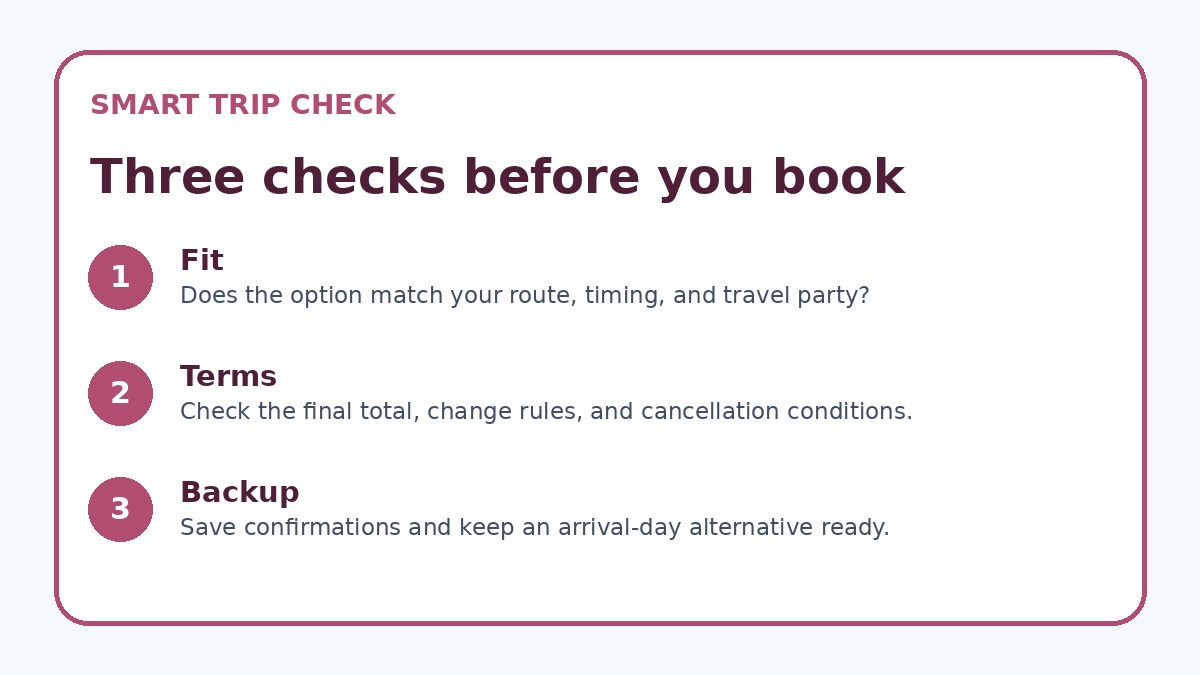
Compare inclusions and change conditions before deciding whether a package is genuinely useful for this trip.
Deal comparison checklist
- Match the exact travel dates, traveler names, and passenger types before comparing package and separate options.
- Verify flight class, seat selection policies, and baggage allowances on the provider’s final booking page.
- Confirm hotel room type, bed configuration, included meals, and any mandatory local fees at checkout.
- Write down each provider’s free-change or cancellation deadline and the penalties for changes after that date.
- Check whether bundled components earn loyalty points or are excluded from program benefits.
- Compare refund methods: cash back to your card versus travel credit or voucher and note processing times.
Traveler-specific value: what matters for couples
Couples travel has special priorities: shared rooms, proximity to date-night restaurants, and the ability to coordinate differing activity levels. Packages may offer convenience that appeals to couples who want a turnkey experience: one reservation to manage, bundled transfers, and possibly curated experiences. But a curated package can miss small personal preferences that matter on a romantic trip, such as late breakfast service, connecting rooms for families, or specific room views. Decide which personal features you won’t compromise on and treat them as non-negotiable when comparing proposals.
Think about how you and your partner divide trip responsibilities. If one prefers handling flights and the other prefers choosing hotels, separate bookings allow each partner to choose their priority. Conversely, if neither wants the hassle of separate confirmations, a package handled by a single provider may reduce stress. Also consider loyalty programs: if you want to earn or use hotel or airline points, separate bookings often make program crediting and elite benefits clearer. Verify on the final booking page whether a bundled stay is eligible for points or status benefits before assuming you’ll receive them.
Final terms: the small print that decides value
The marketing page can make a deal seem attractive, but the booking page is where the contract lives. Couples must check full payment deadlines, whether the package requires full prepayment, and the exact refund process. Pay attention to whether the quoted package price includes taxes and resort fees — some suppliers add mandatory local fees at checkout. Also confirm whether the package uses third-party suppliers for flights or hotels; that affects who you contact for day-of issues and who handles rebooking if something goes wrong.
Before committing, read who shoulders responsibility for missed connections or delayed flights: some packages offer connection protection, while others treat components independently. Check whether the package includes travel insurance or if you need to buy it separately, and verify the insurer and coverage limits on the booking page. If you compare options using a metasearch or a site like Trip.com, follow through to the provider’s own terms and cancellation policy — those final pages determine your real protections and costs.
Travel Deals & Booking Strategy questions travelers ask
Can a package sometimes be cheaper than booking everything separately?
Yes, a package can appear cheaper because it aggregates supplier rates or negotiates bulk inventory, but avoid assuming savings without a direct comparison. To test value, price the same dates, flight classes, room type, and transfer options individually — include taxes and any mandatory fees. Also factor in change and cancellation terms: a low upfront rate that is non-refundable may cost more if plans change. Always confirm inclusions and final terms on the seller’s booking page before treating a package as the cheaper option.
How do couples handle different preferences when one wants luxury and the other wants budget?
For differing priorities, hybrid approaches work well: book the flight and hotel separately so the high-priority item meets one partner’s standards, and bundle lower-priority activities or transfers to save effort. Alternatively, choose a mid-range hotel that offers room upgrades or paid amenities so each partner customizes their experience without splitting bookings. Ensure the booking terms allow room upgrades or added services, and verify any upgrade costs and refund rules on the final checkout screen.
What should we verify about attraction tickets and local experiences in a package?
Check the exact date, start time, cancellation window, and whether tickets are transferable or refundable. Packages sometimes include one-day tickets or vouchers that expire quickly; confirm validity dates on the booking confirmation. Also verify meeting points, whether private guides are truly private, and if group experiences have minimum participation requirements. If the package lists flexible sightseeing, confirm whether rescheduling is allowed and whether refunds are prorated on the provider’s final terms page.
Final decision note
For couples planning Los Angeles travel, there’s no one-size-fits-all answer: the right choice depends on how much control you want over flight times, room details, and changeability versus how much convenience you value. Start by matching identical dates and inclusions, then read the provider’s final booking terms to understand change fees, refund methods, and loyalty eligibility. If simplicity and a single confirmation are worth the tradeoff, a full package can reduce coordination; if personalization, points, or flexible changes matter more, separate or hybrid bookings usually serve better. Use the checklist here when comparing offers and confirm every detail on the booking page before you pay.
Continue planning
Check current options and final conditions
Use the provider page to confirm live availability, the final total, cancellation terms, and every condition that matters to your trip.
This evergreen planning guide was created with AI-assisted drafting and a structured quality review. It does not display live prices, schedules, availability, visa guidance, or provider rankings. Verify current details before booking. Some links are affiliate links; we may earn a commission at no additional cost to you.