Practical travel between Los Angeles and San Francisco for a solo traveler usually hinges on two things: how cleanly the journey connects from door to door, and how much flexibility you need if plans change. For most solo travelers who value straightforward transfers, predictable luggage handling, and fewer coordination points, choosing the option that minimizes extra transfers and terminal friction is the fastest way to reduce stress. This article gives a clear recommendation up front, then walks through the tradeoffs—terminal fit, luggage and transfer friction, timing flexibility, and what to do if your plan is disrupted. Use this to decide whether to favor rail, coach, flight, or a mixed approach based on where you start in Los Angeles, where you need to arrive in the Bay Area, and how much buffer you want for delays or last-minute adjustments.
How to choose between rail, coach, flight, or a mixed route
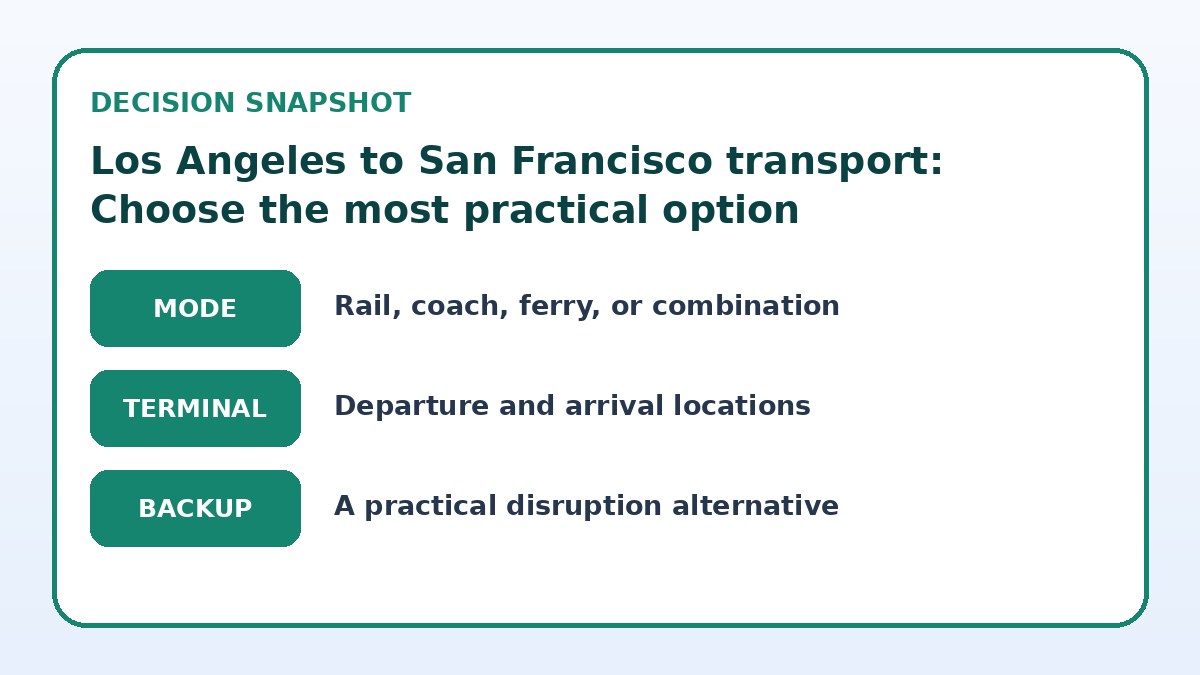
Begin by mapping your actual door-to-door plan: where in Los Angeles you will start, where in San Francisco you need to finish, and whether you prefer city-center terminals to minimize extra transfers. Rail typically drops you close to downtown stations on both ends, which can cut rideshare time; coaches often use central bus terminals and can be cheaper but may add wait time for boarding and luggage loading. Flights move you fastest in the air but usually require travel to and from airports outside central neighborhoods, which adds transfer time and costs. Mixed routes—train or coach to a regional airport or a hub followed by a short flight—can work if timing aligns, but they increase the number of handoffs and potential points of failure.
Next, match the trip to the kind of solo traveler you are: if you value low-stress transfer logistics, pick the mode with the fewest changes and the most predictable terminal layout. If cost and overnight flexibility dominate, coach or a mix may be preferable despite longer on-road time. If speed is the goal and you are comfortable with airport procedures and security, a flight may be practical, but remember to add time for check-in, security, and airport transfers. Finally, weigh frequency: frequent departures reduce pressure and provide easier disruption backups than rare, fixed departures.
Choose the end-to-end journey plan
| Journey approach | Best for | Friction to check |
|---|---|---|
| Direct rail between city centers | Travelers prioritizing minimal last-mile transfers and predictable station procedures | May be slower than flying and subject to rail network delays; check terminal-to-destination rideshare time |
| Intercity coach (direct) | Budget-minded solo travelers who prefer fewer booking steps and central bus terminals | Longer on-road time and potential boarding luggage waits; less comfortable for extended trips without legroom upgrades |
| Flight with airport transfers | Those needing the fastest possible in-air travel and who accept airport transfer time | Adds check-in and security time plus airport transfers; increases number of handoffs and potential disruption points |
| Mixed route (train/coach plus short flight or shuttle) | Travelers balancing speed and terminal convenience when no single mode fits perfectly | More handoffs and coordination required, increasing luggage/transfer friction and disruption risk |
Check live intercity options
Look beyond the ride itself and compare terminals, transfers, luggage, and arrival fit.
Terminal fit and transfer friction: what to check before booking
Look beyond the mode and check the specific terminals you will use in Los Angeles and San Francisco. A central rail or bus terminal often means a short rideshare or transit trip; an outlying airport may require an hour or more of transfer time. Solo travelers should verify transfer options such as direct shuttle services, public transit lines, or reliable rideshares from the terminal to the final address. Also check how terminals handle luggage: some services let you keep bags with you, others require checked luggage loading with waits at dispatch, which can add 10–30 minutes or more to your process.
Confirm accessibility and station layout on the provider’s final booking page so you know whether elevators, escalators, or level boarding are available for your bags. If you plan to use public transit for first- or last-mile legs, look up schedules and whether transfers require extra walking between terminals. For airport departures, inspect recommended arrival windows and whether bag drop or self-tagging exists; for rail and coach, check boarding procedures and whether tickets are digital or printed. These are all practical details that change how far your trip extends beyond the advertised travel time.
Timing flexibility and planning buffers for solo travelers
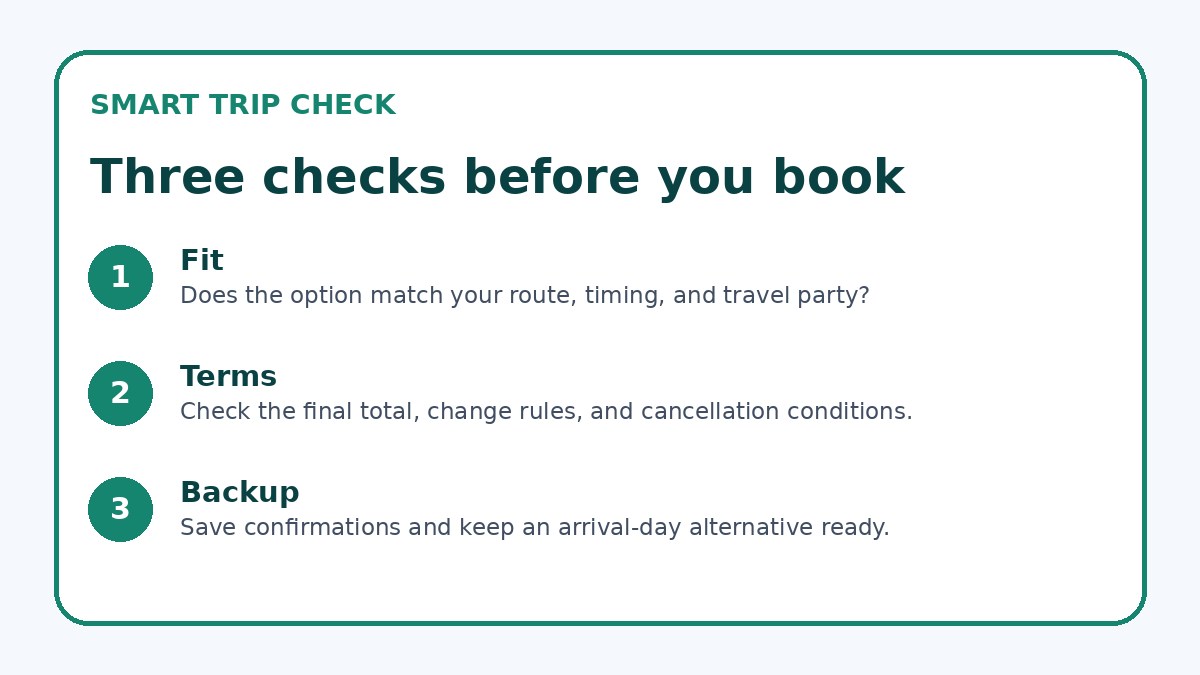
Solo travelers should build time cushions into their itinerary. If your arrival or departure is time-sensitive, prioritize modes with multiple daily departures so you aren’t locked into a single connection. On routes with less frequent service, a missed connection can cascade into long waits or expensive last-minute alternatives. When comparing options, look at the whole travel window: estimate door-to-door time, add a buffer for unexpected traffic or delays, and prefer schedules that leave you arriving with daylight if you’ll be navigating a new city alone.
Also review rebooking and change policies on the booking pages before buying. Some modes or fares offer flexible rebooking for a small fee or free changes, which is valuable for solo travelers who may need to adjust plans. If you must arrive at a precise time, allow extra margin for airport security or check-in, and for road travel estimate variable traffic windows. Remember that flexibility can be bought by choosing slightly earlier or later departures with more frequent options if that reduces stress and backup complexity.
Compare the practical alternatives
Use the final page to confirm what is actually offered on your dates and save a workable fallback.
Intercity travel checklist
- Map your exact door-to-door route and estimate total travel time including transfers and potential traffic or security waits.
- Check the provider’s final booking page for terminal addresses, boarding procedures, luggage rules, and change/refund policies.
- Identify the next two backup departures for your chosen mode and note their door-to-door times as contingency options.
- Confirm first- and last-mile options (rideshare, shuttle, or transit) and whether they run reliably at your planned arrival times.
- Pack carry-on essentials in an easily reachable bag and keep digital copies of tickets and rebooking instructions offline.
- Set a simple decision rule for delays (how long to wait, when to switch to backup) and share it with someone who can help if needed.
Disruption backups: simple, realistic contingency plans
Plan a clear backup for each leg of your chosen route. For rail or coach, identify the next two departures and note approximate door-to-door times for each so you can decide on the spot. For flight plans, have a ground alternative mapped—an express coach, a later flight, or a long-distance train—because flights can cancel or be delayed. Keep a contactless payment method and a rideshare app ready for last-mile hops that aren’t covered by your ticket, and store digital copies of confirmations and a screenshot of rebooking instructions in case your primary device loses signal.
Practice a simple decision rule before you go: for example, if delay > X minutes use backup A; if canceled, use backup B. Know where to find live updates—provider apps or official booking pages—and check those first before calling. If you prefer tangible backups, book a refundable or flexible ticket for at least the most uncertain leg, or keep a credit on a booking platform for same-day changes. Trip.com can be used to compare availability and options but verify final availability and rebooking rules on the provider’s official site before confirming.
Rail & Intercity Transport questions travelers ask
Should I prioritize city-center stations or airports for the smoothest solo trip?
Prioritizing city-center stations usually reduces last-mile friction because you often arrive closer to urban neighborhoods and can use short rideshares or public transit. Airports can be faster in the air but require longer transfers and more time for security and check-in. For a solo traveler who wants fewer handoffs and simpler luggage handling, a city-center rail or coach arrival often feels less stressful; however, if you must save travel time over longer distances, weigh the total door-to-door time including airport transfers before deciding.
How much buffer time should I allow when transferring between modes?
Allow enough buffer to cover typical delays: for airport flights factor in check-in and security; for rail or coach, factor in boarding windows and possible platform changes. A practical rule is to allow at least 60–90 minutes for airport transfers from city center to departure gate, and 30–60 minutes for rail-to-rideshare transitions depending on time of day and your confidence with local transit. If you have a strict appointment upon arrival, add extra cushion and book options with more frequent departures so you can switch without long waits.
What are the clearest signs a mixed-route option is the right choice?
A mixed route becomes attractive when no single mode serves both your start and end points conveniently, or when combining a short flight with a local train drastically shortens total door-to-door time. It also helps when you can use a fast shuttle or short regional flight to avoid the longest ground congestion. Choose this only if you’re comfortable with extra handoffs and have clear backup plans for each leg; verify connection times and luggage transfer rules on each provider’s booking page to avoid surprises.
Final decision note
For most solo travelers focused on practical door-to-door ease between Los Angeles and San Francisco, the clearest route is the one that minimizes handoffs and uses terminals closest to your origin and destination. Rail or direct coach services often win on that metric because they reduce last-mile rides and simplify luggage handling; flights can save time in the air but usually add transfer complexity. Whatever you choose, check terminal details and change policies on the provider’s booking page, map at least two realistic backups, and build time buffers into your plan. Keeping these decisions simple and rehearsed will make the trip more predictable and less stressful.
Continue planning
Check current options and final conditions
Use the provider page to confirm live availability, the final total, cancellation terms, and every condition that matters to your trip.
This evergreen planning guide was created with AI-assisted drafting and a structured quality review. It does not display live prices, schedules, availability, visa guidance, or provider rankings. Verify current details before booking. Some links are affiliate links; we may earn a commission at no additional cost to you.