Practical answer up front: for most first-time visitors flying Los Angeles to Honolulu, a nonstop flight wins for simplicity, shorter total travel time, and less hassle with luggage and transfers. Choose a connecting itinerary only if it meaningfully lowers cost, creates a useful stopover you want to visit, or opens significantly better timing for your schedule. Before booking, compare total door-to-door time, number of transfers, layover length, and the final fare after taxes and fees. Also check aircraft type and baggage rules on the carrier’s booking page — those can change and affect comfort and cost. Trip.com is a convenient place to compare current availability and connection options, but always finalize details on the airline’s or OTA’s confirmation screen.
How direct (nonstop) flights simplify the trip
Nonstop flights from Los Angeles to Honolulu are the simplest route choice because they eliminate the extra steps that come with connecting itineraries: no plane change, no extra boarding pass, and less chance of baggage mishandling. For a first-time visitor, that simplicity reduces the stress of navigating unfamiliar airports and gives you more predictable arrival timing to start your vacation. Nonstops can also cut the total travel window, which matters if you have a strict check-in for a tour, car rental pickup, or tight plans on arrival day.
When assessing nonstop options, don’t assume all nonstops are identical. Aircraft size, seat layout, onboard services, and baggage rules differ by airline and fare level, and those specifics can meaningfully affect comfort. Verify the aircraft type and what’s included directly on the airline’s booking page—read the seat map, baggage allowance, and onboard meal or entertainment offerings. If you need extra legroom or a bulkhead seat, book early; those options sometimes sell out faster on popular nonstop flights.
Why some travelers choose connecting itineraries
Connecting itineraries often appear when travelers want to lower the ticket cost, tie together an extra stop, or when nonstop schedules don’t align with their plans. If you’re flexible with departure times or want a cheap daytime layover in an interesting city, a connection can turn travel time into an opportunity to see another place. For families or budget travelers, a connection might lower the fare or unlock seats in a preferred cabin that nonstops no longer offer.
Connections introduce more variables: longer total travel time, potential for missed connections, and increased chance of checked luggage being delayed. When considering a connection, prioritize layovers that allow a comfortable buffer for customs, reboarding, and any terminal transfers. Also compare the risk tolerance for tight connections versus the savings or benefits; for example, an overnight layover adds a lodging cost and logistics but can reduce connection stress and let you rest before the final leg.
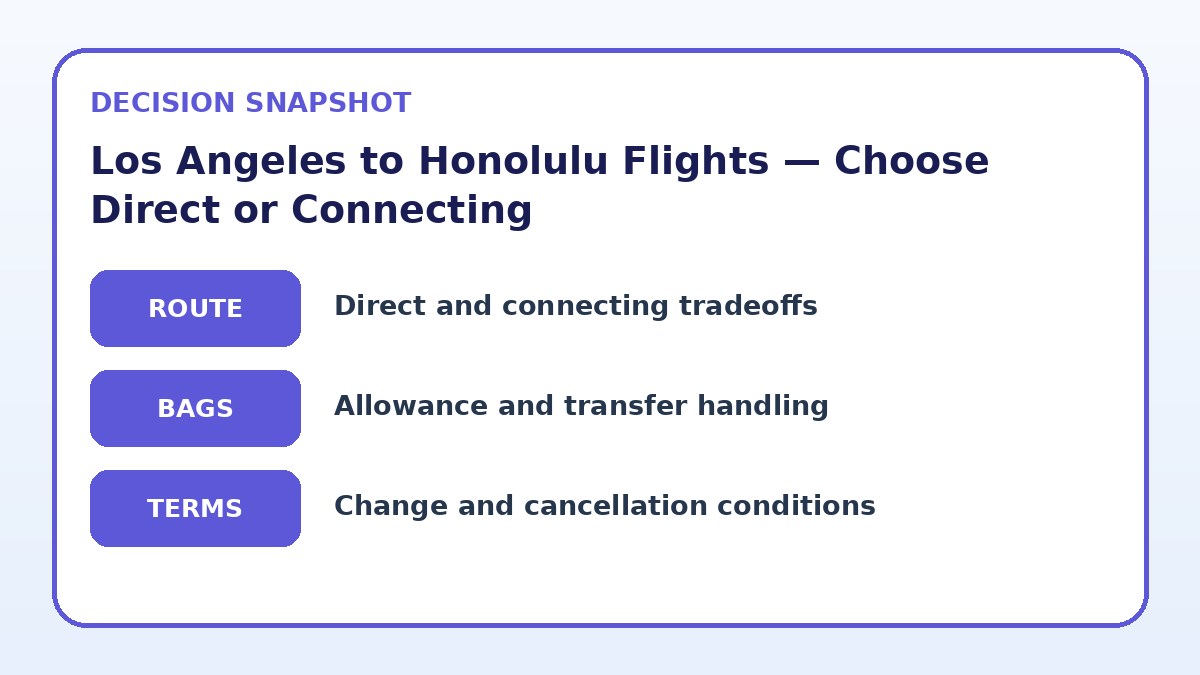
| Approach | Best for | Tradeoff to check |
|---|---|---|
| Nonstop flights | Travelers prioritizing speed, low stress, and predictable arrival times | Fewer scheduling options and sometimes higher fares or sold-out preferred seats |
| Single-ticket connections | Those seeking lower fares while keeping disruption protection | Longer travel time and reliance on airline rebooking policies if delays occur |
| Multi-ticket connections | Flexible travelers combining separate trips or adding a stopover | Higher risk of missed connections and separate baggage/boarding rules |
| Extended layover stopovers | Travelers who want to visit an intermediate city en route without rushing | Adds logistics like accommodation and local transport but turns travel into two short trips |
Decision criteria: time, cost, comfort, and risk
Start by ranking what matters most to you. If minimizing travel time and arrival-day energy are priorities, a nonstop is usually the right call. If cost is the dominant factor, compare the full out-the-door price of connecting options—include checked baggage fees and the potential cost of an unplanned overnight stay if a connection is missed. Also factor in your personal comfort threshold for long flights and whether you or your travel companions need extra mobility or aisle access.
Next, evaluate risk tolerance. Direct flights reduce the number of touchpoints where something can go wrong, like missed connections or lost luggage. If you opt for connections, leave generous layover windows—especially when changing airlines or terminals—and verify whether a single ticket covers the entire itinerary; multi-ticket itineraries carry higher disruption risk. Always confirm on the airline’s booking page which segments are protected on a single reservation and what rebooking policies apply in case of irregular operations.
Before you book
- Compare nonstop and connecting itineraries by total door-to-door time, not just flight time listed on search results.
- Verify aircraft type, seat map, and exact baggage allowance on the airline’s final booking page before payment.
- Allow generous layovers when connecting—factor in terminal transfers and potential customs or security lines.
- Book under a single ticket when possible to ensure the airline will rebook you if a connection is missed.
- Download your airline app and save boarding passes and connection details offline in case of spotty cell service.
- Pack essentials (medication, a change of clothes, chargers) in carry-on luggage if you connect, to manage the risk of delayed checked bags.
Practical booking and pre-travel checks
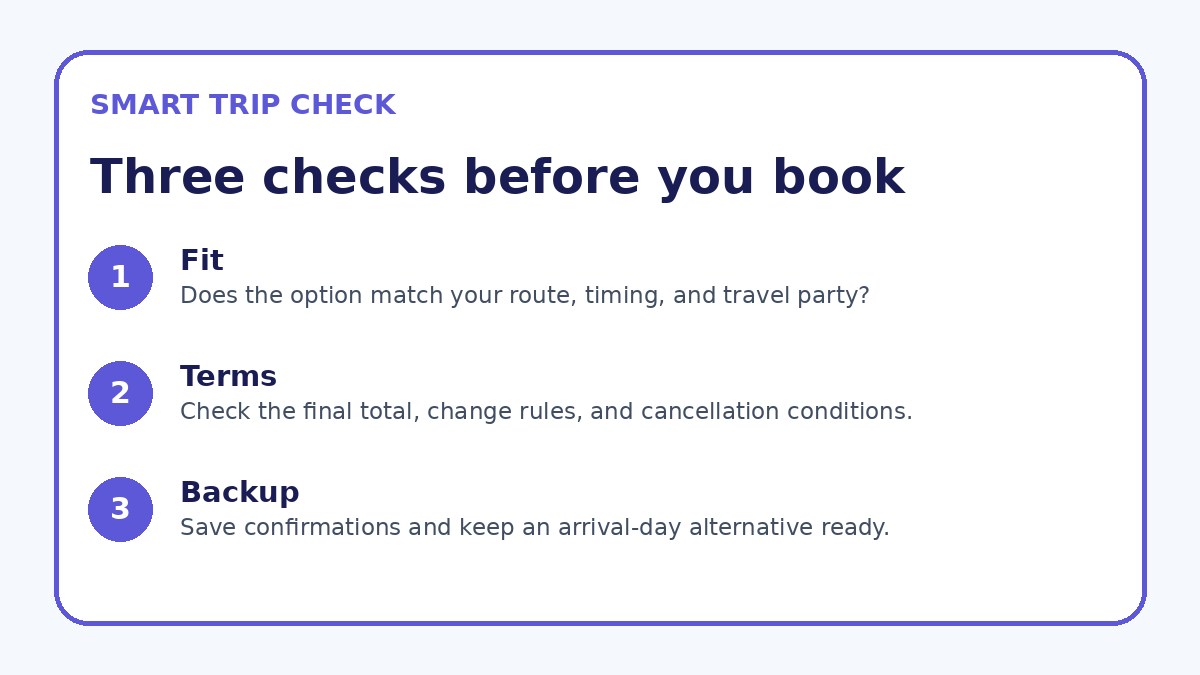
When you’re ready to book, compare itineraries side-by-side: total elapsed travel time, number of takeoffs and landings, layover length, and the cabin and seat details shown on the booking page. Use a single search tool to line up options quickly, and visit the airline’s confirmation screen to verify baggage allowance, change or cancellation rules, and whether meals or entertainment are included. If transfer time is tight, check airport maps and terminal transfer options so you know whether you’ll need to change terminals or re-clear security.
Before you travel, complete actionable pre-trip checks: confirm your flight status within 24 hours, download the airline app for mobile boarding passes and notifications, and reconfirm any special assistance or seating requests. If you chose a connecting itinerary, print or save the itinerary with connection details and minimum recommended transfer times for the airports you’ll use. Finally, double-check the airline’s policy pages for baggage size, carry-on limits, and any add-on fees—these often change and appear on the carrier’s final booking page.
Frequently asked questions
Are nonstop flights between Los Angeles and Honolulu always faster and worth the extra cost?
Nonstop flights are almost always faster in terms of door-to-door travel time because they remove the need for a transfer, but whether they’re worth an extra cost depends on your priorities. If minimizing travel day fatigue, reducing the chance of missing connections, and predictable arrival times matter most—especially on short trips—nonstops usually justify the premium. If you’re on a flexible schedule, have a tight budget, or want a planned stopover, a connecting itinerary could provide meaningful savings or a chance to see another place. Compare the final ticket price plus likely ancillary costs, and weigh that against the value of saved time and reduced stress.
How much layover time should I allow for connecting flights to Hawaii from Los Angeles?
There’s no universal minimum that fits every airport and traveler; the safe layover length depends on factors like whether you change terminals, need to clear security, or switch airlines. As a rule of thumb, allow extra time for any connection that requires a terminal transfer or re-checking bags. If you’re unfamiliar with the airports involved, err on the side of caution and choose longer layovers—two hours or more for domestic connections within a large hub is common advice for many travelers. When in doubt, check airport maps and the airline’s recommended connection times on the booking page and add a buffer that matches your comfort level.
If I book a connecting itinerary on separate tickets, how can I reduce the risk of problems?
Booking separate tickets increases exposure to missed connections and separate baggage handling, so take steps to mitigate those risks. Allow long layovers to accommodate delays and terminal transfers, and avoid tight windows that leave little recovery time. Travel light with carry-on essentials in case checked baggage is delayed or needs to be rechecked. Consider travel insurance that covers missed connections or schedule disruptions, and research whether airports involved require customs or security re-clearance between flights. Finally, factor in the cost of potential overnight accommodation if a connection is missed—sometimes that erases any fare savings.
Final planning note
For most first-time visitors, a nonstop Los Angeles to Honolulu flight is the cleaner, lower-stress choice: fewer moving parts, shorter overall travel time, and more predictable arrival energy for starting your trip. Connecting itineraries have clear use cases—notably when they reduce cost significantly, enable a planned stopover, or offer timing otherwise unavailable—but they add complexity and potential disruption. Decide by ranking what you value most (time, cost, comfort, or adventure) and then compare the full door-to-door travel time and total cost, including likely fees and transfer logistics. Verify aircraft, baggage rules, and change policies on the carrier’s booking page before you purchase, and consider Trip.com or similar tools to line up options quickly before finalizing with the airline.
Continue planning
Check current options and final conditions
Use the provider page to confirm live availability, the final total, cancellation terms, and every condition that matters to your trip.
This evergreen planning guide was created with AI-assisted drafting and a structured quality review. It does not display live prices, schedules, availability, visa guidance, or provider rankings. Verify current details before booking. Some links are affiliate links; we may earn a commission at no additional cost to you.