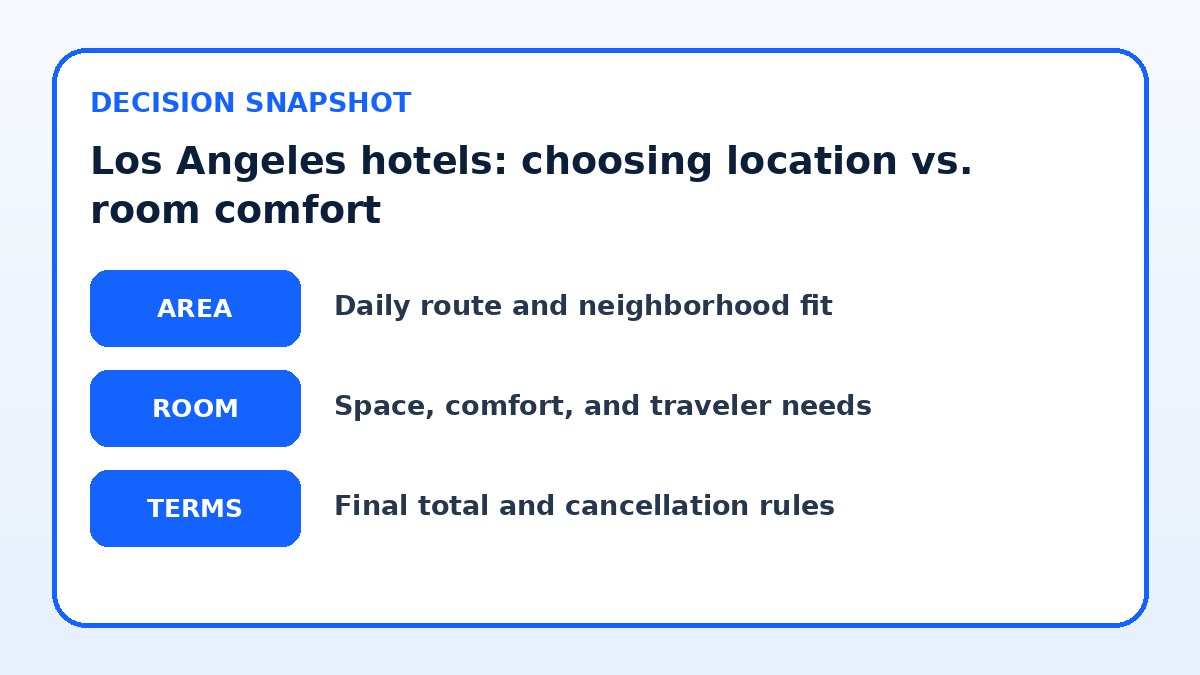
Practical answer first: pick the neighborhood that best matches your daily plan, then choose the smallest room within a hotel that reliably gives you the specific comforts you value most—quiet, storage, a desk, or better bed and bathroom. For most solo travelers in Los Angeles, that means accepting a tradeoff: a smaller, quiet room near transit and attractions, or a larger room further from the densest neighborhoods. If you plan to spend mornings exploring museums and evenings in nightlife, lean toward central areas with good public transit or rideshare access and prioritize room features that support sleep and secure storage. If your trip is road-heavy or focused on beaches, a room with on-site parking and a comfortable living space matters more. Below you’ll find decision criteria, neighborhood pros and cons, and a checklist of exact things to verify when booking.
See current options before you compare the details
Availability and final conditions change. Open Trip.com now or keep reading for the practical comparison.
Deciding what you need first: activity-based priorities
Start your decision by listing what you expect to do most days. Solo travelers heading to museums, downtown shows, or galleries should prioritize neighborhoods with dense transit or walkable clusters: Downtown, Bunker Hill, and Koreatown put you near many cultural venues. If your days will be beach-focused—Santa Monica, Venice, or Manhattan Beach are logical—then parking, proximity to the sand, and an easy place to rinse off matter more than being next to a subway. If you’re combining work and leisure, a hotel with reliable Wi-Fi, a comfortable workspace, and a quiet atmosphere will save time and stress.
Once you have this activity list, translate each item into tangible room and location priorities. For transit-heavy plans, the priority is walking distance to a Metro or major bus stops. For nightlife, pick neighborhoods with late-night dining and safe rideshare pickup points. For day trips by car, prioritize secure, reasonably priced parking and a location that gives you quick freeway access without being next to a noisy interchange. Making this list before searching helps you avoid the common trap of booking a nice room in the wrong place.
Neighborhood tradeoffs: location pros and cons
Central Los Angeles areas—Downtown, Hollywood, Koreatown—offer quick access to museums, restaurants, and nightlife, making them an efficient base for solo travelers who want to walk and use transit. The downside is variable noise, higher foot traffic, and sometimes smaller rooms for the same nightly rate compared with suburban options. Downtown and Hollywood can be lively late into the night, which is great if that’s your aim but problematic if you need uninterrupted sleep or a calm workspace. Consider upper-floor rooms, soundproofing options, or hotels set back from main streets.
Beach neighborhoods provide a relaxed, scenic stay but can be farther from cultural sites and central transit lines. Santa Monica and Venice are pedestrian-friendly and pleasant for morning runs or sunset walks, yet they often mean longer rides to museums or airports. Westside and South Bay neighborhoods also tend to offer more room space for the money and quieter nights, but you should factor in travel time and the cost of rideshares if you plan frequent trips across the city. Weigh whether time spent commuting offsets the extra comfort.
| Approach | Best for | Tradeoff to check |
|---|---|---|
| Central neighborhood, small room | Solo travelers prioritizing walkability and transit access | Less living space and possible street noise for faster access to attractions |
| Beach or westside hotel, larger room | Travelers valuing comfort, relaxation, and scenic surroundings | Longer travel times to cultural sites and downtown areas |
| Airport-area or near freeways, roomy and parking | Drivers or those with tight flight schedules | Less walkable and fewer evening activity options within walking distance |
| Boutique hotel with upgraded amenities | Solo travelers wanting personalized service and extra in-room comforts | Often higher nightly cost and fewer locations near major transit hubs |
Ready to check the option that fits your plan?
Use your exact dates and traveler details so the provider page can show the current total and conditions.
Room comfort decisions: what to prioritize inside the hotel
Room size is tempting, but thoughtful small-room features often matter more for solo travelers than square footage. Prioritize a comfortable bed and quality linens, reliable climate control, good blackout shades, and effective noise reduction. A functional bathroom with good water pressure and hot water improves travel satisfaction more than a slightly larger living area. If you work from the room, insist on a proper desk, ergonomic chair, and stable, fast Wi-Fi. For safety and convenience, check for a secure safe or lockable storage and clear in-room lighting that supports packing and reading.
When you compare specific room types, look for transparent descriptions and photos of the exact room category. Verify whether the advertised photos match the room you’ll receive, and check whether amenities—like a mini-fridge, kettle, or coffee maker—are included in your room type. For longer solo stays, an upgraded room with a small kitchenette or extra storage may be worth the premium. If you’re sensitive to noise, confirm whether rooms face courtyards, streets, or rooftop bars and ask about the availability of higher-floor options to reduce street noise.
Before you book
- Confirm the hotel’s exact room type, bed size, and whether photos match the category you will receive on the final booking page.
- Verify soundproofing information or request a quiet room/higher floor if you’re sensitive to street noise before you finalize booking.
- Check whether on-site parking exists, the nightly cost, reservation requirements, and secure vehicle access if you’ll have a car.
- Ensure the hotel’s cancellation and change policy suits your plans and note any nonrefundable restrictions that might affect flexibility.
- Confirm that Wi-Fi speeds and workspace availability meet your needs if you plan to work from your room; ask about business center access if necessary.
- Check safety features: 24-hour front desk, guest-floor keycard access, visible lighting at entrances, and clear directions for late-night arrivals.
Safety, logistics, and the final checks before booking
Safety for solo travelers is an intersection of neighborhood familiarity and hotel practices. Look for hotels with 24-hour front desk service, secure keycard access to guest floors, and well-lit entrances. Read recent guest comments about neighborhood conditions and evening access—pay attention to mentions of safe late-night ride pickup spots and pedestrian friendliness. Confirm what the hotel lists about accessibility and emergency procedures. For transport logistics, check where the nearest Metro station, frequent bus stop, or rideshare pickup point is located and how late services run relative to your schedule.
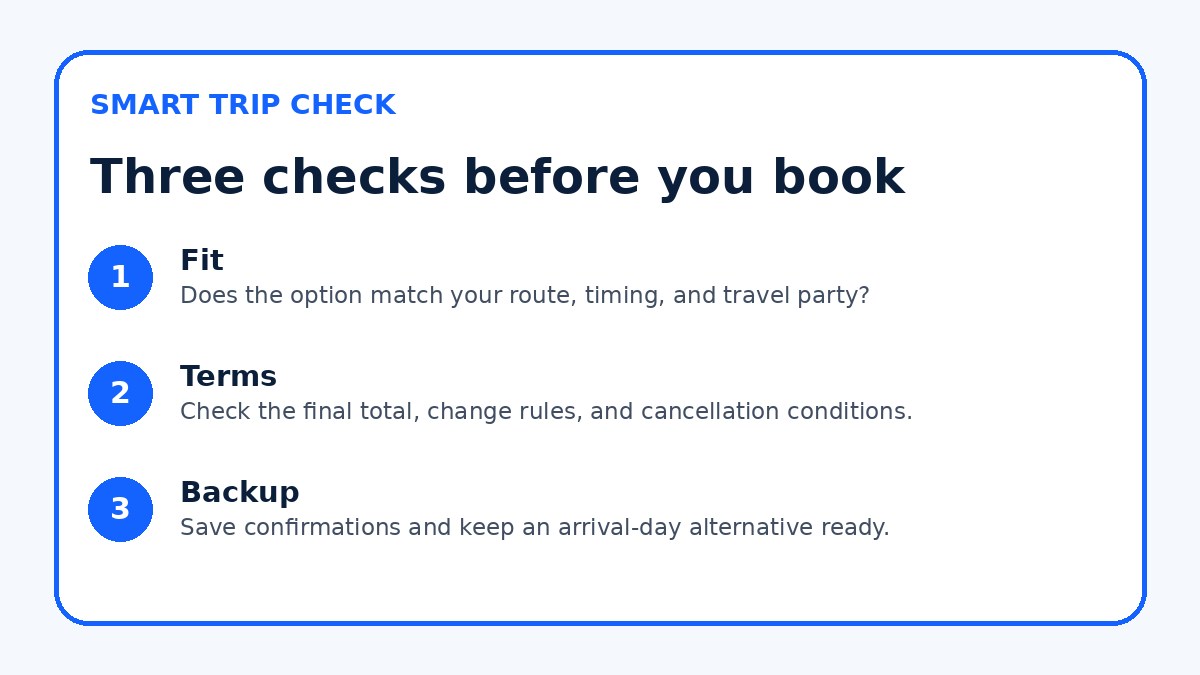
Before you click the booking button, verify the exact details on the provider’s final booking page: cancellation policy, whether the rate includes taxes and fees, the availability of specific room types and bed sizes, and any additional fees (parking, resort, or cleaning). If parking is essential, confirm whether it’s on-site, the cost, and whether it requires a reservation. If Trip.com is part of your comparison, use it to compare availability and policies but confirm final terms directly with the hotel’s booking page to ensure no surprises at check-in.
Frequently asked questions
How do I choose between staying near the beach or downtown Los Angeles?
If your days center on beach time, morning runs, and a relaxed pace, a coastal hotel keeps you close to sand and sunset walks, and often offers larger rooms. If you want museums, theatre, diverse dining, and transit access for exploring a range of neighborhoods, downtown or central areas are more efficient bases. Factor in transport: compare typical ride times and costs from each area to the places you’ll visit most. Also consider whether on-site parking or easy rideshare pickup is essential, since coastal hotels can increase travel time to inland attractions.
What room features should a solo traveler prioritize in Los Angeles?
Prioritize sleep-related comforts—quality mattress, blackout curtains, and reliable climate control—because daily energy matters more than extra square footage. If you’ll work, a proper desk, comfortable chair, and stable Wi-Fi come next. For safety and convenience, look for secure in-room storage or a safe and clear lighting for packing and reading. If you plan to be out late, confirm 24-hour desk service and safe, easy pickup locations for rideshares. Finally, think about bathroom quality and hot water—these small comforts often define a pleasant stay.
How can I verify safety and neighborhood suitability before booking?
Start by reading recent guest comments focused on safety, late-night conditions, and staff responsiveness. Use mapping tools to check lighting, walking routes, and proximity to transit stops or rideshare pickup zones. Confirm the hotel’s posted safety measures—24-hour front desk, controlled floor access, and CCTV—on the booking page or by contacting the property directly. If you have particular concerns, call the hotel and ask about late check-in procedures and the best nearby options for food and transport after dark.
Final planning note
Balancing location and room comfort in Los Angeles as a solo traveler comes down to clarifying what your days will look like, then translating those priorities into neighborhood and room choices. Choose a neighborhood that reduces wasted travel time for your planned activities, and then pick the smallest room that reliably provides the comforts you need: good sleep, secure storage, and either workspace or parking as required. Verify all specifics—room photos, policies, parking arrangements, and safety features—on the final booking page before you commit. With a clear activity list and the right verification steps, you’ll find an LA hotel that fits both your itinerary and personal comfort needs.
Continue planning
Check current options and final conditions
Use the provider page to confirm live availability, the final total, cancellation terms, and every condition that matters to your trip.
This evergreen planning guide was created with AI-assisted drafting and a structured quality review. It does not display live prices, schedules, availability, visa guidance, or provider rankings. Verify current details before booking. Some links are affiliate links; we may earn a commission at no additional cost to you.