
If you and your partner want a Paris trip that balances cost, choice, and stress, the practical answer is: pick a flexible window based on when you travel and how fixed your dates are. For low-season travel with flexible dates, a shorter booking window (6–12 weeks before departure) often gives enough options without excessive monitoring. For busy periods—spring blooms, summer, or late-December—start looking 4–6 months ahead for the better selection of hotels and convenient flight times. If one partner’s schedule is fixed or you need specific hotel features, treat your travel plans like an anchored date and lock flights and your preferred room earlier. Use fare alerts and calendar checks, and confirm baggage, cancellation, and change policies on the actual provider booking page before you finalize anything.
See current options before you compare the details
Availability and final conditions change. Open Trip.com now or keep reading for the practical comparison.
Deciding your booking urgency
First, decide how fixed your travel dates must be. If both partners can shift travel by a week or two, you have more leverage to wait for better fares or hotel availability. If a celebration, work deadline, or event fixes your dates, treat them as nonnegotiable and prioritize locking in flights and a suitable room. The more anchored your dates, the earlier you should search and book to secure specific amenities such as a river view, adjoining rooms, or late check-in.
Next, factor in what you value most: price, exact travel times, or accommodation features. Couples chasing a particular neighborhood or a room type with specific amenities should expect to commit sooner, because those options often sell out. If price is the main driver and you can adjust days, use flexible-date searches and alerts to watch for dips; for guaranteed convenience or special dates, accept paying a modest premium for peace of mind.
How season and events affect timing
Paris’s demand fluctuates with seasons, fashion weeks, holidays, and major conventions. Spring (April–June), late summer, and early autumn often draw the most visitors, so hotel rooms and desirable flight times get booked earlier. During these peaks, aim to compare options 4–6 months ahead for the best balance of availability and reasonable terms. For shoulder and low seasons, you can often wait closer to 6–12 weeks before booking while still keeping solid options.
Also check the calendar for specific local events that might overlap your trip: trade shows, major sports fixtures, or school holidays can shrink available inventory quickly. When an event coincides with your travel window, either move your dates if you can, or advance your booking timeline to avoid limited choices. Always verify event dates and cross-check the provider’s booking page for any event-related surcharge or minimum-stay requirements before you commit.
| Approach | Best for | Tradeoff to check |
|---|---|---|
| Book early (4–6 months ahead) | Couples traveling in high season or with fixed dates | Better selection and timing but less chance of later price drops or last-minute bargains |
| Moderate window (6–12 weeks ahead) | Flexible couples traveling off-peak | Balances choice and potential savings but may miss peak-season availability |
| Last-minute booking (under 6 weeks) | Couples seeking late deals with flexible dates | Possible lower rates but limited room and flight choices, and higher stress |
| Hybrid approach (book refundable, then switch) | Couples wanting security and the chance to save | Higher initial cost for flexibility, requires active monitoring and rebooking |
Ready to check the option that fits your plan?
Use your exact dates and traveler details so the provider page can show the current total and conditions.
Balancing price risk and flexibility
Airfares and hotel rates move unpredictably, and there’s no single month that guarantees the lowest price. If you want to minimize risk, consider refundable or changeable fare classes and hotel rates—these usually cost more but protect you if plans change. For most couples, a hybrid approach works: book refundable or flexible tickets and reserve mid-range rooms that allow free changes, then switch to a cheaper nonrefundable option if prices fall and your dates remain firm.
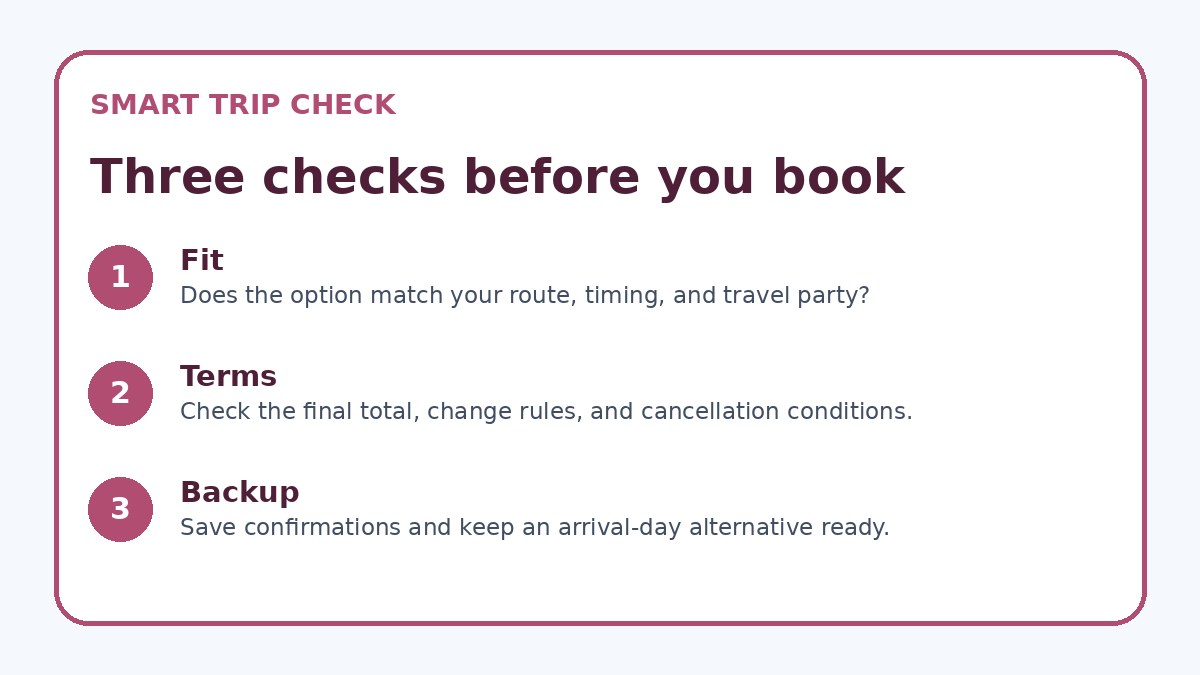
When comparing options, read the provider’s final booking page carefully: confirm cancellation penalties, change fees, what’s included with the rate, and whether taxes or service charges are added at checkout. If you see vouchers, credits, or hold options, check exactly how long they last and what conditions apply. Trip.com can be a place to compare current availability and conditions, but always verify policy details on the airline or hotel’s own booking page before finalizing.
Before you book
- Agree on date flexibility and set a firm decision rule for when you’ll book (e.g., price threshold or calendar deadline).
- Identify nonnegotiable accommodation features and prioritize neighborhoods before searching.
- Set fare and hotel alerts and subscribe only to two or three reliable sources to avoid overwhelm.
- Compare refundable versus nonrefundable rates and calculate the net cost including potential change fees.
- Verify baggage, seat assignment, check-in times, and cancellation terms on the provider’s final booking page.
- Confirm payment and travel insurance coverage, and note any deadlines for refunds or free changes.
Practical search and booking tactics for couples
Use flexible-date searches and multiple search engines to compare a range of flight and hotel windows; set price alerts so both partners can monitor deals. Coordinate a simple decision rule with your partner—such as booking when price drops X% below your budget or when a specific room type appears—so you avoid endless deliberation. For hotels, filter by neighborhood and must-have features, then compare refundable rates to balance commitment and cost savings.
When you find options you both like, don’t delay for long: an attractive flight time or a favorite room can disappear within days, especially in popular seasons. Before you hit purchase, check baggage rules, seat assignment options, check-in times, and hotel cancellation terms on the provider’s final booking page. If you use a credit card with travel protections, review what it covers; that extra layer can influence whether you choose a tighter booking window or wait for a lower rate.
Frequently asked questions
How far ahead should couples book flights to Paris to get decent seat choices?
Seat selection can be important for travel comfort, especially on longer flights. If you need specific seats together, booking earlier—often in the 3–6 month window—improves your chances of finding adjacent seats on popular flights. However, exact seat availability depends on the airline’s inventory rules and fare class, so check the airline’s seating policy and fees on the booking page. If flying on a tight budget and you can tolerate separate seats until check-in, waiting can sometimes lower the fare but reduces seat choice certainty.
Should couples reserve a refundable hotel room or risk a cheaper nonrefundable rate?
Choosing refundable rooms gives you flexibility if plans shift—valuable for couples with uncertain schedules. Nonrefundable rates are often cheaper but carry the risk of losing the full payment if you cancel. Consider a middle path: reserve a refundable rate when you need to lock dates, then monitor rates and rebook to a lower nonrefundable rate only if your plans are firm and you understand the cancellation policies. Always confirm the provider’s exact refund window and any administrative fees on their final booking page.
Can I use alerts and still avoid the hassle of constant monitoring with my partner?
Yes. Set up price alerts for your preferred airports and neighborhoods, and agree on a simple action plan: who monitors alerts, what threshold triggers booking, and how you’ll confirm decisions. Limit alerts to a few key dates or ranges so you don’t get overwhelmed. If you prefer minimal checking, choose refundable options or buy a short-hold if available, then revisit the alerts once a week rather than continuously. This keeps both partners informed without turning planning into a daily task.
Final planning note
For couples planning a Paris trip, the realistic booking window depends on seasonality and how fixed your dates are. Flexible travelers can often wait into the 6–12 week range for reasonable choices, while those visiting during Paris’s peak months or tied to specific dates should begin comparisons 4–6 months ahead. Use a mix of refundable bookings, price alerts, and a simple joint decision rule to balance cost, convenience, and peace of mind. Always verify final baggage, fee, and cancellation details on the provider’s booking page before confirming, and consider Trip.com or similar sites for quick availability checks while relying on provider pages for final policy confirmation.
Continue planning
Check current options and final conditions
Use the provider page to confirm live availability, the final total, cancellation terms, and every condition that matters to your trip.
This evergreen planning guide was created with AI-assisted drafting and a structured quality review. It does not display live prices, schedules, availability, visa guidance, or provider rankings. Verify current details before booking. Some links are affiliate links; we may earn a commission at no additional cost to you.