If you’re travelling from Sydney to Auckland with extra luggage, the practical question is not just which flight is fastest but which fare and routing give you the best protection when plans change. Flights between these cities can be direct or routed via a connection; fares vary by flexibility and baggage allowances. For heavier or awkward baggage, small differences in change fees, refundability, and transfer rules at connections matter more than a marginal fare saving. This article gives the direct answer up front: choose a fare class that explicitly includes your baggage and flexible change or refund terms when your luggage would complicate transfers. Below you’ll find the tradeoffs among routing, baggage and connection risk, schedule fit, and fare conditions — plus exactly what to verify on the airline or booking page before you book.
See live routes for your exact travel day
Compare direct and connecting choices with the same baggage and traveler details.
Routing: direct versus connecting with extra luggage
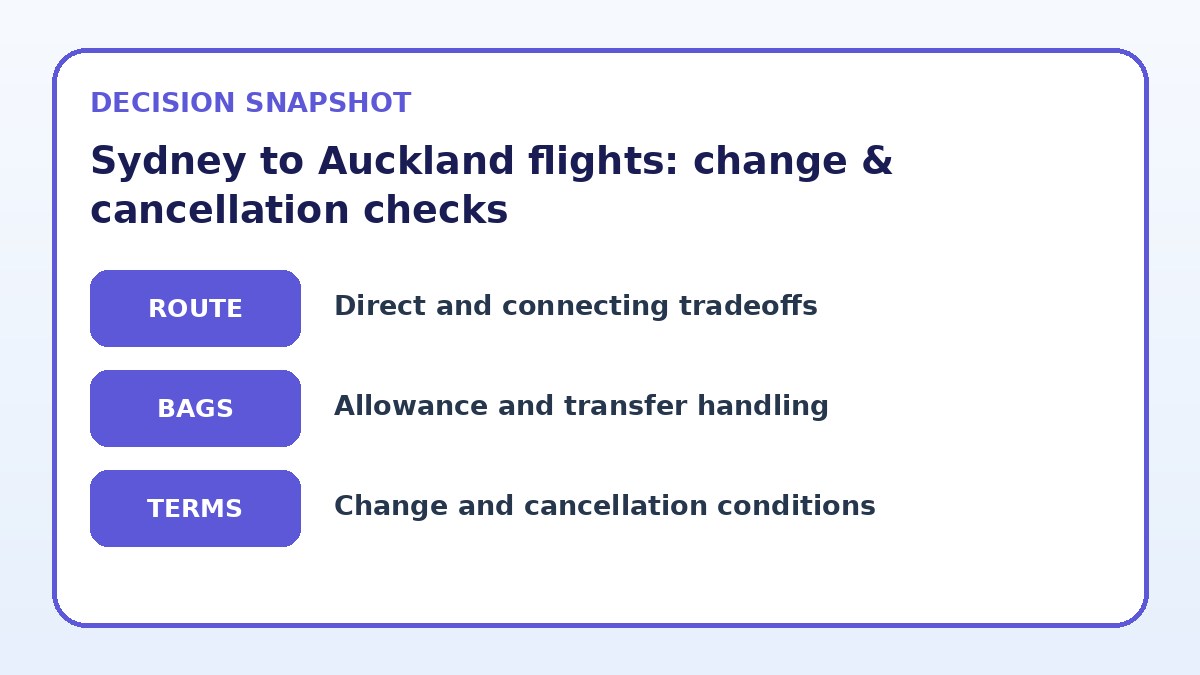
Direct flights reduce handling and the number of times your luggage is transferred, which lowers the chance of delay or misrouting. If you can find a direct Sydney to Auckland option that includes the baggage you need, it usually simplifies the trip: you check your bags once, they’re tagged to your final destination, and you’re less exposed to connection tightness or separate-ticket problems. For travellers carrying bulky sports gear, musical instruments, or multiple checked items, direct routing tends to be worth paying more for since it reduces at-transfer baggage handling.
Connecting itineraries can still work if they’re on one ticket and the airline agrees to transfer bags automatically. The risk grows when you book legs separately or when a short connection time is involved: a missed first flight could mean re-checking luggage, paying new fees, or being liable for the second fare. When comparing options, always verify whether the fare is through-checked, whether oversized or special items are accepted on each segment, and what happens to baggage if you exercise the ticket change or cancellation option.
Baggage and connection risk: what can trigger extra costs
Extra-cost triggers include overweight or oversized pieces, special-category items (bikes, surfboards, instruments), and the need to split luggage across multiple bags due to airline piece limits. Policies differ by fare class and carrier; some allow a single heavy piece while others use a strict per-piece limit. If your baggage could exceed the airline’s free allowance, check whether the fare you’re considering includes the correct number of pieces and maximum weight per item. Even when baggage appears covered, special items often require pre-notification and payment, and you must verify each segment’s acceptance rules.
Connection risk is more than just time between flights: it’s the combination of through-checked baggage, separate tickets, and whether you must re-clear security or customs. If a connection requires you to collect and re-check bags (common when switching carriers or ticketing through certain hubs), that adds time and potential extra fees — and it often invalidates any protective policies the first carrier offered. Before booking, check the exact wording about through-checking on the airline’s page, ask whether special items are accepted through to the final airport, and confirm re-check and customs procedures at the transit airport.
Compare flight-selection strategies
| Flight strategy | Best for | Risk to check |
|---|---|---|
| Lowest base fare with add-on baggage | Travellers prioritising upfront cost and confident schedules | Lower ticket price but pay per piece/weight; higher risk of unexpected fees if plans change or baggage exceeds allowance |
| Flexible fare that includes baggage | Those valuing easy date changes and included bags | Higher initial fare but fewer change fees and simpler baggage handling; you pay more up front for certainty |
| Direct flight with standard baggage allowance | Travellers wanting minimal transfers and simpler luggage movement | May cost more than connecting options, but reduces connection risk and complexity for oversized items |
| Connecting itinerary on a single ticket with baggage through-check | Budget-conscious travellers who find a cheaper through-ticket | Saves money but depends on reliable transfer and through-checking; schedule disruptions may complicate rebooking and baggage retrieval |
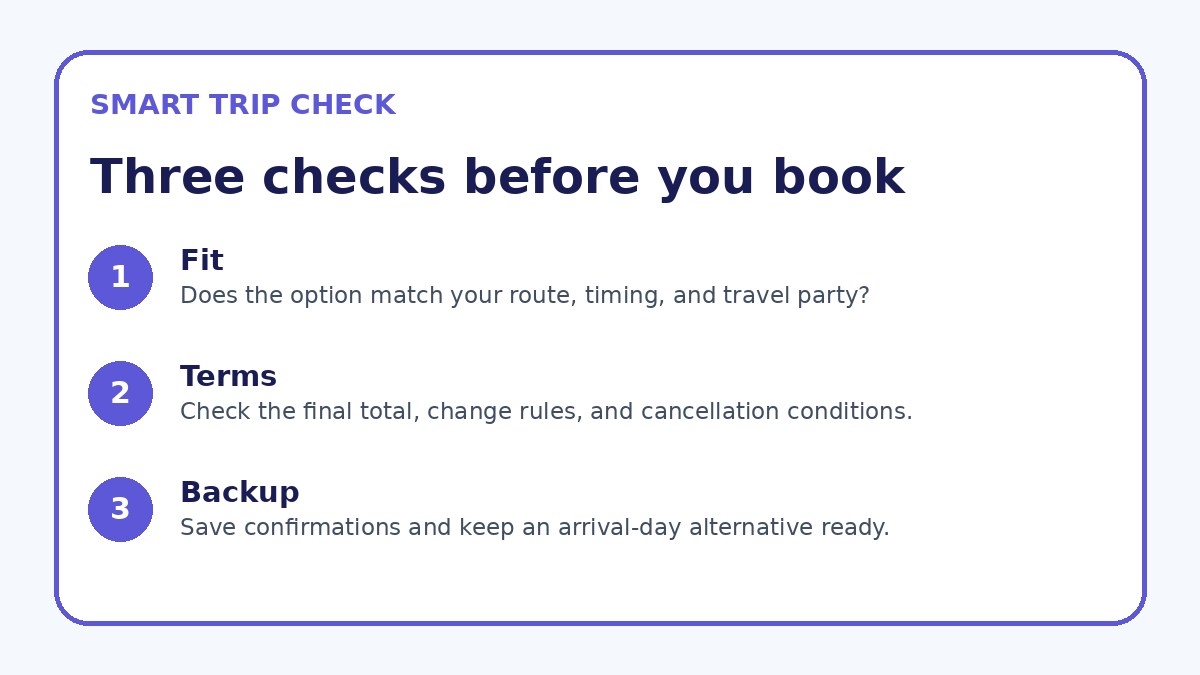
Recheck the complete itinerary
Confirm airports, connection handling, baggage, and change conditions before deciding.
Schedule fit: aligning flexibility with luggage needs
Pick flights that give a realistic cushion for baggage drop, special handling, and unexpected hold-ups at check-in. Early check-in for oversized items may be required and can take longer than standard baggage processing. If your plan includes time-sensitive connections or ground arrangements in Auckland, prefer schedules that allow extra margin. When deciding between an early morning direct with a small change fee and a late-afternoon flexible fare that allows free name or date changes, weigh the operational certainty of baggage handling against your tolerance for possible change costs.
If you need to change travel dates, flexible fare conditions are often more valuable than an initially cheaper flight. Evaluate how change windows (how late you can change), change fees, and fare difference policies work together: a low-fee but non-refundable fare with expensive change penalties can cost more if plans shift. Also check whether schedule changes initiated by the airline (time changes or cancellations) trigger free rebooking or refunds, and verify how that interacts with your baggage arrangements — sometimes an airline-classified schedule change will allow a free reissue that preserves baggage allowances.
Flight details to verify
- List every piece and its measurements/weight, and confirm each item meets the airline’s permitted size and weight before comparing fares.
- Have exact travel dates, passenger ages, and frequent flyer numbers ready when you check fare rules and baggage inclusions.
- On the airline or booking page, verify whether baggage is through-checked to Auckland on the itinerary and whether special items are accepted on each segment.
- Confirm the fare’s change and cancellation wording: fixed fee, fare difference, refundable, or credit only — copy the exact clause or take a screenshot.
- If booking separate tickets, plan at least double the minimum connection time and check whether re-checking baggage and customs clearance are required.
- If carrying special or oversized items, pre-notify the airline as required and request written confirmation of acceptance and any applied fees.
Fare conditions: reading the small print for baggage-sensitive bookings
Fare families or classes segment flexibility, baggage, and change/cancellation rights differently. The critical items to read are: included baggage pieces and weights, explicit change fees versus fare-difference policies, refundability, and whether changes can be made online or require agent handling (which may add fees). Look for language about waivers for schedule changes and whether credit or rebooking options are issued in the event of airline disruption. If your baggage requires special handling, confirm whether that handling is covered under the fare or treated as a separate service with its own fees and conditions.
Before you book, have your travel dates and a precise list of baggage items ready so the booking tool or airline page shows the correct rules and prices. Verify whether the fare allows name corrections, date changes, or cancellations, and whether change fees are fixed or only charge fare differences. Check whether refunds are credited back to the original payment method or returned as voucher/credit. Finally, review the carrier’s conditions for excess and special-item transport and confirm any pre-notification requirements — this is the most common place travellers with extra luggage encounter unexpected charges.
Flight Guide questions travelers ask
If my baggage is larger than the included allowance, should I buy a flexible fare or pay for extra pieces?
If you regularly travel with large or specialized items, a flexible fare that includes the correct baggage allowance often gives better overall value and reduces stress. Buying a flexible fare avoids the need to pre-calculate potential overweight or piece fees and provides room to change dates without paying separate change penalties on top of re-booking oversized allowances. However, if your extra baggage is a one-off and the flexible fare premium is large, purchasing the specific extra piece allowance at booking may be cheaper — just verify on the carrier’s booking page whether changing the date later will require repurchasing those allowances.
How do I check whether my baggage will be through-checked on a connecting itinerary?
Look for explicit language on the airline or booking site that states ‘through-checked to final destination’ or similar. If the itinerary mixes carriers, check whether both carriers are on the same ticket and whether interline or codeshare baggage agreements apply. If the website is unclear, call the airline’s baggage or reservations team and provide your intended itinerary and baggage details; ask them to confirm in writing or note the booking record. Remember that separate tickets often require you to collect and re-check baggage at the connection.
What exact items and terms should I verify on the provider’s final booking page before paying?
On the final booking page confirm: included checked pieces and per-piece weight limits, excess and special-item fees, precise change and cancellation fees (and whether refunds are credited or vouchers), whether baggage is through-checked, and any required pre-notification for large or delicate items. Also verify whether schedule-change waivers apply, and whether changes can be made online or must go through an agent. If anything is ambiguous, contact the provider to get a clear statement in writing before completing the purchase.
Final decision note
For travellers carrying extra luggage on Sydney to Auckland flights, the sensible path is deliberate: prioritise fares and routings that explicitly cover your baggage and allow flexible changes. Direct flights or single-ticket connections that through-check baggage lower operational risk; flexible fares reduce the financial risk of rescheduling. Before booking, prepare exact dates and a complete baggage list, read the fare’s change and cancellation language carefully, and confirm through-checking and special-item acceptance on the final booking page. Use the checklist here, and optionally compare live options on Trip.com or the carrier sites to confirm current conditions before you pay.
Continue planning
Check current options and final conditions
Use the provider page to confirm live availability, the final total, cancellation terms, and every condition that matters to your trip.
This evergreen planning guide was created with AI-assisted drafting and a structured quality review. It does not display live prices, schedules, availability, visa guidance, or provider rankings. Verify current details before booking. Some links are affiliate links; we may earn a commission at no additional cost to you.