When your plane taxis to a gate at LAX, the first decision is simple but consequential: get into something shared and cheaper, or secure a private ride that meets you curbside? For first-time visitors, the arrival hour is when luggage volume, party size, jet lag, and whether your flight was late or rebooked all become immediate trip-shapers. This guide gives the direct answer up front — choose public transit if you prioritize cost and are comfortable managing transfers with baggage; choose private transport if you value door-to-door convenience, predictable pickup when running late, or if you’re traveling in a group with lots of luggage. Below you’ll find clear tradeoffs and a practical framework: how to match luggage and party size to an option, what to do if your arrival is delayed or disrupted, how to find the correct meeting point, and how to ensure the drop-off location fits your actual destination.
Check options for your arrival details
Use your flight, luggage, party size, and accommodation address to compare current choices.
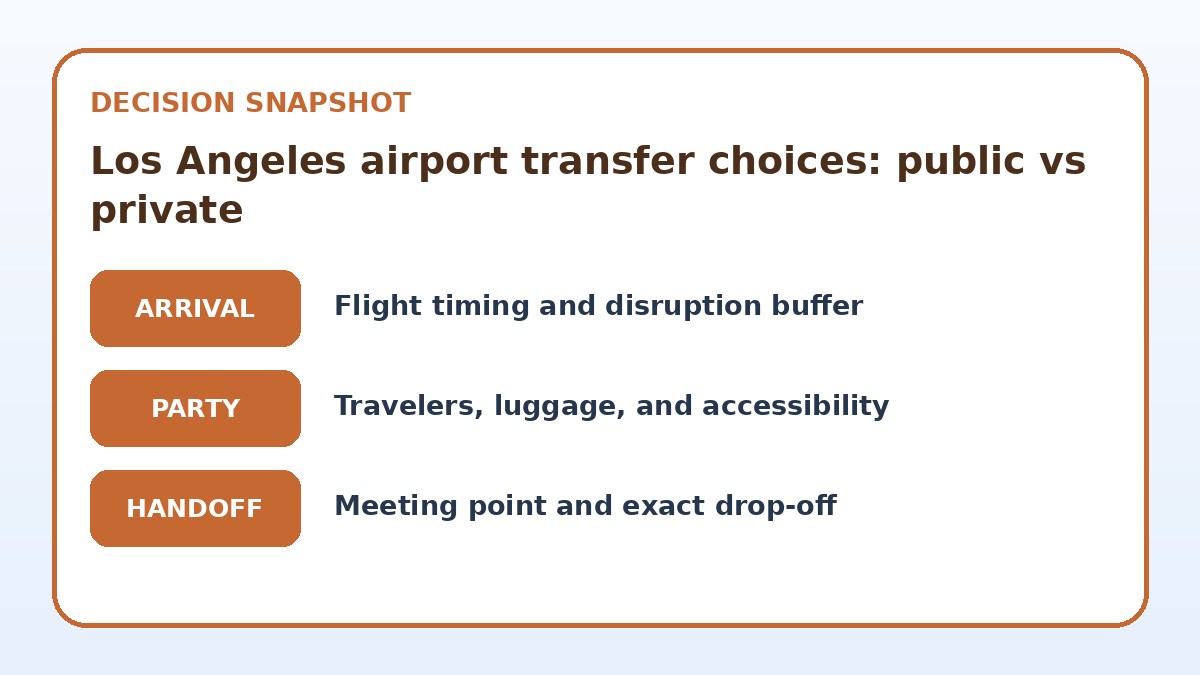
Match luggage and party size to the right transfer
Count bags and people before you decide. If you’re traveling solo or as a pair with one or two small suitcases, Los Angeles public transit plus a short walk, shuttle, or short rideshare can be practical. Buses and some rail lines are built to handle suitcases, but elevators, stairs, and crowded platforms matter — if you expect a lot of luggage, repeated transfers increase fatigue and time between landing and your door. Consider whether your group can comfortably carry bags between stops or if you’ll need assistance; that affects whether to choose public or private.
For groups of three or more, families with children, or travelers with sports or oversized equipment, private cars or airport shuttles reduce handling. A single vehicle that drops you at the hotel entrance saves time and eliminates multiple transfers. Shared hotel shuttles are a middle ground: they load luggage efficiently but may make additional stops. Balance the convenience of door-to-door drop-off against waiting times and possible detours when multiple passengers are served.
Arrival details to have ready
- Count people and suitcases now; if you have more than two checked bags or more than three people, favor a private car or shuttle.
- Save screenshots of terminal maps and the exact pickup zone for your terminal to your phone before you land.
- If pre-booking private transport, confirm pickup policy for delayed flights and obtain a direct contact number for the driver or operator.
- If using public transit, download or screenshot the route and timetable, and note the nearest elevator or escalator for baggage movement.
- Prepare a backup access method: a rideshare app, local taxi number, or shuttle desk location in case your primary plan falls through.
- Tell your accommodation your expected arrival window and ask where they recommend drivers drop guests off for easiest access.
Plan for late or disrupted arrivals
If your schedule is uncertain, consider the risk tolerance for waiting in terminals or navigating limited services late at night. Late arrivals often mean fewer bus routes, reduced rail frequency, and longer waits for shared shuttles; ticket counters for some services may be closed. A private transfer booked with flexible pickup instructions or a rideshare app can adapt to a delayed arrival more easily, but you will need reliable mobile service and a clear meeting plan at the terminal.
When flights are disrupted, cancellable or flexible bookings provide peace of mind. If you select public transit, identify alternative routes and know where to buy tickets or reload transit cards at the airport. If you prefer private transport, verify how the provider handles delays and whether drivers wait, where they park, and how they communicate. For any option, prepare a backup: a rideshare app, cash or card for a taxi, and a list of terminal pickup locations so you can switch quickly if needed.
Match the transfer to your arrival
| Arrival approach | Best for | Detail to verify |
|---|---|---|
| Public transit (bus + rail) | Solo or budget-minded travelers staying near transit lines | Lower cost but requires baggage handling and possible transfers |
| Rideshare or taxi | Flexible travelers needing quick door-to-door service | Convenient but variable wait times and surge pricing can apply |
| Pre-booked private transfer | Groups, families, or late arrivals wanting guaranteed pickup | Higher cost but predictable pickup, door-to-door convenience |
| Shared hotel or airport shuttle | Travelers wanting luggage help without the price of a private car | Efficient for baggage but may include multiple stops and waits |
Make the meeting plan clear
Check the final pickup instructions, waiting conditions, and exact drop-off coverage.
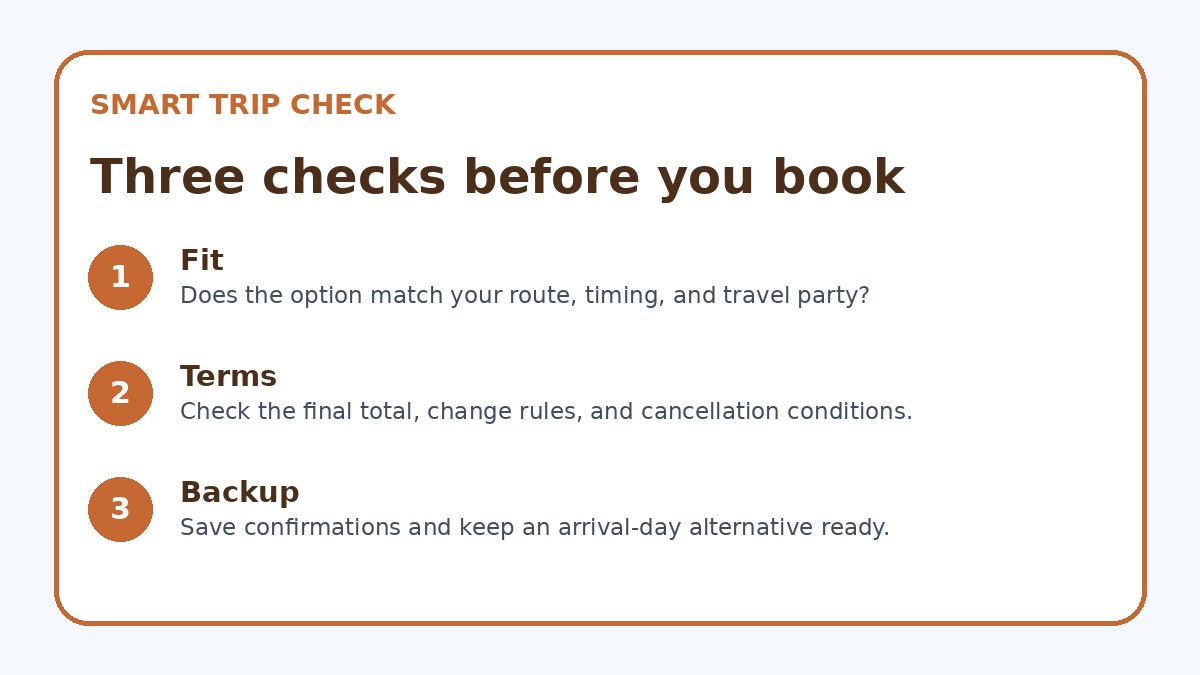
Meeting-point clarity: avoid common pickup mistakes
Airports like LAX have specific terminal pickup rules and zones. For rideshares and taxis, confirm whether you’ll meet curbside, at an “airport pickup” lot, or at a designated rideshare area. Private transfer providers may have a staff member in arrivals or require you to walk to a nearby meeting point. Ask your driver or operator exactly where they will wait, how they will identify you, and what to do if you can’t find each other — a photo of the driver’s sign, a vehicle description, or a text-enabled contact number can save time.
If you plan to use public transit, locate the nearest bus stop or rail station relative to your arrival gate and identify whether an elevator or pedestrian bridge is needed. Some travelers miss planned connections because they underestimated the time needed to get from baggage claim to the transit platform. Consider walking the route mentally during your flight by checking terminal maps, and save a transit map screenshot offline in case airport Wi-Fi is slow or unavailable.
Does the drop-off fit your destination-side needs?
Think beyond the hotel entrance. Some accommodations are in pedestrian zones, narrow streets, or have restricted vehicle access that affect where a private driver can drop you. Public transit may drop you closer to an entrance in walkable neighborhoods even if a car can’t reach the door. Confirm whether your accommodation has a guest drop-off area, luggage assistance, or stairs that matter when you arrive with heavy bags or a child seat.
If your plan includes onward connections — to a rental car, a cruise terminal, or an event — choose the option that aligns with the next leg. A private transfer that drops you directly at a rental counter or train station can streamline logistics, while public transit might require extra walking and transfers. Before booking any transfer, check with your hotel or destination host about recommended pickup points and any local restrictions that could change where vehicles can stop.
Airport Transfer & Local Mobility questions travelers ask
Can I use public transit directly from Los Angeles airport to downtown?
Yes, public transit serves routes between major airports and downtown areas, but options can vary by terminal and time of day. Compare rail or bus routes against your arrival gate and check whether transfers are required. If you have lots of luggage, confirm elevator availability and the walking distance between platforms and street level. When planning, look up current schedules and fares on official transit websites or apps and consider how a short rideshare might bridge any inconvenient gaps.
How do I find my pre-booked private driver at the airport?
Private operators typically provide a meeting-point instruction and a contact number; some also allow you to track the driver’s approach via app. Make sure you have the driver’s name, vehicle make and color, and a phone number saved where you can reach them after landing. If directions from the operator are unclear, confirm whether they meet curbside, at the arrivals hall, or at a designated passenger pickup lot. If you lose signal, use airport information desks to locate the operator’s meeting area.
Is a shared shuttle a good compromise between cost and convenience?
Shared shuttles can balance affordability and convenience because they handle luggage and often stop close to hotels, but they typically serve multiple passengers and therefore may involve wait times and extra stops. If you value lower cost without the hassle of navigating public transit with bags, a shuttle can be sensible, especially for mid-sized groups. Before booking, ask how many stops are typical, whether door-to-door service is included, and how long the operator will wait for delayed flights.
Final decision note
For first-time visitors to Los Angeles, the right airport transfer depends on how you weigh cost against convenience. Public transit is often the most budget-friendly choice for light travelers staying near transit hubs, while rideshares and taxis suit those who want quicker, simpler door-to-door travel. Pre-booked private transfers and shared shuttles are sensible when luggage, group size, or late arrivals make direct, predictable pick-up a priority. Whatever you choose, prepare by counting luggage, saving terminal pickup details, confirming delay policies with providers, and keeping a backup option ready. Checking current schedules and provider pickup instructions on their final booking pages — or comparing options on Trip.com if you like — will help you land and travel into Los Angeles with confidence.
Continue planning
Check current options and final conditions
Use the provider page to confirm live availability, the final total, cancellation terms, and every condition that matters to your trip.
This evergreen planning guide was created with AI-assisted drafting and a structured quality review. It does not display live prices, schedules, availability, visa guidance, or provider rankings. Verify current details before booking. Some links are affiliate links; we may earn a commission at no additional cost to you.