Decide on your stay area first: if you want easy temple mornings choose Higashiyama; for nightlife and transit hubs pick Kawaramachi or Kyoto Station; for quieter streets and value consider Northern Kyoto. For most solo travelers the practical choice is a neighborhood that minimizes daily friction—short walks to transit, safe late-night routes, and hotels offering flexible cancellation or date-change policies. Start your shortlist by matching one neighborhood to your typical day: museum and temple loop, evening dining and strolling, or early-morning photo runs. Once you have that area, compare room types (single vs. twin), breakfast options, and the exact cancellation and change policies shown on the supplier’s booking page. Verify whether refunds are immediate, subject to processing windows, or credited as vouchers before you complete a reservation.
Check live stays in the areas that fit
Use your dates and party size to compare current rooms after you narrow the neighborhood fit.
Neighborhood fit: match your daily rhythm
Begin by mapping a typical day in Kyoto: morning shrine and temple visits, midday museum stops, afternoon café time, and evening dinners or walks. Higashiyama suits early-morning temple runs because many major sights are within walking distance, reducing transit dependency. Kawaramachi and Pontocho put you in the center of dining and nightlife, which matters if you plan late returns when trains reduce frequency. Northern Kyoto neighborhoods like Kuramaguchi and near the Imperial Palace tend to be quieter and may offer lower rates but can require longer trips to the main attractions.
For solo travelers, safety and predictable routes are crucial—pick an area where the walk from your hotel to the nearest transit or main street feels comfortable at night. Factor in luggage handling: a hotel near a larger station makes arriving or departing by rail less stressful. Finally, if you expect to change your schedule mid-trip — adding or removing nights — prioritize neighborhoods with multiple nearby alternatives so you can easily relocate if a booking’s change policy forces a move.
Choose an area-selection strategy
| Area approach | Best for | Tradeoff to check |
|---|---|---|
| Central Kawaramachi/Pontocho | Evening dining, nightlife, quick transit to shopping areas | Higher foot traffic and often shorter free-cancellation windows during busy periods |
| Higashiyama (temple corridor) | Early-morning sightseeing and walkable temple loops | Fewer late-night transport options; flexible booking helps if you run late |
| Kyoto Station area | Arrivals/departures, trains and buses hub, easy luggage handling | More business-style hotels where refundable leisure rates may be limited |
| Northern or residential neighborhoods | Quiet stays, lower nightly density, local feel | Longer daily commutes if you change plans—good flexible-date policies are essential |
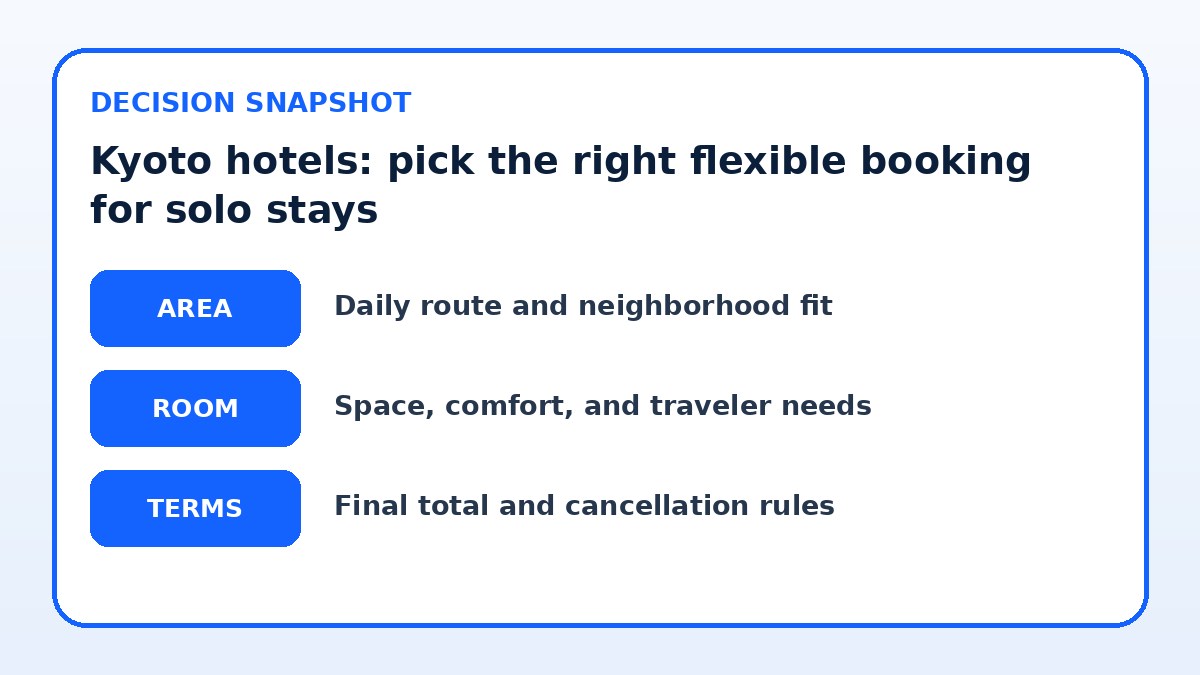
Daily-route friction: how location affects flexibility needs
Transit convenience changes how flexible your booking must be. If your chosen neighborhood has frequent local buses and a subway line, you can accept stricter advance bookings because getting around is quick even if plans shift. Conversely, in quieter districts with infrequent buses or limited late-night trains, you’ll value free or low-penalty date changes since a delayed activity could force you to miss the check-in window or require an additional night.
Also think about luggage and check-in logistics: solo travelers sometimes arrive early or late due to connections. If you’ll rely on luggage storage, confirm whether the hotel offers same-day storage and whether that service is guaranteed in the booking terms or simply noted in the property description. Where transit is sparse, a hotel with a flexible check-in/checkout policy or an easy ability to add nights without heavy penalties reduces stress when a travel hiccup pushes schedule changes.
Now compare like with like
Keep the same dates, guests, room needs, and cancellation preferences while you compare the final choices.
Room and party needs: choosing the right refundable room type
Decide the room size and bedding configuration you actually need—single, twin, or small double—and confirm the occupancy rules on the booking page. Hotels often list refundable and nonrefundable rates for the same room type; choose the refundable option if your dates might change, but read the fine print to see whether refunds are processed back to your card or issued as travel credit. For solo travelers, a single-bed room with breakfast included can simplify mornings, but confirm whether breakfast refunds apply if you cancel portions of your stay.
If you’ll sometimes share a room for safety or networking with fellow travelers, verify whether the rate allows an additional name or guest without penalty and how that affects the cancellation window. When comparing room types, pay attention to non-monetary flexibility: free cancellation until a number of days before arrival, the ability to change dates without fees, and whether the hotel will allow a late check-in without extra charge. These details are shown on the provider’s final booking page and should be confirmed before payment.
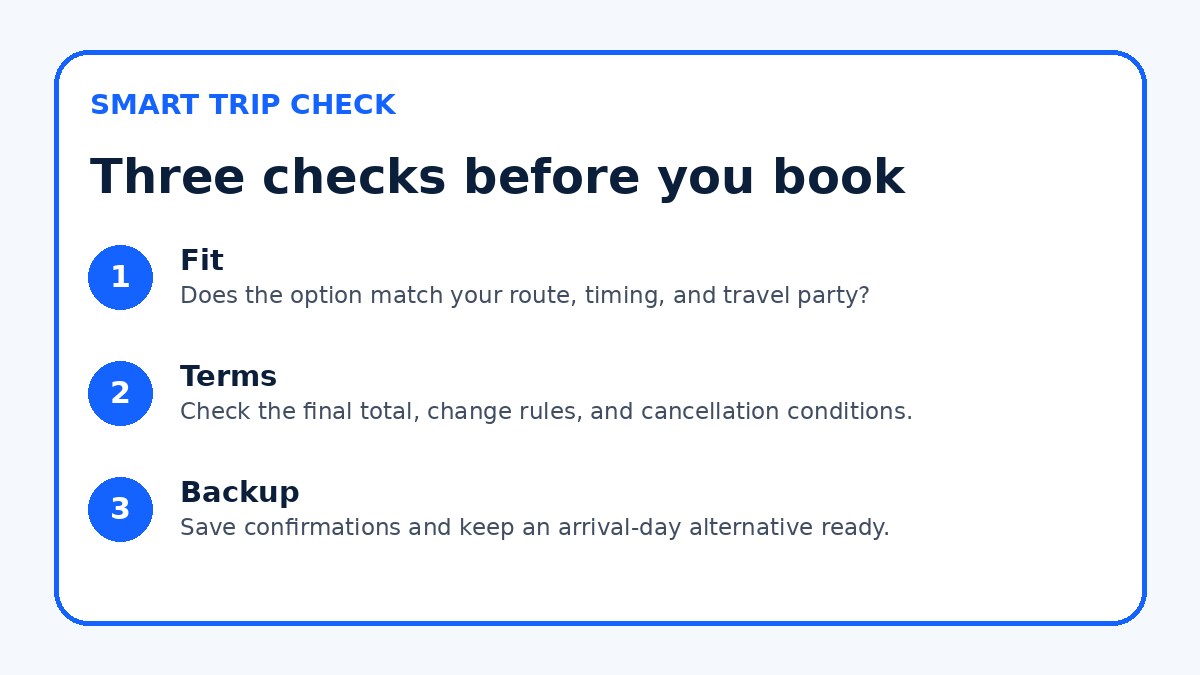
Hotel booking check before payment
- List three neighborhoods that match your daily rhythm and prioritize them by proximity to your main activities.
- For each shortlisted neighborhood, open two refundable and two nonrefundable rate pages and compare cancellation cut-off dates side by side.
- Confirm how refunds are processed (card refund vs. voucher) and note any processing windows or fees specified on the final booking page.
- Check the hotel’s stated policy on late check-in and luggage storage to avoid needing an extra paid night for arrival timing.
- If you may add or remove nights, verify the date-change rules and any blackout dates that would require paying new rates.
- Save screenshots or PDF copies of the rate rules and the reservation confirmation showing the exact cancellation and change terms.
Final booking terms: what to verify before clicking reserve
Before you book, scrutinize four elements on the supplier’s final page: cancellation window and penalties, how refunds are issued (card refund vs. voucher), date-change rules and any blackout or weekend restrictions, and whether taxes or local fees are refundable. Don’t rely on summary labels like “flexible” without opening the detailed policy. Hotels and booking platforms sometimes display layered rules—an initial free-cancellation period followed by a stricter rate—so check the timeline for each rate option.
Also confirm arrival details that affect flexibility: the payment timing (prepaid vs. pay-at-property), ID or deposit requirements at check-in, and how the property handles late cancellations caused by travel disruptions. If you compare multiple listings in your chosen neighborhood, keep a short spreadsheet of the cancellation cut-offs and refund method to see which option gives you real flexibility. For additional comparisons of current availability and conditions, you can check Trip.com, but always verify policy text on the hotel’s or booking platform’s final confirmation page.
Hotel Guide questions travelers ask
How far in advance should a solo traveler book a Kyoto hotel with flexible terms?
It depends on your flexibility needs and travel season. If you expect schedule changes, prioritize a refundable rate even if it means booking later to compare options; many refundable rates are available up to a few weeks before arrival. If you already know exact dates and want more choices of rooms in a specific neighborhood, secure a refundable booking earlier. Always check the cancellation cut-off on the booking page because the actual refund window—not an assumption—determines how far ahead you must decide or alter plans.
Are refundable rates always worth the extra cost for a solo traveler in Kyoto?
Not always. If your itinerary is locked and travel disruptions are unlikely, a nonrefundable rate can save money. However, solo travelers often face unpredictable arrival or departure times; refundable rates reduce stress if you need to shift a night or extend a stay. Compare the price difference and the specific refund mechanics: a refundable rate that returns money to your card is more flexible than one that issues a credit valid only with the same provider. Evaluate the trade-off against your tolerance for risk.
What specific policy language should I verify on the hotel or booking site?
Look for exact phrases and dates: the last date/time you can cancel for a full refund, whether refunds are processed to your original payment method or credited as vouchers, any per-night penalties after the cut-off, and rules for changing reservation dates (and whether changes incur rate differences). Also confirm whether taxes and local fees are refundable. If the policy mentions exceptions for third-party bookings or force majeure, read those clauses to know when they might apply.
Final decision note
For solo travelers in Kyoto, choosing the right neighborhood first reduces the need for last-minute moves; then choose a room and rate whose cancellation and date-change mechanics match how much your plans can shift. Higashiyama, Kawaramachi, Kyoto Station, and quieter northern neighborhoods all suit different rhythms—use the comparison approach above to shortlist one area and then evaluate refundable versus nonrefundable rates within that area. Always open the supplier’s final booking page and read the full policy text: confirm cut-off times, refund method, and any processing windows before you pay. With those checks done, you’ll be able to reserve a stay that supports your daily routes and gives you breathing room for the inevitable small changes solo travel brings.
Continue planning
Check current options and final conditions
Use the provider page to confirm live availability, the final total, cancellation terms, and every condition that matters to your trip.
This evergreen planning guide was created with AI-assisted drafting and a structured quality review. It does not display live prices, schedules, availability, visa guidance, or provider rankings. Verify current details before booking. Some links are affiliate links; we may earn a commission at no additional cost to you.