Short practical answer: if you want friction-free planning and are happy to trade some flexibility for convenience, a curated package can be a smart choice; if you prioritize control over timing, accommodation type, and local experiences, book flights, trains, hotels, and passes separately. For first-time visitors to Kyoto the right option depends on how comfortable you are navigating Japan’s transport and accommodation systems, how many fixed dates you have, and whether you prefer guided experiences or independent wandering. Packages bundle logistics—often including transfers, accommodations, and key tours—so they reduce research time and some day-to-day decisions. Separate bookings give you granular control: choose neighborhoods, room types, and how much time you spend at temples, gardens, and museums. Below I explain the tradeoffs, decision criteria, and a practical checklist of what to verify before you commit to any Kyoto travel deals.
What package deals typically include and who they suit
Package deals aimed at Kyoto usually bundle at least some combination of long-haul transport (flight or rail), accommodation, and a small selection of guided activities or transfers. For a first-time visitor this can mean you arrive with someone else having already confirmed the big pieces—where you stay, how you get from the airport or station to your hotel, and the timing of a few popular tours. Packages often include options at different comfort levels and sometimes add local guides for specific cultural sites, which helps travelers unfamiliar with etiquette or language nuances.
Packages best serve travelers who value convenience and want fewer day-to-day decisions while on the trip. They can reduce the mental load of comparing dozens of hotels, train schedules, and separate activity vendors. If you are short on time for planning, prefer a structured itinerary, or want straightforward customer support that can manage logistics during travel, a package may be the most efficient option. That said, always read the detailed itinerary and inclusions so you know exactly which transport legs, meals, or entrance fees are covered and which are not.
Why separate bookings give control — and what that control costs
Booking flights, hotels, and local experiences separately gives you complete control over where you stay, how long you linger at places like Fushimi Inari or Kiyomizu-dera, and which neighborhoods to use as a base—Gion for atmosphere, Kawaramachi for shopping, or near Kyoto Station for transport convenience. You can mix budget and splurge nights, choose ryokan stays or modern hotels, and prioritize morning visits to popular temples to avoid crowds. Independent booking also makes it simpler to customize train routes and choose between regional rail passes or point-to-point tickets based on your broader itinerary.
That control comes with more time spent researching and comparing options, and potentially more transaction fees and cancellation policies to juggle. You’ll need to compare direct versus connecting flight or train options, check baggage allowances, and decide whether a Japan Rail Pass or individual tickets make sense. If something goes wrong, there isn’t a single provider responsible for every leg, so you should be comfortable resolving issues across airlines, hotels, and activity operators or be prepared to pay for travel insurance that covers multiple suppliers.
| Approach | Best for | Tradeoff to check |
|---|---|---|
| Package deal | Travelers wanting low-effort planning and bundled logistics | Less flexibility in hotels, timing, and independent exploration |
| Separate bookings | Travelers who want full control over neighborhood and schedule | More research and multiple vendor policies to manage |
| Hybrid (package + add-ons) | Visitors who want a core itinerary but customized extras | You must carefully check compatibility and change rules |
| Local provider packages (Kyoto-focused) | Those prioritizing cultural guides and curated local experiences | May restrict free time and require early booking for popular slots |
How to compare total cost and avoid surprises
When evaluating Kyoto travel deals, compare all line items: base fare or room rate, taxes, local tourist fees if any, luggage charges, transfers, and the cost of the activities you plan to do independently if they’re not included. For example, a package that looks cheaper on headline price may exclude airport transfers or a popular guided day tour that you then have to buy separately. Create a simple spreadsheet listing inclusions and exclusions for packages and separate bookings so you can compare apples to apples; include expected local transport costs and any anticipated meals.
Beyond money, consider opportunity cost and flexibility. Packages can lock you into fixed dates and times—useful if you value a timed visit to a cultural performance or have limited vacation days—but they can make changing plans harder or more expensive. Separate bookings let you adjust on the fly but require you to handle last-minute changes across multiple suppliers. Before paying, verify the booking page details: exact refund and change terms, what portion is refundable, baggage rules for flights, and whether transfers are private or shared.
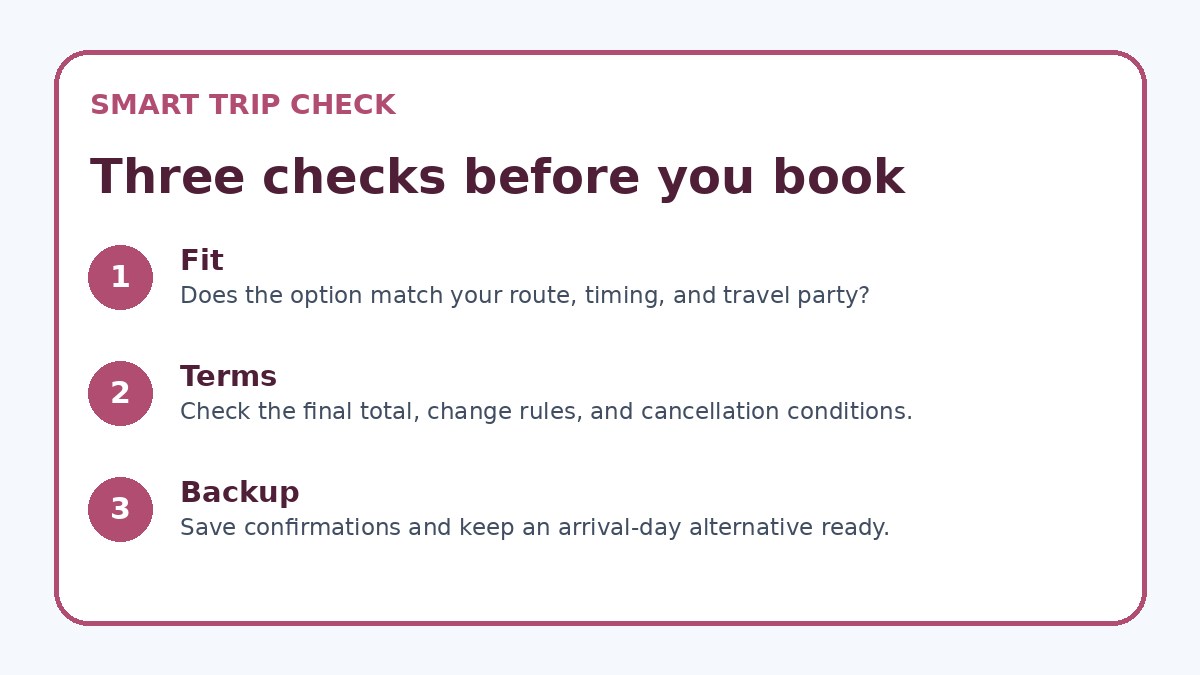
Before you book
- List your top three priorities (neighborhood, guided experiences, and flexibility) to determine package versus separate booking advantage.
- Compare total trip cost by adding expected transfers, local transport, entrance fees, and meal budgets to headline prices.
- On the final booking page confirm exact transport legs (direct or connecting), baggage rules, and whether transfers are private or shared.
- Read cancellation and change terms carefully and note any non-refundable deposits or deadline dates in your calendar.
- If booking separately, check train pass options versus point-to-point tickets and verify where passes are valid in Kyoto and beyond.
- Confirm meeting points, language of guided tours, and whether included activities require advance reservation or have minimum participant rules.
Practical decision criteria and what to verify before booking
Decide using three practical filters: time (how much planning time you have), tolerance for uncertainty (how comfortable you are coordinating multiple bookings), and priorities (comfort level, neighborhood, guided experiences). If you have limited planning time or prefer hands-off logistics, a package is attractive. If you want to stay in a specific Kyoto neighborhood, combine different accommodation types, or have flexible travel dates, separate bookings give better outcomes. Rank these filters for your trip and let them guide the choice rather than relying on only price.
Before you complete any purchase, verify specific items on the provider’s final booking page: exact travel legs and whether they are direct or connecting, cancellation and change fees and timelines, what transfers actually cover, whether included tours have minimum participants, and any documentation required at check-in. You may also compare availability on Trip.com as one of several sites to confirm current options, but use the supplier’s booking page to confirm terms and final totals.
Frequently asked questions
Will a package save money compared with booking everything separately for Kyoto?
Sometimes packages can appear less expensive once you bundle flights, accommodation, and some tours, but savings are not guaranteed. The real comparison should add all likely separate costs—airport transfers, individual tours, local train fares, and baggage fees—and weigh those against package inclusions. Also consider the time you spend researching and the value of convenience. Check final totals and any cancellation penalties on the provider’s booking page before deciding. If price is the only factor, build a side-by-side cost sheet to compare true out-of-pocket costs.
How do I decide which Kyoto neighborhood to pick if I book separately?
Choose based on your priorities: stay near Kyoto Station if you want the fastest train connections and easy day trips; pick central Kawaramachi or Gion for nightlife and walking access to shops and temples; opt for Higashiyama for historic streets and temple proximity. Consider morning and evening plans—temples are busiest mid-afternoon—so proximity can affect your experience. Also check public transport options for your likely itinerary and whether your hotel provides luggage storage for early arrivals or late departures.
What should I verify about guided tours included in packages?
Confirm what the tour covers, its pace, and the language offered. Verify whether entrance fees, certain meals, or public-transport fares are included, and check if the tour has a minimum participant requirement or fixed departure dates. Ask about refund or rescheduling rules if weather or personal plans change. If you prefer quieter visits or want to skip a crowded attraction, ensure the package allows free time or opt for a private guide when flexibility matters.
Final planning note
There’s no single right answer for first-time visitors to Kyoto: choose a package if you value convenience and want major logistics handled, and choose separate bookings if neighborhood choice, timing, and personalization matter more. Use the decision filters—time available to plan, tolerance for managing multiple providers, and your travel priorities—to guide your choice. Always compare the true total cost, check the final booking page for exact travel legs, cancellation rules, and included services, and consider a hybrid approach if you want the best of both worlds. With clear priorities and a short checklist, you can pick Kyoto travel deals that match how you want to experience the city.
Continue planning
Check current options and final conditions
Use the provider page to confirm live availability, the final total, cancellation terms, and every condition that matters to your trip.
This evergreen planning guide was created with AI-assisted drafting and a structured quality review. It does not display live prices, schedules, availability, visa guidance, or provider rankings. Verify current details before booking. Some links are affiliate links; we may earn a commission at no additional cost to you.