
Practical answer first: if you value the fastest door-to-door travel and the fewest points of failure, choose a direct flight; if you prioritize a lower fare, more schedule options or a daytime break en route, consider a connecting itinerary. For first-time visitors, the differences are less about in-air comfort and more about how each option affects your arrival time, luggage handling, and contingency planning in winter. Before booking, compare total journey time from your Tokyo accommodation to your Sapporo destination, check minimum connection times, and confirm baggage transfer rules on the carrier or booking page. If a budget carrier is part of the trip, verify boarding procedures and airport terminals. Use these criteria to match the option to your travel priorities rather than assuming one choice fits every trip.
What 'direct' and 'connecting' mean for this route
A direct flight typically means you fly non-stop from one Tokyo-area airport to an airport serving Sapporo without changing planes. That reduces the number of transitions—no extra transfers, fewer ticket segments to manage, and usually simpler baggage handling because your luggage is checked through to your destination. For first-time visitors, the predictability of a single flight can be reassuring: arrivals are easier to plan, and you won’t need to navigate a second departure gate or another check-in process.
A connecting itinerary routes you through another airport between Tokyo and Sapporo, which can be in Japan or a nearby hub. Connections may occur within the same carrier’s network or involve different carriers and separate tickets. This creates more scheduling flexibility and sometimes lower fares, but it also adds tasks: you may need to change terminals, recheck baggage, or allow extra time to clear security and immigration if applicable. Understanding those operational differences helps you decide whether the tradeoffs fit your comfort level and schedule.
Time, cost and schedule flexibility
Direct flights are usually the fastest way to travel between two cities because they avoid layovers. For many travelers, especially those with limited time in Japan, shaving off transfer time matters: you can arrive earlier, settle into your hotel, and start exploring Sapporo the same day. Directs also reduce the number of flights on your itinerary to monitor—fewer chances for cascading delays. That said, airlines’ schedules vary throughout the day, so the direct option may not fit your ideal departure or arrival time.
Connecting flights often offer more schedule options across the day and sometimes lower base fares. If your travel dates are inflexible or you want a particularly early or late departure, a connection may open possibilities a direct flight doesn’t. However, connections add layover time and the risk that a delay on the first leg will disrupt the second; this is especially relevant in regions with seasonal weather disruptions. When you compare itineraries, calculate the full door-to-door time, not just airborne hours, and confirm any minimum connection times listed by the airline or booking agent.

| Approach | Best for | Tradeoff to check |
|---|---|---|
| Direct flight | Travelers who want the quickest, simplest door-to-door journey with fewer points of failure | May have fewer daily departures and sometimes higher fares or less scheduling flexibility |
| Connecting flight on a single ticket | Travelers seeking lower fares or specific departure times while keeping some transfer protection | Adds layover time and connection risk, but the airline usually handles rebooking if the first leg is delayed |
| Connecting flights on separate tickets | Budget-conscious travelers willing to accept higher planning responsibility to mix carriers or times | You bear full responsibility for missed connections and luggage recheck; requires longer buffers |
| Hybrid approach (overnight or long daytime layover) | Travelers who want to break the journey, rest, or sightsee without rushing a tight connection | Increases total travel time and may add accommodation costs but reduces stress from tight transfers |
Baggage, ticketing and missed-connection risks
With a single-booking direct flight, baggage is normally checked through to the final airport and handed over at arrival in Sapporo, which simplifies arrivals. Connecting itineraries booked on one carrier or via a single ticket may offer similar through-checked-luggage convenience, but that depends on the airlines and the transfer agreement. If you mix carriers on separate tickets, you might need to collect and recheck bags during the layover. For first-time travelers, this adds a step and the potential for confusion—check the carrier’s baggage transfer policy on the booking page before you buy.
Missed connections are the primary operational risk of multi-leg travel. If all segments are on one ticket, the operating carrier usually has responsibility to rebook you, though policies differ. With separate tickets, you may be treated as two independent journeys and could be responsible for buying a new ticket if you miss the second leg. For peace of mind, consider connection buffer times, travel insurance that covers missed connections, and whether the carrier’s displayed minimum connection time is realistic given airport layout and procedures.
Before you book
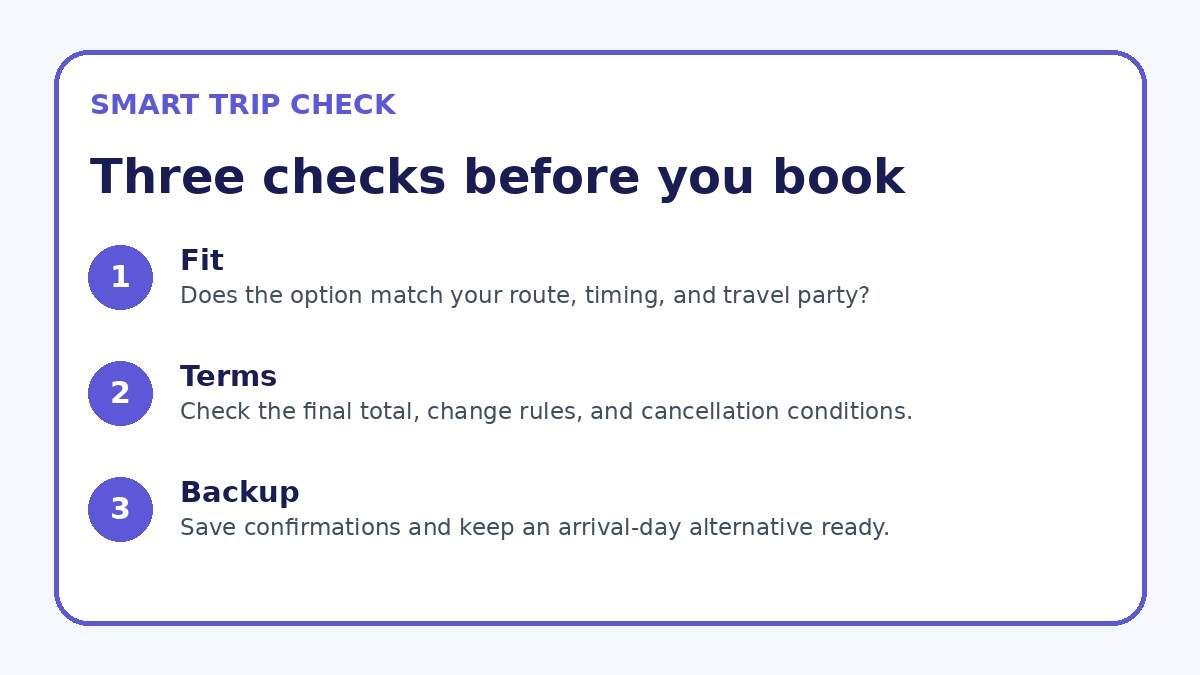
- Confirm whether your ticket is single-booking or multiple separate tickets and note the baggage transfer rules on the airline’s booking page.
- Calculate total door-to-door time including airport transfers, recommended security times, and any layovers before comparing itineraries.
- If booking a connection, allow extra buffer time for winter weather or terminal changes; prefer same-airline connections when possible.
- Check the terminal and arrival airport in Sapporo and plan ground transport options to your final accommodation before departure.
- Read the carrier’s rebooking and cancellation policy for missed connections and consider travel insurance that covers such events.
- Save electronic and printed copies of reservations, and keep essential documents and a change-of-clothes in carry-on luggage for unexpected delays.
Seasonal considerations and practical tips for first-timers
Sapporo’s region experiences heavy snow and winter weather that can affect flights more than Tokyo. In winter months, the likelihood of delays or cancellations rises, and transfer-heavy itineraries become more vulnerable. If you’re traveling during a season with known weather disruption, prioritize options that minimize required transfers or give you a longer buffer between connections. Also consider morning flights; they often have fewer knock-on delays than later departures after a day of operations has started to accumulate issues.
Practical preparation helps regardless of route type. Allow extra time to move between terminals if your itinerary requires it, and double-check whether the airline needs you to recheck baggage during the layover. Keep digital copies of your tickets, and confirm the airport you land at in Sapporo and its transit options to the city center. If you want to compare real-time availability or see combined itineraries, you can check providers like Trip.com, but always verify the final baggage and connection rules on the airline’s official booking page before completing your purchase.
Frequently asked questions
Is it faster to fly direct from Tokyo to Sapporo than to take a connecting flight?
Generally, a direct flight is faster in door-to-door time because it eliminates layovers and the need to change planes. However, total travel time depends on where in Tokyo you start, how you reach the airport, and the arrival point in Sapporo. A well-timed connecting itinerary could match a direct’s arrival if the direct option requires inconvenient ground travel times. Compare combined travel time from your accommodation to your final destination, and factor in minimum recommended airport arrival windows to make the practical speed comparison.
What should first-time visitors check about baggage when choosing between direct and connecting flights?
Confirm on the booking page whether baggage is checked through to Sapporo or must be collected and rechecked during a layover. Single-ticket itineraries with the same carrier commonly transfer bags automatically, but separate tickets often require baggage pickup and a new check-in. Also check size and weight limits, and whether low-cost carriers enforce strict carry-on rules at boarding. If you rely on checked luggage, choose an option that clearly states through-checked baggage to avoid surprises and extra time during the connection.
How much buffer time should I allow for connections, especially in winter?
There’s no universal buffer that fits every airport and itinerary, but allow more time than the airline’s minimum during winter or when changing terminals. Consider at least one to two extra hours beyond standard minimums for domestic-to-domestic transfers in snowy conditions, accounting for deicing, gate changes, or slower ground transport. If you are on separate tickets, build an even larger cushion or opt for an overnight layover. Always verify airport layout and transfer procedures on the airline’s site so you can judge whether your planned buffer is realistic.
Final planning note
Choosing between direct and connecting Tokyo to Sapporo flights comes down to your priorities: time and simplicity versus schedule flexibility and potential savings. Direct flights reduce the number of moving parts and are often the least stressful choice for first-time visitors, while connecting itineraries can open more departure windows and sometimes lower fares at the cost of added transfer risk. Before booking, compare total door-to-door time, confirm baggage transfer and rebooking policies on the airline’s final booking page, and factor seasonal weather into your buffer. With those checks, you’ll pick the option that best matches your risk tolerance, schedule, and comfort level.
Continue planning
Check current options and final conditions
Use the provider page to confirm live availability, the final total, cancellation terms, and every condition that matters to your trip.
This evergreen planning guide was created with AI-assisted drafting and a structured quality review. It does not display live prices, schedules, availability, visa guidance, or provider rankings. Verify current details before booking. Some links are affiliate links; we may earn a commission at no additional cost to you.