If you’re flying Paris to Istanbul for the first time, the quickest practical decision is whether you value time in the air and simplicity (direct) or a lower fare and schedule flexibility (connecting). Direct flights minimize the number of steps: one check-in, one takeoff, and one arrival, which simplifies transfers and customs. Connecting options introduce an extra leg and an extra airport, which can save money or open more departure times but requires careful attention to layover length, transfer airports, and whether both tickets are on the same itinerary. Before you book, decide which matters more: minimizing stress and transit time, or maximizing schedule choices and potential savings. Read on to learn the concrete tradeoffs, how to compare itineraries, and a practical checklist so you can pick the flight that fits your comfort level and schedule.
How direct and connecting options differ in practice
A direct flight typically means you board once in Paris and disembark once in Istanbul with no intermediate stop where you change aircraft or recheck luggage. Practically, that reduces stress: fewer announcements to follow, lower chance of missing a connection, and no need to navigate an unfamiliar transit airport. For first-time visitors, that simplicity also makes arrival procedures at Istanbul’s airport quicker to understand — one passport check, one luggage belt. However, direct flights may depart at less convenient times or be offered less frequently depending on season and carrier schedules.
A connecting itinerary splits the journey into two or more legs, often with a layover at a hub city. This opens up more combinations of departure times and carriers, which can be valuable if your preferred times aren’t offered directly. Connecting flights require confirming the minimum connection time at each airport, checking whether you must claim and recheck baggage, and planning for possible delays. For newcomers, a transfer can be an opportunity to stretch, grab a meal, or explore a transfer lounge, but it also introduces more moving parts — and every extra leg is another place where travel can be disrupted.
Time, comfort and disruption risk: what to compare
When weighing itineraries, always compare total travel time door-to-door rather than just flight time. A direct flight with a slightly longer airborne time is often faster overall than a connecting route with a short layover that risks missed connections. Consider airport transfer times in Paris (to reach your departure terminal) and in Istanbul (to reach your accommodation or onward transport). Also think about your personal comfort: would you rather sleep through one longer flight or break the journey into smaller segments? For many first-timers, fewer transitions translate into lower stress and easier navigation on arrival.
Disruption risk rises with each connection. If your inward leg is delayed, the pressure to make a tight connection grows, and rebooking across different carriers can be complicated. When comparing options, check whether the itinerary is sold on a single ticket (protects you in case of missed connections under the carrier’s responsibility) or as separate tickets (riskier and often requiring you to claim and recheck bags). Also review transfer terminals: some airports require long transfers between terminals that involve shuttle rides, security re-screening, or extra walking, which affects the real feasibility of tight layovers.
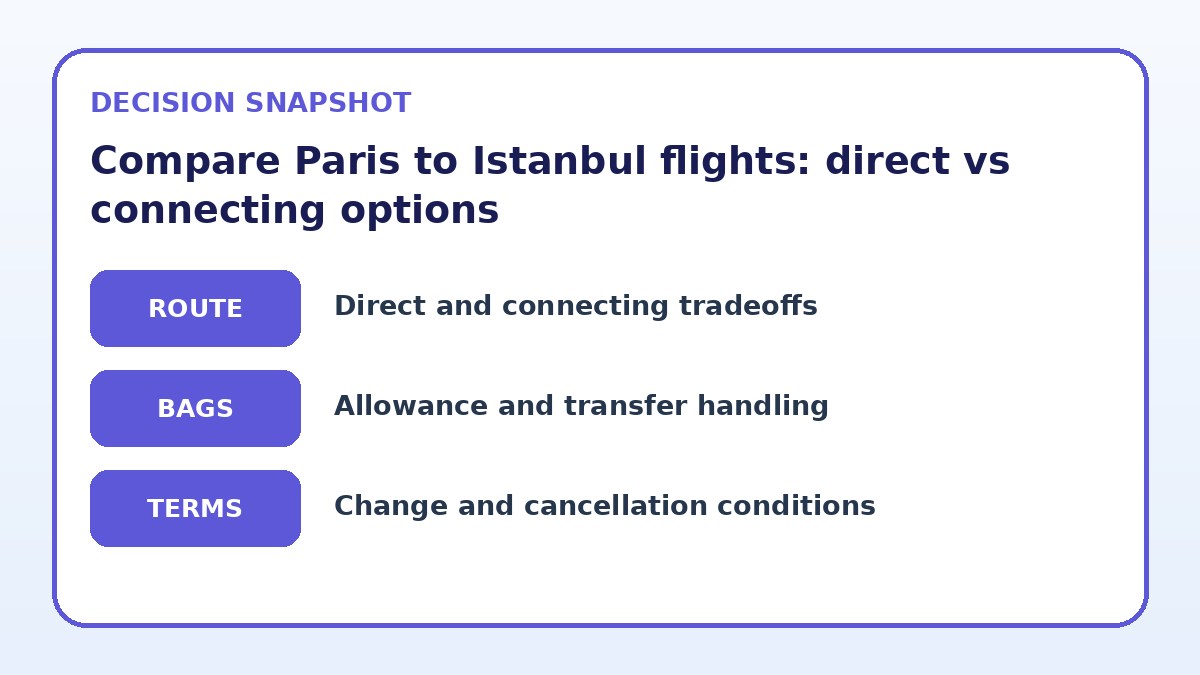
| Approach | Best for | Tradeoff to check |
|---|---|---|
| Direct flights | Travelers prioritizing simplicity, fewer variables, and shorter arrival procedures | Often fewer schedule choices and potentially higher base fares without added flexibility |
| Single-ticket connecting flights | Those seeking lower fares with carrier protection for missed connections | Still adds airport transfers and longer total travel time than direct options |
| Separate-ticket connections (different airlines) | Experienced, flexible travelers willing to risk rebooking for lower fares | Greater disruption risk; you may need to claim and recheck bags and manage missed connections yourself |
| Connections with long layovers | Travelers who prefer stress-free transfers or want time to rest or leave the airport | Longer door-to-door travel time; may reduce the time available at your destination |
Cost, flexibility and fare rules to inspect
Price is often the deciding factor for travelers. Connecting itineraries can open cheaper fare buckets or seats on low-cost carriers that don’t offer direct service. But cheaper upfront fares sometimes exclude essentials like checked luggage, seat assignment, or the ability to change dates. Carefully read the fare conditions on the carrier’s booking page: what refunds, changes, and cancellations are permitted? How much does an upgrade, extra baggage, or preferred seat cost? Those add-ons can narrow the apparent price gap between direct and connecting options once factored in.
Flexibility is another critical consideration. A single direct ticket on a full-service carrier may include protections such as rebooking assistance or meals if the carrier disrupts your journey; separate low-cost legs may not. If your schedule is uncertain or you’re traveling during busy seasons, the ability to change flights without steep fees may be worth a higher fare. Always verify on the airline’s final booking page whether the ticketed itinerary is protected when a connection is missed, which entity handles re-accommodation, and whether any third-party booking sites list identical protections.
Before you book
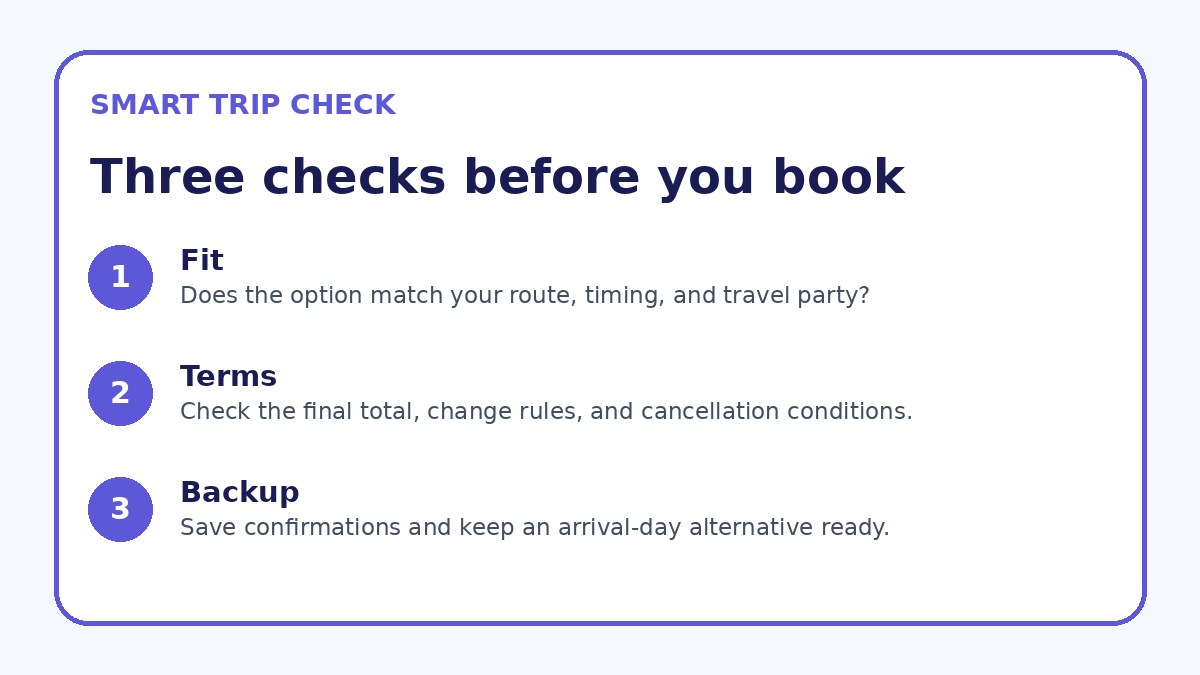
- Check whether the itinerary is on a single ticket or multiple separate tickets before booking.
- Verify baggage allowance, dimensions, and any fees on the airline’s final booking page.
- Confirm minimum connection times and required terminal transfers at any layover airport.
- Compare total door-to-door time including transfers to and from airports, not just flight time.
- Review change and cancellation rules, and note who handles rebooking for missed connections.
- Plan ground transport from Istanbul airport to your accommodation and allow buffer time for immigration and baggage.
Practical planning tips for first-time travelers
If you prioritize simplicity, search first for direct Paris to Istanbul flights on major carriers, compare departure times that suit your jetlag and arrival preferences, and check airport arrival logistics in Istanbul for onward transportation. If you’re considering a connection, pick layovers that provide at least the airport’s recommended minimum connection time plus a comfortable buffer — 90 minutes is often conservative for international-to-international changes, longer if you must change terminals or clear immigration. Also look for flights on a single ticket to reduce the risk of stranded transfers.
Before booking any itinerary, confirm three concrete facts on the carrier’s final booking page: baggage allowance and fees, whether seats are included or sold separately, and the ticket’s change or refund rules. If an itinerary involves a low-cost carrier for one leg, verify baggage transfer rules and whether you must collect and recheck luggage. Use a reputable comparison site to surface options — Trip.com can be a useful place to compare availability and conditions — but finalize details on the airline’s page so you know exactly what is covered and who to contact if plans change.
Frequently asked questions
Are direct Paris to Istanbul flights always faster than connecting ones?
Direct flights are generally faster in total door-to-door time because they eliminate layovers and extra transfers, but not always. A direct departure at an inconvenient time or located at a far terminal can erode that advantage. Also consider real-life factors: travel time to the Paris airport you choose, potential traffic, and how quickly you can clear immigration in Istanbul. Always compare the full itinerary duration and not just airborne flight time, and factor in transfer buffer time if you have tight connections.
How much layover time should I allow when connecting through another airport?
There’s no single rule, but a safe approach for international-to-international connections is to allow at least the airport’s published minimum connection time plus an extra buffer. For many travelers 90–120 minutes offers a reasonable balance if you stay airside and don’t need immigration, while transfers requiring baggage claim, recheck, or immigration often need two hours or more. If the connection involves different terminals, long security lines, or small airports with limited staff, add additional time. When in doubt, choose a longer layover to reduce stress.
If I book a connecting itinerary with different airlines, who is responsible if I miss my next flight?
Responsibility depends on whether the legs are on one ticket or separate tickets. If both legs are on a single ticket or through a codeshare, the operating carrier(s) typically assist with rebooking you on the next available flight under their contract of carriage. If you book separate tickets with different airlines, each airline usually treats the flight you missed as your fault, meaning you’d be responsible for rebooking and any extra costs. Always confirm protection details on the airline’s final booking page before purchasing, and consider travel insurance that covers missed connections.
Final planning note
For first-time travelers choosing Paris to Istanbul flights, the core decision is between convenience and complexity. Direct flights keep things simple: fewer steps, less to worry about on arrival, and a smoother experience navigating a new city. Connecting flights expand schedule options and may lower the ticket cost, but they introduce extra transfer steps and a higher chance of disruption. The smart approach is to compare full door-to-door time, fare inclusions (baggage, seats, change rules), and whether connections are protected on a single ticket. Use the checklist above to confirm essentials on the airline’s final booking page, and choose the option that best matches your tolerance for risk, your schedule, and how you want to arrive in Istanbul.
Continue planning
Check current options and final conditions
Use the provider page to confirm live availability, the final total, cancellation terms, and every condition that matters to your trip.
This evergreen planning guide was created with AI-assisted drafting and a structured quality review. It does not display live prices, schedules, availability, visa guidance, or provider rankings. Verify current details before booking. Some links are affiliate links; we may earn a commission at no additional cost to you.