Practical answer first: for most first-time visitors to Kyoto, a rental car is unnecessary and often more hassle than benefit. The city's historic center, major temples, and most museums are compact and well-served by trains, subways, buses, taxis, and plentiful walking routes. However, a rental can make sense if your itinerary includes remote sites, countryside day trips (northern mountains, Nara beyond the main rail lines, or the Sea of Japan coast), or if you travel with bulky gear, tight mobility needs, or a flexible multi-destination plan across Kansai. Before booking, compare driving time versus public-transit itineraries for each day, check parking availability at your accommodations and destinations, and confirm any provider-specific rules (insurance, mileage, and international driving permit requirements) on the rental company’s final booking page.
Where Kyoto’s public transport shines and where it doesn’t
Kyoto’s urban core is unusually compact for a major destination. Key neighborhoods—Kyoto Station, downtown Kawaramachi, Gion, Higashiyama, and the northern temple strip—are connected by rapid trains, a reliable subway, and a dense bus network. For most first-time visitors, this combination makes point-to-point travel straightforward: trains for longer hops, subway for cross-town journeys, and buses for access to temple approaches that trains don’t directly serve. Walking is often the fastest way between nearby sights, and the pedestrian-friendly streets around shrines are easier to enjoy without dealing with car navigation and parking.
Public transport has weaknesses outside the core. Rural or coastal day trips, mountain passes, and some smaller shrines lack frequent train or bus service, meaning journeys can be long or require multiple transfers. If your plan includes early starts, late-night returns, or tightly timed visits to rural attractions, driving can save time and reduce transfer stress. Still, consider whether the saved time outweighs parking hassles and unfamiliar driving rules, and plan to check parking availability and any restrictions at each stop before committing to rent.
Practical tradeoffs: cost, convenience, and stress
Cost comparisons are complex. A rental gives flexibility but introduces expenses beyond the base rate: fuel, parking, tolls on expressways, and possible extra insurance or young-driver fees. You’ll also need to budget for time stuck in traffic and for navigating narrow streets where finding a turn or a legal parking space can be time-consuming. For small groups or families sharing costs, these added expenses may be acceptable; for solo travelers or couples, local transit passes and occasional taxis are usually cheaper and less stressful.
Convenience is the other key factor. Driving lets you carry bulky gear, stop spontaneously, and reach out-of-the-way destinations on your schedule. On the flip side, Kyoto’s center features one-way streets, limited-scope parking lots, and pedestrian-only stretches where driving gains little. Evening traffic around major temples or station areas can be heavy, and GPS or rental-company navigation systems may use routes that aren’t ideal for sightseeing. Balance convenience against likely delays and the mental load of driving in an unfamiliar environment.
| Approach | Best for | Tradeoff to check |
|---|---|---|
| Rely on public transport and taxis | First-time visitors focused on central Kyoto and short walks between sights | Less flexibility for rural day trips; must follow train/bus schedules |
| Rent a car for the whole trip | Travelers planning rural itineraries, multi-destination days, or moving between prefectures | Higher costs, parking headaches, and city driving stress |
| Mix: public transit in city, rent for a day or two | Visitors who want transit convenience paired with one or two remote day trips | Extra effort to pick up and drop off vehicle; potential one-way rental fees |
| Hire private drivers or guided day tours | Those preferring door-to-door service without navigating or driving themselves | Less independence and possibly higher per-day cost compared with self-driving |
Neighborhoods and where a car helps most
If you plan to base yourself in central Kyoto—near Kyoto Station, Kawaramachi, or Gion—you’ll rarely need a car to enjoy the main highlights. These areas offer easy access to trains, buses, and walking routes; taxis are also plentiful at night. However, if your lodging is rural, located on the outskirts, or in neighboring prefectures like northern Kyoto Prefecture or the Sea of Japan coast, a car may be essential. Look at each day’s first and last attraction: if they involve late departures or arrivals on quiet country roads, a rental could substantially improve comfort and timing.
Cars are most useful for itineraries combining multiple rural stops or accessing sites with poor public-transit links, such as remote temple trails, rice-terrace viewpoints, or small coastal towns. If you anticipate traveling early in the morning or returning late from events that train timetables don’t support, driving avoids long waits. Remember that some charming rural roads are narrow and not designed for high speeds; practice cautious driving and factor extra time into your plans.
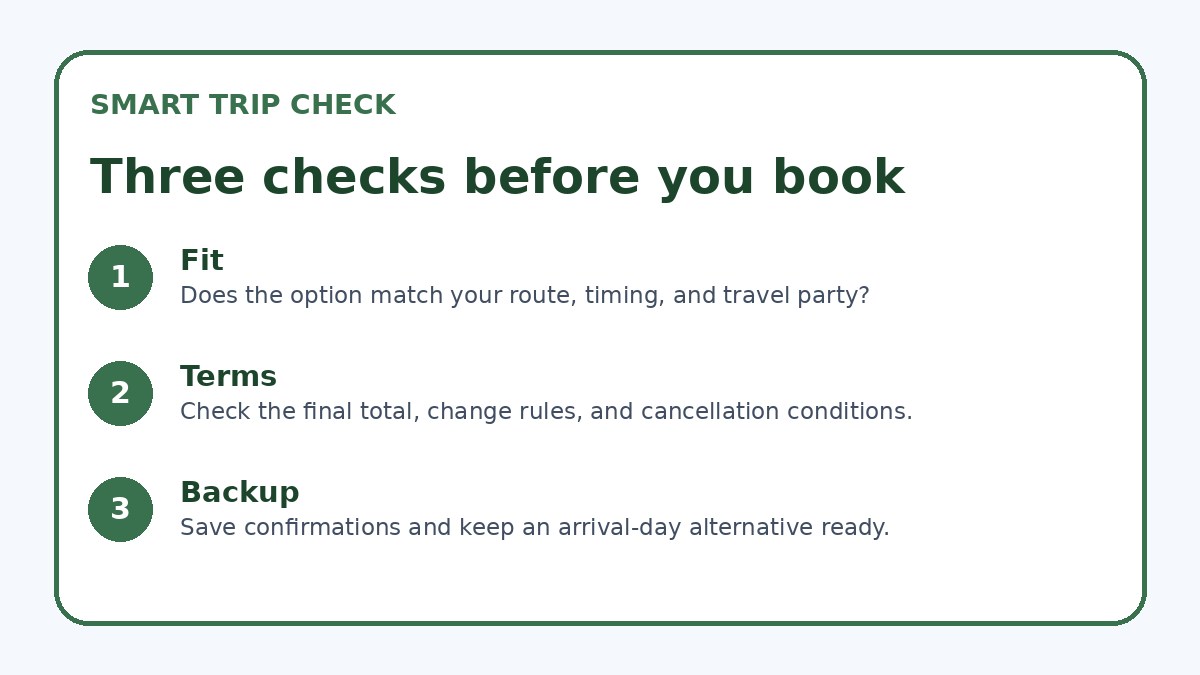
Before you book
- Map each day’s start and end points and compare public-transit travel times with driving estimates.
- Confirm parking availability and approximate cost with each hotel and major attraction you plan to visit.
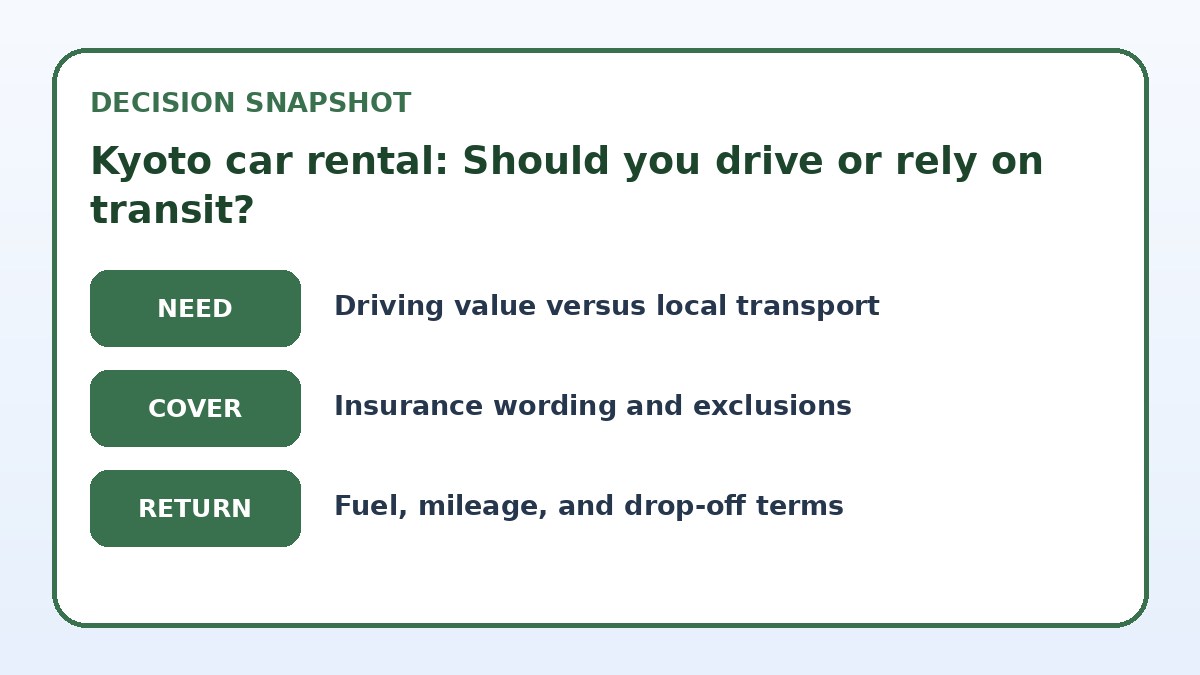
- Check the rental company’s final booking page for insurance options, international driving permit requirements, and fuel policy.
- Estimate expressway tolls and likely fuel use for rural routes and add them into your transportation budget.
- Decide pickup/drop-off logistics: same-location return versus one-way rentals and any associated fees.
- Plan for emergency contact methods, language support, and offline maps if you’ll drive in rural or low-coverage areas.
How to decide before you book
Make a day-by-day decision map. For each planned day, list origins, destinations, and approximate travel durations using public-transit planners and driving estimates. Note the number of transfers, walking segments, and whether arrival times land during off-hours. If most days require no more than one transfer and walking under 20 minutes between stops, public transport is probably the simpler option. If many days have long gaps, multiple rural stops, or limited late-night options, leaning toward a rental makes more sense.
Always verify provider-specific details before committing. Check the rental company’s final booking page for insurance options, cross-prefecture rules, fuel policies, and rules about international driving permits. Confirm parking with hotels and major attractions, and compare expressway tolls and likely fuel consumption for your planned routes. For comparing current availability and terms, sites like Trip.com can be a useful place to see options, but rely on each provider’s official terms at booking for the final information.
Frequently asked questions
Do I need an international driving permit to rent a car in Kyoto?
Most rental companies require a valid driving license recognized in Japan; many foreign visitors must also present an International Driving Permit (IDP) based on the 1949 Geneva Convention. Requirements can differ by nationality and provider, so check the rental company’s final booking page for exact documentation rules and whether any translations or additional paperwork are accepted. Don’t assume you can rent without confirming—arrive at the counter with original documents to avoid being turned away.
How hard is parking in central Kyoto, and should I worry about availability?
Parking in central Kyoto is limited around popular temple precincts and shopping streets; lots exist but can be small, fill early, or charge premium rates for convenience. Many hotels offer parking for guests, sometimes at a separate cost or on a reservation basis. Before leasing a car, contact your accommodation to confirm they can accommodate your vehicle and learn any rules about overnight parking. For day trips to major attractions, check each site’s parking situation in advance to avoid wasted time circling for a space.
Can I combine public transit and a short rental without extra fees?
Combining transit and a short rental is common: many visitors use trains and buses for city days and rent a car for one or two rural excursions. Fees depend on rental terms—there can be minimum rental periods, airport surcharges, and charges for different pickup/drop-off locations. Compare rates for short-term rentals, and verify any additional charges on the provider’s booking page. Also coordinate timing carefully so pickup and return don’t force you to cancel or alter other planned transit reservations.
Final planning note
For most first-time visitors, Kyoto’s compact layout and reliable public transport make a rental car unnecessary and potentially more trouble than it’s worth. Choose transit if you’re focused on downtown temples, museums, markets, and evening strolls; you’ll save money, avoid parking stress, and spend more time enjoying sights on foot. Opt for a rental when your plan includes multiple rural stops, limited public-transit options, or special accessibility needs—just plan routes in advance, confirm parking, and check all rental terms on the provider’s final page. If unsure, a hybrid approach (transit in the city plus a one- or two-day rental) often delivers the best balance of convenience and low hassle.
Continue planning
Check current options and final conditions
Use the provider page to confirm live availability, the final total, cancellation terms, and every condition that matters to your trip.
This evergreen planning guide was created with AI-assisted drafting and a structured quality review. It does not display live prices, schedules, availability, visa guidance, or provider rankings. Verify current details before booking. Some links are affiliate links; we may earn a commission at no additional cost to you.