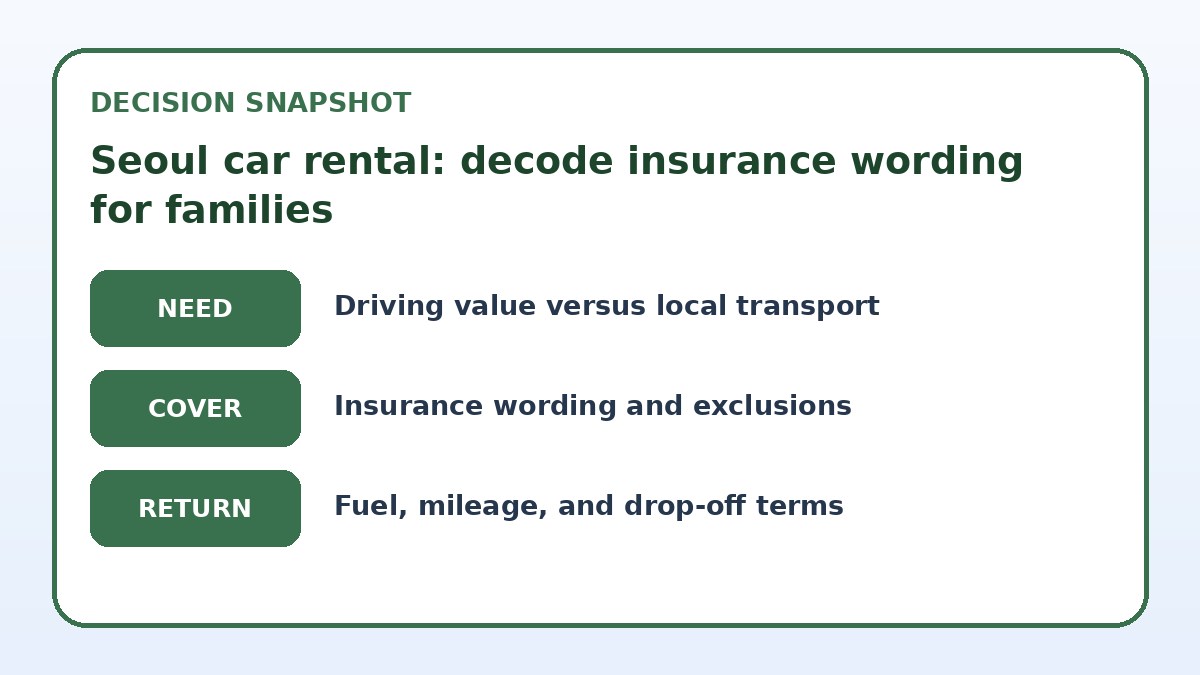
If you’re booking a car in Seoul with children, the practical rule is simple: don’t sign or pay until you understand three things on the insurance page — who is covered to drive, what deductibles apply, and which liabilities are excluded. These contract phrases control both everyday peace of mind and whether an unexpected dent, glass repair, or third‑party claim becomes your responsibility. This article walks parents through the common Korean and English wording you’ll see, how deductibles and CDW/LDW differ, and which add‑ons are worth buying for a family trip. Read this before you pick a car or click confirm — and keep your rental confirmation and the insurer’s policy language handy so you can verify specifics on the provider’s final booking page.
Who can drive and why the wording matters
Rental contracts in Seoul often limit coverage to ‘named’ or ‘authorized’ drivers. That wording can sound like a formality, but it determines whether your spouse or another adult in the party is covered if they take the wheel. Some companies automatically allow additional drivers but only after you register them at the counter and pay a fee; others require you to add drivers at booking. If an unauthorized person drives and causes damage, the rental company can deny insurance claims and pursue you for the full repair cost.
Families should read the exact phrase—‘additional driver included’, ‘driver must be present at pickup’, or ‘only drivers listed on contract’. If you plan to swap drivers during the day (for naps or night driving), make sure that flexibility is explicitly allowed. Keep passports or driver’s licenses for every driver ready at pickup and confirm the surcharge and process to add drivers in writing. When in doubt, ask the final booking page or the provider’s desk for the precise clause and keep a screenshot or PDF of their confirmation.
Collision damage, deductibles and the true out‑of‑pocket risk
Collision Damage Waiver (CDW) or Loss Damage Waiver (LDW) lowers or removes your financial responsibility for vehicle damage—but the wording is critical. Some waivers reduce your liability to zero; others only lower it to a fixed deductible amount. You’ll also find language like ‘waiver subject to exclusions’ or ‘excludes negligence’, which can negate coverage if the company deems the driver at fault due to reckless behavior or rule violations. For families, the main risk is forgetting a deductible clause that still exposes you to hundreds or thousands in repair costs.
When reading the policy, identify the deductible amount, whether it applies per incident or per rental day, and which damage types are excluded (e.g., wheels, windscreen, undercarriage, interior stains). Consider an extra collision damage cover sold by third‑party insurers or at the desk that specifically covers glass and tires if the base contract excludes them. Always verify the exact deductible and exclusions on the provider’s final booking page before you pay; this is the document used if a claim arises.
| Approach | Best for | Tradeoff to check |
|---|---|---|
| Basic coverage included with rental | Short city drives with very low perceived risk | Lower cost but likely significant deductibles and common exclusions like glass or tires |
| Provider sold top‑up CDW/LDW at pickup | Families who want immediate, simplified protection and prefer dealing with the rental desk | Convenient but pricier; verify cancellation/refund terms and exact exclusions on the booking page |
| Third‑party insurance purchased before travel | Cost‑conscious families who compare policies and want reduced deductibles | May save money but requires careful verification of claim process and acceptance by the rental company |
| Pay‑per‑item protections (child seat, roadside assist) | Families who need specific cover for child equipment and remote driving | Fine‑grained protection but can add complexity and extra fees at pickup |
Liability, third‑party claims and what families should prioritize
Liability coverage handles damage to other people, vehicles, or property if you’re at fault. Korean rental language may list ‘third‑party liability’ with limits expressed as maximum payouts; these limits can be lower than what you’d expect for a busy urban accident. Families should focus on the limit amount and whether supplemental liability insurance (SLI) is available to raise that limit. Without sufficient liability coverage, you may face claims from injured parties or property owners that exceed the basic policy.
Check whether personal injury protection (PIP) or medical coverage for occupants is included or if you need travel health insurance to fill gaps. Language such as ‘up to’ or ‘per incident’ affects how much the insurer pays. For family trips, prioritize liability and occupant medical coverage over fancy extras: a comprehensive liability patch and modest medical protection can prevent a small collision from becoming a costly legal problem. Confirm the final coverage numbers and exclusions on the booking confirmation you receive.
Before you book
- List every potential driver and confirm they’re covered in writing on the booking confirmation or add them at pickup.
- Check the deductible amount and whether it applies per incident, per day, or per rental; get the exact figure from the final booking page.
- Verify whether glass, tires, undercarriage, interior stains, and child‑seat damage are covered or explicitly excluded.
- Confirm the liability limit and whether supplemental liability insurance (SLI) can be added; note the insurer’s contact details for claims.
- Ask whether roadside assistance is included, its operational hours, and how towing or off‑road incidents are handled.
- Take photos of the car at pickup and return, keep the rental agreement and insurer text, and file any damage reports immediately.
Everyday exclusions and family‑specific protections to watch
Rental contracts frequently exclude routine items that families care about: child‑seat damage, food or drink stains, lost keys, and roadside assistance for outlying areas. Wording like ‘no coverage for interior damage’ or ‘no coverage for child seat damage’ means you could be billed for cleaning or replacement. If your itinerary includes mountainous or island roads, check for exclusions that limit assistance or increase liability for driving off‑paved routes.
Look for explicit mentions of child seats, booster seats, and their insurance status. If the contract is silent, assume child seats are a rental accessory without damage protection. Consider bringing your own certified seat if you want to avoid unknown replacement fees. Also confirm availability and terms for roadside assistance—phrases such as ‘towing excluded’ or ‘limited assistance hours’ should trigger a direct question at booking. Always request the exact policy text or a screenshot of the relevant clauses from the provider before finalizing.
Frequently asked questions
Can an additional driver be added later if I didn’t list them when booking?
Often yes, but it depends on the rental company’s wording and local policy. Many companies let you add drivers at the counter for a fee if you present their driver’s license and ID. Some corporate or discounted rates require drivers to be listed at booking to be covered. Before traveling, check the provider’s final booking page for the exact process and fee, and have the additional driver’s documents ready at pickup to avoid an unauthorized‑driver exclusion.
Is a collision damage waiver (CDW) the same as full insurance for my family?
No. CDW or LDW limits your financial responsibility for damage to the rental vehicle, but it is not comprehensive in every case and doesn’t replace liability coverage. CDW often has a deductible and may exclude items like tires, glass, or the undercarriage. It also won’t necessarily cover injuries to occupants or damage to third parties. For family travel, treat CDW as one part of a broader protection plan that includes sufficient liability and occupant medical coverage.
Will my personal car insurance or credit card cover a rental in Seoul?
Possibly, but coverage varies widely and always depends on the issuer’s policy wording. Some personal auto policies and premium credit cards extend collision or loss damage coverage overseas; others exclude certain countries or rental types. Coverage may also be secondary to the rental’s insurance, meaning it only applies after the rental’s deductible. Check your insurer’s and card issuer’s written policy, confirm whether Korea is covered, and verify acceptance by the rental company on the provider’s final booking page before relying on that protection.
Final planning note
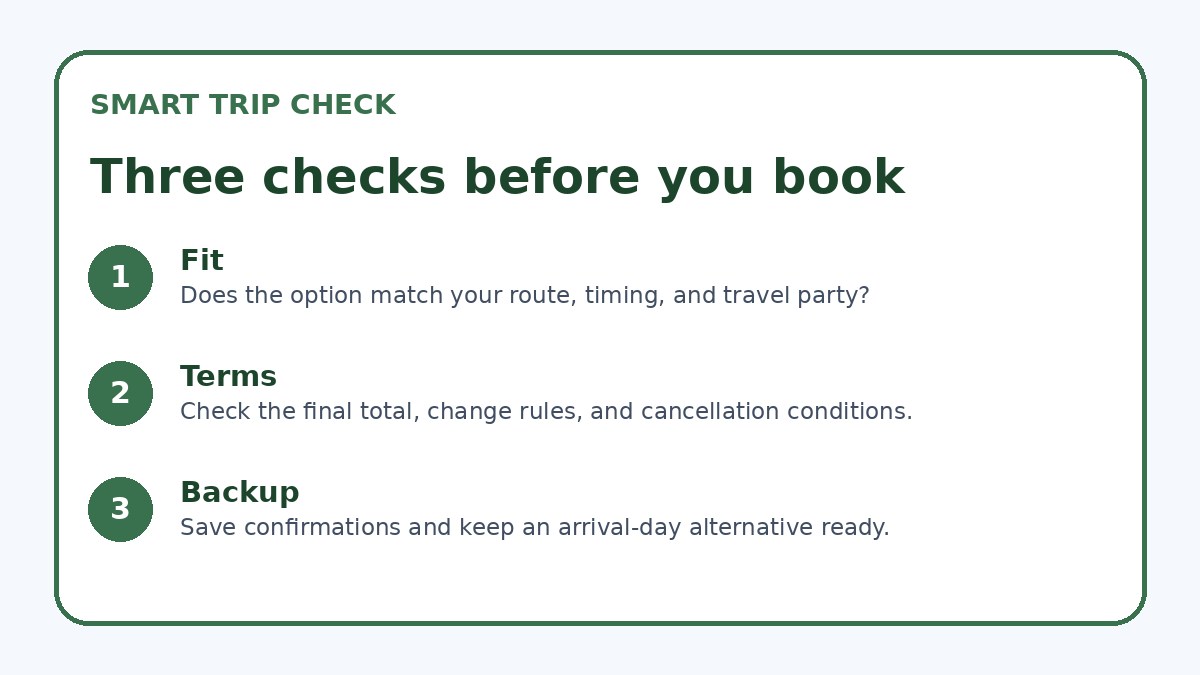
Families renting a car in Seoul should focus on reading the specific insurance wording that controls who can drive, how much you’d pay after an incident, and which items are excluded. Prioritize clear liability limits and occupant medical protection, make sure all drivers are properly listed, and decide if a desk top‑up or a third‑party policy best reduces the deductible and covers glass, tires, and child seats. Don’t rely on assumptions: request the exact clause wording on the provider’s final booking page, carry copies and photos, and keep receipts and contact details for claims. With those steps you’ll reduce surprises and keep the focus on enjoying Seoul together.
Continue planning
Check current options and final conditions
Use the provider page to confirm live availability, the final total, cancellation terms, and every condition that matters to your trip.
This evergreen planning guide was created with AI-assisted drafting and a structured quality review. It does not display live prices, schedules, availability, visa guidance, or provider rankings. Verify current details before booking. Some links are affiliate links; we may earn a commission at no additional cost to you.