
If you’re traveling to Kyoto with extra luggage, the practical answer is to use flexible dates to widen your transport and accommodation options, then compare combinations that reduce transfers and paid baggage handling. Start by deciding how many flexible days you can shift—often one to three days either side of your ideal travel day is enough to reveal lower-fee flights, quieter train manifests with more luggage space, or hotel check-in windows that accept early drop-offs. Prioritize options that minimize the number of times you must move heavy bags (fewer transfers, direct services when available) and check provider pages for exact baggage allowances, luggage storage, and any extra‑size fees before you book. This approach helps you balance fare savings, convenience, and the practicalities of moving larger suitcases in Kyoto’s compact streets.
See current options before you compare the details
Availability and final conditions change. Open Trip.com now or keep reading for the practical comparison.
Decide what 'flexible dates' means for your trip
Start by setting a clear flexibility window before you shop: one day, three days, or a full week either side of your ideal departure. That window should reflect your work and schedule constraints, how much extra luggage you have, and whether you can comfortably move departure or return times. For example, a traveler with two large suitcases and tight onward connections might accept only small date shifts to secure a direct service or a later check-in that allows early luggage drop. Conversely, someone carrying bulky sports or trade-show equipment may accept a broader window to find transport with generous size allowances or lower handling fees.
Treat the window as a planning tool, not a promise. Use it to run side-by-side searches for flights, trains, and hotels, and note how luggage rules and transfer counts change. Keep a short list of non-negotiables—such as a maximum number of connections, minimum layover length, or whether an airline accepts checked oversize items—and use those filters while comparing dates. This upfront clarity reduces decision fatigue and helps you spot dates where convenience and cost align.
Compare travel types and how they affect luggage
Air travel, shinkansen (bullet trains), and private transfers each treat extra luggage differently. Flights will show baggage allowances and over‑size fees on the airline’s booking page—always verify those exact terms before purchase. Trains in Japan often allow larger suitcases but can be crowded; some stations and train carriages have limited space, and private transfer services may include door-to-door handling for an extra fee but require booking in advance. When dates are flexible, prioritize options that reduce the number of times you need to handle heavy bags: a slightly more expensive direct flight or an extra night to catch a daytime bullet train can be worth avoiding repeated lifts on and off platforms.
When comparing dates, also think about arrival times. Late-evening arrivals can make moving large luggage between stations and hotels harder, especially if public transport options shrink. If your flexible dates include different arrival windows, favor those that get you to Kyoto during regular hours when luggage services, hotel desks, and station staff are more available. If a hotel offers early luggage drop-off or an airport-hotel transfer service, verify those details on the hotel’s booking page before finalizing dates.
| Approach | Best for | Tradeoff to check |
|---|---|---|
| Narrow-date search (±1 day) | Travelers who need minimal schedule change and fewer unknowns | Less chance to find routes with better luggage policies or cheaper multi-piece allowances |
| Moderate flexibility (±3 days) | Most travelers balancing savings and convenience | More options to compare but requires extra time to verify baggage rules across carriers |
| Wide flexibility (±7 days) | Those carrying bulky, oversized items willing to adjust schedules | May require longer trip windows and more complex planning for accommodations |
| Staggered dates (different outbound and return flexibility) | Travelers optimizing arrival convenience and return costs separately | Requires careful tracking of two independent sets of rules and fees |
Ready to check the option that fits your plan?
Use your exact dates and traveler details so the provider page can show the current total and conditions.
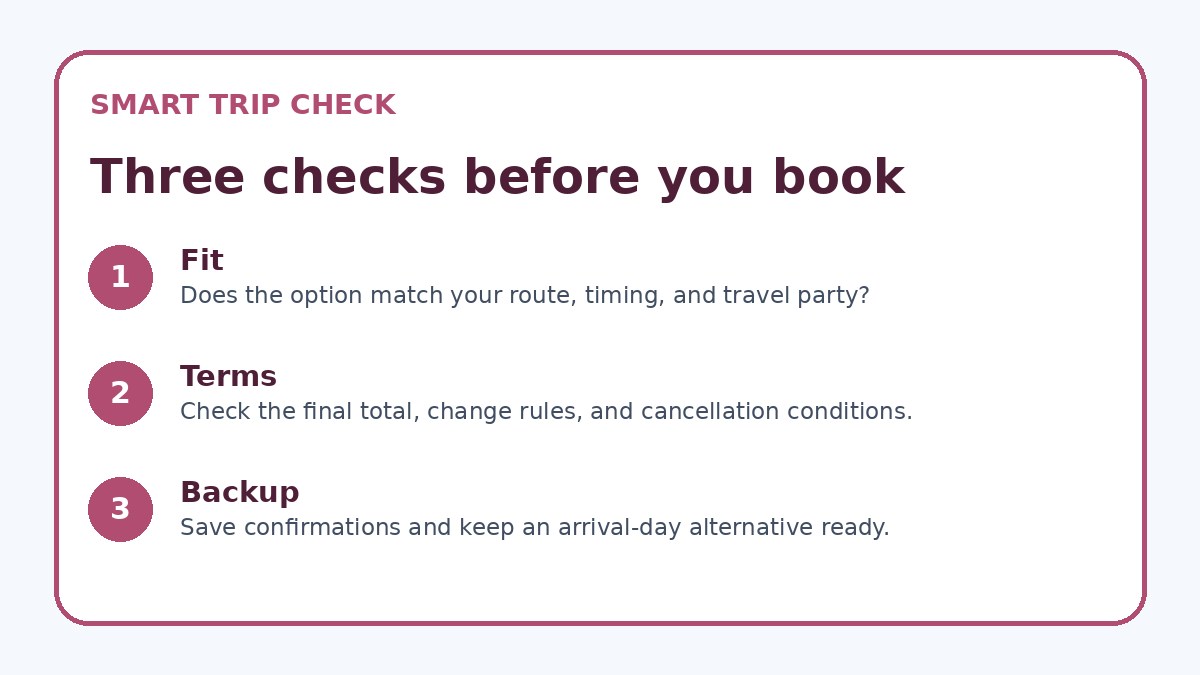
How to search and what to verify on booking pages
Use multi-date search tools and calendar views to see price and schedule variations across your flexibility window. When you find tempting itineraries, go to the provider’s final booking page to confirm baggage size and weight limits, fees for extra pieces, and rules for oversize items—these often appear only at checkout. For trains and shinkansen, check whether seat reservations include space for large suitcases or whether a separate luggage reservation is required. If you plan private transfers or courier services for baggage, confirm pickup windows and insurance terms on the provider page.
Make a short checklist of the exact provider details to verify before you click purchase: permitted dimensions and weight, number of free checked pieces, oversize or overweight charges, transfer and storage options, and refund or change terms related to date changes. If you use aggregators for initial price discovery, remember to visit airline, rail operator, or hotel pages for the binding terms. Trip.com can be suggested as one place to compare availability, but always verify baggage rules and final charges where the ticket or room is sold.
Before you book
- Set a clear date-flexibility window (e.g., ±3 days) and use it as the baseline for searches.
- Search multi-date calendars for flights and trains, noting options with fewer transfers and better luggage allowances.
- Open provider booking pages to confirm exact baggage size, weight limits, and fees before finalizing dates.
- Compare arrival times across your flexible dates and prioritize daytime arrivals when luggage services are available.
- Check hotels for early-luggage drop-off, secure storage, and proximity to your arrival station before booking.
- Consider booking a door-to-door transfer or a luggage courier for oversized items and verify pickup schedules on the provider page.
Tradeoffs: cost savings versus convenience with extra bags
Flexible dates often reveal lower fares, but those savings can evaporate if you must pay multiple baggage fees or handle complex transfers. A cheaper flight with a tight connection can force you to check extra bags twice or pay for priority handling; a slightly more expensive date that offers a direct route might save time and effort, which matters a lot when someone in your party has mobility limits or you have fragile items. Weigh the monetary savings against the physical cost and stress of moving heavy luggage across stations, stairs, or narrow Kyoto streets.
Also consider time of day and local staffing. Reduced fares that land late at night might mean hotel desks are closed or that luggage storage is unavailable, pushing you to pay for private transfers or late check-in services. Conversely, shifting to a daytime arrival on a flexible date could allow you to use station lockers, left-luggage desks, or hotel early-drop services, reducing handling pain. Your ideal choice balances the fare, number of transfers, luggage fees, and the arrival/departure times that suit your tolerance for moving heavy items.
Frequently asked questions
How much date flexibility should I allow when traveling to Kyoto with two large suitcases?
Allowing three days on either side of your target travel dates is a practical starting point: it gives you space to find direct routes, better baggage rules, or daytime arrivals without expanding planning complexity too far. With two large suitcases, prioritize itineraries that reduce connections and verify each provider’s checked-bag dimensions and extra-piece fees on the booking page. If you must avoid late arrivals or want guaranteed luggage handling, smaller windows focused on daytime services may be preferable even if they cost a bit more.
Are trains in Japan a good option for heavy luggage compared with flights?
Trains can be a comfortable option for heavy luggage if you plan properly: they avoid airport baggage fees and reduce fuss at security, but space varies by service and time of day. For shinkansen and limited express trains, check whether seat reservations include space for large suitcases or if special reservations are required. Flexible date searching can help you pick less crowded trains or times with more carriage space. Always confirm luggage policies on the rail operator’s booking page before you finalize dates.
Can flexible dates help me avoid paying extra luggage fees when flying to Kyoto?
Yes—flexible dates let you compare different flight options and fare classes, some of which include additional checked pieces or more generous weight limits. Shifting travel by a day or two can reveal fares that bundle baggage or permit larger items without overweight charges. However, baggage inclusions and fees are specified on the airline’s final purchase page, so verify the number of included pieces, size/weight allowances, and oversize/overweight charges before booking, rather than relying on preliminary search summaries.
Final planning note
Using flexible dates when planning Kyoto travel deals is a practical strategy for travelers managing extra luggage: it widens your options and helps you find itineraries that reduce handling, transfers, or baggage fees. Start with a clear flexibility window, compare across flights, trains, and hotels, and always verify baggage and service details on the provider’s final booking pages. Balance cost savings against the physical and time costs of moving heavy items; sometimes a small date shift that secures a direct route or a daytime arrival is worth the extra fare. With a little planning, you can make Kyoto easier to reach and enjoy, baggage and all.
Continue planning
Check current options and final conditions
Use the provider page to confirm live availability, the final total, cancellation terms, and every condition that matters to your trip.
This evergreen planning guide was created with AI-assisted drafting and a structured quality review. It does not display live prices, schedules, availability, visa guidance, or provider rankings. Verify current details before booking. Some links are affiliate links; we may earn a commission at no additional cost to you.