Pick a Jeju neighborhood to match how you’ll move and meet: choose city-center for company visits and dining options, the airport corridor for tight travel schedules, Jungmun/resort areas for a quiet base with corporate retreat space, or Seogwipo/ eastern towns to combine client meetings with island access. For most short business trips where time matters, prioritize commute time to meeting locations and reliable transport links over scenic extras. If you need flexible workspace, verify meeting-room availability in the hotel or nearby business centers and check morning/evening dining options for client hospitality. Use the quick guide below to narrow to one area before you open live availability—this helps you compare properties against your core needs instead of getting distracted by extras.

Check live stays in the areas that fit
Use your dates and party size to compare current rooms after you narrow the neighborhood fit.
Neighborhood fit: match area strengths to your business goals
Decide what a successful business stay looks like for you. If most appointments are in Jeju City or concentrated in one urban cluster, staying in or near the city minimizes taxi or shuttle time and gives you more evening choices. If you’re leading a multi-day workshop that needs breakout rooms and banquet options, resort areas around Jungmun typically host hotels with larger conference facilities and on-site F&B that simplify logistics. For tight travel schedules—same-day arrival and departure—the airport corridor reduces the risk of long transfers and gives you buffer time for check-in and last-minute prep.
Consider the rhythm of your day: will you be going door-to-door to clients, commuting to a single campus, or hosting attendees on site? If you’ll be driving between dispersed locations, picking a central base on the island’s north coast reduces mileage and keeps travel predictable. If meetings spread toward the south, basing in Seogwipo or the eastern towns reduces back-and-forth. Factor in evening needs too—some areas have more restaurant and cafe options for informal meetings, while resort zones may be quieter and require hotel dining.
Choose an area-selection strategy
| Area approach | Best for | Tradeoff to check |
|---|---|---|
| City-center Jeju (near municipal offices) | Short intra-city travel, multiple dining and transportation options | Smaller rooms and fewer large on-site event spaces than resort properties |
| Airport corridor and nearby hotels | Minimal transfer time and tight arrival/departure schedules | Fewer evening leisure options and less island character compared with other areas |
| Jungmun/resort strip | On-site conference facilities, larger rooms, quieter hotel-focused logistics | Longer travel times to dispersed client locations and fewer city conveniences |
| Seogwipo and east/south coast towns | Client visits across southern Jeju and scenic drives between meetings | Less taxi density and potentially longer transfers to Jeju City or the airport |
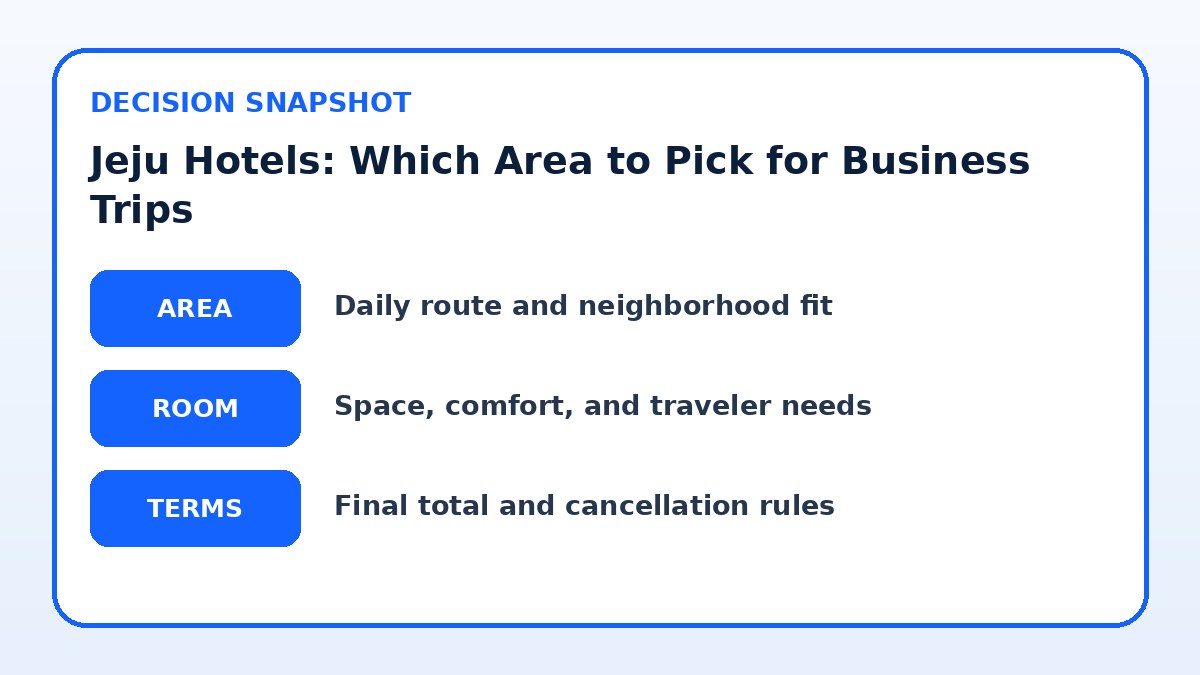
Daily-route friction: how transport shapes your schedule
Assess first- and last-mile options from your hotel to meeting venues. Jeju’s transport mix includes taxis, rental cars, intercity buses, and some hotel shuttles; availability varies by area and time of day. If you prefer not to drive, choose neighborhoods with more taxi density—typically Jeju City and central Seogwipo—or verify that your hotel offers reliable airport or convention shuttles. When comparing hotels, check their stated pickup policies and whether they can arrange early departures or late arrivals without penalties; confirm specifics on the provider’s final booking page.
If you plan to rent a car to reach scattered client sites, prioritize hotels with easy parking and a straightforward exit onto main roads—this matters more in resort zones where hotel access roads can be circuitous. Also think about peak traffic windows: narrow roads near popular coastal attractions can lengthen commutes midday. For business travelers juggling meetings across the island, central north-coast lodging often reduces cumulative travel time, while choosing south-coast bases avoids repetitive crossing of the island’s central routes.
Now compare like with like
Keep the same dates, guests, room needs, and cancellation preferences while you compare the final choices.
Room and party needs: picking the right property type
Define your room needs clearly: do you need a separate meeting area, in-room workspace, or multi-room suites for colleagues? City hotels often provide compact rooms with strong Wi‑Fi and business services but limited on-site event spaces. Resort hotels around Jungmun or larger properties near Seogwipo commonly offer larger suites, meeting rooms, and banquet facilities suitable for small conferences. Whatever you need, confirm the hotel’s room layout, the presence of a desk and reliable internet, and whether meeting rooms include AV support—always verify these specifics with the hotel's booking or events team.
If you’re traveling with a small team, multi-room suites or connecting rooms can simplify coordination, while single travelers may prefer quieter rooms away from event floors. Also check early check-in or late check-out policies if flight schedules require flexible arrival or departure times. For in-person client hospitality, look into the hotel’s F&B capabilities and private dining options; ask the property directly about menu customization or private meeting setups and verify any charges or minimums on the booking confirmation.
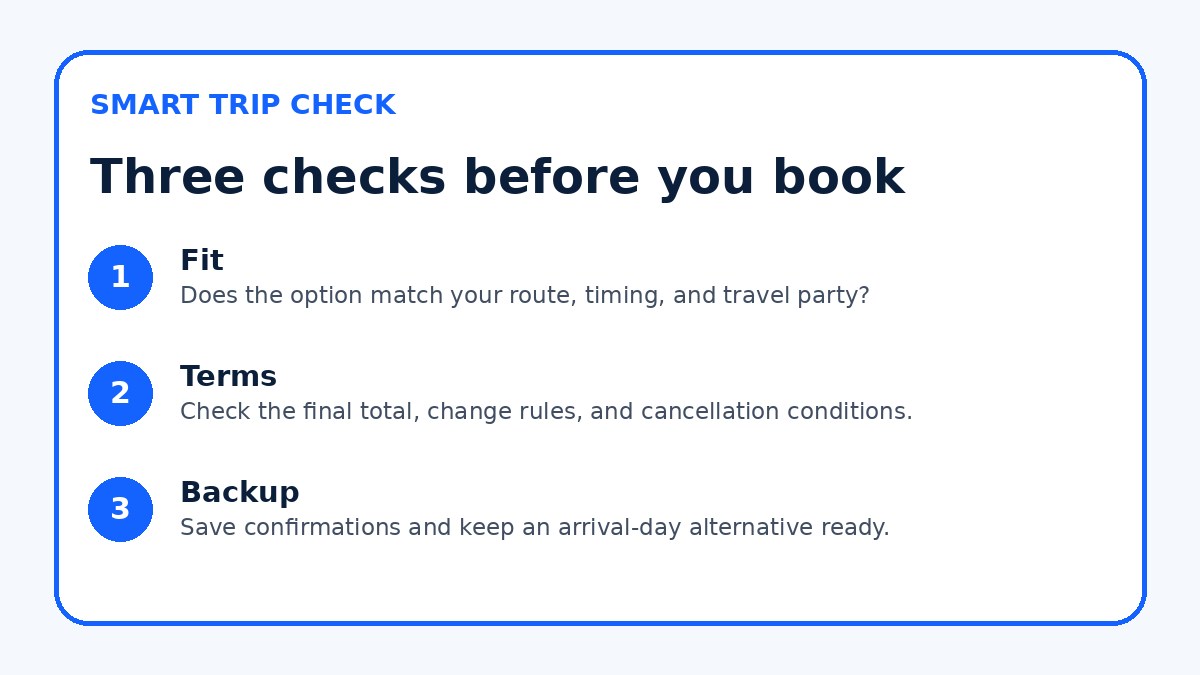
Hotel booking check before payment
- Map your meeting locations and estimate transfer times from candidate neighborhoods during likely travel hours.
- Confirm with the hotel the availability and cost of meeting rooms, AV equipment, and group dining options in writing.
- Verify the property’s stated Wi‑Fi speed and whether free business-grade bandwidth is guaranteed for your booking.
- Ask about shuttle schedules, taxi availability, and parking arrangements if you plan to rent a car or rely on transfers.
- Request cancellation and deposit terms from the hotel and match them against your company’s travel policy before finalizing.
- Check breakfast hours, early check-in/late check-out options, and any corporate invoicing or receipt requirements you need.
Final booking terms: what to confirm before you commit
Before you book, confirm cancellation policy specifics, deposit requirements, and whether corporate invoicing or receipts meet your company’s accounting rules. Don’t assume standard policies—ask for the exact cancellation window, whether nights are refundable, and which forms of payment are accepted for incidentals. If you need a corporate rate or a contract for multiple rooms, request written confirmation and check that the reservation name, dates, and included services match your agreement. For shuttle or airport services, ask the provider how to schedule pickups and what to do if your flight changes.
Check practical items that affect the working day: in-room Wi‑Fi bandwidth expectations (and whether there is a charge), breakfast hours and whether early-service options exist, and laundry or pressing services for meetings. If you plan to host clients, verify noise policies and the availability of private meeting spaces during your stay. When comparing live inventory, Trip.com can be used as one place to view current availability and property policies, but always verify key terms directly with the property before finalizing a corporate booking.
Hotel Guide questions travelers ask
Which Jeju area typically gives the fastest commutes to business addresses?
If most meetings are clustered in Jeju City or its administrative area, staying in or near Jeju City usually gives the fastest commutes because it concentrates hotels, restaurants, and local services close to common business addresses. However, if your appointments are spread across the island, a central north-coast base can reduce overall driving time. Always map actual meeting addresses against candidate hotels and check typical traffic on the routes you’ll use—travel times can vary by time of day and season.
Should I rent a car in Jeju for business travel or rely on taxis and shuttles?
Renting a car gives flexibility when meetings are spread across different towns or remote sites, but it also requires handling parking and navigation. If your schedule is concentrated in urban areas or includes late-night client dinners, taxis and hotel shuttles may be simpler and avoid parking logistics. Compare the number of daily trips, parking availability at each hotel, and your comfort driving on local roads. If you choose not to drive, confirm taxi density near your hotel and whether the property can reliably arrange transfers.
How can I ensure a hotel’s meeting rooms meet my technical needs?
Request a written specification from the hotel listing room capacities, available AV equipment (projector, screen, microphones), internet bandwidth for the room, and any technician support options. Ask whether setup and teardown times are allowed without extra fees and if the hotel provides adapters or specific cabling. Confirm these details on the hotel’s booking or events page and, for larger events, request a sample floor plan and a named contact who will manage on-site logistics to avoid last-minute surprises.
Final decision note
Choose the Jeju area that aligns with how you’ll use your time: pick Jeju City for convenience and nightlife options, the airport corridor for tight travel windows, Jungmun for event-focused stays, or Seogwipo/east coast for dispersed client visits and scenic routing. Shortlist one or two neighborhoods first, then evaluate individual hotels against commute time, meeting-room capability, in-room workspace, and booking terms. Confirm essential operational details—Wi‑Fi speed, cancellation rules, shuttle schedules, and AV support—directly with the property before you finalize. Use a booking site like Trip.com to compare current availability, but always verify critical terms on the hotel’s own booking page or with a sales contact.
Continue planning
Check current options and final conditions
Use the provider page to confirm live availability, the final total, cancellation terms, and every condition that matters to your trip.
This evergreen planning guide was created with AI-assisted drafting and a structured quality review. It does not display live prices, schedules, availability, visa guidance, or provider rankings. Verify current details before booking. Some links are affiliate links; we may earn a commission at no additional cost to you.