Practical answer first: for most solo travelers planning Honolulu around shoulder seasons, compare total inclusions (flights, hotel, transfers, baggage), cancellation and change flexibility, and the exact same travel dates and traveler count before choosing a bundled package. Bundles can simplify logistics and sometimes consolidate customer service, but they may lock you into inflexible rules or include items you don’t need. Start by lining up identical dates, flight times (direct or connecting), room type and cancellation windows, and transfer conditions so you’re comparing apples to apples. Use that side-by-side comparison to judge whether the time savings of a package outweighs the cost of reduced flexibility. The rest of this guide explains the tradeoffs solo travelers face during Honolulu’s shoulder periods, how to evaluate inclusions, and what final terms to verify on the provider’s booking page before you book.
Test package value fairly
| Booking approach | Best for | Tradeoff to check |
|---|---|---|
| Full package (flight+hotel+transfer) | Travelers who want one itinerary and single-vendor support | May be less flexible and include services you won’t use |
| Flight + hotel booked separately | Travelers who want best control over flight times and hotel location | Requires more research and may lack consolidated customer service |
| Flight bundle (multi-city or roundtrip) plus separate hotel | Those prioritizing flight pricing or routing flexibility while simplifying lodging | You must still manage hotel changes and separate cancellation rules |
| Book everything separately, add transfers a la carte | Independent solo travelers who value flexibility and tailoring | More time-consuming to assemble and troubleshoot if problems arise |
Check current package and separate options
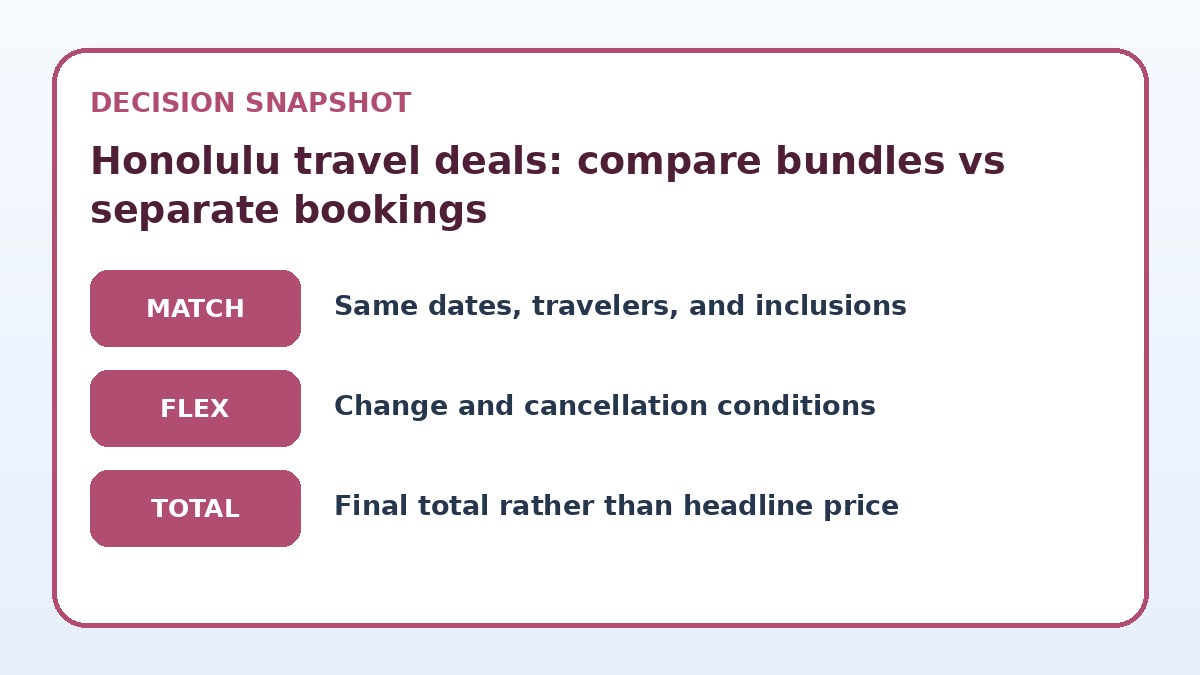
Use identical dates, travelers, room needs, baggage, and flexibility so the comparison stays meaningful.
What to compare first: inclusions that change the value
The single most important step is to compare exactly what each option includes. For flights, check whether the bundle’s fare is for the same cabin and whether baggage, seat selection, and any change fees match the standalone fare you find. For hotels, compare room type, bed configuration, breakfast or resort fees, and whether the rate is prepaid or refundable. Transfers and local extras—airport shuttles, tours, or activity vouchers—often make a package look more valuable, but they only matter if you intend to use them. Always write down the line items for both bundle and separate quotes so you can add them up and compare the grand total.
When comparing, use the same travel dates and the same solo traveler profile. Small differences—an earlier flight, a nonrefundable room, or a mandatory transfer—can create perceived savings that disappear when you align terms. If a bundled rate includes a connecting flight while your separate search finds a direct flight for the same times, make sure to price the direct separately for a fair comparison. This is particularly relevant in shoulder seasons when frequencies and routings may differ from peak schedules.
Flexibility and risk: why shoulder seasons change the calculus
Shoulder seasons often offer lower base fares and more hotel availability, but schedules and services can be less predictable than at peak times. For a solo traveler, flexibility can be more valuable than a small fare difference—especially if your plans might shift by a few days. Bundles sometimes impose stricter change or cancellation rules because they rely on negotiated fares and group-like conditions. If your travel dates are fixed and you’re comfortable with nonrefundable savings, a package might be fine. If your dates are tentative, prioritize refundable or changeable flight and hotel options even if that raises the headline cost.
Also consider the impact of connections, limited transfer options, or reduced local transport in shoulder seasons. A bundle that includes a single late shuttle to your hotel may look convenient but could leave you stranded if schedules are cut. Always verify the vendor’s final terms for transfer windows and alternative options. For solo travelers who value autonomy—wanting to explore neighborhoods or change hotels—separately booked elements often give the most practical control.
Look past the headline total
Compare inclusions and change conditions before deciding whether a package is genuinely useful for this trip.
Deal comparison checklist
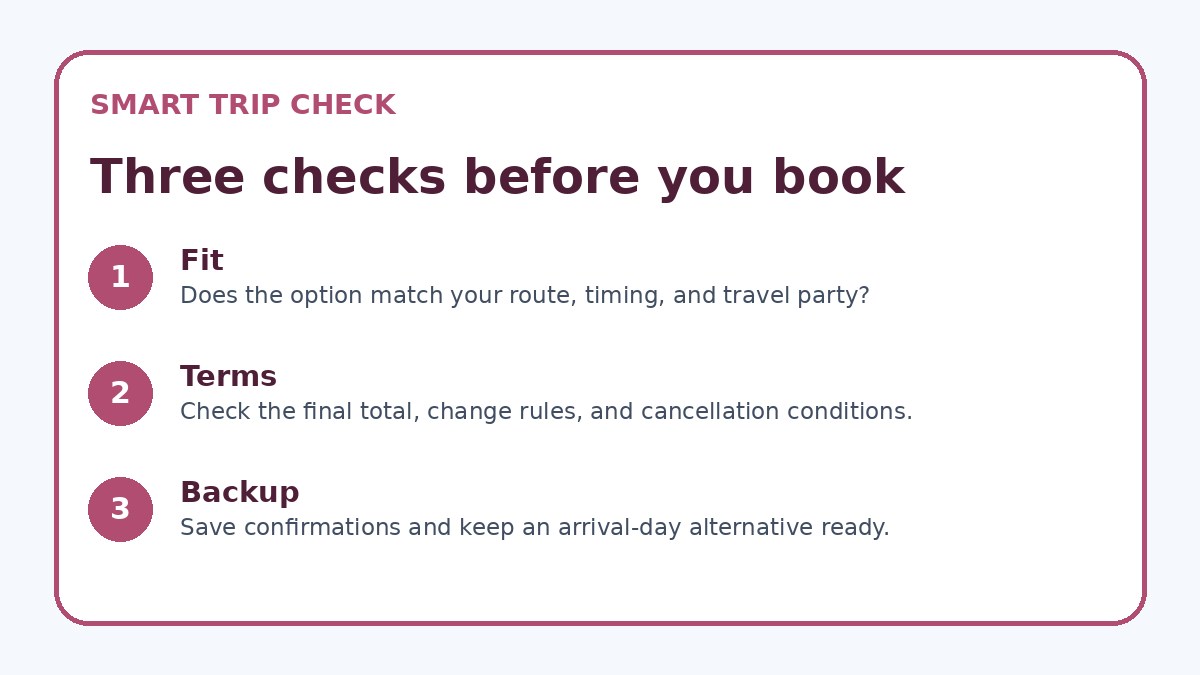
- List exact travel dates, preferred arrival and departure times, and the solo traveler’s baggage needs before searching deals.
- For each quote, write down flight cabin, baggage allowance, and change/cancellation rules from the final booking screen.
- Confirm hotel room type, bedding, taxes, resort or amenity fees, and the cancellation window shown on the provider’s confirmation page.
- If a package includes transfers, verify pickup times, meeting points, and the provider’s refund policy for missed or changed transfers.
- Compare the grand total for identical dates and inclusions—don’t compare a bundled standby shuttle with a private transfer unless you intend to use it.
- Check whether bundled fares allow loyalty points or elite benefits on flights or hotel stays and decide if those benefits affect your value calculation.
Traveler-specific value: who benefits from packages vs separate bookings
Solo travelers who benefit most from packages are those who prioritize simplicity: one point of contact for flight, hotel, and transfers, and who accept limited options in exchange for a lower logistical burden. If you’re short on time to research or prefer a single itinerary and claim check, a package can reduce pre-trip friction. Conversely, if you want to choose a specific hotel neighborhood in Honolulu, pick flights based on arrival times you like, or want the freedom to extend your stay, individual bookings let you tailor each element to your needs and often allow targeted upgrades or loyalty benefits.
Think about how you travel in-destination. If you plan to island-hop after Honolulu or book many paid activities, separate flight/hotel bookings could offer more useful combinations and loyalty accrual than a packaged rate. Also consider luggage and seat choices: solo travelers who prefer a certain seat, award upgrades, or carry-on-only travel should confirm that the bundled fare permits those options without expensive add-ons. Wherever a package restricts such choices, the convenience may not justify the cost.
Final terms to verify before you book any Honolulu travel deal
Never finalize a booking without confirming the exact terms on the provider’s final booking page. Verify the fare rules for each flight segment—change fees, whether the fare is refundable, and what happens if the carrier changes schedule or cancels. For hotels, confirm room category, bedding, whether taxes and resort fees are included, whether the rate is prepaid, and the cancellation window. If transfers or activities are included, check pickup times, meeting points, and refund or rebooking policies for those providers.
Also check how the provider handles customer service and changes: who rebooks you if the airline cancels, and whether you must go through a single call center or coordinate separately with the hotel and carrier. If you plan to use loyalty points or elite benefits, confirm whether the bundled rate is eligible for points accrual or status recognition. Finally, if you find similar options on aggregators, compare identical line items and conditions—same dates, same traveler count, same inclusions—so you don’t mistake packaging convenience for a real saving.
Travel Deals & Booking Strategy questions travelers ask
When are Honolulu’s shoulder seasons and how do they affect travel deals?
Shoulder seasons in Honolulu typically fall between peak winter holidays and the quieter late spring or between summer peak and early fall lull, though exact months can vary. During these periods you’ll often find more hotel availability and competitive airfare, but flight frequencies, direct routings, and some ground services may be reduced. That can make some bundled packages seem attractive because they guarantee transfers or activities, but it also increases the value of flexible cancellation and change policies. Always check the provider’s final terms for schedule guarantees and transfer windows before booking.
Can a package offer better protection if my flight is delayed or canceled?
A package can simplify rebooking because a single vendor may take responsibility for rearranging connecting services included in the bundle. However, that isn’t automatic; you must confirm the provider’s stated rebooking and refund policy on the booking page. If the package uses separate supplier contracts (different carriers and independent hotels), you might still have to negotiate changes with each supplier. For solo travelers, the convenience of a single point of contact is real value—just verify the provider’s step-by-step process for delays or cancellations before committing.
How should a solo traveler handle transfers and activities included in a bundle?
Treat included transfers and activities as optional extras until you confirm the specifics. Check pickup/drop-off times, meeting locations, and contingency plans in case your flight arrives late or is rescheduled. If times are tight or transfers are infrequent during shoulder season, you may prefer to book a private transfer or a flexible ride option a la carte. For activities, confirm refund or rebooking windows and whether single-traveler rates apply; some group rates assume multiple participants and may not be the best fit for one person.
Final decision note
For solo travelers planning Honolulu during shoulder seasons, the correct choice between a bundled travel deal and separate bookings depends on how much you value simplicity versus control. Start by lining up identical dates, flight cabin and baggage, room type, and any transfers or extras so you can compare true totals. If your dates are firm and you want reduced pre-trip logistics, a package that clearly lists refundable or change-friendly terms can be worthwhile. If you need maximum flexibility, neighborhood choice, or loyalty benefits, prefer separate bookings and add transfers or activities only as needed. Always verify final fare rules, cancellation terms, and exact inclusions on the provider’s booking page—Trip.com can be one place to check availability, but use the supplier’s final page to confirm the contract before you pay.
Continue planning
Check current options and final conditions
Use the provider page to confirm live availability, the final total, cancellation terms, and every condition that matters to your trip.
This evergreen planning guide was created with AI-assisted drafting and a structured quality review. It does not display live prices, schedules, availability, visa guidance, or provider rankings. Verify current details before booking. Some links are affiliate links; we may earn a commission at no additional cost to you.