Practical answer first: if you need flexibility, don’t assume a package is more forgiving — instead compare the same dates, travelers, and cancellation rules across package and separate bookings before you buy. For many first-time visitors to Honolulu, the difference that matters is whether a single vendor controls cancellations for flights, hotels, and activities, or whether each piece carries its own policy. Bundles can centralize service and refunds, but they can also lock you to one provider’s terms. Separate bookings let you pick refundable hotel rates or airline tickets with flexible change policies, but managing multiple vendors adds complexity and potential nonrefundable components. Read provider terms carefully, confirm refund windows and change fees on the booking page, and prioritize what you’d rather protect — dates, price, or convenience.

Test package value fairly
| Booking approach | Best for | Tradeoff to check |
|---|---|---|
| Bundled package from one vendor | Travelers who value single-contact convenience and centralized customer service for changes. | May lock you into one provider’s cancellation rules and combine refundable and nonrefundable elements into one policy. |
| Separately booked refundable flights and hotels | Travelers who prioritize maximum component-level flexibility and selective refunds. | Requires more time to manage multiple suppliers and may miss bundled conveniences like included transfers. |
| Mix: flexible hotel + basic flight bundled by third party | Travelers who want some component protection while still benefiting from partial centralization. | Complexity in who handles refunds: hotel may be refundable but flight policies still apply separately. |
| Low-cost nonrefundable bookings with travel insurance | Budget-focused travelers willing to accept higher risk in exchange for lower upfront fares. | Insurance has claim conditions and exclusions; it may not reimburse every cancellation reason or fee. |
Check current package and separate options
Use identical dates, travelers, room needs, baggage, and flexibility so the comparison stays meaningful.
What to compare before judging a bundle
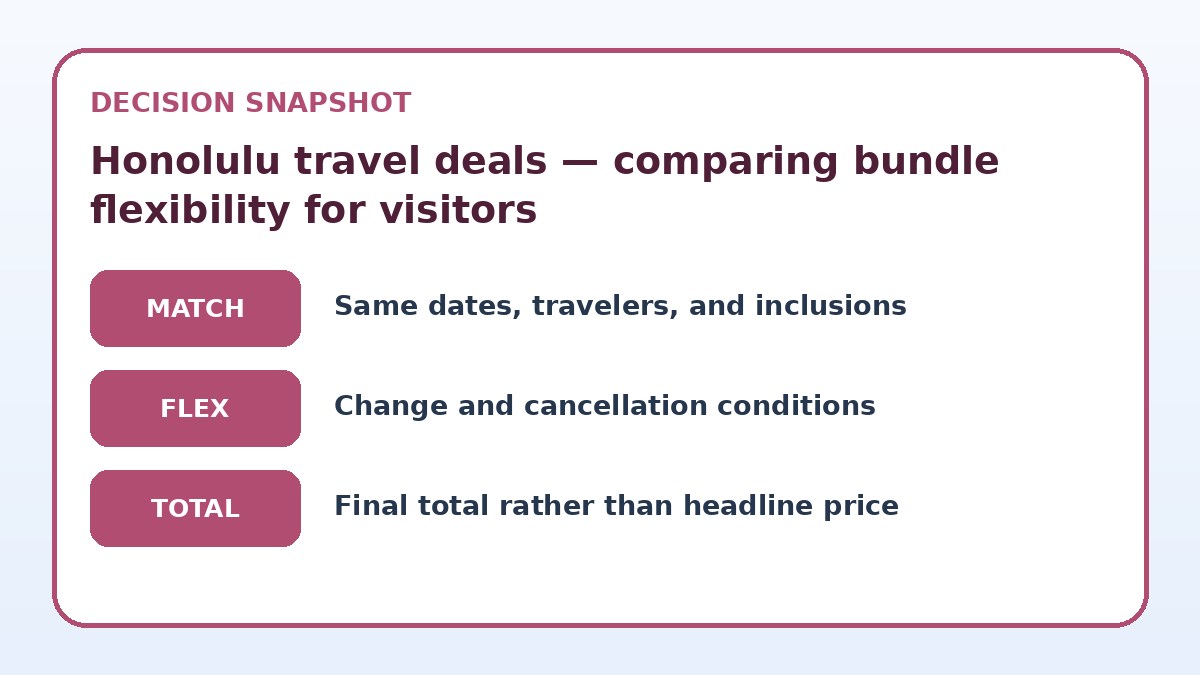
Before you decide whether a package is useful, line up the specifics: same travel dates, identical number of travelers, identical room types and bed configurations, and comparable flight times and connections. If a bundle uses a different flight routing, shows a different hotel room type, or includes activities you wouldn’t book separately, the apparent savings become meaningless. Comparing apples to apples prevents false savings and helps reveal whether the bundle’s convenience outweighs any restrictions it adds.
Next, check who is contractually responsible for changes and refunds. Some packages are sold by a single operator that handles refunds and rebookings; others are aggregations where the supplier handles its own cancellations. That distinction affects processing times, communication channels, and whether you can get a partial refund if only part of your trip changes. Confirming responsibility on the vendor’s final booking page will save time and dispute hassle later.
Inclusions: what’s actually covered
Inspect the list of inclusions closely: flights, checked bags, seat assignments, transfers, hotel taxes and resort fees, daily breakfast, and scheduled activities all matter. A bundle that looks inexpensive may exclude mandatory resort fees or airport transfers that you’ll have to pay later. For separate bookings, you can select refundable room rates or add flexible fare options on flights, but those choices may raise the upfront cost while reducing downside risk if plans change.
Also note conditional inclusions: shuttle schedules, activity minimums, and time-of-day restrictions can make an included item impractical for your itinerary. If an included activity has strict no-refund rules, that single component could eliminate the package’s overall flexibility. Always write down each included element and the cancellation rule that applies to it, then recalculate the net exposure if one element becomes nonrefundable.
Look past the headline total
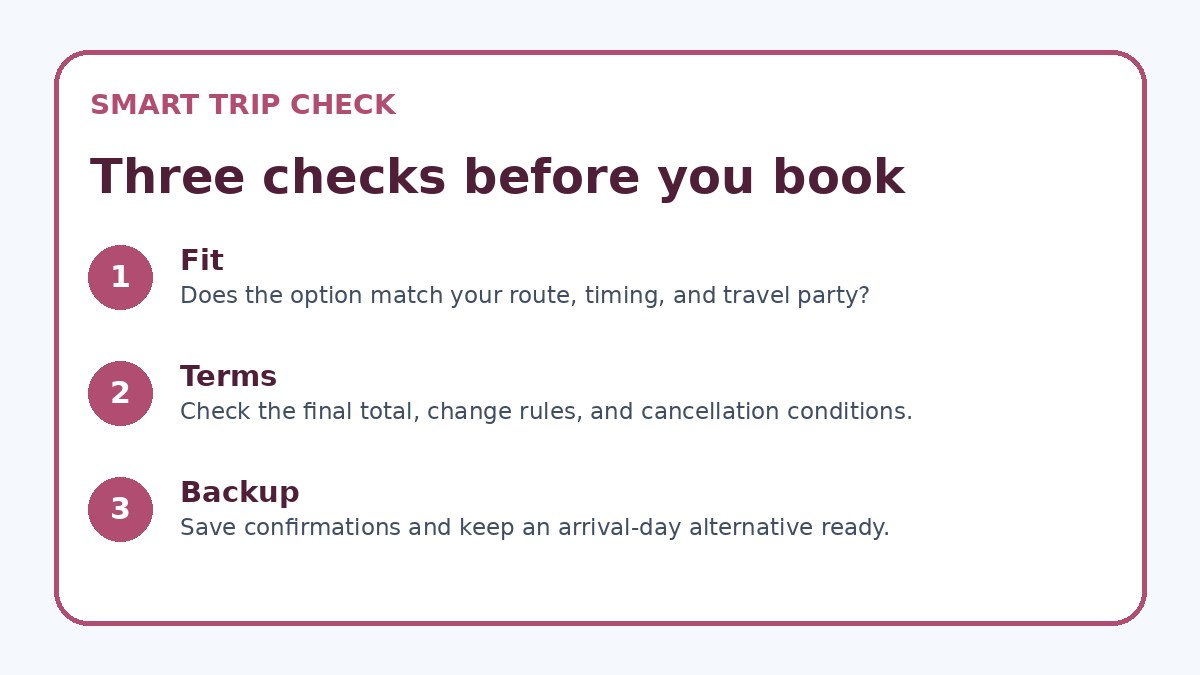
Compare inclusions and change conditions before deciding whether a package is genuinely useful for this trip.
Deal comparison checklist
- Match dates, traveler count, and room/seat types between package and separate quotes to ensure an apples-to-apples comparison.
- Open and save the full cancellation and change policy on the final booking page for each supplier before paying.
- Calculate the total refundable and nonrefundable exposure by listing fees, taxes, and nonrefundable components.
- Decide whether single-point customer service (package) or component control (separate booking) suits your problem-tolerance.
- If using travel insurance, read the insurer’s covered reasons and claim process and confirm preexisting condition clauses.
- Take screenshots of confirmations and policy text immediately after booking and store them with your trip documents.
Flexibility and traveler-specific value
Different travelers need different protections. Families with children or visitors on short trips often prioritize refundable hotels and flights with low change fees, because illness or an unavoidable delay has a larger impact on a short itinerary. Solo travelers with open dates might prefer nonrefundable rates and changeable activity bookings to save money. Identify your personal tolerance for risk: is losing a portion of your fare acceptable, or do you need near-certain refunds up to a few days before travel?
For first-time visitors to Honolulu, timing matters: seasonal crowding or special events can affect availability and cancellation windows. If you anticipate the chance of shifting dates, choose options that allow free date changes or offer credit toward future travel. Some travelers value a single customer-service contact offered by packages; others value the ability to negotiate directly with hotels or airlines when problems arise. Match the booking structure to the type and level of flexibility you actually expect to need.
Final terms: what to verify on the booking page
On the provider’s final booking page, verify the cancellation window (how many days before arrival), any tiered penalties, nonrefundable components, and whether refunds are returned to the original form of payment or as travel credit. Also check processing times for refunds and the contact method for disputes. Note whether taxes and mandatory fees are refundable and whether third-party service fees are refundable; these finer points often differ between packages and separate components.
Look for change-fee waivers, involuntary change protections, and force majeure language that could apply in exceptional circumstances. If the bundle includes travel insurance, read the insurer’s policy schedule — what they cover and exclude — rather than assuming it will cover every reason you might cancel. Finally, save screenshots of the full terms and booking confirmation; those records are essential if you need to request a refund or escalation later.
Travel Deals & Booking Strategy questions travelers ask
Are bundled Honolulu travel deals usually more flexible than separate bookings?
Not necessarily. Bundles centralize service, which can simplify changes or refunds because you contact one seller, but they often impose a single combined policy that may include nonrefundable components. Separate bookings let you choose refundable hotel rates or flexible airline fares for specific pieces, but then you must coordinate multiple suppliers if a change is needed. The practical approach is to compare identical itineraries and read the final terms for both bundled and separate options before deciding.
What specific cancellation terms should I prioritize when booking Honolulu travel?
Prioritize explicit cancellation windows (how many days before arrival you can cancel for a full or partial refund), the size of any penalties or change fees, and whether taxes and mandatory fees are refundable. Also check how refunds are issued (card refund versus travel credit) and typical refund processing times. If transfers or activities are included, verify their individual refund policies too, since one nonrefundable component can negate your overall flexibility.
If I find a cheap package, how can I avoid surprises about cancellations and refunds?
Before buying, list every included item and locate its cancellation rule on the booking page. Confirm whether the vendor or the supplier handles refunds, whether any service fees are nonrefundable, and whether refunds come as credit or to your card. If terms are unclear, contact customer service in writing and save the response. Using a reputable comparison site like Trip.com can surface current offers and terms, but always verify the final policy language on the vendor’s own booking confirmation.
Final decision note
For first-time visitors to Honolulu, the right choice depends on whether you value centralized convenience or component-level control. Bundles can simplify customer service and sometimes reduce booking steps, but they may combine refundable and nonrefundable items under one policy. Separate bookings give you the ability to select refundable rates for the pieces you care most about, at the cost of managing multiple suppliers. Before committing to Honolulu travel deals, compare identical itineraries, verify cancellation windows and refundable fees on each booking page, and document the terms. That preparation reduces stress if plans change and helps you choose a booking style that matches your tolerance for risk.
Continue planning
Check current options and final conditions
Use the provider page to confirm live availability, the final total, cancellation terms, and every condition that matters to your trip.
This evergreen planning guide was created with AI-assisted drafting and a structured quality review. It does not display live prices, schedules, availability, visa guidance, or provider rankings. Verify current details before booking. Some links are affiliate links; we may earn a commission at no additional cost to you.