If you’re planning a business trip to Seoul, the first hour after landing is when decisions made in advance keep the day on schedule. The practical choice is to confirm pickup details that match your party size, luggage and meeting expectations before you leave home: pick a meet point you can reliably reach from the arrival gate, have backup contact methods, and verify the driver’s instructions for delays or transfers. This guide gives the short, actionable answer up front and then breaks down the tradeoffs—private car, shared shuttle, public transit, or hotel-arranged pickup—so you can weigh speed, privacy and cost. Keep your flight number, arrival terminal and hotel address open while you check each provider’s final booking page for meeting-point maps, wait-time rules and contact options.
Check options for your arrival details
Use your flight, luggage, party size, and accommodation address to compare current choices.
Luggage and party size: pick the right vehicle
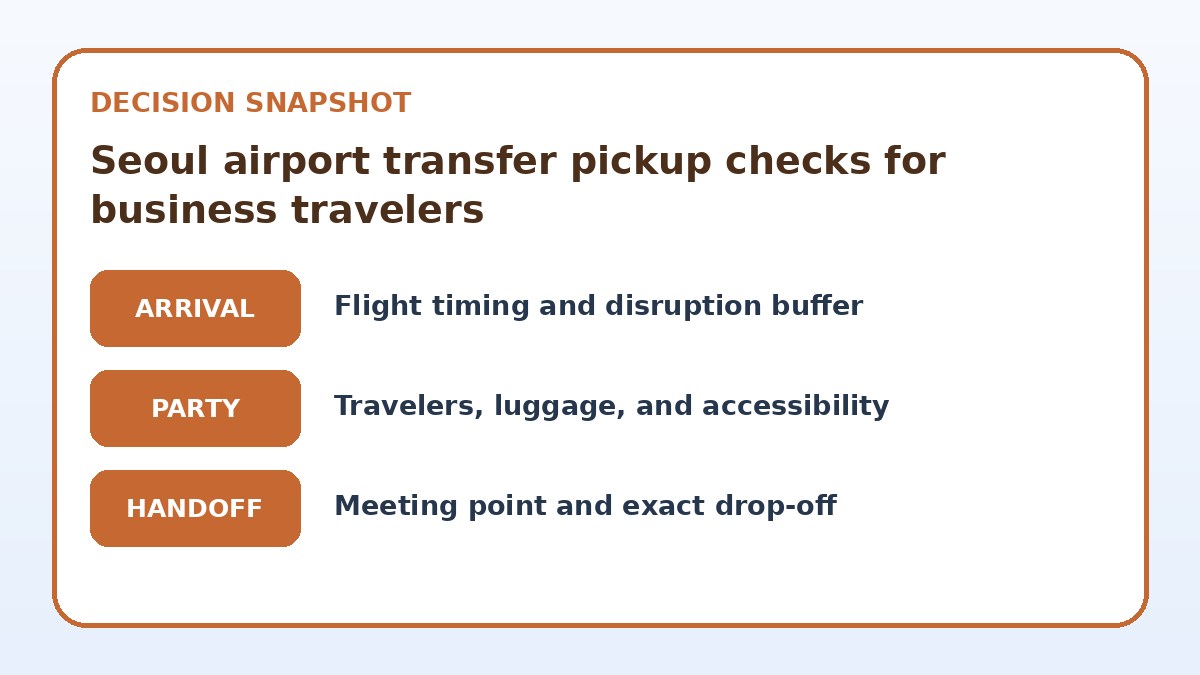
Business travelers frequently travel with a mix of roller bags, carry-ons and briefcases—and sometimes additional equipment. Before booking, count all checked pieces and large items, then compare that to the stated vehicle capacity. Private cars and minivans usually list passenger numbers, but not always usable luggage space, so ask for dimensions or whether drivers will load luggage for you. If your group includes more than three people, or if you have golf bags, instrument cases or large cartons, choose a transfer option that explicitly confirms space for those items.
Also consider boarding needs. If team members arrive at different times, a single reserved car may not be efficient; conversely, multiple ride-hail pickups can split the team and cause delays at a busy meeting. For tight schedules, a dedicated vehicle that waits for a confirmed flight or offers a flexible wait window saves time. When in doubt, choose the next larger vehicle class and confirm language support and driver assistance for handling luggage from curb to trunk.
Arrival details to have ready
- Have your flight number, arrival terminal and scheduled landing time visible when you open the transfer booking page.
- Confirm the provider’s exact meeting point (exit number, door name, curbside zone) and how the driver will identify you.
- Count all luggage and special items, then request confirmation that the chosen vehicle has adequate cargo capacity.
- Read the provider’s delay and wait-time policy and note the contact method they require for late arrivals.
- Verify drop-off accessibility with the destination and confirm whether curbside stop or nearby public access is the expected plan.
- Save the driver’s contact details and a second contact (hotel or local host) so you can coordinate if plans change.
Late or disrupted arrival: what instructions to verify
Flights occasionally land late or face disruptions. Before committing, read the provider’s policy on flight delays, rebook windows and free wait times. Practical details matter: some services monitor your flight and adjust pickup automatically, while others require you to message or call. Verify exactly how they want you to report a delay—phone call, SMS, app message—and whether there’s a cutoff after which the booking is canceled or extra waiting fees apply. Also check where the driver will wait during extended delays; terminal interior waiting areas may be restricted or expensive to use for drivers.
Have at least one backup plan if the provider’s policy is inflexible. Public transport or a ride-hail app may offer immediate options if the scheduled pickup is canceled. Keep your airline’s arrival gate and terminal visible in your flight details and note nearby indoor meeting points in case weather or terminal rules prevent curbside holding. If a connecting domestic flight is involved, confirm whether the transfer provider will account for the connection in their arrival monitoring.
Match the transfer to your arrival
| Arrival approach | Best for | Detail to verify |
|---|---|---|
| Private pre-booked car | Travelers needing direct, private transport and predictable timing. | Typically more expensive and requires exact pickup instructions and possibly advance wait-time fees. |
| Shared shuttle or minibus | Small groups or solo travelers balancing cost with door-to-door convenience. | Longer overall journey times because of multiple stops and fixed schedules; luggage restrictions may apply. |
| Public transit (train or bus) | Budget-conscious travelers with light luggage and flexible schedules. | Can be faster in heavy traffic and cheaper, but less convenient for tight business itineraries or heavy luggage. |
| Hotel-arranged pickup or concierge | Travelers who want the hotel to manage access and building-specific drop-off details. | May be more reliable for access but can be pricier and requires early coordination with the hotel’s arrival procedures. |
Make the meeting plan clear
Check the final pickup instructions, waiting conditions, and exact drop-off coverage.
Meeting-point clarity: avoid costly confusion
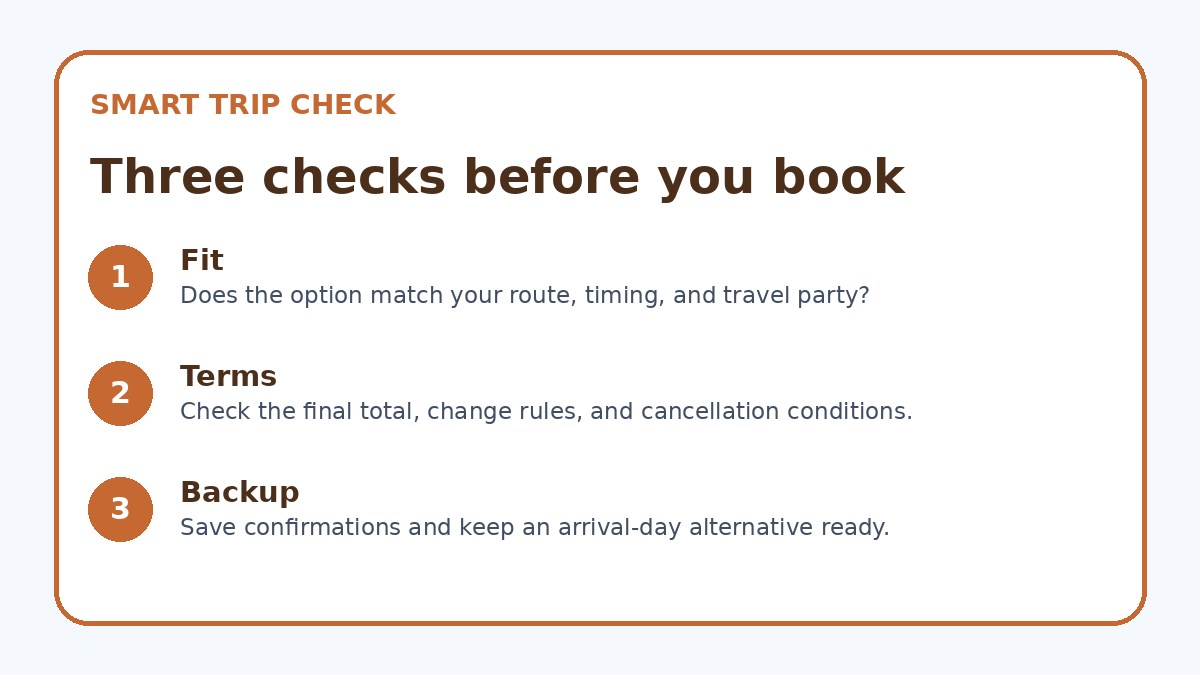
Meeting-point ambiguity is the most common cause of delays. Don’t assume “arrivals hall” is enough. Look for a map, gate-by-gate instructions, or specific exit names in the provider’s pickup notes. If pickup occurs outside security, identify which exit or door number the driver will use and whether the meeting point is inside the terminal (past customs) or at curbside. Ask whether the driver will display your name, hold a sign, or send a vehicle photo and license plate through the app—these details reduce search time in busy Seoul terminals.
For business travelers who value time, set a fallback meeting point you can reach within five minutes of the official location. If your client meeting demands punctuality, communicate your exact arrival gate and confirm the driver knows where to wait relative to that gate. When multiple terminals or satellite gates are possible, confirm which terminal the service covers. If the provider’s pickup instructions are vague, request clarification in writing before you rely on that transfer for a tight schedule.
Drop-off fit: match the vehicle to your final address
Not all central Seoul addresses allow curbside drop-off for larger vehicles due to narrow streets, restricted access or building policies. Before booking, make sure the provider accepts the exact street address and understands whether the driver can stop directly at your building entrance. If you’re heading to a corporate campus, hotel with valet, or a client site, ask if there are designated loading zones or a recommended nearby drop-off point where the driver may need to wait for access clearance.
Consider last-mile time and luggage handling. A vehicle that drops you at a nearby curb but still requires a walk with luggage to the meeting location may be less convenient than a slightly slower option that drops closer. For presentations or meetings where timeliness and appearance matter, request driver assistance with luggage and confirm if the transfer includes short-term waiting in case you must collect a visitor pass. If access rules are unclear, contact the building or meeting host to verify acceptable drop-off points.
Airport Transfer & Local Mobility questions travelers ask
How do I confirm a pickup if my flight changes terminals or gates?
If your flight is reassigned to a different terminal or gate, immediately update the transfer provider using the contact method they specify on the booking page. Many services list a monitored phone number or an app messaging feature to report changes; if they do not, call the backup contact or your hotel concierge. Also confirm whether the driver monitors the airline status and will adjust automatically—if not, mention the new terminal and request a revised meeting point in writing before you land.
What should I do if the driver can’t find me at the arrival area?
First, check the pickup instructions to ensure you’re at the correct exit or meeting point. Contact the driver using the provided phone number or messaging option and describe your exact location and nearby landmarks. If you cannot reach the driver, call the transfer provider’s main support or use the hotel’s front desk for assistance. Keep an alternative meeting point in mind—an indoor arrivals hall or a named café—so you can move to a clearly identifiable spot if needed.
Is it better to book through my hotel or a third-party service for business pickups?
Both hotel-arranged pickups and third-party services can work well; the decision depends on your priorities. Hotel pickups can simplify building access and coordination with reception, which is useful for meetings at upscale properties or restricted campuses, but they may have limited vehicle choices. Third-party transfers often provide more vehicle-size options and direct instructions; verify their pickup clarity and delay policies. Whichever you choose, confirm meeting points, wait-time rules and contact channels on the provider’s final booking page.
Final decision note
For business travelers to Seoul, the right airport transfer hinges on clear pickup instructions that match your luggage, timing and drop-off needs. Make the choice practical: verify the exact meeting point, confirm vehicle capacity, and read delay-handling policies before you book. Keep your flight and hotel details open while you check and save the driver’s contact and a backup plan. If you want to compare current availability quickly, Trip.com can be an option to view live provider pages—but always verify the final pickup map, wait-time rules and cancellation terms on the supplier’s own booking page before relying on a transfer for a critical meeting.
Continue planning
Check current options and final conditions
Use the provider page to confirm live availability, the final total, cancellation terms, and every condition that matters to your trip.
This evergreen planning guide was created with AI-assisted drafting and a structured quality review. It does not display live prices, schedules, availability, visa guidance, or provider rankings. Verify current details before booking. Some links are affiliate links; we may earn a commission at no additional cost to you.