If your flight or ferry gets you into Busan late, the most useful decision is which neighborhood to book so check-in, luggage storage, and morning plans are painless. Pick a hotel close to the terminal or the metro line you’ll use first thing, or choose a compact, walkable area where late-night dining and convenience stores are available. Think about who’s traveling with you: solo travelers often prioritize a bright, busy block; families may need easy elevator access and larger rooms; couples might want a quieter street. This guide gives a practical quick answer up front, then unpacks tradeoffs—neighborhood fit, how a late arrival affects your first-day routes, room and party needs, and the final booking terms you should verify before confirming.

Check live stays in the areas that fit
Use your dates and party size to compare current rooms after you narrow the neighborhood fit.
Neighborhood fit: pick a practical home base
Start by deciding what matters most for your first hours in Busan. If your arrival is after most hotel desks wind down, staying near a major transport hub such as Busan Station or a main airport bus stop will ease late-night transfers and give you options to leave early next morning. Alternatively, choose a compact, well-lit neighborhood like Haeundae or Seomyeon if you want immediate access to food, convenience stores, and evening streets that feel safe for a late walk. Consider whether you’ll need easy access to the port, the train station, or the metro line you plan to use the next day.
Also factor in energy and recovery: a noisy beachfront street might look appealing but can be tiring if you need rest after a long travel day. Conversely, a quieter residential area could offer better sleep but fewer late-night services. For first-time visitors, prioritize a balance of transit access and nearby essentials rather than aiming for a specific attraction; you’ll cover most sightseeing easily once you’re settled. If you’re unsure, shortlist two neighborhoods—one ultra-convenient for transport and one with a calmer feel—and compare available rooms before booking.
Choose an area-selection strategy
| Area approach | Best for | Tradeoff to check |
|---|---|---|
| Stay by the main transport hub (Busan Station) | Travelers who want minimal post-arrival transfers and quick morning departures | More transient area, potentially less nightlife charm and fewer boutique options |
| Book in a tourist cluster (Haeundae beach area) | Visitors prioritizing immediate access to dining and a lively evening strip | Can be noisy and further from inland attractions or major train terminals |
| Choose a central shopping/metro node (Seomyeon) | Those who want lots of late-night services and multiple metro connections | Busy and commercial; quieter residential feel is harder to find |
| Pick a quieter neighborhood near sights (Nampo-dong / Gwangalli fringe) | Travelers who value calmer streets and shorter walk distances to local attractions | May require an extra transfer from the main train or airport bus routes |
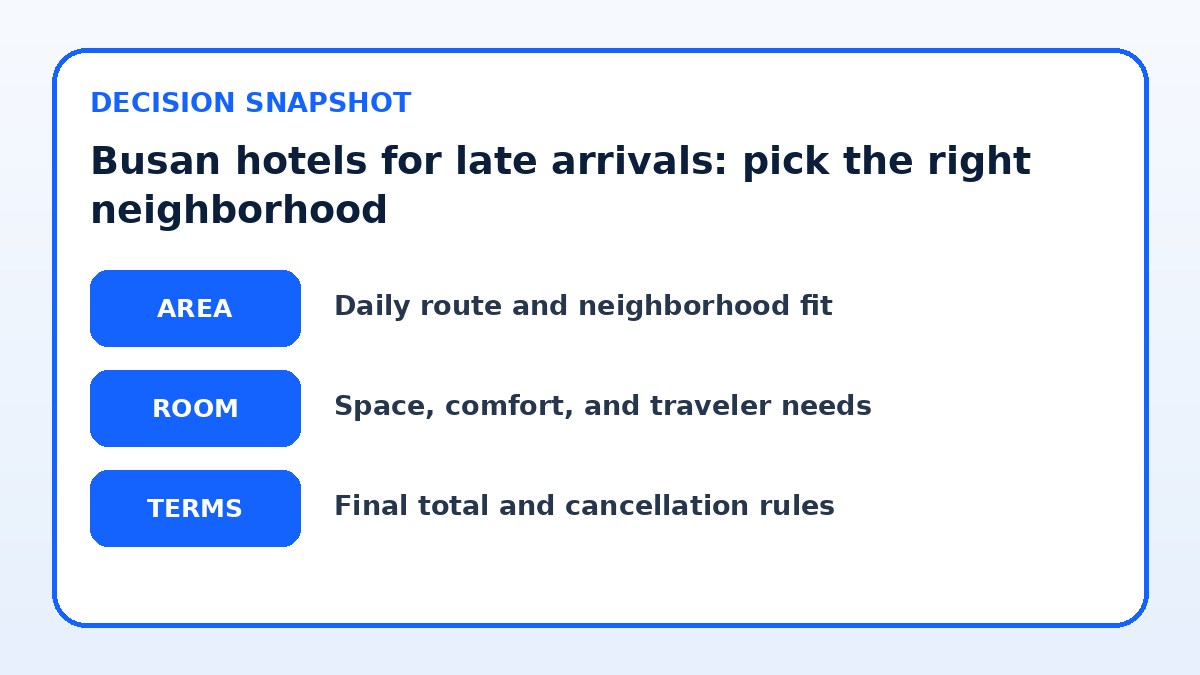
Daily-route friction: how your location shapes day one
A late arrival changes your morning routing choices more than people expect. If you want to use public transit first thing, book near a metro station on lines that connect directly to your must-see spots, because the metro is often the fastest way across the city. If your plan requires a train or express bus, staying around the corresponding terminal cuts morning transfers and stress. For travelers relying on taxis or ride-hailing with luggage, keep in mind that central, well-known neighborhoods make drivers easier to find and shorten pickup times.
Think through the first full day’s agenda before choosing a hotel. If you intend to head straight to the beach at Haeundae, staying there saves one morning transfer; if your priority is cultural sites downtown, a hotel in Nampo-dong or near Nampo Station reduces commute time. Also consider walkability: neighborhoods with clustered cafés, kiosks, and breakfasts make rescuing a late arrival easier—pick one where you can find a quick meal and recharge without a long trip.
Now compare like with like
Keep the same dates, guests, room needs, and cancellation preferences while you compare the final choices.
Room and party needs: size, access, and practical amenities
Your party composition should directly influence room type and amenities when arriving late. Solo travelers often do fine with small rooms if they have reliable late check-in; couples may want slightly larger rooms and quieter floors. Families or groups should prioritize connecting rooms, multi-bed layouts, and properties with larger bathrooms to manage evening routines quickly. Ask whether the property offers luggage hold after check-out and secure storage for early arrivals, and whether there’s an elevator—carrying bags up stairs after a late arrival is one of the most common annoyances.
Amenities that matter most the night you arrive include 24-hour front desk or clear late-check-in instructions, on-site or nearby food options, and charging facilities. If you can’t verify late staffing when browsing, choose flexible booking terms and contact the hotel directly to confirm how late check-in works; if you use a third-party booking site, check the hotel’s own policy page as provider details can differ. Finally, request a quiet room or late-arrival pack (if available) to make the first night smoother.
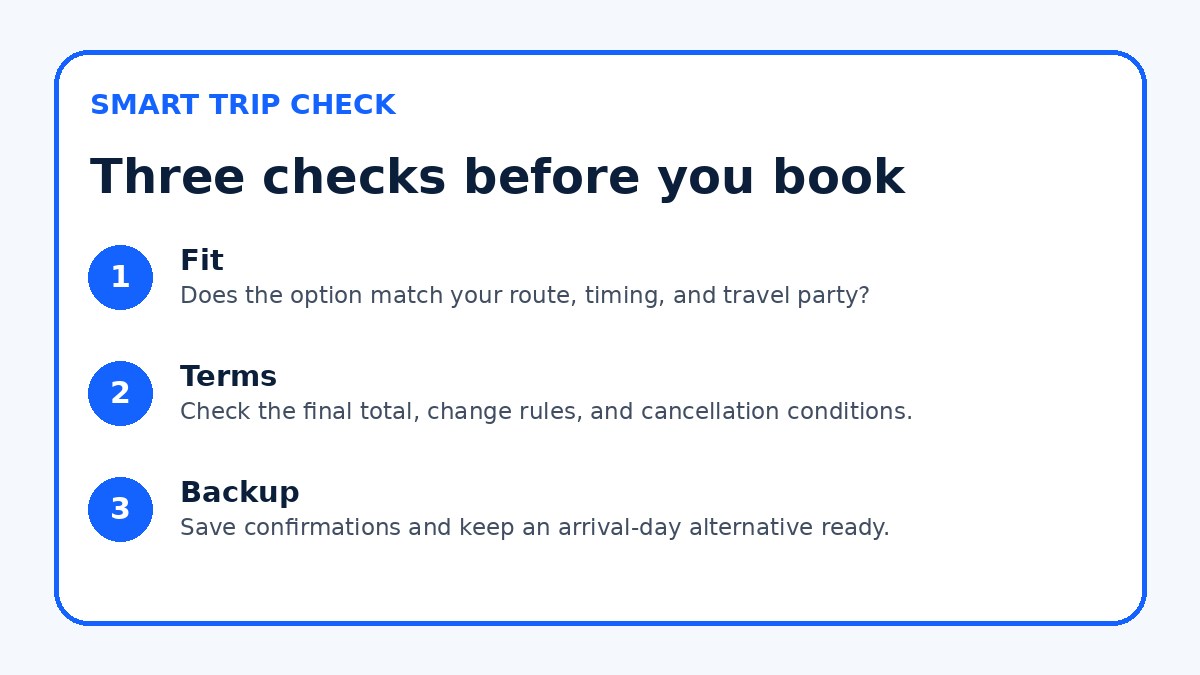
Hotel booking check before payment
- Confirm the hotel’s official check-in hours and whether they accept late arrivals without extra steps.
- Save the property’s address in Korean and the hotel phone number for taxi drivers and late coordination.
- Verify luggage storage options and whether storage is complimentary or charged after check-out.
- Ask the hotel how to collect keys for arrivals after desk hours (lockbox, night staff, or code).
- Compare room types for elevator access, bed configuration, and enough space for carry-on luggage.
- Screenshot an offline map of your route from the arrival point to the hotel and note nearby late-night food options.
Final booking terms: what to verify before you click confirm
Before you complete a reservation, read three items carefully: the official check-in hours and late-arrival instructions, the hotel’s cancellation and modification terms, and any room-access details (key pick-up, code entry, or on-site staffing). If the hotel lists late check-in as acceptable, note whether they require prior notice and the method to inform them—email, form, or booking site message. Verify whether luggage storage is free or paid, whether the property enforces quiet hours, and if there are extra charges for late arrivals or early breakfasts.
When provider-specific facts could change, go straight to the hotel’s official booking page or contact them directly to confirm. If you’re comparing options, Trip.com can be used to view current availability and check-in instructions but do cross-check the hotel’s policy page for the final word. Finally, make a clear plan for arrival: save an offline map screenshot, note the hotel address in Korean, and keep the hotel’s contact number handy so you can notify them if your arrival time shifts.
Hotel Guide questions travelers ask
I land late—should I stay near Gimhae Airport or pick central Busan?
Staying near Gimhae Airport reduces immediate travel after arrival but means you’ll likely need more time to reach central sights the next day. If your first full day is flexible or you have an early flight out, airport-area hotels can be very practical. However, if you want to maximize morning sightseeing in Busan, book a hotel closer to the metro lines or your first destination in the city. Compare convenience against your morning plans and transport options before deciding.
How do I ensure a smooth late check-in when booking through a third-party site?
When using a third-party booking site, read the hotel’s own policy page to confirm late check-in procedures, because booking platforms sometimes summarize policies differently. Message the hotel directly via email or phone before travel to confirm your expected arrival time and how to collect keys after hours. Save any written confirmation and the contact details in case you need to show them to taxi drivers or to resolve arrival issues quickly.
What room features are most important for families arriving late?
Families should prioritize rooms with easy elevator access, flexible bed arrangements or connecting rooms, and enough floor space to manage luggage. Also check whether the hotel offers late-night dining or a 24-hour convenience option nearby, and whether staff can assist with late check-in. If you have young children, look for hotels that can provide cribs, blackout curtains, and quiet floors—confirm availability directly with the hotel before you book.
Final decision note
For first-time visitors arriving late in Busan, the simplest planning step is to pick a neighborhood that minimizes your first-night logistics: either near transport hubs for easy morning departures or in a compact, service-rich area for immediate post-arrival needs. Match the neighborhood to your first-day priorities, then choose a room with the right access and amenities for your party. Before you book, verify the hotel’s late-check-in instructions, luggage storage policy, and how to collect keys after hours on the provider’s official page. With those checks done and a local address saved, you’ll turn a late arrival into a low-stress start to exploring Busan.
Continue planning
Check current options and final conditions
Use the provider page to confirm live availability, the final total, cancellation terms, and every condition that matters to your trip.
This evergreen planning guide was created with AI-assisted drafting and a structured quality review. It does not display live prices, schedules, availability, visa guidance, or provider rankings. Verify current details before booking. Some links are affiliate links; we may earn a commission at no additional cost to you.