Practical answer up front: for most couples traveling with standard checked bags and aiming to maximize time together in Hong Kong, a direct flight usually saves time and reduces connection risk; a connecting itinerary can be worth it if the fare gap is meaningful, you want different departure times or airlines, or you’re combining other destinations. Begin by locking exact travel dates, preferred departure airport in Seoul (ICN or GMP), number of travelers, baggage needs, and any mobility or seat preferences before checking live options. Once you have those details, compare total door-to-door travel time, total fare with baggage, and the connection window length. This guide walks through the routing differences, baggage and missed-connection risk, schedule fit for couples, and fare-condition checks so you can make a confident choice together.
See live routes for your exact travel day
Compare direct and connecting choices with the same baggage and traveler details.
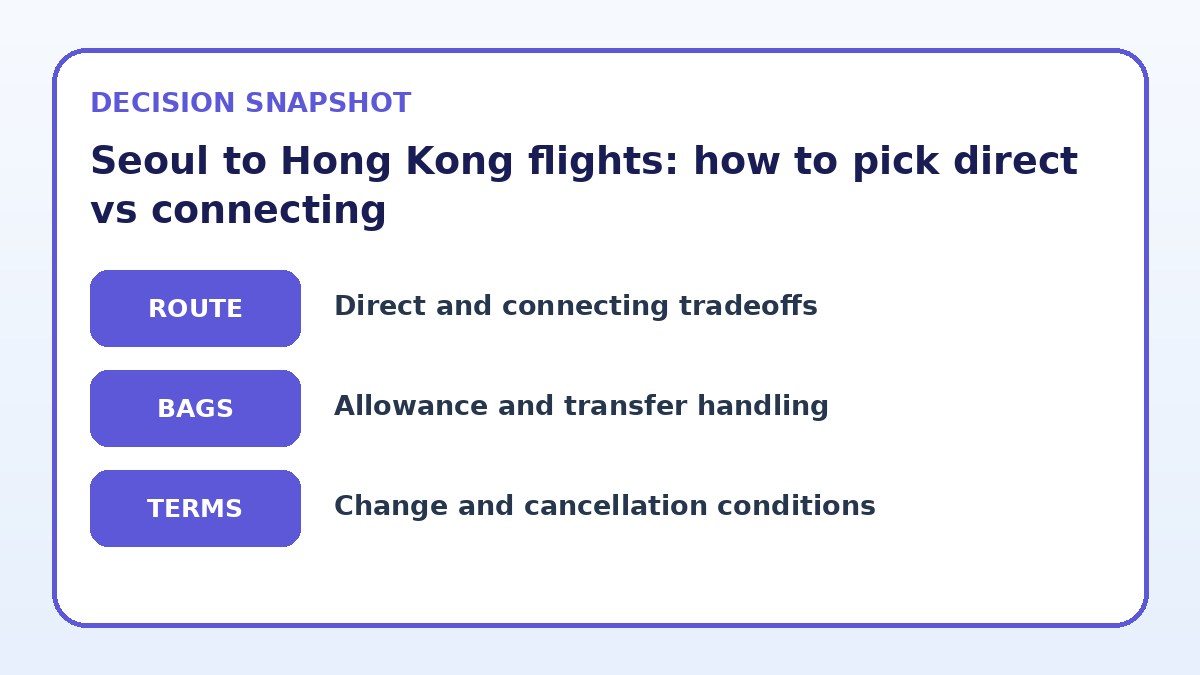
Routing: direct versus stopover choices
Direct Seoul to Hong Kong flights mean you board in Seoul and deplane in Hong Kong with no scheduled aircraft change. That simplicity shortens airport time, reduces the number of boarding passes, and removes the need to re-clear security or immigration during transit. For couples, direct routing keeps the travel day straightforward, which matters when one partner prefers fewer moving parts or if you’re traveling on a tight schedule. If direct service exists on your date, weigh whether the departure time aligns with your ideal arrival window in Hong Kong and whether the airline’s seat and meal options fit your needs.
Connecting itineraries route you through a third city and can appear as single-ticket connections or separate bookings. Single-ticket connections are generally safer because the airlines coordinate missed connections and can rebook you, but check whether the connection is within a single airport or requires transit between terminals or even different airports. Separate tickets may look cheaper but increase risk: you might need to collect bags, re-check them, or clear immigration. Couples willing to trade convenience for lower costs or more flexible routing can consider connections, but plan ample transfer time and confirm baggage handling rules before purchase.
Baggage and connection risk for couples
Baggage policy differences are one of the most overlooked costs. Some fares exclude checked bags, others include one piece; carry-on allowances also vary. If you and your partner plan to share a single checked bag or prefer just cabin luggage, a low-fare connecting option might work — but verify whether all segments allow the same baggage weight and size. For single-ticket connections operated by partner airlines, bags are often checked through to the final destination; for separate tickets, anticipate collecting and re-checking luggage. That extra handling adds time and stress, especially when traveling with sentimental items or fragile purchases.
Missed connections can disrupt a couple’s plans quickly. On a single itinerary, airlines typically protect you if the first flight causes you to miss the onward segment; they will rebook on the next available flight or arrange accommodation depending on their policy. With separate tickets, you assume the risk: a delay could mean purchasing a new ticket to stay on schedule. For couples, consider your tolerance for that uncertainty. If one partner is prone to travel anxiety or if you have important commitments at your destination, prioritize itineraries that minimize connection exposure and offer clear protections.
Compare flight-selection strategies
| Flight strategy | Best for | Risk to check |
|---|---|---|
| Direct nonstop booking | Couples prioritizing speed, simplicity, and lower connection risk. | Often higher base fares and fewer schedule options compared with connecting itineraries. |
| Single-ticket connection (partner airlines) | Couples wanting lower fares with some protection against missed connections. | Longer total travel time and potential terminal changes even when bags are through-checked. |
| Separate-ticket connection (mix-and-match cheap fares) | Price-sensitive couples comfortable with risk and flexible on timing. | Higher risk of needing to rebook, collect/re-check baggage, and pay surprise fees. |
| Hybrid: direct outbound, connecting return (or vice versa) | Couples balancing convenience one way with savings or timing needs the other. | More complex itinerary management and possibly different baggage/seat conditions on each leg. |
Recheck the complete itinerary
Confirm airports, connection handling, baggage, and change conditions before deciding.
Schedule fit: timing, convenience and jet lag
Couples often balance when they want to depart against arrival energy levels. A daytime direct flight can arrive in Hong Kong with energy to start exploring; overnight flights might save a night’s accommodation but can leave you tired. Check departure and arrival times against your planned activities and hotel check-in. Consider early-morning departures if you want a full first day, or evening departures if you prefer to sleep on the plane and arrive refreshed. If connection options give you a desirable departure window that direct flights don’t, evaluate whether that timing advantage outweighs the extra transit.
Connection length matters for comfort and contingency. Short connections cut into plane time and can be stressful if you need to negotiate long terminal walks; very long layovers extend total travel time and can be tiring. For couples who enjoy airport lounges, a longer connection might be a pleasant break — just confirm lounge access rules. If either traveler needs mobility assistance, book longer transfers and request help through the airline in advance. Ultimately, match the itinerary to the couple’s rhythm: aim for a schedule that leaves you both comfortable and aligned with your arrival-day plans.
Flight details to verify
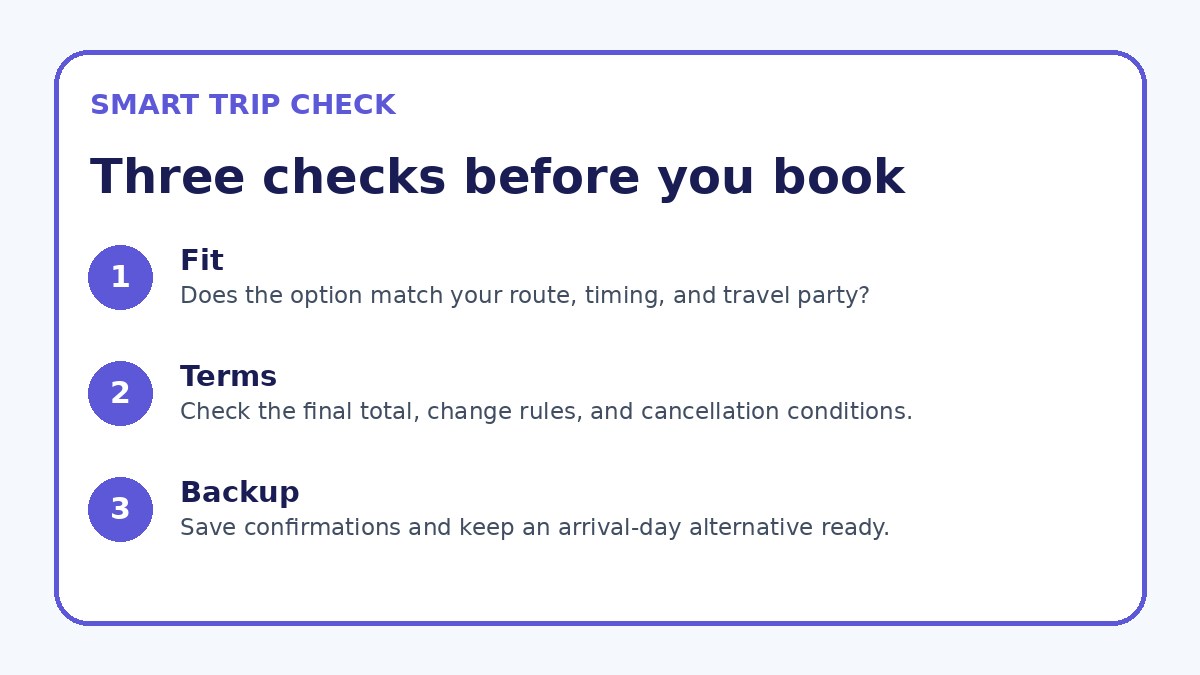
- Confirm exact travel dates, full passenger names as on passports, and passport expiry against the carrier’s requirements before searching fares.
- Check total price for two passengers including checked bags, seat selection, taxes, and any carrier surcharges on the final booking page.
- Verify whether baggage is checked through on connections and whether you will need to pass immigration to re-check luggage.
- Compare total door-to-door travel time (including transfer and layover) rather than only flight block times.
- Note minimum connection times for the airports involved and request mobility or escort assistance in advance if needed.
- Save screenshots of the fare rules and booking confirmation, and record contact details for all operating carriers in case re-accommodation is needed.
Fare conditions and what to verify before booking
Fares for direct and connecting options often come with different rules. Read the fare conditions carefully: which ticket types include refunds, free changes, seat assignments, and loyalty accrual. Low-cost basic fares may look attractive until you add baggage and seat fees; a slightly higher fare that includes essentials can be cheaper in total. For connecting itineraries, confirm whether a single ticket covers the whole route or if you are combining separate tickets with separate rules. Couples should compare the all-in total cost for both travelers, including any extras you'll almost certainly need.
Before finalizing any booking, verify a set of provider-specific details on the airline or booking site’s final purchase page. Confirm baggage allowance per passenger, the exact layover airports and minimum connection times, whether the fare allows name changes or refunds, and whether seats can be pre-assigned together. If using different airlines, check if baggage is through-checked and whether tickets are protected in case of delay. Trip.com can be used to compare live availability and conditions, but always validate price breakdowns and the carrier’s contract of carriage on the seller’s page before paying.
Flight Guide questions travelers ask
Should couples always choose a direct Seoul to Hong Kong flight?
Not always. Direct flights reduce transfer stress and are ideal when you want to maximize time in Hong Kong or minimize schedule uncertainty. However, connecting itineraries can be attractive if they significantly reduce the total cost, offer departure times that fit your plans better, or allow you to visit an additional city en route. Evaluate the fare difference after adding baggage and seat fees, check connection logistics and protections, and decide which tradeoffs match your comfort level as a couple.
How much connection time should we leave between flights when traveling as a couple?
Aim to allow enough buffer for deplaning, potential gate changes, security lines, and, if necessary, terminal transfers. For single-ticket connections, a moderate connection of 60–90 minutes can work at efficient airports, but larger airports or international interterminal transfers usually require 90–150 minutes. For separate tickets, add extra time to collect and re-check baggage and clear immigration — several hours may be prudent. Always check the airline and airport minimums and choose a window that keeps both partners comfortable with the pace.
If we pick a cheaper connecting option and a flight is delayed, who pays for rebooking?
If both segments are on the same single-ticket itinerary, the carrier(s) typically handle rebooking when delays cause missed connections, though policies vary so review the contract of carriage. For separate tickets, each airline treats its leg independently and you are usually responsible for the missed onward segment and any new fares. For couples, that means a potentially large unexpected cost. To reduce that risk, consider travel insurance covering missed connections or book connections under a single ticket whenever possible.
Final decision note
Choosing between direct and connecting Seoul to Hong Kong flights comes down to which tradeoffs matter most to you as a couple: simplicity and time saved, or potential savings and schedule flexibility. Start by locking your exact travel dates, the airports you prefer in Seoul, and your baggage needs. Compare total door-to-door time, the all-in ticket cost for two, baggage handling rules, and the protection each fare offers if things go wrong. Verify all fare conditions on the airline or seller’s final booking page, and consider a hybrid approach if one leg must prioritize convenience while the other can accept more complexity. With details in hand and an agreed tolerance for risk versus savings, you’ll make a choice that fits your shared travel priorities.
Continue planning
Check current options and final conditions
Use the provider page to confirm live availability, the final total, cancellation terms, and every condition that matters to your trip.
This evergreen planning guide was created with AI-assisted drafting and a structured quality review. It does not display live prices, schedules, availability, visa guidance, or provider rankings. Verify current details before booking. Some links are affiliate links; we may earn a commission at no additional cost to you.