
Practical answer first: for most first-time visitors I recommend staying in Waikiki for its simple walkability to beaches, restaurants, and transit; pick Ala Moana or Kakaako if you prefer fewer tourists and better local dining; choose Downtown/Chinatown when you want culture, museums, and a food-scene edge; and consider Diamond Head/Kapiolani for quieter, greener stays near scenic walks. The right area balances what you plan to do each day—beaches, hikes, museums, food tours, or shopping—against your tolerance for crowds and nightly noise. Below I explain what each neighborhood actually feels like, the typical tradeoffs for transportation and convenience, and the practical booking checks to make before you finalize a Honolulu hotels reservation.
Waikiki — convenience and classic beach energy
Waikiki is Honolulu’s most visitor-focused area and remains the simplest pick for a first-time traveler who wants to maximize beach time without worrying about transport. Many hotels, restaurants, and shops cluster along Kalakaua Avenue and the beachfront, so you can drop your bags and walk to the surf, snorkel rentals, nightlife, and Waikiki Aquarium. If your plan is to balance beach days with an easy schedule of luaus, beginner-friendly surf lessons, and short shopping outings, Waikiki minimizes transit decisions and helps you use your limited time efficiently.
The tradeoffs are crowding and a more commercial atmosphere: Waikiki is lively day and night, which suits people wanting activity close at hand but might frustrate travelers seeking calm or an authentic local vibe. If you choose Waikiki, check each Honolulu hotels listing for room orientation (street vs. ocean), noise policies, and on-site amenities like secure luggage storage and free shuttle information, because those details affect comfort more than star ratings alone.
Ala Moana & Kakaako — newer options and local flavor
Ala Moana sits one block inland from the largest shopping center in Hawaii and has a mix of hotel and condo options near Ala Moana Beach Park. Kakaako, a short walk or quick bus ride away, is an increasingly popular neighborhood with newer apartment-style accommodations, art murals, and a growing roster of restaurants and cafes. Both areas feel more residential and local than Waikiki while still offering quick access to beaches and central Honolulu; they’re good choices if you want contemporary hotel options and better access to farmer’s markets and local eateries.
Staying here usually brings quieter nights and more space for the same money you’d spend in Waikiki, but you may need to walk a little farther to reach the best swimming spots or to catch certain tours. Confirm exact distances between your chosen Honolulu hotels and key points—Ala Moana Center, Ala Moana Beach Park, and the nearest bus stop or ride-hail pickup point—on the provider’s booking page so you know how you’ll get around each day.
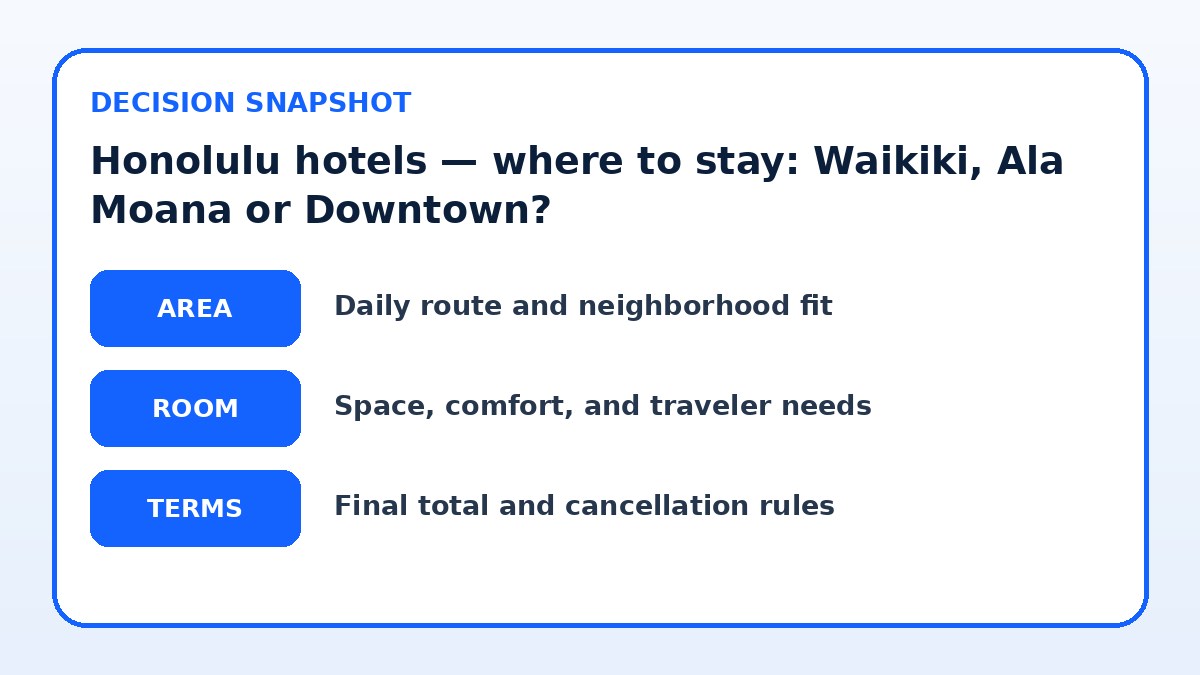
| Approach | Best for | Tradeoff to check |
|---|---|---|
| Waikiki base | First-time visitors wanting immediate beach access and easy walkability | Heavier crowds and more tourist-targeted restaurants and shops |
| Ala Moana / Kakaako | Travelers seeking newer hotels, local dining, and quieter nights | Slightly farther from the main Waikiki beach scene and some tour pick-up points |
| Downtown / Chinatown | Culture, museums, markets, and a more local urban experience | Less beachfront convenience and fewer large resort-style hotels |
| Diamond Head / Kapiolani | Outdoorsy travelers who want park space, hikes, and quieter evenings | Fewer nightlife options within walking distance and more short commutes to central attractions |

Downtown & Chinatown — culture, food, and a city pulse
If your trip is focused on museums, history, live music, and small restaurants, Downtown Honolulu and Chinatown reward the curious traveler. The area is compact: walking routes connect Iolani Palace, the Hawaii State Art Museum, and a lively Chinatown with markets and chef-driven eateries. Hotels here tend to be smaller or boutique-style, and staying Downtown puts you within easy walking or quick transit distance of the harbor, the Bishop Museum (a short trip), and evening food tours.
Traditional tourist conveniences are less concentrated than in Waikiki, so anticipate more short rides or transit choices. Chinatown is vibrant after dark but can be noisier and has a different pace than beach neighborhoods. Verify on the hotel’s booking page whether rooms have effective soundproofing, whether a late check-in option exists, and where the nearest transit stops or parking facilities are—these practical details will shape how well Downtown suits your travel style.
Before you book
- Confirm the hotel’s exact address and measure walking distances to the beach, main restaurants, or tour meeting points using a map tool before booking.
- Check room orientation and noise-reduction features on the hotel’s booking page (ocean-facing, street-facing, or park-facing) to match your sleep preferences.
- Verify cancellation, check-in times, and whether the property charges for parking or holds a security deposit before finalizing your reservation.
- Ask whether your chosen Honolulu hotels offer secure luggage storage or early check-in for long travel days; if not, plan where to stash bags on arrival.
- Compare transit and ride-hail options from your hotel to Pearl Harbor or the North Shore if you plan day trips, and confirm pickup points with tour providers.
- If you need accessible rooms, onsite laundry, or a kitchenette, confirm these amenities directly on the property’s booking page rather than relying on general descriptions.
Diamond Head & Kapiolani — quieter stays near green spaces
Diamond Head and the adjacent Kapiolani neighborhood offer a more relaxed Honolulu experience with access to scenic walks, parks, and a relatively upscale residential feel. Kapiolani Park, the Honolulu Zoo, and the Diamond Head trailhead are big draws for travelers who value outdoor morning runs, hiking, or picnic time over constant nightlife. Hotels here often appeal to families or couples seeking quieter evenings and proximity to outdoor activities while still being within a manageable cab ride to central Waikiki.
The main downside is that many of the most convenient restaurants and nightlife venues sit across the main thoroughfares toward Waikiki, so expect a short commute if you want an evening on the strip. Before booking any Honolulu hotels in this area, check whether the room faces the ocean or park, whether breakfast or kitchenette options are available, and what transportation links the property highlights for reaching beaches and downtown attractions.
Frequently asked questions
What neighborhood is best for walking to multiple beaches from one hotel?
For walkability between beaches and daytime convenience, Waikiki is the practical choice: it places several popular swimming spots, snorkel rentals, and beachfront dining within a short walk of many Honolulu hotels. Ala Moana Beach Park lies just west of Waikiki and offers a calmer alternative, but most other reef and surf-access beaches (for example, Hanauma Bay or the North Shore) require a car or organized tour. If beach-hopping on foot is your priority, verify the hotel’s distance to the particular beach you want to use on the provider’s booking page before you book.
Is Downtown or Chinatown a good choice for families visiting Honolulu?
Downtown and Chinatown work well for families who value museums, markets, and short walks between cultural sites. The neighborhoods are compact and close to places like Iolani Palace and the Hawaii State Art Museum, and many family-friendly restaurants are nearby. However, these areas are not beachfront, so families who expect daily beach time might prefer Waikiki or the Diamond Head side for easier beach access. Check hotel amenities for family needs—cribs, connecting rooms, and laundry—on the final booking page to ensure the property fits your group.
How do I decide between a hotel in Kakaako and one in Ala Moana?
Choose Kakaako if you want a trendier neighborhood with murals, craft coffee shops, and a rapidly evolving dining scene; choose Ala Moana if you prioritize proximity to the large shopping center and direct park/beach access. Kakaako often has newer condo-style properties and small independent restaurants, while Ala Moana skews toward convenience for shopping and larger beach park space. Before you book, compare walking times, check whether your chosen Honolulu hotels allow easy ride-hail pickup, and read recent guest notes about noise and local construction, all of which can affect the week-to-week experience.
Final planning note
Choosing where to stay in Honolulu comes down to how you want to spend most of your time. Pick Waikiki to minimize transit and maximize easy beach access and services; choose Ala Moana or Kakaako for newer accommodations and a more local feel; opt for Downtown/Chinatown when culture and food are your priorities; and select Diamond Head/Kapiolani for proximity to parks and hikes. Before you book any Honolulu hotels, verify the exact address, room orientation, amenity details, and cancellation policy on the property’s final booking page. If you want to compare current availability across several properties, Trip.com can be used as one of the places to check listings and conditions.
Continue planning
Check current options and final conditions
Use the provider page to confirm live availability, the final total, cancellation terms, and every condition that matters to your trip.
This evergreen planning guide was created with AI-assisted drafting and a structured quality review. It does not display live prices, schedules, availability, visa guidance, or provider rankings. Verify current details before booking. Some links are affiliate links; we may earn a commission at no additional cost to you.