If you’re solo and deciding among Honolulu hotels, prioritize location when you plan to spend most of your time on Waikiki’s beach, dining, and nightlife. Choose a room-focused option if you want quiet, good sleep, workspace, or an extended stay away from crowded corridors. Many solo travelers split the difference: pick a centrally located hotel with smaller tradeoffs in soundproofing, or pick a quieter neighborhood and plan short daily trips into the action. The right choice depends on how long you’ll stay, how often you’ll be out each day, whether you need a dedicated workspace, and how you value morning or evening convenience versus private comfort.
See current options before you compare the details
Availability and final conditions change. Open Trip.com now or keep reading for the practical comparison.
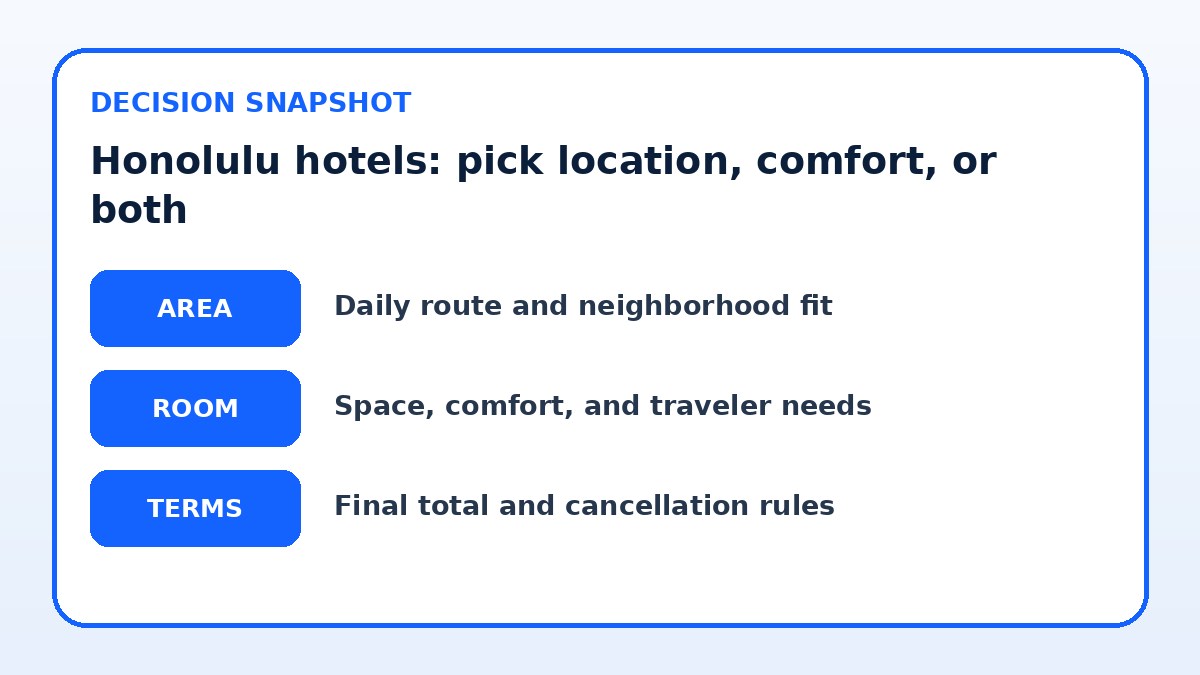
Deciding what matters: location vs room quality
Start by listing what you want every day in Honolulu. If your plan centers on surfing at sunrise, beach walks, or sampling many restaurants and bars, a hotel near Waikiki or Ala Moana will save travel time and let you pop back to your room between activities. If you expect late nights or early mornings, proximity to the places you visit will increase convenience and reduce rideshare costs and stress.
Room quality covers sleep, workspace, and private amenities. For longer solo stays, a comfortable bed, consistent Wi-Fi, blackout curtains, and a quiet HVAC system matter more than a view. If your trips combine work and leisure, prioritize a room with a stable desk area and good lighting. Knowing which days you’ll be in the room versus out helps you weigh whether a noisier, central location is acceptable.
Neighborhood tradeoffs: Waikiki, downtown, and quieter pockets
Waikiki is the default pick for first-time solo visitors because it concentrates beaches, restaurants, and convenience. The tradeoff is crowds, frequent events, and street noise—especially near Kalakaua Avenue. Staying here minimizes transit planning and makes it easy to meet other travelers, but rooms tend to be smaller and more expensive for the same comfort level compared with quieter neighborhoods.
Consider neighborhoods like Kakaako, Ala Moana, or residential areas just beyond the tourist strip if you want calmer evenings and slightly larger rooms. These areas often offer better value in room space and quieter streets while keeping you within a short bus or rideshare of the beach and downtown. Assess the hotel’s walking routes, nearby grocery or café options, and evening safety lighting before booking.
| Approach | Best for | Tradeoff to check |
|---|---|---|
| Central Waikiki location | Maximizing beach time, dining, and nightlife convenience | Smaller rooms, more noise, and higher foot traffic outside the hotel |
| Quieter residential area | Restful sleep, larger rooms, and calmer evenings | Longer trips to main attractions and occasional reliance on transit |
| Business-oriented hotels | Reliable workspace, meeting facilities, and consistent service | Less local character and sometimes farther from casual dining or beaches |
| Mid-distance compromise (Ala Moana/Kakaako) | Balance of quieter rooms and quick access to Waikiki and downtown | May still face some noise and requires a short commute for prime beachfront spots |
Ready to check the option that fits your plan?
Use your exact dates and traveler details so the provider page can show the current total and conditions.
Practical room features solo travelers should demand
Ask specifically about room noise insulation and floor location if light and quiet are crucial—higher floors typically reduce street noise but confirm elevator access and safety. Request details about the HVAC or air conditioning to avoid intermittent noise, and check if blackout curtains are installed for better sleep after late nights. If you’re sensitive to noise, ask the hotel about typical event schedules and whether rooms face courtyards rather than streets.
Other practical features include a firm desk or table suitable for laptop work, reliable Wi‑Fi (verify speeds or test policies on the booking page), a safe for valuables, and a small refrigerator if you want snacks or leftovers. For longer stays, check laundry options and whether housekeeping frequency is flexible. When any provider-specific amenity could change, verify the exact offering on the hotel’s official booking page or on Trip.com as a comparison tool.
Before you book
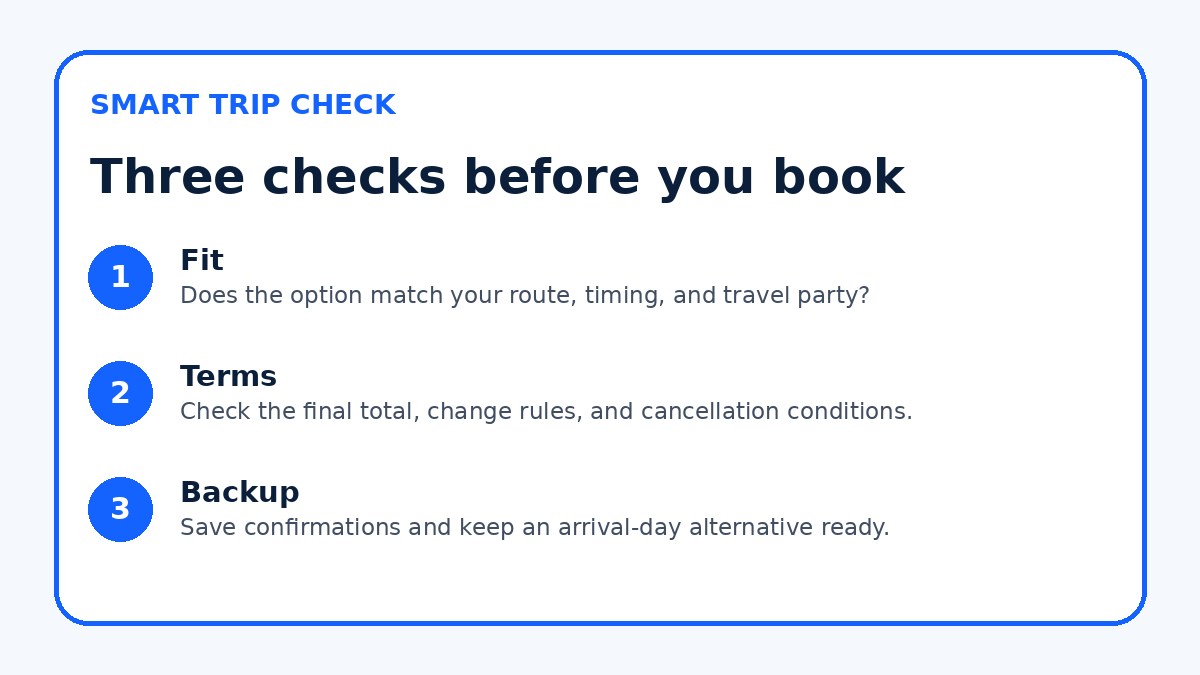
- Identify your top three daily activities (beach time, dining out, work) and rank how often you’ll be in the room versus out.
- Filter hotels by neighborhood and note walk times to key spots rather than relying solely on distance in miles.
- Ask the hotel or check the booking page for room location options, noise insulation, and whether higher floors are available.
- Confirm the presence and terms of Wi‑Fi, desk space, and in-room amenities that matter to you on the provider’s final booking page.
- Compare total expected transport costs (bus, rental, rideshare) from each hotel to your planned itinerary before choosing the cheaper nightly rate.
- Book a flexible or refundable first-night option if you want the ability to change hotels after an initial assessment on arrival.
Budget, safety, and how to test a hotel choice
Budget shapes this balance: on a tight budget you may need to choose location over room size, accepting smaller rooms near major attractions to reduce transport costs and maximize time. If preserving sleep and privacy is non negotiable, allow for a slightly higher per-night spend on quieter areas or hotels that market soundproofing. Remember that value isn’t just nightly cost—factor in expected rideshare or bus fares when comparing hotels farther from the action.
To test a hotel choice before booking, read recent guest comments focused on your priorities (noise, cleanliness, staff responsiveness) and search for photos showing room layouts rather than stylized marketing images. For any claim about shuttle service, parking, or breakfast, confirm availability and exact terms on the provider’s booking page. If you still feel unsure, choose a refundable rate or a short first stay so you can move if the reality doesn’t match your needs.
Frequently asked questions
Is Waikiki the right place for a solo traveler who wants both comfort and convenience?
Waikiki suits solo travelers who plan to spend most days at the beach or who want immediate access to dining and nightlife because it minimizes transit time. The tradeoff is denser crowds, smaller rooms, and more street noise; if quiet or space are priorities, consider nearby neighborhoods that are a short commute away. Evaluate how much you’ll use the room and whether quick access matters more than a calmer environment before booking.
How can I judge whether a hotel’s room will be quiet enough for work and sleep?
Look for recent guest notes mentioning noise and request rooms facing inner courtyards or higher floors. Ask the hotel about soundproofing, HVAC noise, and whether they host late events. If uninterrupted work is essential, verify Wi‑Fi reliability on the booking page and request a room with a dedicated desk area; consider booking a refundable rate so you can change rooms or hotels if noise proves problematic.
Should I prioritize walkability or access to public transit when choosing in Honolulu?
If your daily plan centers in one neighborhood—Waikiki for beach time or downtown for museums—walkability is very valuable and reduces reliance on transit. If you plan multiple day trips across Oahu, prioritize a hotel with easy bus stops or rideshare access and check typical transit connections for your likely routes. Compare travel time and convenience for your specific itinerary rather than choosing solely on the neighborhood name.
Final planning note
Solo travelers in Honolulu face a practical choice: be in the center of activity with shorter journeys and smaller rooms, or prioritize room comfort and quieter evenings with a short commute. Start by clarifying daily patterns—how often you’ll be in the room, whether you need workspace, and how much noise you can tolerate. Use recent guest feedback focused on your priorities, verify amenity details on the hotel’s booking page, and compare total expected transport costs. If uncertain, choose a refundable first night to test the hotel in person and adjust your stay based on how the reality matches your needs.
Continue planning
Check current options and final conditions
Use the provider page to confirm live availability, the final total, cancellation terms, and every condition that matters to your trip.
This evergreen planning guide was created with AI-assisted drafting and a structured quality review. It does not display live prices, schedules, availability, visa guidance, or provider rankings. Verify current details before booking. Some links are affiliate links; we may earn a commission at no additional cost to you.