
If you're a couple planning Rome, the practical answer is: aim to book flights and hotels between 2 and 4 months before travel for most dates, and earlier (4–6 months) for high-season, anniversaries, or limited-room boutique hotels. That window balances time to compare fares and room types with remaining availability and cancellation flexibility. For short trips during low-demand months, you can wait 3–6 weeks and still find reasonable options, especially if you value flexibility over choice. Use the earlier side of the window when dates are fixed and you need particular rooms, and the later side when you want to monitor deals or expect plans to change. Below I explain tradeoffs, how to compare types of offers, what to verify on provider pages, and a simple checklist you can follow before you hit “book.”
See current options before you compare the details
Availability and final conditions change. Open Trip.com now or keep reading for the practical comparison.
Why a realistic booking window matters for couples
Couples choose travel together because they want shared experiences, comfort, and usually a touch of romance—choices that make timing important. Booking too early can lock you into flights or rooms you later want to change; booking too late can leave you with inconvenient flight times, split beds, or only high-room-rate options. For couples, the trade isn't just price: it's the quality of the stay, proximity to attractions, and the chance to reserve the special touches you might want, like a room with a view or an accessible check-in time that fits your arrival.
Consider how your priorities shift if you’re celebrating something special versus taking a spontaneous city break. For anniversaries or proposals, availability of particular room types, boutique property suites, or romantic add-ons is often more important than a small fare difference. For flexible city breaks, you can give up a few conveniences for lower prices and more flexible cancellation. The window you choose should reflect how much each partner values certainty over last-minute flexibility.
How seasonality and events change the optimal window
Rome's demand pattern is shaped by summer tourists, religious events, and weekends filled with domestic visitors. High season typically means tighter inventory and fewer convenient flight times, so the rational move for couples with fixed dates is to push bookings earlier—often to the 4–6 month range. If your travel coincides with a known local event or a major holiday, you should assume hotel rooms and midday flights are claimed sooner than quieter months.
In shoulder or low season, late deals can appear and the need to book far ahead drops, which helps couples who prioritize flexibility over exact room features. However, even off-season, attractive boutique properties or specific room categories can sell out, and weekend demand from Italians can tighten availability. Track fares and property availability for a few weeks to sense patterns, then commit when the tradeoff between risk and options matches your comfort level.
| Approach | Best for | Tradeoff to check |
|---|---|---|
| Book early (4–6 months) | Fixed-date travel, anniversaries, boutique rooms | Less flexibility and potential change fees if plans shift |
| Standard window (2–4 months) | Most couples balancing price and availability | Moderate risk of losing specific room types or seat choices near peak dates |
| Late booking (3–6 weeks) | Flexible couples prioritizing lower-priced, last-minute options | Fewer choices and possible inconvenient flight times or hotel locations |
| Hybrid approach (lock flights, wait on hotel) | Couples wanting schedule certainty but room flexibility | Requires active monitoring and may pay slightly more for last-minute preferred rooms |
Ready to check the option that fits your plan?
Use your exact dates and traveler details so the provider page can show the current total and conditions.
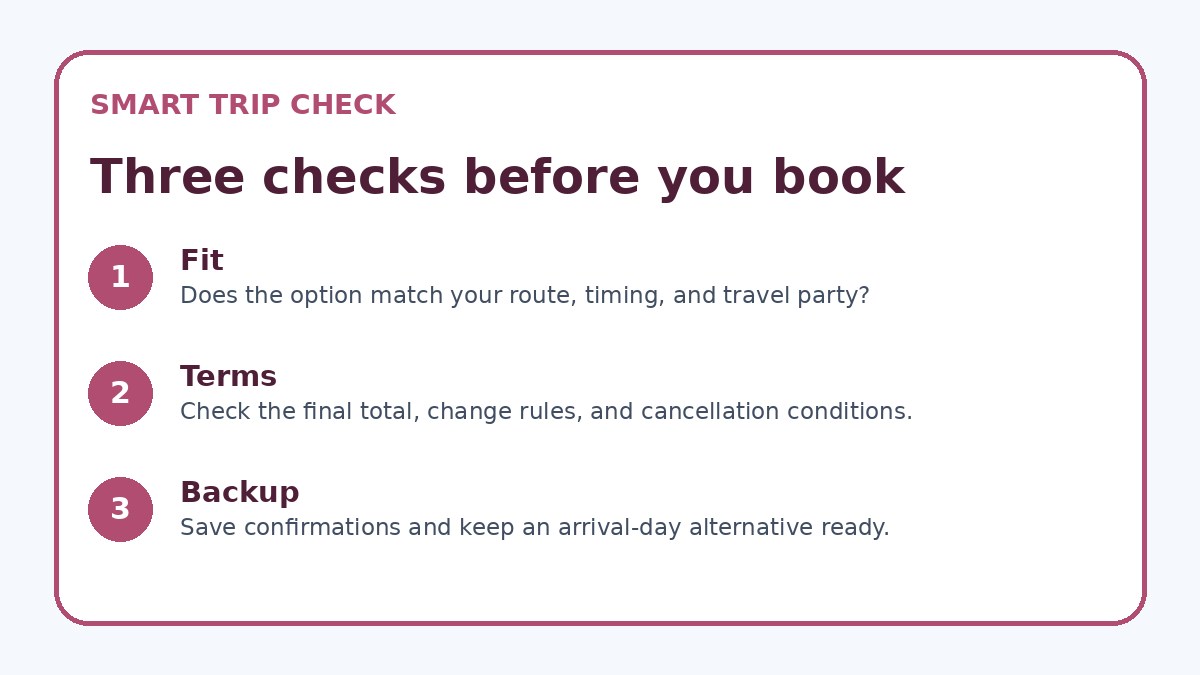
Comparing flight and hotel booking approaches
For flights, compare nonstop versus connections and the costs of basic versus flexible fares. Nonstop flights offer convenience that many couples prefer, especially for short trips, but they can be more expensive and sell out sooner. If you need seat selection together, factor that into your booking window: cheaper fare buckets sometimes restrict seat choices until check-in, which matters if you want to be seated together on a long leg into Rome.
For hotels, decide whether you value a specific neighborhood, room layout, or flexible cancellation. Chain hotels often have predictable policies and inventory, so you can book a refundable rate earlier and lock in a nonrefundable rate later if prices fall. Boutique or highly rated guesthouses may have limited rooms and refundable options may be rare—secure those sooner if they're important. Always compare dates and policies side by side, and verify final details like bedding configuration, breakfast inclusion, and airport transfer options on the provider’s booking page before you pay.
Before you book
- Set calendar reminders for 6, 4, and 2 months before your intended travel dates to re-evaluate availability.
- Create flight and hotel price alerts and check totals including taxes and fees before comparing offers.
- Confirm bedding configuration, breakfast inclusion, and cancellation/change penalties on the provider’s final booking page.
- Decide together which matters more: specific neighborhood/room type or flexible cancellation, and document that choice before booking.
- If you book refundable fares early, plan a check date to switch to a nonrefundable rate only if savings justify loss of flexibility.
- Save confirmation emails and screenshot the final provider terms so you can reference exact policies if changes or disputes arise.
Practical tactics for couples hunting Rome travel deals
Set price and availability alerts for your chosen dates and neighborhoods so you can watch trends without committing immediately. Use a private browser or different devices to compare fares and room rates, and be consistent about including taxes and fees when comparing final totals. If one partner wants certainty and the other wants to wait for a deal, consider splitting decisions: lock flight outbound times that suit your schedules, but wait a little longer to select a hotel if you value room choice over early savings.
Use refundable or low-penalty-change fares if your trip has some flexibility, especially when booking earlier than your finalized plan. Before you click pay, open the provider's final booking page to confirm cancellation windows, change fees, baggage allowances, seat assignment rules, and whether any extras (breakfast, city tax, transfers) are included. Trip.com can be a place to compare current availability and conditions, but always verify those provider-specific facts on the supplier’s or booking engine’s final page.
Frequently asked questions
How far in advance should a couple book a Rome weekend in summer?
For a summer weekend with fixed dates, aim for the earlier end of the planning spectrum—about 4–6 months ahead—because weekend rooms and middle-of-the-day flights fill faster. If you need a specific room, a hotel with a rooftop terrace, or a particular neighborhood close to the sites you want, booking earlier reduces the risk of compromises. If you prefer flexibility, look for refundable rates or flights with low change fees and set search alerts so you can grab a suitable option if availability shifts.
Can waiting yield better Rome travel deals for boutique hotels?
Sometimes, but boutique hotels usually have limited inventory and popular room types disappear quickly. Waiting can find marginal price drops or last-minute cancellations, but it also risks losing the very rooms that make a boutique stay special—like a suite or a room with a terrace. For boutique stays that are central to your trip, prioritize locking in your preferred room earlier, or book a refundable rate and monitor prices; then switch to a nonrefundable option if it becomes significantly cheaper and you’re comfortable with the cancellation terms.
Should couples prioritize flight or hotel bookings first when planning Rome?
Start with the firm constraint: the flight if you have tight schedules, work leave windows, or specific arrival times, since good flight times can sell out and affect your plans. If hotels or a specific neighborhood are the core of the trip—say you want a particular romantic property or proximity to family—book that first. A hybrid approach often works well: secure outbound flight times that fit your schedule, and hold off booking a hotel for a short period while you compare room types and cancellation policies.
Final planning note
Choosing a realistic booking window for Rome travel deals comes down to matching your couple priorities with the city’s demand rhythm. If your dates are fixed or your trip marks a milestone, move earlier to lock desirable rooms and convenient flights. If flexibility and last-minute spontaneity appeal more, you can wait closer to departure but accept fewer options. Use alerts, compare full-price totals, and always double-check cancellation and inclusion details on the provider’s final booking page before paying. With a clear decision about what matters most—specific room features or flexible change policies—you’ll pick a window that minimizes stress and maximizes the experience together.
Continue planning
Check current options and final conditions
Use the provider page to confirm live availability, the final total, cancellation terms, and every condition that matters to your trip.
This evergreen planning guide was created with AI-assisted drafting and a structured quality review. It does not display live prices, schedules, availability, visa guidance, or provider rankings. Verify current details before booking. Some links are affiliate links; we may earn a commission at no additional cost to you.