If your trip to Canberra is work‑focused, the practical choice comes down to door‑to‑door time, transfer friction, and reliability rather than simply the headline travel time. For many business travellers that means prioritising a single easy transfer and predictable luggage handling over small savings in journey minutes. Use the rest of this article to weigh rail, coach, driving, and mixed-mode options against four decision criteria: terminal fit (how close the arrival point is to your meeting or hotel), luggage and transfer friction, timing flexibility during the business day, and a realistic disruption backup plan. I’ll explain tradeoffs and give an actionable checklist so you can compare specific schedules and book confidently. If you want to check current availability and connections before you book, Trip.com is one place to view live options, but always confirm final details on the operator’s booking page.
Terminal fit: start and finish where your day needs you
Terminal fit means asking where you will actually end up after the journey, not where the vehicle stops on a map. For business travel, immediate proximity to your meeting venue or a convenient hotel can save both time and stress. Check whether the arrival point is in the city centre, a suburban bus or coach interchange, or a distant park‑and‑ride. Also factor how easy it is to reach common corporate districts, conference centres, or government offices from that terminal: a short walk or single taxi ride typically beats complicated local transfers.
When comparing options, open a map and plot walking routes and taxi times from each terminal to your destination — include potential traffic hotspots at your travel time. If you plan to work en route, confirm onboard Wi‑Fi availability and a seat with a table, but treat that as a secondary convenience. Finally, verify the operator’s arrival dock or platform specifics on the booking page, since arrival location changes and temporary platform shifts sometimes occur, and knowing the exact exit can cut transfer time significantly.
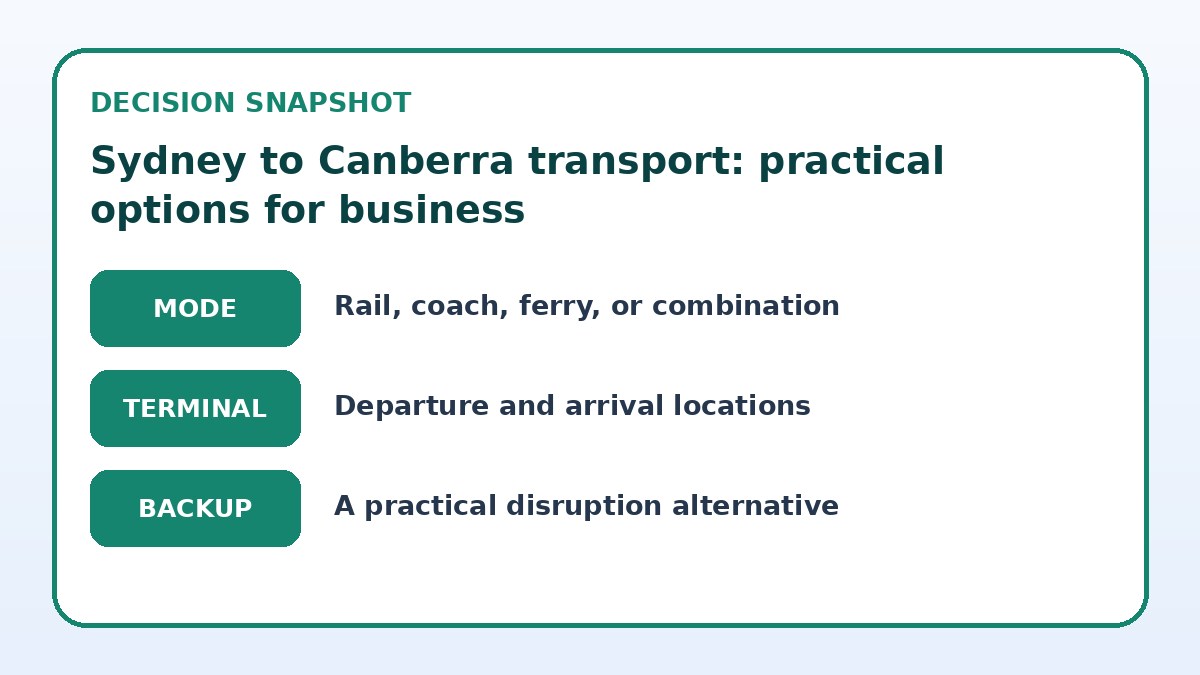
Choose the end-to-end journey plan
| Journey approach | Best for | Friction to check |
|---|---|---|
| Direct rail (single train) focused on terminal proximity | Travellers prioritising predictability and minimal transfer walking | May have limited departure times and require a short taxi if station isn’t next to meeting |
| Scheduled coach with central stops | Those wanting simple luggage handling and central drop‑offs | Journey time can be more variable with road traffic and fewer last‑minute options |
| Drive (self‑drive or chauffeur) door‑to‑door | Maximum flexibility and direct door‑to‑door travel for tight schedules | Subject to traffic variability and may cost more; parking/arrival logistics matter |
| Mixed-mode (train or coach plus short taxi) | Balancing travel time with terminal fit when direct options don’t align | Introduces an extra transfer but often shortens overall door‑to‑door time |
Check live intercity options
Look beyond the ride itself and compare terminals, transfers, luggage, and arrival fit.
Luggage and transfer friction: what you practically need
Luggage friction is more than weight and size: it’s how often you need to move bags between vehicles, lift them up stairs, or queue for storage. If you travel with a rollaboard and a laptop bag, choose an option that offers onboard storage or immediate access to your luggage at the seat. If you have larger suitcases, prefer services that load and unload baggage for you or routes that avoid multiple transfers. Consider whether you’ll need a last‑mile taxi; repeatedly repeating ‘find local cab’ adds time and uncertainty to a business schedule.
When planning, list the exact items you’ll carry and imagine the moments you’ll change vehicles. That will help you judge whether the convenience of a direct coach or a single train with baggage space outweighs faster but more fragmented alternatives. For group travel or shared equipment, check whether operators allow earlier check‑in of baggage or offer reserved luggage racks. Always confirm baggage rules and platform access on the operator’s final booking page, since those details can differ and change.
Timing flexibility: scheduling around meetings and returns
Timing flexibility is crucial for business trips that may shift by a few hours. Look for services with multiple departures during morning and evening peaks and sensible mid‑day options if you need a same‑day return. If your schedule could require a late meeting or an early start, weigh the frequency and spacing of departures rather than a single fastest service. Often a slightly longer but more frequent service reduces the risk of missing a return and gives you freedom to extend meetings or respond to delays.
Also consider the predictability of travel time during your journey window. Road services can face variable traffic; rail is usually steadier but may run less often. If you must arrive by a firm time, build a buffer into your itinerary and compare the number of alternative departures within a two‑hour window. For last‑minute adjustments, know cancellation or change rules on the booking page, and whether you can switch to a later service easily without large penalties.
Compare the practical alternatives
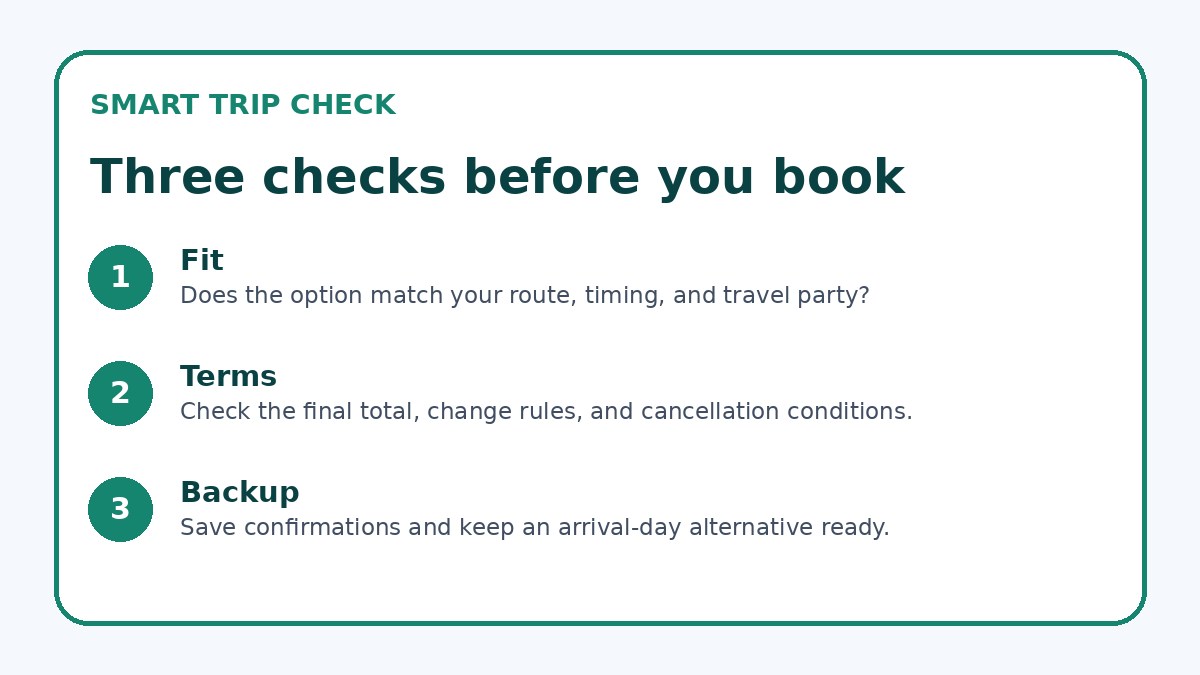
Use the final page to confirm what is actually offered on your dates and save a workable fallback.
Intercity travel checklist
- Map door-to-door routes from origin to final meeting/hotel for each option and note estimated walking and taxi times.
- Confirm luggage rules and where your bags will be stored or handled on each service via the operator’s booking page.
- Check frequency and departure windows for your travel day and identify two viable alternative departures.
- Note the exact arrival platform, stop or bay on the operator’s booking page to minimise transfer time on arrival.
- Save operator contact numbers, booking references, and a local taxi or car service for disruption scenarios.
- Decide in advance your acceptable buffer time for meetings and choose the option that reliably meets it.
Disruption backup: realistic fallbacks for a business day
A disruption plan should be practical: identify at least two realistic fallbacks and how long each will take door‑to‑door. For example, if your primary rail option is delayed, can you jump on the next service and still make your meeting? If both public options are disrupted, is a taxi or ride‑hail service feasible within your time and company expense rules? Don’t assume immediate availability — estimate wait times and confirm local providers’ typical response options in advance.
Keep essential contact and booking references to hand: operator phone numbers, booking references, and a local taxi or car‑hire number. If you rely on public transport, note whether the operator posts real‑time updates and where you’ll get them. Finally, prepare a simple retry strategy: try the next scheduled public option first, then a pre‑booked private transfer if that still leaves you short. Confirm change and refund policies on the operator’s official booking page so you know your options if plans shift.
Rail & Intercity Transport questions travelers ask
Which Sydney to Canberra transport option is most reliable for making a morning meeting?
Reliability depends on predictable departure windows and fewer transfers. In many cases a single direct rail service or a direct coach with dedicated arrival stops offers steadier journey times than a drive that can be affected by peak traffic. To choose, compare the number of departures that arrive before your meeting and pick the option with the most comfortable buffer. Also verify real‑time update tools and the operator’s delay policies on their booking page so you can switch plans quickly if needed.
How should I factor luggage when selecting between train, coach, or driving?
Consider the exact pieces you’ll bring and how often you’ll move them. If you travel light, a walkable station arrival might be ideal. For larger suitcases or equipment, favour services that load and unload baggage for you or choose driving where there’s no transfer. Mixed‑mode can work if the taxi leg is short. Always confirm baggage allowances, storage availability, and whether assistance is offered on the operator’s official booking page before you book.
What’s a sensible disruption backup when I must be at a time‑sensitive meeting?
Prepare two fallbacks: the first should be the next public‑transport departure that still reaches you in time, and the second a pre‑identified private transfer or taxi service that can close the time gap if public options fail. Know estimated door‑to‑door times for each fallback and carry contact numbers and booking references. Check change or refund rules on the booking page so you’re not surprised by penalties if you need to switch services at short notice.
Final decision note
For business travel between Sydney and Canberra, the most practical option is the one that minimises door‑to‑door time and transfer friction while fitting your meeting schedule. Start by mapping terminal proximity to your destination, then weigh luggage handling, departure frequency, and real‑world disruption fallbacks. Direct public services reduce the number of handoffs; driving can be convenient for strict door‑to‑door control but is subject to traffic variability. Use the checklist to compare concrete options and always verify arrival points, baggage rules, and change policies on the operator’s final booking page before you commit. That preparation keeps your travel reliable and focused on the purpose of the trip.
Continue planning
Check current options and final conditions
Use the provider page to confirm live availability, the final total, cancellation terms, and every condition that matters to your trip.
This evergreen planning guide was created with AI-assisted drafting and a structured quality review. It does not display live prices, schedules, availability, visa guidance, or provider rankings. Verify current details before booking. Some links are affiliate links; we may earn a commission at no additional cost to you.