If you want a comfortable Sydney to Melbourne flight connection, pick the simplest routing that fits your sleep, mobility and luggage needs: a direct flight if you value time and fewer transfers, or a single well-timed connection if you want lower cost or different departure times. For first-time visitors, comfort usually means a seat with legroom, reliable carry-on handling, and a transfer plan that leaves at least 60–90 minutes if switching aircraft. Decide whether you need extras such as an aisle seat, a pre-boarding option, or lounge access and add them when booking. Before finalising, check the airline’s current baggage policy, seat map, and transfer rules on the carrier’s booking page — these change more often than schedules. You can compare availability on Trip.com or other booking sites, but confirm final baggage fees and seat assignments with the operating carrier.
See current options before you compare the details
Availability and final conditions change. Open Trip.com now or keep reading for the practical comparison.
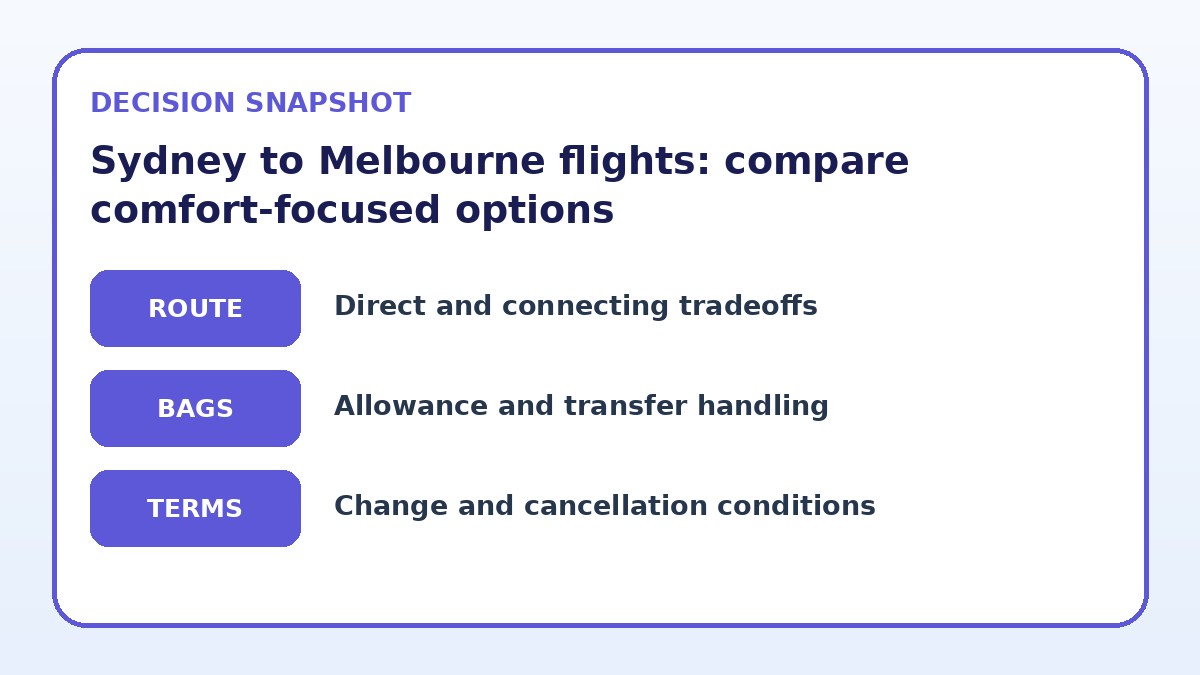
Direct versus connecting: practical tradeoffs
Direct flights keep the journey simple: one check-in, one security process if departing domestic, and no risk of re-checking luggage between cities. For first-time visitors who dislike navigating unfamiliar airports, direct services usually reduce stress and total travel time. However, direct flight options may depart at times that don’t match your schedule, and they can be pricier or fully booked during peak travel periods. If comfort to you equals predictability and minimal movement, a direct flight is often the right choice.
Connecting flights can be comfortable too if you plan them with buffer time and choose connections operated under a single ticket or alliance. A well-planned connection might let you travel at a preferred hour or use a layover airport with better facilities, but it introduces variables: additional boarding, potential gate changes, and either re-checking luggage or depending on the airline’s transfer handling. When comparing itineraries, weigh the time-saving of a direct versus the scheduling flexibility and possible lower fares of a connection.
Choosing seats and cabin options for comfort
For most short domestic hops between Sydney and Melbourne, seat pitch and proximity to lavatories matter more than cabin class. If legroom is a priority, look for economy seats marketed as ‘extra legroom’ or the forward exit rows — review the airline seat map at booking. An aisle seat helps for easier stretching and quicker boarding or deplaning; a window is better if you plan to rest. If upgrading to a premium seat is an option, confirm what exactly is offered: reclining range, meal service, and dedicated overhead space.
When booking, verify seat-change policies and any fees on the airline’s official booking page because third-party listings may not show those details. Bring a travel pillow, compression socks, and noise-cancelling earbuds to improve comfort regardless of seat type. If you have mobility needs, request assistance in advance and check that the airport and airline accommodate it. For those connecting, choose seats that allow faster exit on arrival to reduce transfer stress.
| Approach | Best for | Tradeoff to check |
|---|---|---|
| Direct flight | Travellers who value simplicity and the shortest travel time | May offer fewer departure times and sometimes higher fares or limited seat choice |
| Single well-timed connection on one ticket | Those seeking schedule flexibility while keeping transfer responsibility with the airline | Longer total travel time but reduced risk of luggage issues if on same ticket |
| Separate tickets for each leg | Budget-focused travellers willing to manage luggage and tight connections themselves | Higher risk of missed connections and baggage re-check; requires more buffer time |
| Upgrade to extra-legroom or priority boarding | Passengers who prioritise personal space, faster boarding and calmer airport experience | Additional cost that may only be worth it for longer waits or frequent flyer benefits |
Ready to check the option that fits your plan?
Use your exact dates and traveler details so the provider page can show the current total and conditions.
Managing luggage, check-in and airport transfers
Review baggage allowances before you buy: carry-on size limits and checked-bag rules differ by carrier and fare class, and these are the details you must confirm on the airline’s booking page. Travellers taking a connection on different tickets should plan to collect and re-check checked luggage — build extra time for this. Pack essential items, medication and a change of clothes in your carry-on so delays or lost bags won’t derail your comfort.
Check-in online and download a mobile boarding pass to reduce queues, or arrive early if you need special assistance or bag drop. If you’re transferring between terminals, research the airport transfer options (shuttle, train, or walking route) and factor transit time into your connection buffer. When in doubt, contact the operating airline to confirm whether checked bags transfer automatically between your flights and whether you need to clear security or customs during a connection.
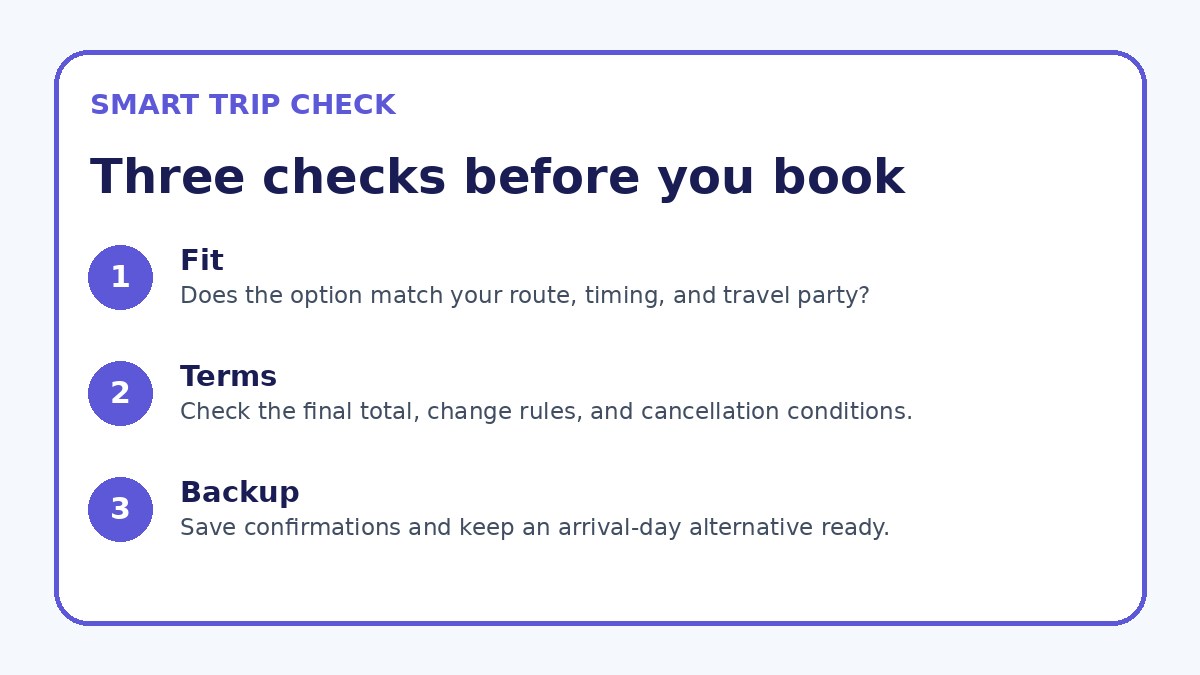
Before you book
- Compare direct and one-stop itineraries and choose the option that balances schedule and comfort for you.
- Confirm seat availability and select an aisle or extra-legroom seat on the airline’s official booking page.
- Check carry-on and checked baggage size and fee rules with the operating carrier before purchase.
- Build at least 60–90 minutes for domestic connections and add more time if terminals change.
- Download mobile boarding passes, save airline contact details, and keep digital copies of documents.
- Pack essentials (medication, chargers, a change of clothes) in your carry-on in case of delays.
Timing, airport facilities and pre-flight planning
Plan your arrival at the departure airport with time for unexpected delays: domestic flights typically recommend arriving at least 60–90 minutes before departure, more if you need to check bags or use special services. If you have a morning or late-night connection, check which airport facilities are open — lounges, cafés and transport options vary by hour. Consider booking a lounge pass or priority security if you want a quieter pre-flight experience; verify access rules and opening hours before relying on them.
For the transit itself, look up gates and terminal maps ahead of travel to reduce walking and stress during a connection. Keep digital copies of travel documents and your contact details for the airline and airport, and use a packing checklist to avoid last-minute shopping that can waste transfer time. If comparing itineraries, prioritise those with longer on-ground time when the alternative routings have tight turnarounds or require terminal changes.
Frequently asked questions
Are direct Sydney to Melbourne flights more comfortable than connecting ones?
Direct flights are usually more comfortable in the practical sense: fewer airport transfers, reduced chance of losing luggage, and simpler logistics. For first-time visitors, that predictability often outweighs marginal seat comfort differences. However, a carefully chosen connecting itinerary on a single ticket can still be comfortable if it provides better departure times or improved onboard amenities. Always compare total door-to-door time, the number and length of transfers, and seat maps before deciding.
How much time should I leave between connecting flights in Sydney or Melbourne?
For domestic-to-domestic connections, plan a minimum buffer of 60–90 minutes if both flights are on the same ticket and the transfer stays within the same terminal. If you must change terminals, collect checked luggage, or are on separate tickets, add extra time—often two hours or more—to allow for baggage collection, additional security checks, or transport between terminals. Check the airline’s published minimum connection times and verify transfer procedures on the carrier’s booking page before you finalise your itinerary.
What small upgrades improve comfort most on this short route?
The most effective comfort upgrades for Sydney to Melbourne are seat selection (aisle or extra legroom) and priority boarding to reduce queuing stress. A lounge pass can make a long wait significantly more pleasant, especially during layovers. Bringing your own travel pillow, ear protection, and a lightweight layer for cabin temperature also makes a big difference. Confirm what each upgrade includes on the airline’s site so you know whether the added cost aligns with the comfort benefits you expect.
Final planning note
For first-time visitors planning Sydney to Melbourne flights, prioritise the routing and services that reduce transfers and uncertainty. Direct flights give the simplest, often most stress-free experience; single-ticket connections can be comfortable if you allow adequate buffer time and confirm baggage transfer. Always verify seat maps, baggage rules and transfer procedures on the operating airline’s booking page before you commit, and consider small upgrades like seat selection or lounge access to improve your comfort. Use a comparison site such as Trip.com to review options quickly, but treat the airline’s official information as definitive for baggage, boarding and transfer rules.
Continue planning
Check current options and final conditions
Use the provider page to confirm live availability, the final total, cancellation terms, and every condition that matters to your trip.
This evergreen planning guide was created with AI-assisted drafting and a structured quality review. It does not display live prices, schedules, availability, visa guidance, or provider rankings. Verify current details before booking. Some links are affiliate links; we may earn a commission at no additional cost to you.