If you’re traveling to Fukuoka on business, decide first whether driving will truly help your schedule. A compact rental can save time traveling between meetings in suburbia or to industrial parks on the outskirts, but in central Hakata and Tenjin it often adds parking hassles and unpredictable fees. This guide gives a short practical answer up front: rent only if your meetings are spread across multiple non-central locations, you need flexible departure times, or you’ll be transporting equipment. If not, rely on taxis, the subway network, and regional trains. Below you’ll find clear checks to run at pickup and return, an insurance decoding section, a frank look at friction points at Fukuoka Airport and city counters, and four mobility strategies compared so you can pick the right approach for a short business trip.
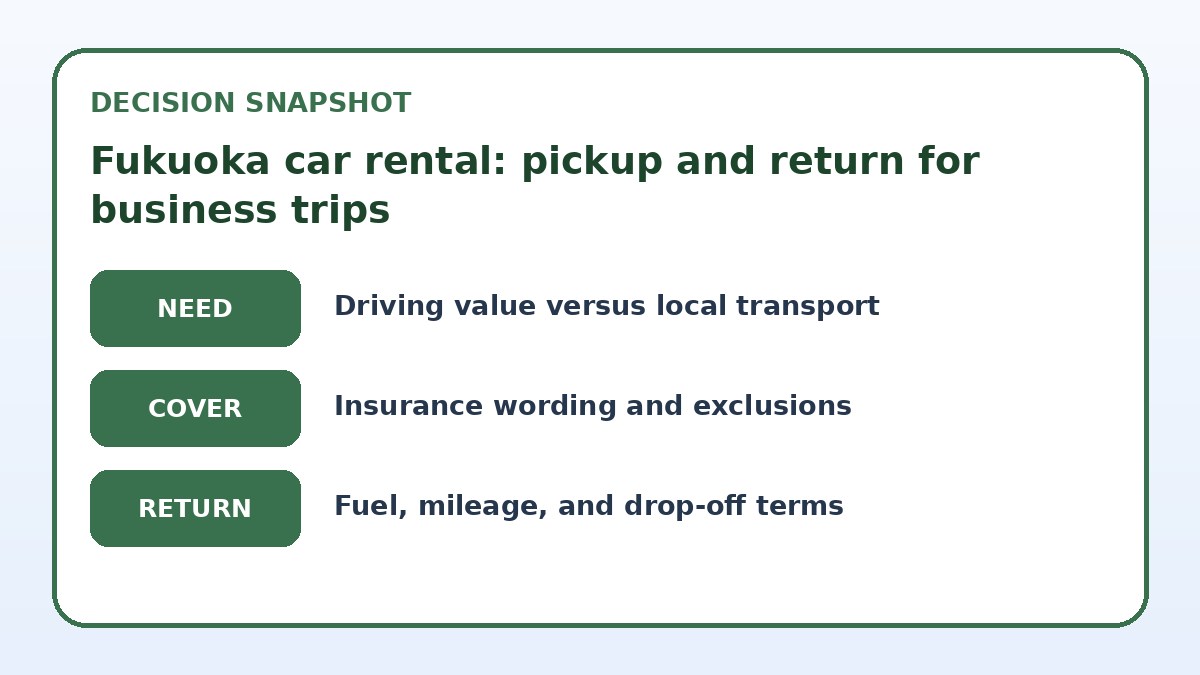
Does driving improve your Fukuoka business itinerary?
Start by mapping where your meetings, hotel, and any client sites sit relative to central transit hubs. Fukuoka’s city center is compact and well served by subway and buses, which often beat driving in peak hours because they avoid parking searches and city traffic. Driving adds clear value when you must reach multiple locations outside the subway grid — industrial areas, seaside conference venues, or client sites in neighboring prefectures — or when carrying equipment that would be awkward on public transport.
Weigh convenience against hidden time costs: finding parking, waiting in hotel valet lanes, and dealing with electronic tolls or unfamiliar payment processes can eat into a tightly scheduled day. If your weekly calendar includes early departures, late finishes, or multiple off-center meetings where taxis would be expensive and slow, a car gives control and schedule certainty. If most activity is in downtown Hakata, consider skipping a rental and using taxis or ride-hailing selectively to preserve time.
Decide whether driving earns its place
| Mobility strategy | Best for | Cost or friction to check |
|---|---|---|
| Rent a car | Spread-out meetings, equipment transport, flexible timings | Administrative pickup/return steps, parking and tolls to manage |
| Taxis for the whole trip | Short urban schedules, late-night travel, minimal administrative burden | Higher ongoing cost and less control over timing across distant sites |
| Public transit plus occasional taxi | Dense central schedules and predictable meeting locations | Limited door-to-door access and possible trouble with heavy luggage or equipment |
| Hybrid: rent for part of the trip | Combining central meeting days with one or two off-center visits | Two-set logistics: pickup/return friction twice and potential extra fees |
Check live rental choices only after the route test
Use the exact driver, dates, pickup point, and return plan to compare current conditions.
Pickup and return friction: what to expect and verify
Pickup friction can negate the convenience of having a car. Expect paperwork, ID and credit-card checks, optional upsell decisions, and possible queues at counters, especially at busy terminals. If you choose airport pickup, confirm on the provider’s booking page whether a shuttle, terminal desk, or off-airport counter applies, and check whether airport surcharges, after-hours collection fees, or parking transfer times are listed. For city bureau pickups, ask whether they will hold the car if your flight is delayed and how long a grace period exists.
Return friction commonly arises from fuel policy, vehicle inspection, and toll or parking reconciliations. Verify the exact fuel policy (same-to-same vs pre-purchase) and how missing fuel is charged on the final booking page. Confirm whether the return location requires a final in-person inspection and whether you’ll receive written confirmation or an electronic receipt. Also look for details on after-hours returns and how damage claims are processed — these specifics determine the time buffer you should build into your schedule before flights or meetings.
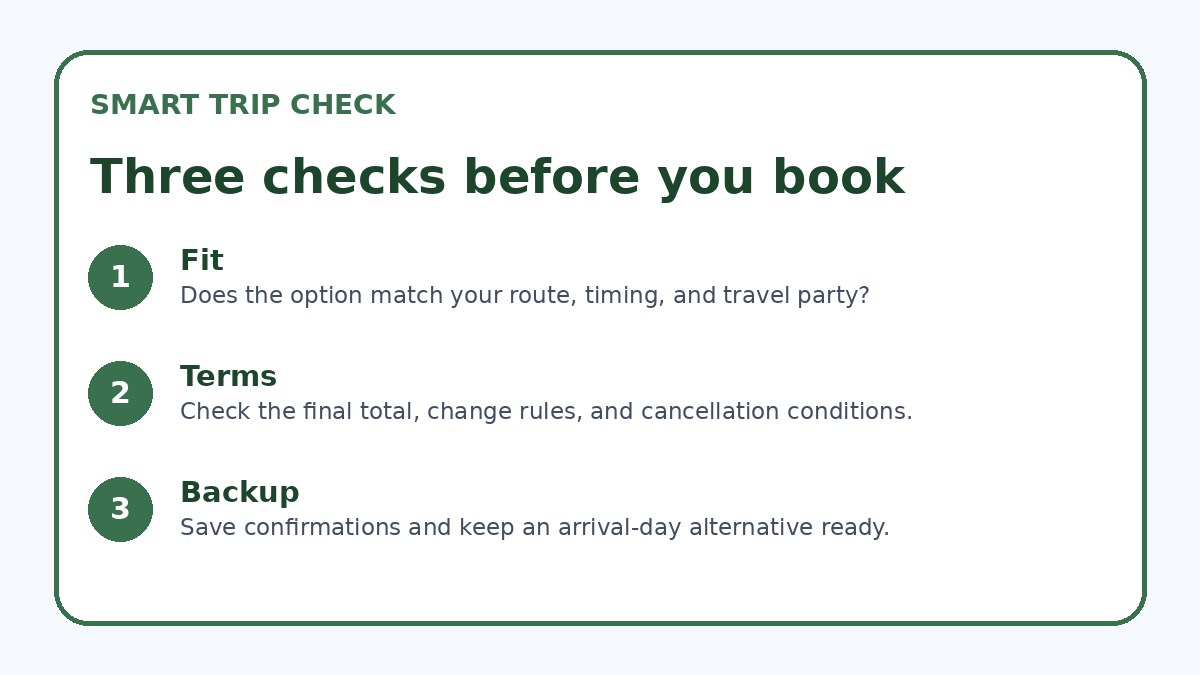
Compare the full rental conditions
Confirm insurance wording, exclusions, deposit, fuel, mileage, and return terms on the final page.
Insurance wording and company policy checks
Insurance language on rental pages is often terse and varies by country. On the provider’s final booking page, check collision damage waiver (CDW) terms, deductible amounts, and whether third-party liability is included or requires an add-on. Look for explicit exclusions — for example, damage from driving on unpaved roads, theft with unattended keys, or unauthorized drivers — and ensure your corporate policy or personal credit-card benefits cover those gaps. If your company reimburses insurance, confirm which documents and receipts are acceptable.
When traveling across prefectural borders or into Kyushu’s rural roads, verify whether cross-border or regional restrictions apply, and whether coverage differs for toll incidents or non-collision damage (windshield, tires). If a credit card provides primary rental coverage, read the card’s terms and compare deductible levels to the rental company’s CDW option. For faster resolution of any claim that might affect your company, take photos during pickup and return, obtain a written inspection record, and keep all receipts and documentation required for expense and insurance claims.
Car rental terms to verify
- Before booking, map meeting addresses and mark which are outside the subway grid to justify a rental.
- On the booking page, confirm pickup location type (airport desk, shuttle, city counter) and any related airport surcharges.
- Verify the exact fuel policy and how refueling shortages are charged; decide whether pre-purchase fuel makes sense for your schedule.
- Document insurance terms: deductible amount, CDW exclusions, and whether credit-card coverage applies; save screenshots for expense claims.
- Plan return logistics: allocate time for final inspection, toll reconciliation, and collecting a signed receipt for your expense report.
- If pickup conditions or wait times exceed your tolerance, be ready to cancel and switch to taxis plus public transit without delay.
A non-driving fallback and when to switch tactics
Have a clear fallback before you arrive: if pickup waits exceed your tolerance or pickup terms add unexpected outlays, canceling and switching to taxis plus subway can be the quickest recovery. For short urban hops, the subway is frequent and punctual; taxis cover off-hours and door-to-door needs without parking administration. Keep a local taxi-app or company transport number ready, and ask your hotel concierge about business-friendly flat taxi rates for common routes like the airport or conference centers.
Switch tactics if any of these arise at pickup: long wait times, unclear fuel or damage policies, required high deposits that your company won’t authorize, or if the vehicle offered doesn’t meet your equipment needs. Make the decision early — before you sign final paperwork — to avoid administrative hassle later. If you do commit to a rental, set calendar blocks for return tasks (refuel, inspection, receipts) and factor them into your departure timing so returns don’t collide with flights or final meetings.
Car Rental & Road Trip questions travelers ask
What should I check on the rental booking page at pickup?
On the final booking page check the pickup location description (airport counter, off-site shuttle, or city office), hours of operation, and any listed airport or after-hours fees. Confirm required documentation such as driver’s license, passport, and the credit card the reservation holds, plus whether additional drivers can be added and at what cost. Look for explicit notes about grace periods for delayed flights and whether the company holds the vehicle after a set time. These facts determine whether pickup will fit your arrival pattern and corporate approval.
Which insurance terms most affect my company liability and reimbursement?
Focus on the collision damage waiver deductible, third-party liability limits, and any listed exclusions that your corporate policy might not cover. Check whether CDW reduces deductible to zero or only partially and whether theft protection requires securing the keys. Verify whether your corporate card or company insurance is primary or secondary; if secondary, you may face upfront charges you must reclaim. Keep written confirmation of coverage and the rental provider’s damage report to support any reimbursement claim.
How should I handle return inspection and proof for expense reports?
Allocate time before departing to refuel according to the policy and bring the correct fuel receipt. When returning, request an in-person inspection and get a signed handover document or an official electronic receipt showing return time, fuel status, and any noted damage. Take timestamped photos of the vehicle at return and retain all toll or parking receipts. These items streamline expense reconciliation and protect you from post-return claims; if the provider lacks clear receipt procedures, ask for written confirmation at the counter.
Final decision note
For business travelers in Fukuoka, the practical choice to rent hinges on location spread, equipment needs, and schedule flexibility. Renting pays off when meetings fall outside the subway network or when door-to-door timing is critical, but be ready for pickup and return administration that can consume valuable time. Before booking, confirm pickup logistics, fuel policy, deductible levels, and how inspections and receipts are handled on the provider’s final page. If the contract or timing feels uncertain at pickup, switching to a taxi-plus-transit fallback will usually preserve your schedule. For quick comparisons and live availability you may check Trip.com, but always rely on the rental provider’s booking page for the definitive terms you must accept.
Continue planning
Check current options and final conditions
Use the provider page to confirm live availability, the final total, cancellation terms, and every condition that matters to your trip.
This evergreen planning guide was created with AI-assisted drafting and a structured quality review. It does not display live prices, schedules, availability, visa guidance, or provider rankings. Verify current details before booking. Some links are affiliate links; we may earn a commission at no additional cost to you.